Have you ever heard of the Romantic pianist and composer Sergei Bortkiewicz (1877-1952)? He might not be a household name, but he composed beautiful music, especially for the piano. Bortkiewicz was born on 28 February 1877, in Kharkov (now Kharkiv, Ukraine), then part of the Russian Empire. Of Polish descent, he grew up on his family’s estate in Artiomovka, where his mother, an accomplished pianist, nurtured his early musical talent.
Sergei Bortkiewicz: Etude Op. 15, No 9 in F-sharp minor
Musical Journey and Wartime Challenges
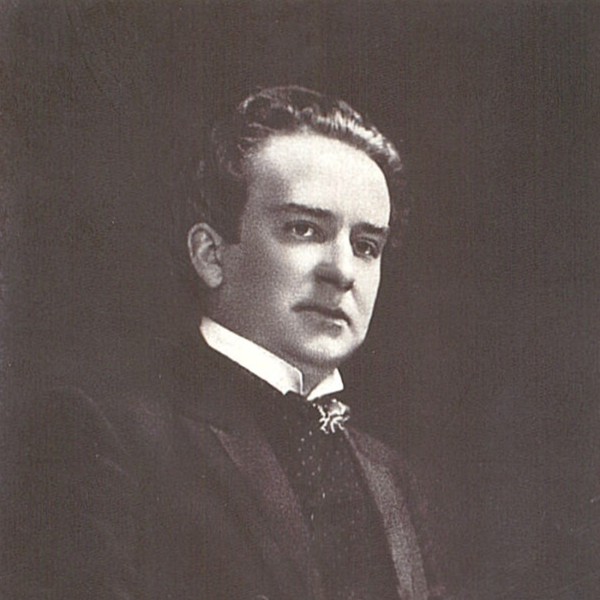
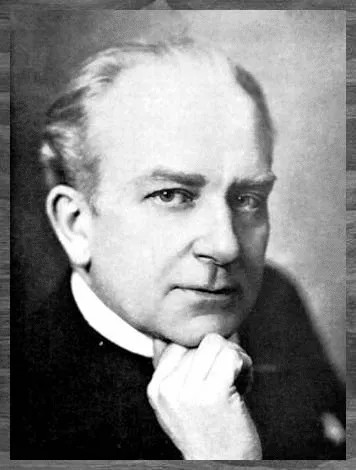
Sergei Bortkiewicz
Bortkiewicz studied at the St. Petersburg Conservatory under Anatoly Lyadov and later at the Leipzig Conservatory, where he honed his skills under Alfred Reisenauer and Salomon Jadassohn, both connected to Franz Liszt.
By his 20s, he was a star in Berlin and around Europe, but World War I and the Russian Revolution turned his world upside down. He did eventually become an Austrian citizen, but World War II blew up his publisher’s stash of his scores.
Sergei Bortkiewicz: Lyrica Nova, Op. 59
Romantic Resilience and Melodic Legacy
Throughout these horrible trials and tribulations, Bortkiewicz continued to compose, but his music was considered seriously old-fashioned. You see, Bortkiewicz had a decided aversion against what he called “modern, atonal, and cacophonous music.”
Instead, he always considered himself a romantic and a melodist, building on the structures and sounds of Chopin and Liszt, with the unmistakable influences of early Tchaikovsky, Rachmaninoff, and Scriabin.
Sergei Bortkiewicz: Lamentations et Consolations, Op. 17: No. 2. Consolation in D Major (Zhenni Li, piano)
Distinctive Style and Enduring Musical Voice
Bortkiewicz had a very colourful and delicate imagination and great sensitivity to his musical ideas. Combined with his undisputed gift for melody, his idiomatic piano-writing resulted in a style that is instantly recognisable, attractive, and appealing to a good many listeners.
The Bortkiewicz specialist Wouter Kalkman writes that “the essential characteristics of his style were already present in his earliest compositions, from around 1906, although his later music is much more personal, poetic, and nostalgic.” One thing is for sure: melody, harmony and structure were essential building blocks for his musical creation.
Sergei Bortkiewicz: Piano Sonata No. 2 in C-Sharp Minor, Op. 60 (Alfonso Soldano, piano)
Rediscovered Echoes
Political upheavals were a recurring obstacle throughout Bortkiewicz’s career. In 2013, a set of Fantasiestücke dedicated to the pianist Egon Kokits were found in the Saxon State Archive in Leipzig. These pieces were intended for publication in 1949 by Anton J. Benjamin, but things once again got in the way.
This cycle of six evocative piano miniatures reflects Bortkiewicz’s lifetime commitment to lyrical, virtuosic, and deeply expressive music. It draws heavily from the influences of Chopin and Rachmaninoff, “infused with a distinctly Eastern European emotional intensity and a refined, almost cosmopolitan charm shaped by his years in Berlin and Vienna.”
The Fantasiestücke offer a journey through varied moods and textures, from introspective melancholy to fleeting moments of whimsy and dance-like vitality. The composer originally seemed to have a different sequence of pieces in mind, but re-ordered the pieces to enhance the overall narrative flow.
Sergei Bortkiewicz: Fantasiestücke Op. 61
A Romantic Odyssey
In 1929, Sergei Bortkiewicz composed his “Novel for Piano,” Op. 35. It is a captivating suite of ten piano miniatures that showcase the composers’ late-Romantic style as he blends lyrical expressiveness with vivid narrative imagery.
Written during a period of personal and professional upheaval, this delightful set reflects the composer’s ability to channel his turbulent experiences into music of profound emotional depth and refined craftsmanship. It captures the composer’s nostalgia and resilience amid the political and economic instability of the interwar period.
Each of the ten movements is a concise, character-driven vignette, like a literary novel with interconnected chapters. Bortkiewicz left no explicit narrative, but the pieces range from tender, introspective moments to dramatic, impassioned outbursts. It is one of the hidden gems of the Romantic piano repertoire, inviting listeners into a world of intimate storytelling.
Sergei Bortkiewicz: Ein Roman fur Klavier, Op. 35 (Klaas Trapman, piano)
Poetic Snapshots
When we look at Bortkiewicz’s ability to distil profound feeling into concise and evocative forms, we must mention his Seven Preludes, Op. 40. Each prelude is once again a distinct musical vignette, showcasing his melodic gift and pianistic virtuosity.
Composed in Berlin, Op. 40 bears the imprint of Bortkiewicz’s nostalgia for his homeland and his resilience amid political and personal challenges, including financial struggles and displacement. Essentially, these pieces create a kaleidoscopic journey through Bortkiewicz’s emotional landscape in a rich yet accessible harmonic language.
The set opens with a lyrical and introspective prelude, while subsequent pieces range from delicate, shimmering passages to robust, dramatic outbursts. For instance, the third prelude’s flowing arpeggios evoke a sense of wistful reverie, while the fifth unleashes a tempestuous energy, demanding technical agility and expressive nuance from the performer.
According to scholars, “these preludes successfully epitomise Bortkiewicz’s achievement during his blossoming middle period… it is clear proof of the sensitivity of the composer in a harmonious and tonal environment, musically close to the young Scriabin.”
Sergei Bortkiewicz: 7 Preludes, Op. 40 (Sławomir Wilk, piano)
Romantic Miniatures
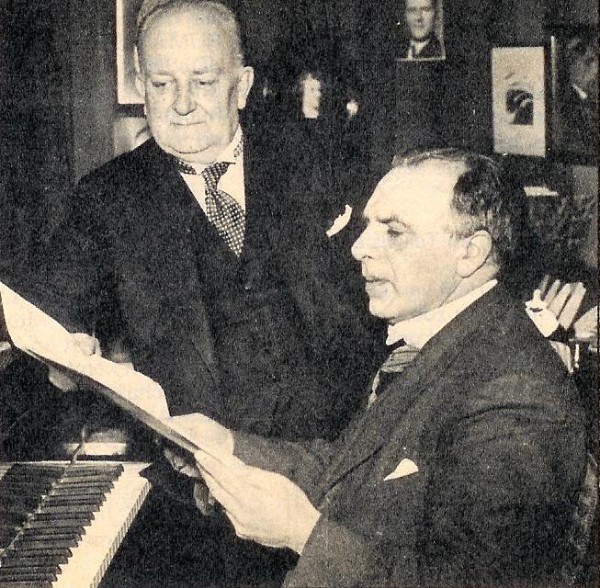
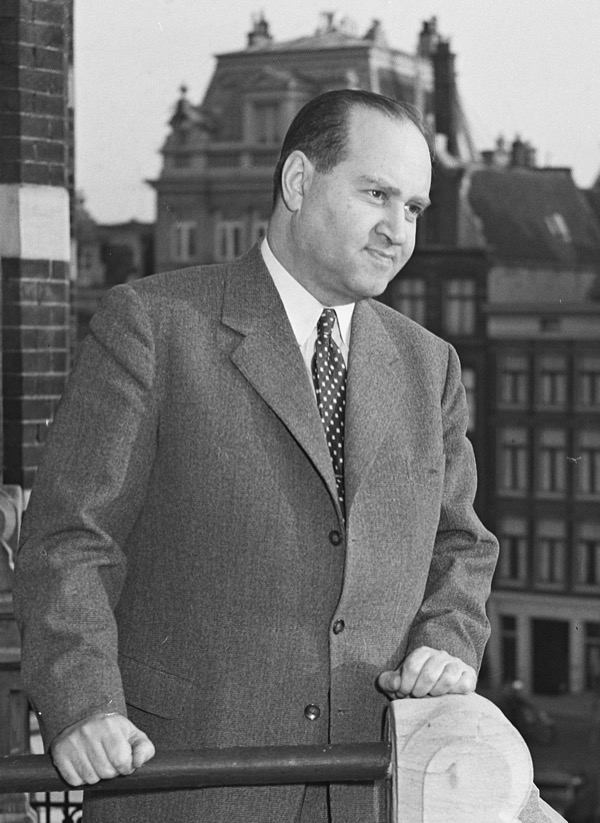
Sergei Bortkiewicz and Hugo van Dalen
For an early, yet strikingly polished set of piano pieces, let’s turn to the Quatre Morceaux, Op. 3. Composed around 1906, shortly after his studies in St. Petersburg and Leipzig, this youthful work already sounds Bortkiewicz’s lyrical sensitivity and pianistic flair.
Likely composed while establishing himself in Berlin, the Quatre Morceaux reflects the optimism and ambition of a young composer eager to make his mark. The set, comprising Prélude, Impromptu, Valse, and Chanson sans paroles, demonstrates his genius for crafting concise, character-driven pieces that balance technical virtuosity with emotional depth.
The “Prélude” evokes Chopin’s introspective style, while the “Impromptu” sparkles with playful energy that blends delicate runs with moments of tender reflection. The “Valse” is possibly a nod to Tchaikovsky, as it swirls with graceful charm and subtle harmonic surprises. Unsurprisingly, the “Song without Words” recalls the understated elegance of Mendelssohn as Bortkiewicz explores the piano’s expressive potential.
Sergei Bortkiewicz: 4 Morceaux, Op. 3 (Stephen Coombs, piano)
Virtuosity and Nostalgia
Paul Wittgenstein, older brother of the philosopher Ludwig Wittgenstein, was a promising young pianist who was severely wounded in the summer of 1914. In fact, his right arm had to be amputated, but he was nevertheless determined to continue his pianistic career.
Wittgenstein came from a highly affluent family, and he decided to commission the leading composers of the day to compose works for the piano left hand. Maybe you know the specific works written for him by Ravel, Richard Strauss, Prokofiev, Benjamin Britten, and others?
Among the others, we find a piano concerto for the left hand by Sergei Bortkiewicz. Wittgenstein premiered the work in Vienna in November 1923. The piece’s demanding left-hand part, requiring intricate passagework, chordal textures, and dynamic contrasts, highlights Bortkiewicz’s awareness of Wittgenstein’s capabilities, incorporating elements that emphasise both technical mastery and emotional depth.
Sergei Bortkiewicz: Concerto No.2 for piano left-hand and orchestra, Op. 28
Boundless Lyricism
In 1926, Sergei Bortkiewicz became an Austrian citizen, and according to pianist Stephen Coombs, “he must have enjoyed the greatest security in his life.” His Ten Preludes Op. 33 don’t have an explicit programmatic narrative, but they explore a unique emotional landscape.
The music ranges from an opening piece that features mysterious bell-ringing and a flowing melody with Chopinesque elegance to a reflective, almost serene conclusion. These preludes require technical precision and expressive nuance, with intricate figurations and dynamic contrasts.
For Wouter Kalkman, this set offers “a stamp of boundlessness and freedom, music that is unpredictable but obedient to internal logic.” Reception was overshadowed during his lifetime due to the disruptions of World War II, but it has gained recognition for its craftsmanship and heartfelt sincerity in recent years.
Sergei Bortkiewicz: 10 Preludes, Op. 33 (Stephen Coombs, piano)
Balkan Tapestry
Composed in 1940, the Jugoslavische Suite is a vibrant and evocative set of six piano miniatures that reflect the composer’s deep connection to the cultural and emotional landscape of the Balkans. Intended for publication in 1941, this collection also had to wait for rediscovery in Leipzig until 2013.
Bortkiewicz’s connection to Yugoslavia stems from his time in Constantinople in 1921–1922, where he formed a significant relationship with Natalie Chaponitsch, the wife of the Yugoslavian ambassador. Bortkiewicz and his wife travelled through Yugoslavia en route to Austria, and specific locations fired his musical imagination.
The opening movement evokes the serene beauty of Rogaška Slatina, a Slovenian spa town known for its lush forests. We also find a waltz tied to the cosmopolitan city of Novi Sad in Serbia, and a nocturne inspired by the coastal beauty of Dubrovnik, in Croatia. And let’s not forget the Piazza Terazije, a bustling square in Serbia’s capital, Belgrade.
Sergei Bortkiewicz: Jugoslavische Suite, Op. 58 (version for piano) (Nadejda Vlaeva, piano)
Enduring Charm
The enduring charm of Bortkiewicz’s piano music stands as a testament to his unwavering commitment to melodic beauty. Forged during a life marked by personal and historical upheavals, including the chaos of World War I, the Russian Revolution, and the loss of his scores in World War II, his compositions remain a testament to lyrical elegance.
His vivid imagination, sensitivity, and masterful piano-writing crafted a style that is both instantly recognisable and deeply appealing, blending nostalgic musical poetry with structural integrity. From his early works around 1906 to his later, more personal compositions, Bortkiewicz’s music continues to captivate listeners with its timeless charm.
The resurgence of Sergei Bortkiewicz’s piano music in modern recordings, recitals, and concerts is a cause for celebration, breathing new life into his exquisite romantic legacy. This revival, championed by dedicated performers and scholars, underscores the timeless appeal of his music.
For comprehensive resources, scores, and insights into his remarkable oeuvre, please visit www.bortkiewicz.com.
For more of the best in classical music, sign up for our E-Newsletter