Published in 1741, J.S. Bach’s Goldberg Variations, BWV 988, stand as any keyboardist’s Everest. Bach’s 70+ minutes of continuous variations were supposedly designed to be forgotten, music to be played to amuse a patron’s fight with sleep. Now, of course, the variations are music to marvel at, music to trace how the thematic Air changes over the course of the work.
The story of the Goldberg Variations comes from historian Johann Nikolaus Forkel, telling of the sleepless nights of the Russian Ambassador to the electoral court of Saxony. Count Kaiserling had many sleepless nights due to his health and arranged that his harpsichordist, Johann Gottlieb Goldberg (1727–1756), would sit in the antechamber to his bedroom and play the count to sleep. Being in Leipzig, the count mentioned to Bach his need for music for his harpsichordist that should be smooth in motion but lively enough in character to retain his attention. Bach supplied him with this variation set, the only one he wrote like this; the count so loved the set that he often called to Goldberg to play him one of his variations.
Forkel wrote his history some 60 years after the count was given the music, and it is believed that the story may have been made up. Another problem with the story is that Goldberg, although known as an accomplished keyboardist and sight-reader, was only 14 in 1741. However, Count Kaiserling had discovered the young Goldberg in Danzig, and he was in the count’s employment before the count was transferred to Leipzig. Goldberg was said to have studied both with J.S. Bach and W.F. Bach, J.S.’s eldest son. In Leipzig, Goldberg died of tuberculosis at age 29 in Dresden.
In a new recording by Yunchan Lim, the youngest winner of the Van Cliburn International Piano Competition in 2022, The Goldberg Variations are set out in a beautiful array. Recorded in Carnegie Hall, on the Perelman Stage in the Stern Auditorium, the modern Goldberg is presented in its finest garb.

Yunchan Lim © Universal Music Group
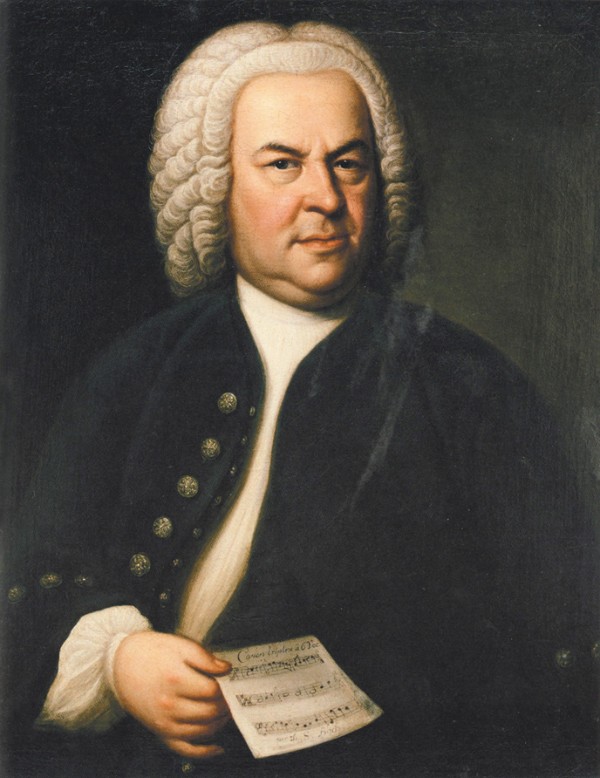
Elias Gottlob Haussmann: J.S. Bach, 1746 (Bach-Archiv Leipzig)
In his notes on the work, Lim tells how he holds the piece in a place of importance. ‘To me, this piece is the journey of the human life told through music — Bach’s portrayal of existence itself’. He goes on to say that he first heard Glenn Gould’s Bach recordings when he was 8 years old and was immediately impressed with the work’s ‘grandeur and beauty’. His teacher introduced him to other pianists’ recordings, and he thought, ‘performing a piece like this is why I do music.’
J.S. Bach: Goldberg Variations, BWV 988 – Aria (Live at Carnegie Hall, New York, 2025)
He finds the work to be both humane and deeply emotional, and finds the end of the work, where you return to the Aria that started everything, to be rather like the circle of life, a spiritual odyssey, where, after a long roundabout journey, you finally return home.
The final variation is a Quodlibet where multiple popular songs, rather than the Aria, form the basis of the piece. Although Bach never noted which folksongs he used in Variation 30, two were identified by one of Bach’s students, and it’s believed that there are more folksongs embedded in the work.
The following return to the opening Aria cuts through all the motion and complexity of the variations and provides a quiet close to the work.
Lim’s performance is cool and technically perfect. The precision of the canons and fughettas brings a clarity to the variation to the point that you lose yourself in the sounds following their individual paths. The sound is live and responsive, and everything you expect from Carnegie Hall.
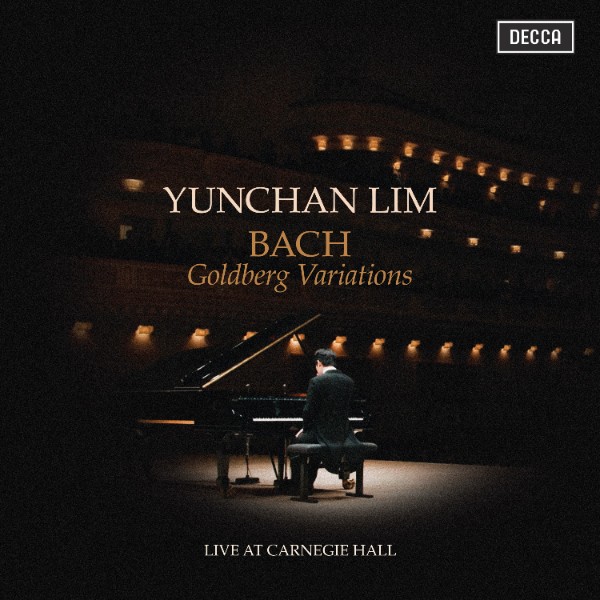
J.S. Bach: Goldberg Variations, Live at Carnegie Hall
Yunchan Lim, piano
Decca Record No: 4871517
Release Date: 6 February 2026
For more of the best in classical music, sign up for our E-Newsletter