In the high-stakes world of classical music, where spotlights burn bright and egos clash like cymbals, few stories resonate with the dramatic intensity of a Puccini score quite like that of soprano Kristine Opolais and conductor Andris Nelsons.
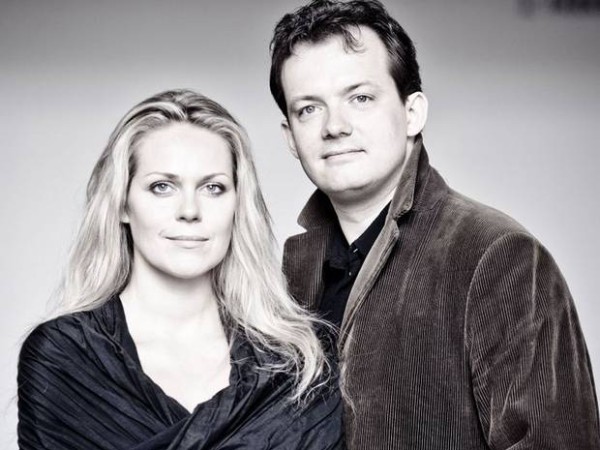
Kristine Opolais and Andris Nelsons
Their union was the stuff of operatic legend. A Latvian power couple who met amid the chorus lines of Riga ascended to the pinnacles of Boston and Berlin and wove their personal passion into professional symphonies.
Yet, as Opolais herself declared in a candid interview, “I didn’t want to be Nelsons’ wife. I wanted to be soprano Kristine Opolais.” To celebrate her birthday on 12 November 1979, let’s explore how their 2018 divorce, coming just after the birth of their daughter, tested the boundaries of collaboration and co-parenting.
Kristine Opolais Sings Puccini: “Quando m’en vo,” La Boheme
Post-Soviet Spark

Kristine Opolais
Their story begins in the post-Soviet chill of Latvia’s National Opera. Born Kristīne Opolais on 12 November 1979 in the eastern town of Rēzekne, she sang her way from a Madonna-obsessed teen to the chorus ranks by 2001.
As critics would later suggest, “with a voice like honey-coloured velvet,” she was a rising soloist, but engagements were scarce in a nation rebuilding from economic rubble. Nelsons, seven years her senior and already a prodigy at the helm of the opera as music director, spotted her potential amid the ensemble.
In 2005, during rehearsals for Puccini’s Tosca, that very opera of jealousy, betrayal, and defiant love, he cast her in the titular role for her first major break. Sparks flew not just from the score, but between them as well.
Kristine Opolais sings Dvořák: “Song to the Moon,” Rusalka
Empire of Two
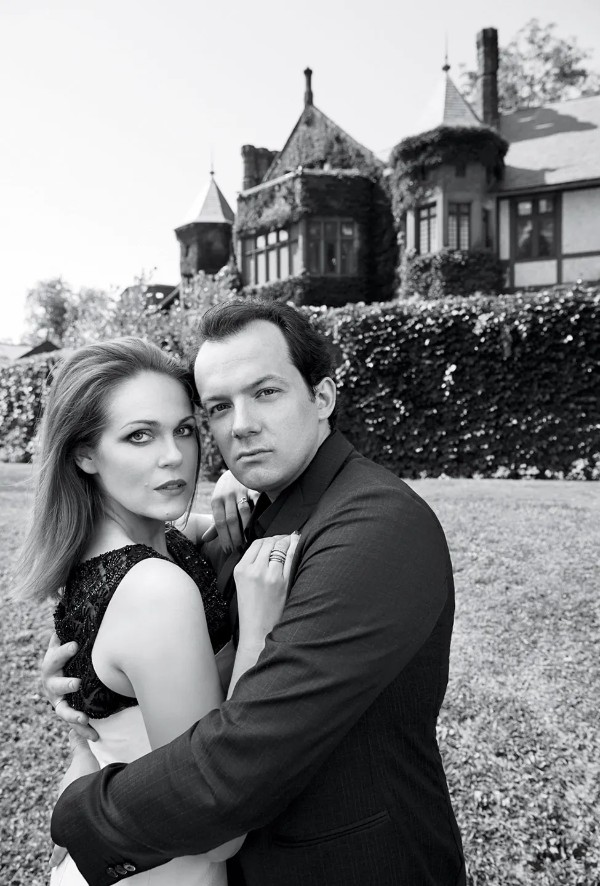
Kristine Opolais and Andris Nelsons
“We built an empire together,” Opolais reflected in a 2020 Opera News profile, recalling how Nelsons championed her, securing extra chorus spots to keep her afloat while she honed her craft under his watchful eye.
By 2011, their romance had formalised into marriage, a Baltic fairy tale transplanted to the world’s grandest stages. Nelsons, now music director of the Boston Symphony Orchestra and Leipzig’s Gewandhaus, conducted Opolais’s Royal Opera House debut as “Cio-Cio-San” in Madama Butterfly, a performance that sealed her as Puccini’s reigning queen.
They became classical music’s golden duo, jetting between continents and their collaborations a seamless blend of podium precision and vocal abandon. “He understands my voice like no one else,” Opolais told The Guardian in 2016, crediting his Latvian roots for their intuitive shorthand.
Kristine Opolais sings Puccini: “Un bel di, vedremo,” Madama Butterfly
Kristine, Not Mrs. Nelsons
However, fissures started to open up, and Opolais, ever the independent force, chafed at the “power couple” label that threatened to eclipse her solo arc. “I fought to be seen as Kristine, not Mrs. Nelsons,” she admitted in a 2019 Vanity Fair feature.
Their daughter, Maija, arrived in late 2017, and motherhood amplified Opolais’ resolve. In March 2018, came the joint statement “Sharing, with regret, that Andris Nelsons and Kristine Opolais have divorced following seven years of marriage.”
What followed was no tragic finale, but a masterclass in resilient reinvention. The divorce was “amicable,” as Opolais described it in a rare 2022 interview with Deutsche Welle, emphasising their commitment to co-parenting.
Opolais/Nelsons in Puccini: “Senza mamma,” Suor Anglica
Parents First

Kristine Opolais © Polina Viljun
“We are parents first,” Nelsons echoed on his website, a mantra that turned potential discord into duet. Professionally, they refused to let acrimony mute their harmony. Mere months post-divorce, they tackled Wagner’s Lohengrin at the Royal Opera.
Their orbits intersected like recurring motifs, from Shostakovich recitals in 2020 to Verdi galas in 2022. Co-parenting across time zones emerged as their unsung overture, but their pact endures. “We communicate like colleagues, clear, kind, and crisis-proof,” explained Opolais.
This resilience crested in the 2025’s Tanglewood Tosca, a reunion that echoed the love ignited two decades prior. Their tale is a modern opera romance, a crescendo of shared triumphs, a poignant adagio of separation, and a resilient finale of mutual respect. Here, passion on the podium and stage endures, proving that in the art of love and music, solo flights can harmonise after all.
For more of the best in classical music, sign up for our E-Newsletter