The earliest classical recordings offer modern listeners a priceless gift: a direct line to performers who lived during or shortly after the lifespans of the great composers.
These eight early classical recordings, made between 1901 and 1907, capture castrati, legendary violinists, and the tenor whose voice helped prove that recorded music had a future – all preserved on wax cylinders and shellac discs at the very dawn of the recording age.
Here is our list of eight of the best early classical music recordings.

Phonograph
1902 – Träumerei by Robert Schumann, performed by violinist Charles D’Almaine
Violinist Charles D’Almaine was born in Britain in 1874. In 1898, he moved to New York City, the centre of the nascent recording industry, becoming one of the first violinists to make his career as a recording artist.
He played in the Metropolitan Opera Orchestra and in 1901 became concertmaster of the Victor Company Orchestra.
In 1914, he expanded his professional horizons by moving to Iowa with his wife so they could both study chiropractic. He then returned to New York, working as both a chiropractor and a violinist.
1902 – Overture to Orpheus in the Underworld by Offenbach, by the Sousa Band
Because brass instruments sounded better on early recordings than string instruments, the Sousa Band was one of the star ensembles of the early recording days.
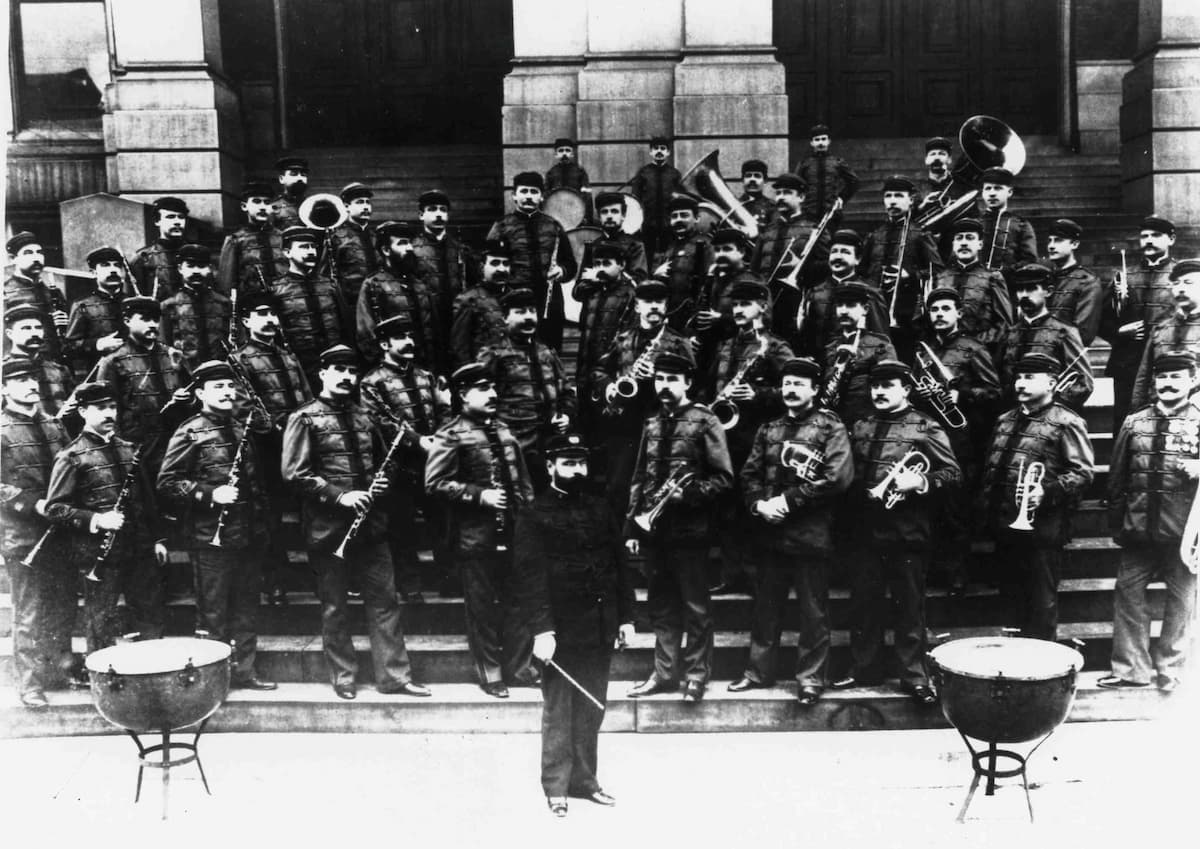
John Philip Sousa and his band, 1893
The band toured for nearly forty years, giving over 15,000 concerts in communities in the United States and abroad.
They provided invaluable touring experience for many women musicians, as bandleader John Philip Sousa liked to hire women soloists for his tours, at a time when women were comparatively uncommon in such roles.
The band also made many influential early recordings, including this one of Offenbach‘s famous Orpheus in the Underworld overture (the source of the Can-Can, which you can hear played with irresistible speed and swagger).
1903 – 1812 Overture by Tchaikovsky, by the Victor Grand Concert Band
One of the Sousa Band’s main rivals was the Victor Grand Concert Band. Unfortunately, little information has survived about them, but it appears they made roughly 50 recordings between 1901 and 1918.
Full symphony orchestras were rarely, if ever, recorded at this time. Their sound was difficult to capture, and musicians had to gather around a horn to record, making performances involving dozens of people extremely difficult.
Not to mention, at this early date, no more than a few minutes of music could fit on a single disc, restricting the choice of orchestral repertoire considerably.
The solution? A band arrangement of Tchaikovsky‘s famous overture – which had only been premiered 21 years before this recording.
1903 – Adagio from the Sonata No. 1 in G-minor by Bach, performed by Joseph Joachim
Violinist Joseph Joachim was born in 1831. In this recording, he plays a piece of solo Bach, a composer who had died only 81 years before he was born, and whose solo violin works Joachim championed.
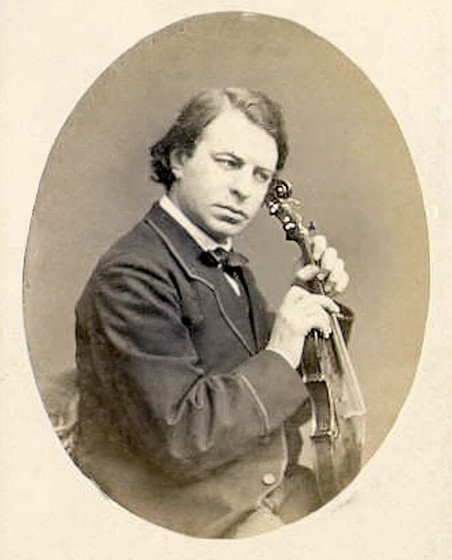
Joseph Joachim
Today, Joachim is best remembered as a friend and confidant of Johannes Brahms. Their friendship and professional relationship spanned decades (albeit with the occasional stormy patch).
The Brahms violin concerto was written for Joachim, so this recording offers a rare chance to hear the sound he had in mind.
1903 – Excerpts from Tosca by Puccini
Lionel Mapleson was the librarian at the Metropolitan Opera in New York City, as well as an amateur recording engineer.
In 1900, he started bringing his Edison phonograph to shows and capturing recordings of live performances. The results of his experiments have become known as the “Mapleson cylinders.”
In 1903, he stopped. We don’t know why. Other projects may have taken precedence, or management may have told him to stop.
Lucky for us, the cylinders were eventually rescued and preserved. They provide a rare window into what live opera performance might have sounded like around the turn of the century.
1904 – Alessandro Moreschi castrato recording
In the early to mid-1700s, the castrato voice played vital roles in European opera and sacred music.
As their name suggests, these artists were castrated as boys to create a particular voice quality. They became the rock stars of their era.
The practice was banned in Italy in the mid-1800s. By the time recording technology developed around 1900, few castrati were still working.
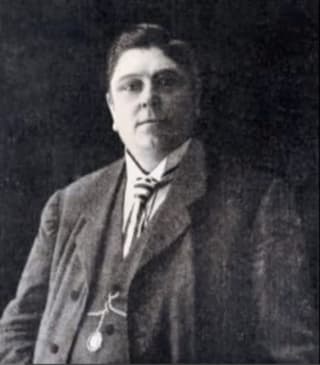
Alessandro Moreschi, 1900
Alessandro Moreschi was born in 1858 on the dividing line between two eras. After his castration, he sang in both religious settings and private salons.
Before he died in 1922, he made a handful of recordings. They give modern listeners a glimpse into the voices that had captivated audiences in eighteenth-century Europe.
1906 – Excerpts from Messiah by Handel, performed by various artists
In 1906, the Gramophone and Typewriter Company embarked on a massive project: a nearly complete recording of Handel’s Messiah.
To account for the new technology, the instrumentation was altered to improve recording, with the entire project spread across 25 discs.
The result was expensive: £5 for the set at a time when the average English income hovered around £70.
The identities of the conductor (or conductors), as well as the instrumentalists, were never documented. The four vocal soloists, forgotten today, were born between 1856 and 1880. Their work provides a rare window into Edwardian performance practice.
For decades, this set of recordings was thought lost, but a complete set was discovered in 2023.
1907 – Vesti la giubba from Pagliacci, performed by Enrico Caruso
Enrico Caruso was one of the first artists in classical music to become a household name based on the strength of his recordings.
Born in 1873 in Naples, Italy, Caruso began his career in smaller regional opera companies. He worked his way up the ladder, finally appearing at the operatic summit – the La Scala opera house – in 1901.
But the major turning point in his career came in April 1902, when he made his first recording for the British Gramophone Company. His voice recorded well, and his records quickly became bestsellers.
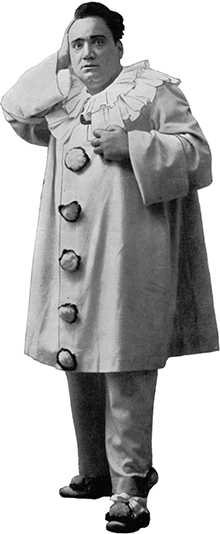
Enrico Caruso in Pagliacci
In late 1903, he began appearing at the Metropolitan Opera in New York, and in early 1904, he signed with the Victor Talking Machine Company.
That year, he recorded the aria “Vesti la giubba” from Ruggero Leoncavallo’s opera Pagliacci.
It became the first record to sell a million copies – proving that this new technology was here to stay.
Conclusion
The artists and ensembles on this list could not have known that their recordings would still be listened to more than a century later.
But whether they understood this or not, they left something irreplaceable behind: a sonic snapshot of a world on the cusp of transformation, where ancient vocal traditions were dying out, new technologies were taking hold, and the concept of a “recording artist” was beginning to take shape.
For more of the best in classical music, sign up for our E-Newsletter