Classical music is difficult to write, and most people assume that you need a rigorous formal education to be able to write great works.
However, some of history’s most extraordinary composers forged their creative paths without extensive formal education, relying instead on their natural talent and, most importantly, their determination to teach themselves.
Today, we’re looking at four of the greatest self-taught composers, who remind us all that passion and perseverance can sometimes take you farther than formal schooling can.
© CMUSE
Georg Philipp Telemann (1681-1767)
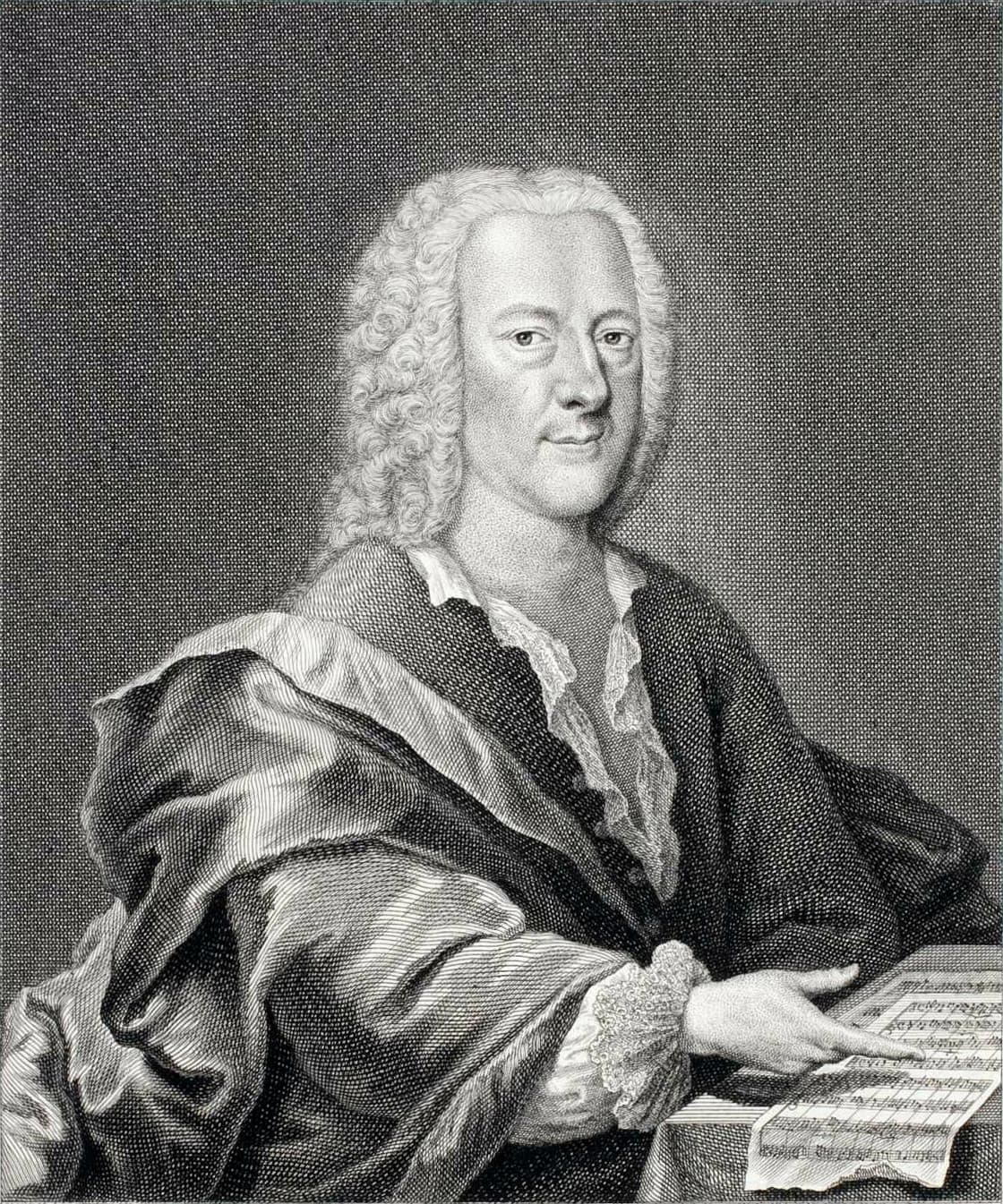
Georg Philipp Telemann
Georg Philipp Telemann was one of the most prolific composers of all time, writing around 3000 pieces of music over the course of his life.
However, compared to his peers, he began studying music relatively late in life. He only started taking organ lessons from a local teacher at the age of ten.
His family discouraged him from studying music, but he ignored them. Two years later, he composed his first opera.
When he was sixteen, he began attending the renowned Gymnasium Andreanum, a school in the city of Hildesheim in present-day Germany.
His teachers there were more supportive than his family had been, and he was encouraged to pursue both musical performance and composition.
While attending the Gymnasium, he taught himself to play a dizzying array of instruments, including violin, viola da gamba, double bass, flute, oboe, and recorder.
Despite his increasingly obvious musical talent, he initially decided against pursuing a career in music, moving to Leipzig in 1701 to study law.
However, in 1702, he embraced his true calling, becoming director at the Leipzig opera house, the Oper am Brühl. He was just twenty-one years old.
It would be the start of a long and starry musical career.
Telemann: Concerto in G major for Viola, Strings and Basso continuo, TWV 51:G9
Joseph Haydn (1732-1809)
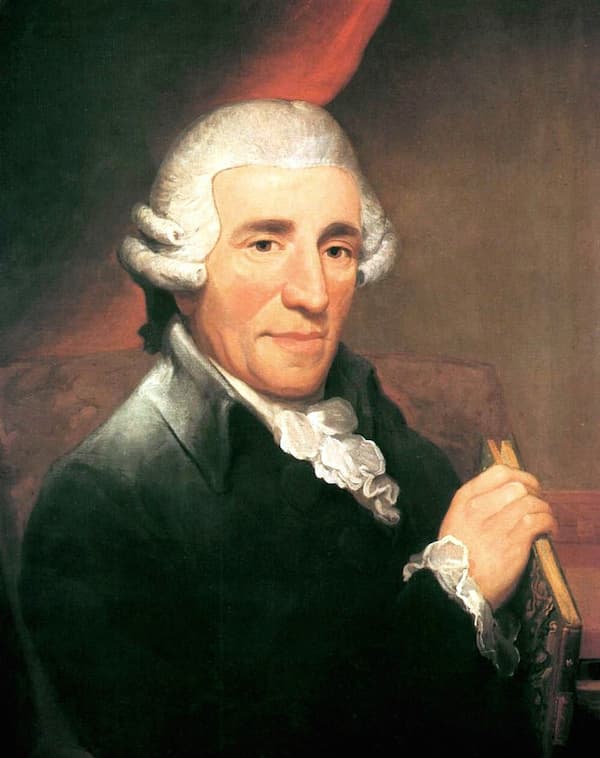
Thomas Hardy: Franz Joseph Haydn, ca. 1791 (London: Royal College of Music Museum of Instruments)
Joseph Haydn was born in the small town of Rohrau in present-day Austria to a family of enthusiastic amateur musicians. His father was a wheelwright and his mother a cook. Both of his parents loved to sing.
Even when he was a little boy, it was clear that Joseph was very musical. Despite his youth, when he was six years old, the Haydns sent Joseph to live with a relative named Johann Matthias Frankh, who was a schoolmaster and choirmaster.
The expectation was that Joseph would apprentice with Frankh and fulfill his musical talent.
Frankh did teach young Joseph the basics of singing, as well as the harpsichord and violin, but he also abused and neglected him.
Just a year later, Frankh sent his charge to study in Vienna with the music director of St. Stephen’s Cathedral in Vienna. He spent the rest of his boyhood working there as a choirboy.
Apprentice choirboys were taught how to sing, but not how to compose music. During his entire apprenticeship, he only received two lessons in composition.
In an autobiographical sketch he wrote in his forties, he noted:
Proper teachers, I never had. I always started right away with the practical side, first in singing and playing instruments, later in composing.
I listened more than I studied, but I heard the finest music in all forms that was to be heard in my time…
Thus, little by little, my knowledge and my ability were developed.
When he realised he wanted to learn more, Joseph began studying theory textbooks. In later years, he was especially grateful to Gradus ad Parnassum by Johann Joseph Fux.
He also embarked on a thorough study of the output of Carl Philipp Emanuel Bach. He later wrote:
I did not leave my clavier till I played them through, and whoever knows me thoroughly must discover that I owe a great deal to Emanuel Bach…
When he left the Cathedral, he became a professional musician – and composer – in Vienna.
Haydn: Symphony No. 94 in G Major “Surprise”
Edward Elgar (1857-1934)
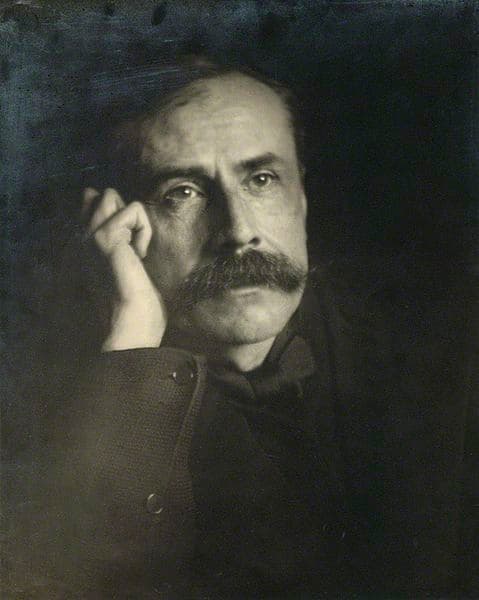
Charles Frederick Grindrod: Edward Elgar, ca. 1903
Edward Elgar was born to a musical British family in the tiny town of Lower Broadheath, forty miles southwest of Birmingham.
His father tuned pianos, kept a music shop, and served as a church organist for nearly forty years.
Edward began studying piano and violin as a small boy. He would later write:
My first music was learnt in the Cathedral…from books borrowed from the music library, when I was eight, nine or ten.
He studied every book on music that he could get his hands on, including the Grove Dictionary of Music and Musicians.
He dreamed of studying in Leipzig, but his family could never afford to send him. Interestingly, the British journal The Musical Times spins this as a positive: “Thus the budding composer escaped the dogmatism of the schools.”
After he graduated from school in 1872, he began working as a clerk, but it wasn’t long before he began pursuing a musical career, despite his lack of formal musical education.
He would go on to become the most important British composer in generations.
Edward Elgar – Enigma Variations, Op.36: IX. (Nimrod)
Amy Beach (1867-1944)
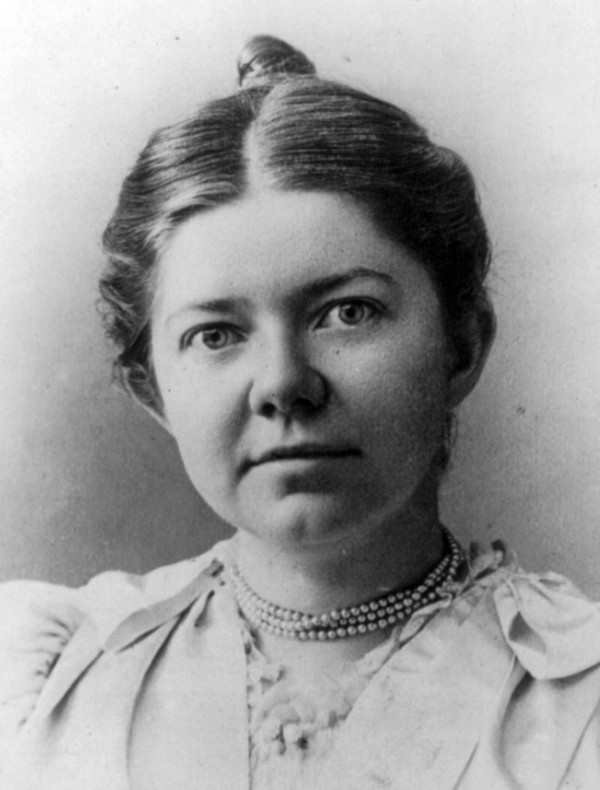
Amy Beach
Amy Beach was born to a musical family in New Hampshire in 1867.
Her Wikipedia page describes her early musical abilities, which were nothing short of extraordinary:
She was able to sing forty songs accurately by age one, she was capable of improvising counter-melody by age two, and she taught herself to read at age three. At four, she composed three waltzes for piano during one summer at her grandfather’s farm in West Henniker, New Hampshire, despite the absence of a piano; instead, she composed the pieces mentally and played them when she returned home.
She began studying piano with her pianist mother when she was six. She soon was accomplished enough to perform in public.
In 1875, the year she turned eight, her family moved to a suburb of Boston. Her parents were encouraged to send her to Europe to study, but opted to stick with Boston-based teachers.
During the 1881-1882 school year, she studied harmony and counterpoint with a teacher by the name of Junius W. Hill. This would be her only formal training.
However, to compensate, she began reading music books voraciously. She even made French translations of musical treatises for her own benefit.
Everything changed at the age of eighteen, when she married Dr. Henry Harris Aubrey Beach, who was twenty-four years her senior.
To keep up appearances (it was considered unseemly and a poor reflection on a husband’s ability to provide for his family if an upper-middle-class woman concertized for money), Beach discouraged his young wife from performing. She decided to focus her creative energy on composing instead.
Modern readers might view this controlling situation as a great tragedy, but Beach herself remembered her marriage as a very happy time in her life.
It certainly was productive. In 1896, the Boston Symphony premiered her first symphony, nicknamed the Gaelic. It was the first symphony ever written by an American woman and played by a major American orchestra, and reviews were hugely positive.
Amy Beach: Gaelic Symphony
For more of the best in classical music, sign up for our E-Newsletter