Given how often composers travel for work, it’s not surprising that many of them have gotten into accidents.
Some of these accidents could easily have killed the composers in question. Others led to disastrous health spirals that did end up killing them. All were dangerous.
Today, we’re looking at the occasionally macabre, occasionally miraculous stories behind ten of the most infamous carriage and car accidents experienced by the great composers.
George Frideric Handel’s Carriage Accident (1750)
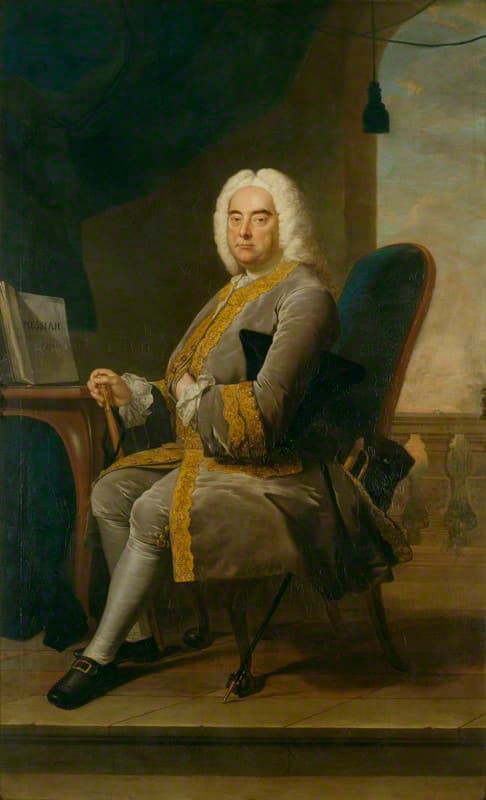
Portrait of George Frideric Handel by Thomas Hudson, 1756
In 1750, composer George Frideric Handel was traveling from his adopted home of London to his native Germany.
But on the way, in the Netherlands, his carriage was overturned somewhere between the Hague and Haarlem.
A London newspaper reported that “he was terribly hurt” and even suggested that his injuries were life-threatening.
We don’t know anything else about what happened, but Handel did go on to recover…at least somewhat.
In 1751, he was back in London premiering new work, but his health began deteriorating from that point forward, and he composed less and less. He died in 1759.
Händel: Organ Concerto Op 7, No 3, written in 1751, the year after his accident
Wolfgang Amadeus Mozart’s Carriage Accident (1770)
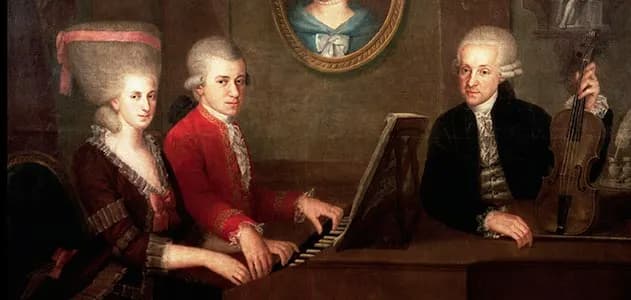
Mozart family portrait by Johann Nepomuk della Croce
In 1770, Mozart was a 14-year-old child prodigy touring through Italy with his father, Leopold.
Leopold wrote to his wife about a bad accident they survived:
“During the last stage to Rome, the postilion kept on lashing the horse, which was between the shafts and therefore supporting the sedia. Finally, the horse reared, stuck fast in the sand and dirt, which was more than half a foot deep, and fell heavily on one side, pulling down with him the front of the two-wheeled coach. I held back Wolfgang with one hand, so that he should not be hurled out; but the plunge forward pulled my right foot so violently to the center bar of the falling dashboard that half the shinbone of my right leg was gashed to the width of a finger.”
Somehow, Wolfgang emerged unhurt, but Leopold had to spend a couple of days in bed while he healed.
Learn more about the Mozarts’ terrifying carriage accident.
Ludwig van Beethoven’s Carriage Accident (1819)
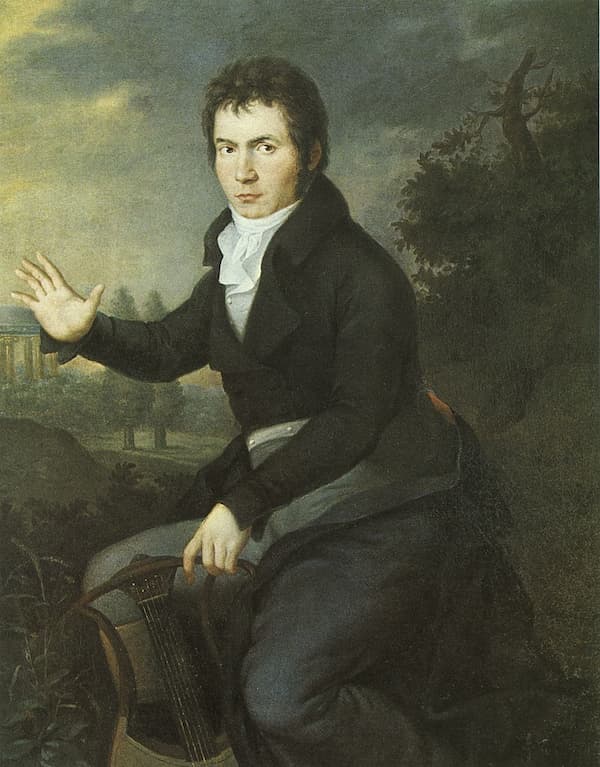
Joseph Willibrord Mähler: Ludwig van Beethoven, ca 1804–1805 (Vienna Museum)
The first reference to Beethoven’s carriage accident is this Frankfurter journal report from January 1819:
“The composer van Beethoven, because of his weak hearing, suffered the misfortune of being knocked down and injured.”
There is no indication where the story came from, but other newspapers soon picked up the story, too. A notice even appeared in a French journal insinuating that Beethoven was gravely injured.
Whatever happened, he continued composing. Between 1819 and 1823, he wrote his Diabelli Variations and his Missa Solemnis.
Beethoven’s Diabelli Variations
Felix Mendelssohn’s Carriage Accident (1829)
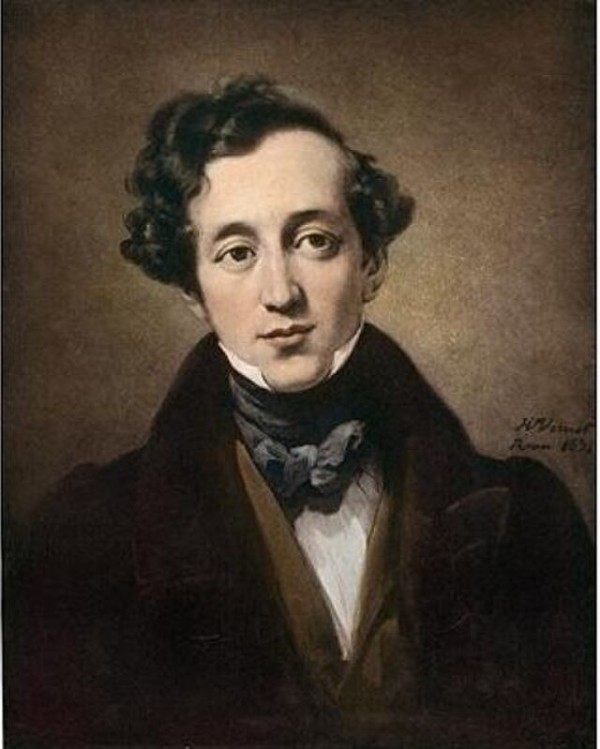
Horace Vernet: Felix Mendelssohn, 1831
In April 1829, Felix Mendelssohn left Germany for a tour of England, Scotland, and Wales. While there, he gave the British premiere of Beethoven’s Emperor piano concerto.
He was scheduled to head home to attend his beloved sister Fanny’s wedding, which was scheduled to take place on 3 October. He was eager to write an organ work for the occasion. (The end result ultimately became the first movement of his Sonata No. 3 for organ.)
However, in August, he got into a carriage accident, being “thrown out of a cabriolet and very severely wounded in the leg.”
It took him two months to recover, making attendance at Fanny’s wedding impossible.
Luckily, Fanny was a gifted composer in her own right and ended up writing the music for her wedding herself!
Mendelssohn’s Sonata No. 3 for Organ
Frédéric Chopin’s Carriage Accident (1848)
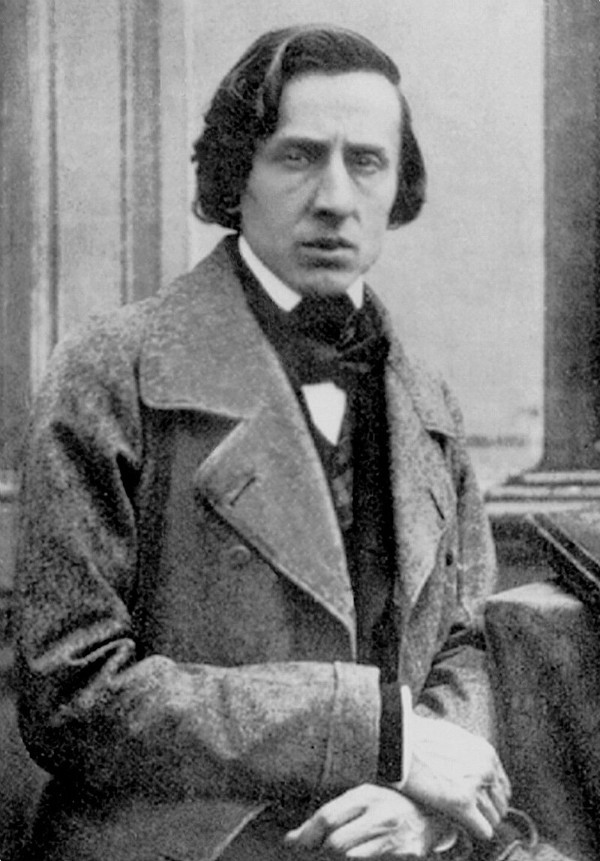
Frédéric Chopin
In 1848, Chopin was terminally ill with tuberculosis and was enduring a miserable tour through Scotland, giving concerts to make money to live.
During the tour, he was in a terrifying carriage accident.
He wrote to his friend Wojciech Grzymała:
“We were driving to see some neighbours on the coast. The carriage I was in was a coupé, with a very handsome pair of young thoroughbred English horses. One horse began to rear; he caught his foot and then started to bolt, taking the other horse with him. As they were tearing down a slope in the park, the reins snapped and the coachman was thrown from his seat (he received a very nasty bruising). The carriage was smashed to bits as it was flung against tree after tree: we should have gone over a precipice if the vehicle had not been stopped at length by a tree. One of the horses tore itself free and bolted madly, but the other fell with the carriage on top of it. The windows were smashed by branches.”
Chopin survived the accident but died of tuberculosis less than a year later.
César Franck’s Omnibus Accident (1890)
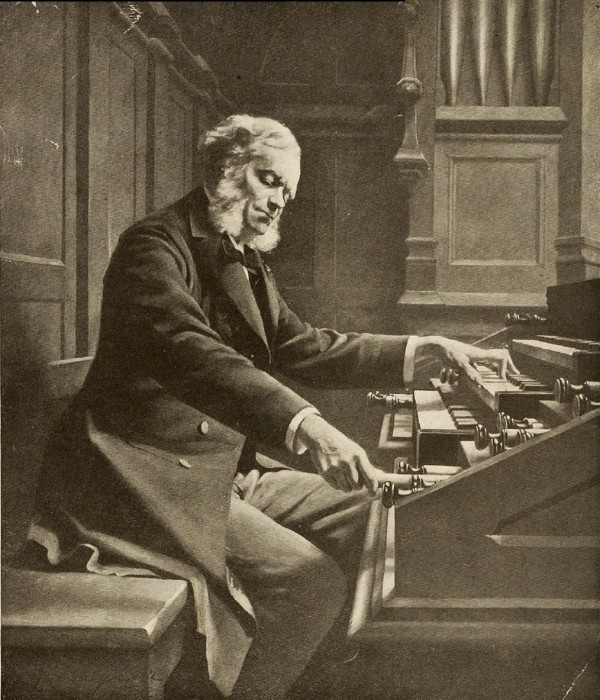
César Franck at the organ
In July 1890, a cab that composer César Franck was riding in was struck by a horse-drawn trolley.
Franck received a head injury and fainted. However, he soon came to and was able to walk. Unfortunately, doing so soon became painful.
He never fully recovered and died in November 1890.
The last work he finished was his Trois Chorals.
César Franck : 3° Choral – Olivier Latry, organ of Notre-Dame de Paris
Read more about César Franck’s tragic final illness and death.
Giacomo Puccini’s Car Accident (1903)
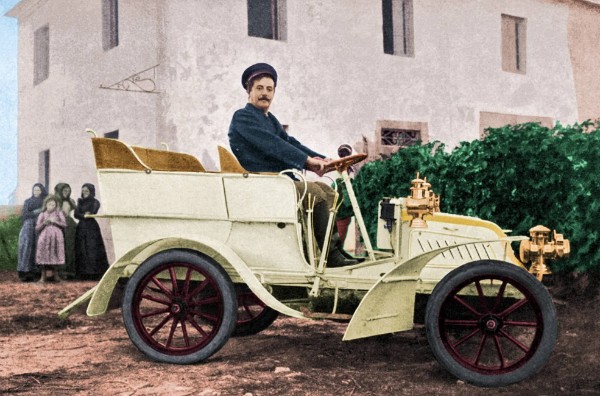
Giacomo Puccini
Giacomo Puccini loved cars…and he nearly died in a car accident!
In February 1903, he, his future wife Elvira, his son, and his chauffeur were traveling through Tuscany at night. The weather was cold and foggy, and the chauffeur lost control of the car.
The vehicle flipped over into a ditch. Puccini was pinned beneath it, while Elvira and his son were thrown out. The driver broke his thigh bone.
Fortunately, a doctor living nearby helped to save Puccini’s life.
Even though he survived, his recovery took an astonishing eight months, and Puccini became deeply depressed. But he managed to pull through, and in 1904, his opera Madama Butterfly premiered.
Learn more about Puccini’s car accident and how Puccini pulled through.
Madame Butterfly
Edward MacDowell’s Cab Accident (1904)
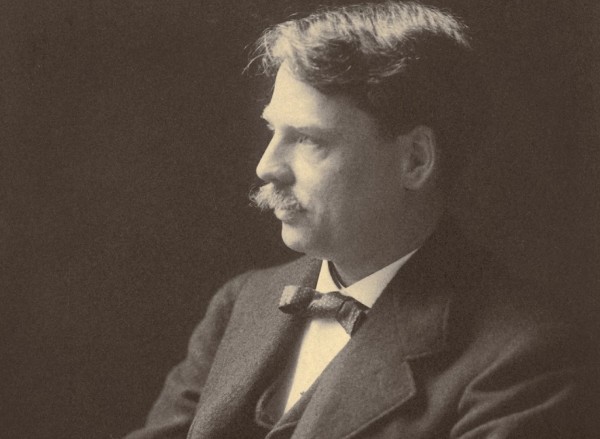
Edward MacDowell
In 1904, at the age of 44, composer Edward MacDowell suffered two major life setbacks: he was pushed out of his professorship at Columbia University, and his health began deteriorating rapidly.
Some believe he was suffering from syphilis; others have theorised he had bromide poisoning. (Bromides were a common treatment for insomnia, which MacDowell was also battling.)
Then, later in the year, he had an accident with a cab on Broadway in New York City.
Whether solely because of the pre-existing health issues or because they were exacerbated by the accident, MacDowell began developing dementia.
A friend wrote:
“His mind became as that of a little child. He sat quietly, day after day, in a chair by a window, smiling patiently from time to time at those about him, turning the pages of a book of fairy tales that seemed to give him a definite pleasure…”
He died in January 1908.
Maurice Ravel’s Taxi Accident (1932)
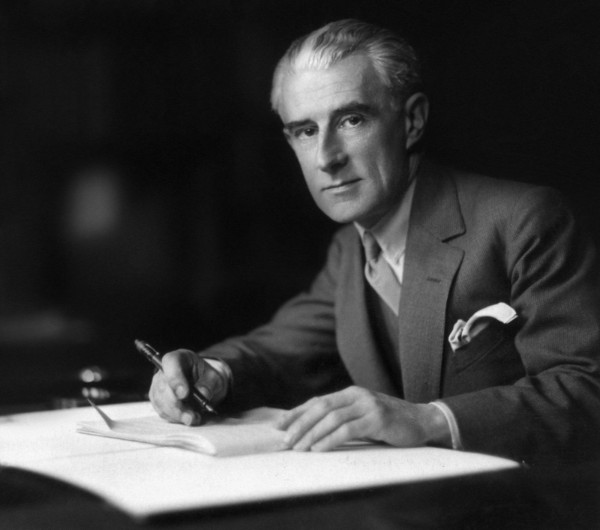
Maurice Ravel, c. 1928
In October 1932, Ravel was riding in a taxi that collided with another car. His head hit the window glass, and he sustained a number of facial cuts and lost several teeth. He may also have suffered from a concussion, whiplash injury, or other head injuries.
After the accident, his friends noticed a worrying decrease in his brain function. He began forgetting where he lived, and even what music he had written.
After the taxi accident, he composed very little. He died in 1937.
Learn more about Ravel’s tragic final illness and death…and his final unsuccessful brain surgery.
Stephen Hough’s Car Accident (2006)
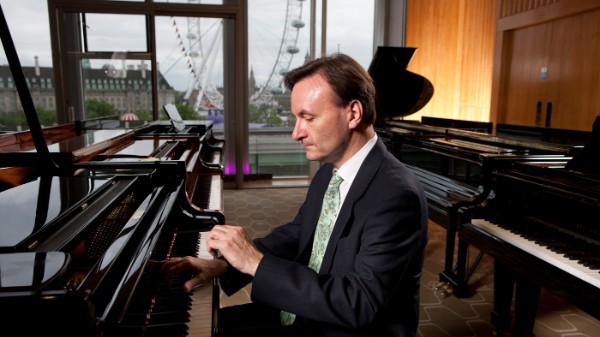
Sir Stephen Hough
Sir Stephen Hough is best known as a pianist, but he’s also a composer.
In 2006, he was in the middle of writing a mass when he was in a shocking car accident.
Hough later described it:
“My car somersaulted on the highway and landed up mangled and upside down on the hard shoulder. And as it was tumbling on the highway, I was thinking – because I had the sketches for this mass with me in the car – I thought, well, I’m never going to hear this mass. This is it. I’ve had a wonderful life, and thank you, God, for all the blessings and wonderful things that have happened, but this is my time. And then I landed on the hard shoulder and all this screeching of metal and sparks flying in the air and the car didn’t explode and I was still alive. And I was able to climb out of the car and get my sketches from it. And that’s why I called it Mass of Miracles.”
He wrote the final movement – the Agnus Dei – while in the hospital, waiting for the results of his brain scan. Lucky for audiences, he’s still around twenty years later!
For more of the best in classical music, sign up for our E-Newsletter