Oscar Wilde (1854-1900), the Irish wit whose velvet-clad rebellion upended Victorian propriety, lived as if life were a grand opera. Classical music, that lofty domain of soaring strings and thunderous brass, was both his muse and his target.
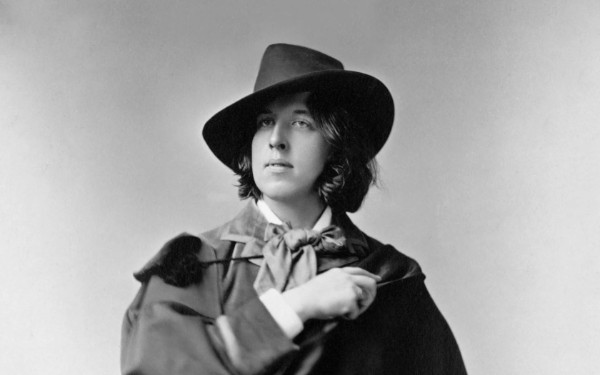
Oscar Wilde
Wilde was no composer, nor did he pretend to be, but his relationship with music was as theatrical as his persona. With a raised eyebrow and a quip poised like a conductor’s baton, he navigated the concert halls of late 19th-century London.
To celebrate his birthday on 16 October, let’s explore Wilde’s dance with classical music, as each note reveals a man who adored the power of art yet delighted in exposing its absurdities.
Richard Wagner: “Prelude” to Lohengrin
Artistry and Absurdity
In the 1880s and 1890s, London was abuzz with the music of Wagner, Tchaikovsky, and Brahms. Wilde, ever the social chameleon with his green carnation pinned defiantly to his lapel, was a regular at these venues. Yet his approach was less reverent than reconnaissance.
In The Critic as Artist, he declared, “Music is the art which is most nigh to tears and memory,” a line that balances sincerity with a sly wink. Was he genuinely moved by a Chopin nocturne, or was he mocking the handkerchief-waving aristocrats who wept on cue? Both, of course.
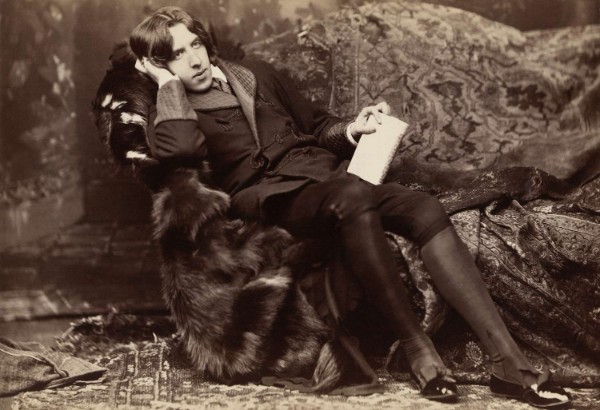
Oscar Wilde
For Wilde, music was a mirror, not just of emotion but of human pretence, essentially a canvas for his ironic artistry. Wilde’s encounters with music were often as performative as his public persona. He saw Lohengrin in New York and quipped, “the music was divine, but the audience applauded as if they’d just seen a circus act.”
Frédéric Chopin: Nocturne in E Flat Major, Op. 9, No. 2
Mocking the Cult
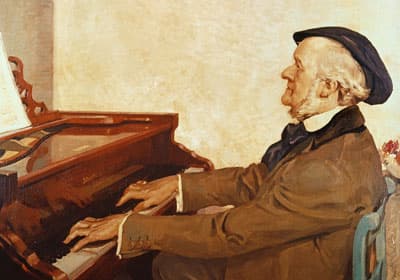
Richard Wagner
Wagner, the era’s operatic demigod, was a particular fascination. Wilde’s belief that art exists for its own sake aligned with Wagner’s totalising vision of music as drama. In his Picture of Dorian Gray, Dorian’s descent into decadence is scored by “the music of great passion.”
Yet Wilde couldn’t resist a jab. At a London dinner party, he reportedly bantered, “Wagner’s operas are loud enough to wake the dead, but not interesting enough to keep the living awake.” While Wilde was drawn to Wagnerian excess, he found its cultish adoration absurd.
For Wilde, Wagner’s bombast was a mirror to his own flamboyance, intensely admired, yet ripe for parody. Yet, the real target of Wilde’s wit was the Victorian obsession with classical music as a marker of refinement.
Pyotr Ilyich Tchaikovsky: The Nutcracker, “Waltz of the Flowers”
Unmasking the Farce
Concert halls were social battlegrounds, where attendance signalled status. Wilde, ever the outsider despite his socialite sheen, saw through this farce. Though Lord Goring never actually says it in An Ideal Husband, the often-misquoted quip “many lack the originality to lack originality” could easily be aimed at the society matrons who professed rapture at Beethoven’s Eroica.
One anecdote places Wilde at a Philharmonic concert in 1890, where he overheard a dowager whisper, “I adore Brahms—it’s so improving.” Wilde leaned in and murmured, “Madam, music improves nothing but one’s mood to endure it.”
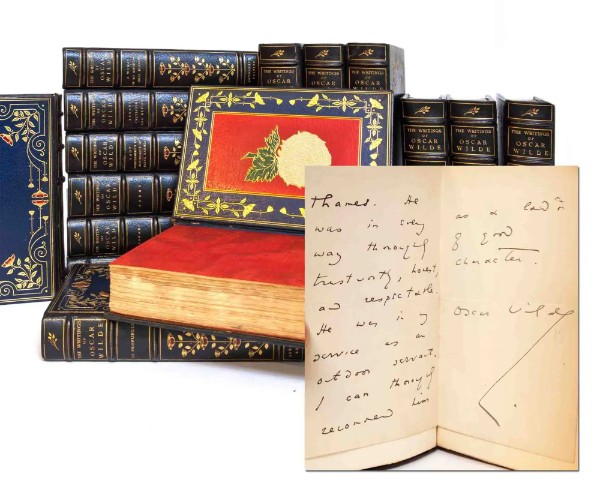
Oscar Wilde’s autograph edition
Yet Wilde was not immune to music’s spell. His poetry hums with a lyrical cadence that rivals the era’s composers. In The Sphinx, lines like “Your eyes are like fantastic moons that shiver in some stagnant lake” evoke the sensuous flow of a Liszt rhapsody or the shimmering textures of a Debussy prelude.
Johannes Brahms: Symphony No. 3 “Poco allegretto”
Salome as Operatic Music
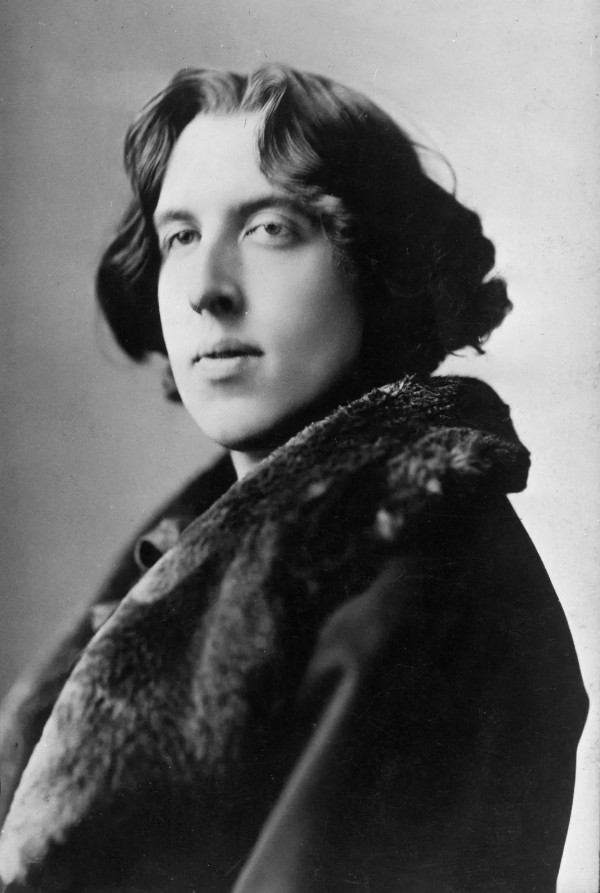
Oscar Wilde
Wilde’s prose, too, carries a musical pulse. In De Profundis, written from the depths of Reading Gaol, we find the lamentation, “I have lain in prison for nearly two years. Out of my nature has come wild despair.” It almost echoes the slow and aching stings of a Mahler adagio.
Wilde’s closest brush with classical music came through his play Salome, which inspired Richard Strauss’s 1905 opera. The play’s decadent prose, with its fevered repetitions, was a gift to Strauss, whose score drips with dissonant, glittering excess.
At a Paris rehearsal of the play in 1892, halted by censorship, Wilde reportedly told actress Sarah Bernhardt, “My words are music enough; the orchestra would only drown them.” Wilde did not live to see the Strauss opera premiered, but the chromatic chaos that horrified audiences might have cheered him up immeasurably.
Robert Schumann: Carnaval, Op. 9
The Paradox of Music
Wilde’s social world was steeped in music. He frequented the salons of Lady Brooke at Easton Lodge, where Chopin’s mazurkas and Schubert’s lieder set the stage for his verbal pyrotechnics.
At one such gathering in 1889, recounted by W.B. Yeats, Wilde interrupted a pianist’s earnest rendition of Schumann with, “My dear sir, you play as if you’re paid by the note.” The room erupted, but the pianist did not.
Classical music, with its blend of discipline and freedom, embodied a paradox for Wilde. For the dandy who turned life into art, music was not just heard but lived. It was a symphony of wit, played to an audience that rarely grasped the score.
For more of the best in classical music, sign up for our E-Newsletter