Niccolò Paganini, born on 27 October 1782 in Genoa, Italy, was the ultimate showman long before that term even existed. Reports said that during performances, his eyes would roll back in his head while he played.
His magnetism was so strong that women would faint and men would burst into tears. In a brilliant bit of self-promotion, he even circulated the rumour that he had sold his soul to the devil in exchange for his uncanny technical abilities.
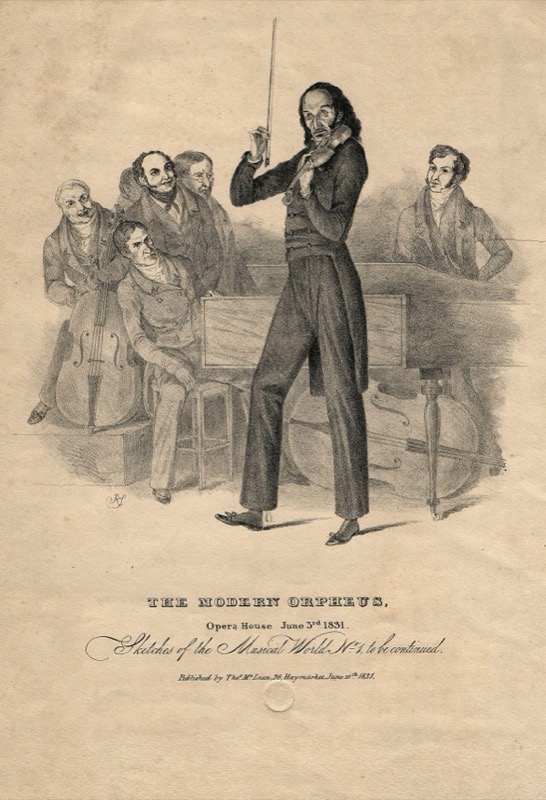
Niccolò Paganini by Richard James Lane
Paganini helped establish a new breed of performing musician, the touring virtuoso. And since he needed repertoire to take on the road, he composed several sets of variations on popular melodies.
To celebrate Paganini’s birthday, let’s listen to some of the pieces that left audiences spellbound and entranced by his seemingly otherworldly magic.
Niccolò Paganini: Variations on “O mamma, mamma cara,” Il Carnevale di Venezia
Little Tune and Big Ambitions
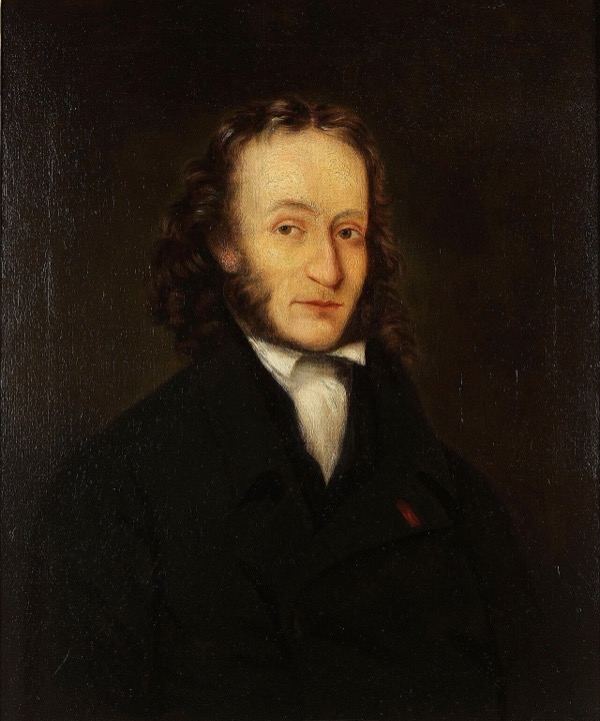
Niccolò Paganini
Despite its title, Il Carnevale di Venezia is generally identified with the Neapolitan popular song “Oh mother, dear mother.” When Paganini composed his set of variations around 1829, he wasn’t interested in geographical detail but in the carnival atmosphere.
Paganini’s variation sets tend to unfold in a basically stable form. First there is an introduction, either in the orchestra or the piano, followed by a soaring melody presented by the violin, often embellished in an operatic style.
We then listen to several variations, and that’s where the fun normally starts. The tune is embellished with rapid runs that are almost impossible to play. The left hand does plenty of plucking, and harmonics produce an almost whistle-like sound.
Amid all these fireworks, at least one variation tugs at the heartstrings, in which the instrument sings a sweet, lyrical melody that imitates the human voice. Paganini’s variation sets tend to finish with a grand finale, a concluding flourish designed to take your breath away.
Niccolò Paganini: Variations on “Le Streghe,” Il noce di Benevento
Double Stops and Double Trouble
For many performers and composers, specific turning points kick their careers into gear. For Niccolò Paganini, it might well have been his first appearance at the Teatro Carcano in Milan on 15 December 1813.
On that day, Paganini presented his “Le Streghe” (The Witch) variations, based on a theme from Salvatore Viganò’s ballet Il Noce di Benevento, with music by Franz Xaver Süssmayr. The work had been performed at La Scala the previous year, and other musicians had used the very popular theme before.
The “Witch” theme certainly spoke to Paganini’s taste for the grotesque and the humorous, and Paganini calls for the violin to be tuned a semitone higher. We find the usual wind-up, with the witches’ dance announced in the first measures. It’s a pretty neutral introduction so far, but then the witchery begins in earnest.
The first variation already features a series of double stops, deliberate chromaticism, and a limping rhythmic pace. The second variation showcases rapid alternations of high-register passages, left-hand pizzicato, and harmonics. A brief minor episode then leaps into a variation featuring double harmonics, and it ends with a staggering summary of all the difficulties found in the previous variations.
Niccolò Paganini: Introduction and Variations in E-Flat Major on Non più mesta from Rossini’s La Cenerentola, Op. 12, MS 22 (version for violin and orchestra) (Mario Hossen, violin; Vienna Classical Players; Martin Kerschbaum, cond.)
Cinderella Gets the Paganini Treatment
Gioachino Rossini was one of the most popular composers in the first quarter of the 19th century, and variations on his famous opera tunes were all the rage. It is therefore no surprise that Paganini stepped onto the stage at the Teatro dei Fiorentini, in Naples, on 31 August 1819 and presented a new work based on the beloved rondo from Rossini’s opera La Cenerentola.
The violin needs to be tuned a semitone higher again, and a few measures later a brief Larghetto cantabile is introduced. Accompanied by the orchestra in pizzicato and punctuated by a few loud chords, the light theme appears.
The first variation reaches the highest regions of the fingerboard, while the second sounds the theme in different octaves, interposed with harmonics and left-hand pizzicato. The minor variations include plenty of double stops, and the fourth variation brings back double harmonics.
As is customary in these pieces, the final variation is a compendium of all the difficulties encountered so far. Also, it includes a few short snippets of the theme played in octaves. Here as elsewhere, audiences erupted in applause, waving handkerchiefs and demanding encores, while musicians struggled to understand how he produced such impossible sounds.
Niccolò Paganini: Variations on “I Palpiti,” Tancredi
A Little Opera and a Lot of Fire
Nobody really knows when Paganini composed his set of variations on “I Palpiti,” as it first appeared in concert programmes only around June 1828. Some speculate it was composed years earlier, since this famous aria from Rossini’s Tancredi had already premiered in Venice in 1813.
With the violin once again tuned a semitone higher, the customary theme-and-variations layout features a number of variants. It begins with a four-measure introduction, followed by a melody in the violin, already embellished and quite operatic. We expect the famous theme next, but Paganini delays it by inserting a recitativo.
Finally, after this quasi-vocal cadenza, the theme arrives, followed by three variations.
The first, a fanciful, rhapsodic piece, consists of double-stop triplets and chromatically descending thirds on alternating strings that eventually reach the highest register.
The second variation is played almost entirely with double and single harmonics, with a violin technique reminiscent of the Finale of the First Concerto. The third and final variation begins with alternating double stops and left-hand pizzicato. It also includes a brief coda, and at the end, Rossini’s aria returns once more.
Niccolò Paganini: Variations on “Nel cor più non mi sento,” La Molinara
Paisiello Makeover
The Paganini variations on the aria “Nel cor più non mi sento” from Giovanni Battista Paisiello’s opera La Molinara exist in several versions. The original place and date of composition point to Naples in 1821, but a different version turns up in Germany a couple of years later.
Paganini himself produced yet another version for the unusual combination of two violins and accompanying cello. As we can tell, Paganini had a healthy interest in experimenting with the variation form, and the Paisiello aria was a good laboratory for experimentation.
After a short introduction, the violin sounds the theme, and a fleeting first variation is balanced by a second based mainly on double stops. Variation 3 is played entirely in harmonics, and Variation 4 offers a brief breather.
In Variation 5, we hear the dialogue between the fourth string and ponticello passages, and Variation 6 reaches for the highest registers in octaves. Double harmonics and nimble descending scales characterise the seventh variation, while the last one offers a summary of all the technical feats.
Prayer and Passion
Let’s conclude with one of Paganini’s most celebrated compositions, borrowing the famous aria “Dal tuo stellato soglio” from Rossini’s opera Mosè in Egitto. In the opera, this is the prayer of Moses and the Israelites at the banks of the Red Sea during the Exodus from Egypt.
After this musical prayer, with its melody of sustained lyricism and expressively seductive intensity, Paganini presents three variations that often use harmonics and produce unusual nasal sounds, achieved by following his instruction to play close to the bridge.
By now, if you are still reading and listening to this blog, you have already figured out that Paganini had found his recipe for success. Maybe he was himself a little bit surprised, but he was predictably proud of his achievement.
As he wrote to a friend, “If you have the opportunity to read some of the English newspapers, you will see the kind of unprecedented enthusiasm … that I have stirred among the frosty Britons… The entire theatre, from the stalls to the boxes and balconies, seemed to rage like a tempestuous sea, as much as for the clamour of the voices and the wild applause, as for the flurries of handkerchiefs and hats flying through the air.”
Niccolò Paganini: Variations on “Dal tuo stellato soglio,” Mosè in Egitto (Moses Fantasy)
Paganini Changed the Game
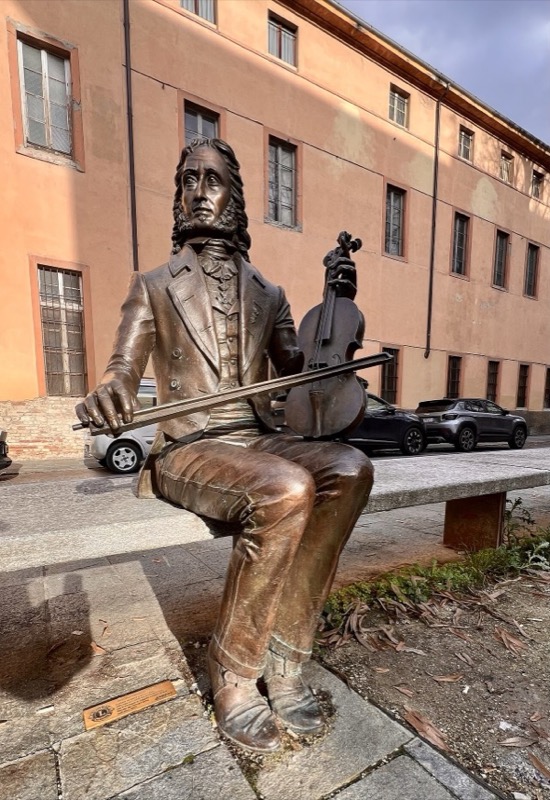
Niccolò Paganini sculpture
Paganini developed highly innovative and unique special effects for the violin. His exceptional skills and strong personal magnetism greatly contributed to the overall effect. In the grand scheme, it was probably most important that he drew other composers’ attention to the significance of virtuosity.
After Paganini, nothing would ever be the same, as virtuosity became an established element in art. I think that was certainly true of the 19th century, but his influence is timeless and has reemerged with a vengeance in the 21st century.
For more of the best in classical music, sign up for our E-Newsletter