A set of short anonymous poems in Boston’s Musical Herald did a poetical job of setting out the history in limericks, along with unique rhyming spellings.
We’ll start with Gluck:
An ancient musician named Gluck
The manner Italian forsuck
He fought with Piccinni
Gave way to Rossini
You’ll find all his views in a buck.
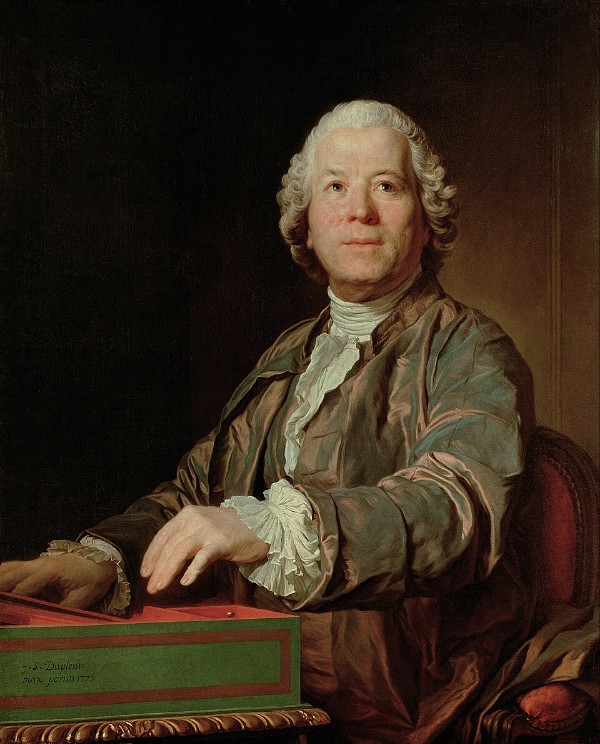
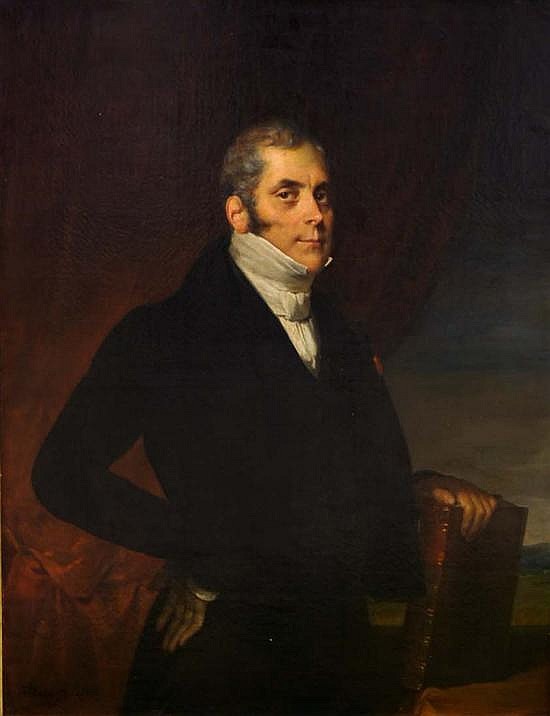
Joseph Siffred Duplessis: Christoph Willibald Gluck, 1775 (Kunsthistorisches Museum)
Christoph Willibald Gluck (1714–1787) was born in the Upper Palatinate (now part of Bavaria, Germany). He started his career at the Habsburg court in Vienna and changed opera forever. Up until this time, Baroque operas were long, elaborate, and filled with long, repetitive arias. In his new style operas, including Orfeo ed Euridice and Alceste, he brought in more drama and cut the length of the da capo arias. His later operas were half the length of the Baroque operas of his time.
He moved to Paris in 1773 and blended the lyricism of Italian opera with the chorus-heavy French opera in the 8 operas he wrote for Paris. Iphigénie en Tauride (1779) was considered to be his finest opera.
Christoph Willibald Gluck: Iphigenia auf Tauris – Act I Scene 1: Aria: O du, die meinem Tod bedarf (Iphigenie) (Hilde Zadek, soprano; Cologne Radio Symphony Orchestra; Joseph Keilberth, cond.)
Gluck thought that both opera buffa and opera seria were outdated and lacked naturalness. Singers would add so much decoration that the composer’s original work was lost in all the filigree. Gluck wanted to return opera to its roots in human drama and passion, with both words and music having equal importance. For the traditionalists, the works of Metastasio were a font of repetitive overstatement. For Gluck, he found the librettist Ranieri de’ Calzabigi and the choreographer Gasparo Angiolini as his partners. Gluck aimed at a kind of beautiful simplicity where the words and music were more important than the singer. He also changed the nature of recitative from being dry and unaccompanied to having orchestral underscoring with dramatic possibilities.
His opponent in Paris was the Italian composer Niccolò Piccinni. He’d been brought to Paris to demonstrate the superiority of Neapolitan opera as a counter to Gluck’s ideas. Paris instantly was caught up in an argument between the ‘Gluckists’ and the ‘Piccinnists’. In his first challenge to Gluck, Piccinni started to set the opera Roland; Gluck instantly destroyed all his manuscripts for the opera. Gluck’s immediate heir was his pupil Antonio Salieri, and the composers Antonio Sacchini, Luigi Cherubini, Étienne Méhul, and Gaspare Spontini, all of whom dominated the French opera scene.
Next, our anonymous limerickist took up Haydn:
Another composer, named Haydn
The field of Sonata would waydn
He wrote the Creation
Which made a sensation
And this was the work which he dayd’n
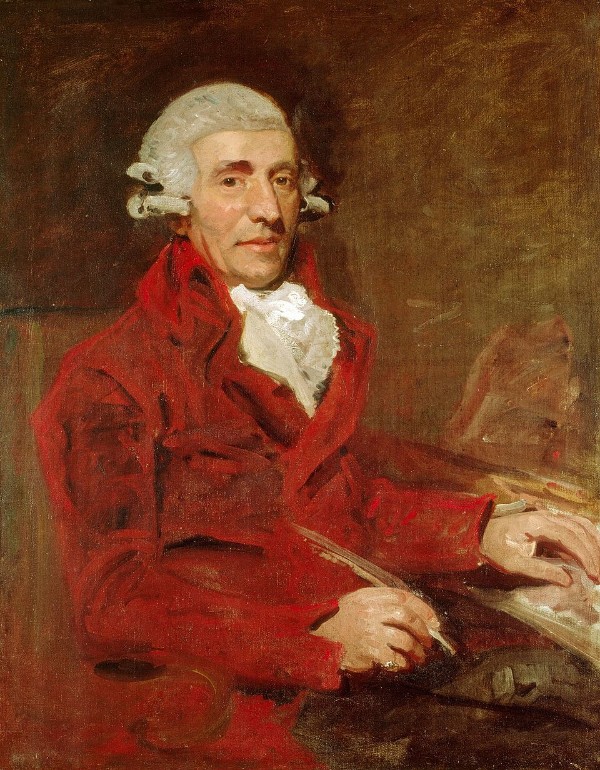
John Hoppner: Haydn, 1791 (Royal Collection)
Franz Joseph Haydn (1732–1809) served the majority of his career in the service of the Esterházy family, and they kept him on the payroll until the end of his days, although others took over his roles.
He started writing The Creation in 1797 and 1798, at a point in time when he was no longer writing to order for his patron and could now write for his own interests. After his visits to London in the early 1790s, where he heard oratorios by Handel, he started writing his own oratorios, completing three: Il ritorno di Tobia (1775), The Creation (1798), and The Seasons (1801).
The Creation is based around the creation of the world, using the Genesis as the basis. The original libretto used by Haydn, entitled The Creation of the World, came from an unknown hand, but was given to Haydn by the impresario Johann Peter Salomon. When he returned to Vienna, Haydn gave it to the Baron von Swieten, who had written earlier librettos for him. Swieten translated the English original into German and added quotations from the Bible. All of this was to enable Haydn to work with the text, since his English was very poor. The scholar Nicholas Temperley found that ‘the German text corresponds to no known German Bible translation. Instead, it is so constructed that the word order, syllabification, and stress patterns are as close as possible to English. Haydn and Swieten must have realised that English audiences would not easily accept changes in the hallowed text of their Bible…’
Franz Joseph Haydn: Die Schöpfung (The Creation), Hob. XXI:2 – Part I: Introduction: Die Vorstellung des Chaos (Raphael, Chorus, Uriel) (Topi Lehtipuu, tenor; David Wilson-Johnson, baritone; Salzburg Bach Choir; Salzburg Mozarteum Orchestra; Ivor Bolton, cond.)
The oratorio is famed for its opening sinfonia, which depicts Chaos. To help create the feeling, Haydn holds back the ends of phrases from completion, leaving the listener unsettled and ungrounded in a settled harmony.
On its premiere in 1799, one writer described the work as ‘the masterpiece of the new age’.
In March 1808, a performance of The Creation was organised in Haydn’s honour. He was very frail at the time and had to be carried into the theatre, where he was greeted by Beethoven, Salieri (who was conducting), and other musicians and nobles of his day. Unfortunately, Haydn was exhausted and had to leave at intermission. He died 14 months later. In his last month of life, the French bombarded Vienna, and this caused him to suffer on his sickbed, particularly when his neighbourhood came under attack. The city fell on 13 May 1809. On 17 May, a French cavalry officer named Sulémy came to pay his respects and sang, skillfully, an aria from The Creation. Haydn died on 31 May 1809.
For more of the best in classical music, sign up for our E-Newsletter