Italian composer Maurizio Guernieri (b. 1962) wanted to explore the world of wind instruments, which he felt, as a string musician, was an unfamiliar corner of the musical world. His 2019 work Musicografie (Images in Music) starts each movement with a quotation that the movement will explore. The texts were created by the composer and pose questions or situations that can be pondered musically.
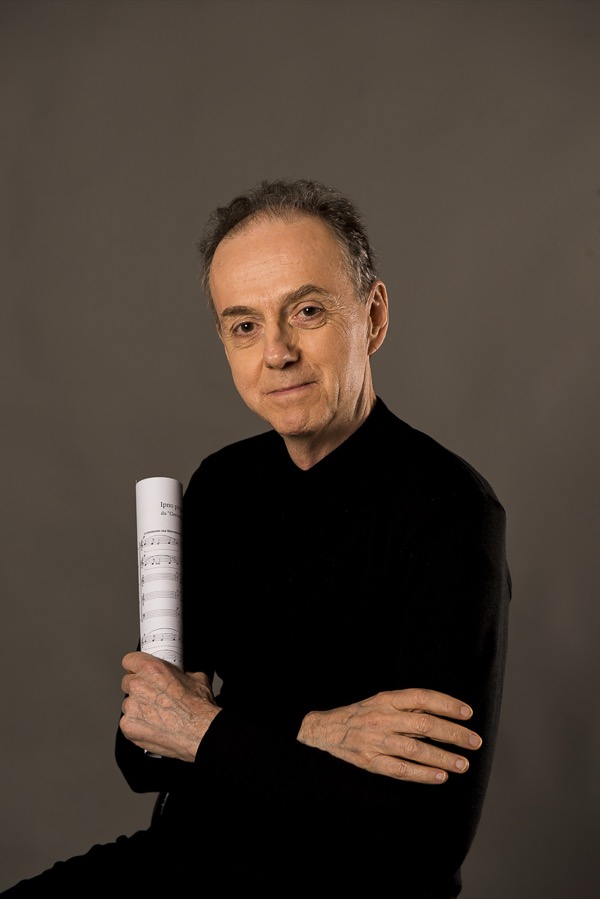
Maurizio Guernieri
In the Praeludium, the story comes from an Aesop’s fable in which the sun and the wind compete to see which is stronger, choosing a traveller on the road to show their power. The wind blows and makes the poor traveller clutch his coat all the closer to keep warm; the sun shines and makes him take his coat off to luxuriate in the heat. Despite his bluster, the wind is defeated by the sun….
| Praeludium | |
|---|---|
| Il vento, con il suo alito possente, voleva dimostrare di essere il più forte… | The wind, with its powerful breath, wanted to prove that it was the strongest… |
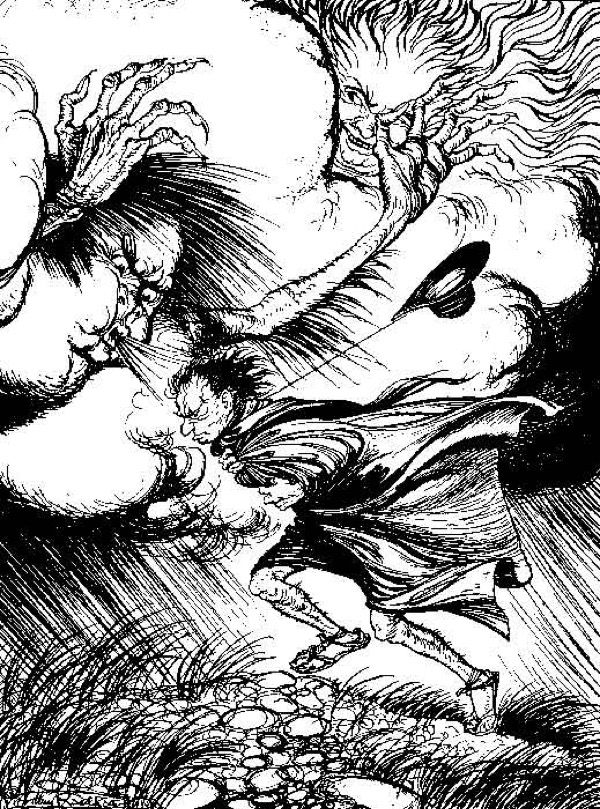
Arthur Rackham: The North Wind and the Sun
Each instrument seems to push its particular sound. The traveller is alone, and around him whirls a multiplex of sound and silences.
Maurizio Guernieri: Musicografie: Praeludium (WKO – Camerata degli Ammutinati)
The student asks his teacher a question, and the answer is larger than either the student or the question. Even in the midst of a crowd, we are always alone.
| Solitude | |
|---|---|
| «Ma gli uomini dove si trovano?» chiese curioso l’allievo. «Io non vedo nessuno. Qui nel deserto è pieno di solitudine…» «Siamo sempre soli. Anche in mezzo agli uomini» rispose il Maestro. | “But where are the men?” asked the student curiously. “I don’t see anyone. Here in the desert it’s full of solitude…” “We are always alone. Even among men,” replied the Master. |
Each instrument plays alone, with little reference to the other ensemble members. The piano thunders in its low register, the flute quivers, and the strings (viola and violoncello) play harmonics and add their own quiver to the flute sound.
Maurizio Guernieri: Musicografie: Solitude (WKO – Camerata degli Ammutinati)
A mix of weather and music! Notes fall like rain, forming drops and then rivers until, at the end, even pianos fall from the heights.
| Ostinati | |
|---|---|
| Le nuvole si aprono e delicatamente cadono gocce di note. Si forma un crescendo e cadono fiumi di intere scale di note. Poi tutta la musica precipita e piovono pianoforti da altezze incommensurabili… | The clouds part, and delicate drops of notes fall. A crescendo forms, and rivers of entire scales of notes fall. Then all the music falls, and pianos rain down from immeasurable heights… |
Maurizio Guernieri: Musicografie: Ostinati (WKO – Camerata degli Ammutinati)
In Pavane, we have our first steps of the dance of life, coming from the sea. In the end, the sea will engulf the world, and we will all dance together.
| Pavane | |
|---|---|
| Il mare è l’immensa culla della vita di tutta la natura: si può dire che da lui ogni cosa abbia mosso i primi passi e forse, probabilmente, verso di lui ogni cosa si incamminerà incontro alla fine di tutto. | The sea is the immense cradle of life for all of nature: it can be said that everything took its first steps from it, and perhaps, probably, everything will move towards it towards the end of everything. |
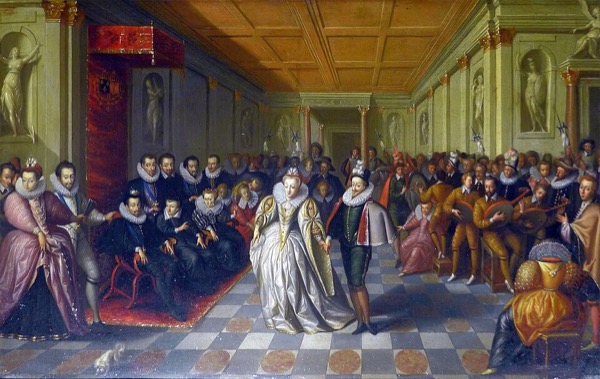
A pavane at the court of Henry III of France, ca 1581 (Louvre Museum)
In European music, the Pavane was a slow processional dance, designed to show off the magnificent clothes worn at court.
Maurizio Guernieri: Musicografie: Pavane (WKO – Camerata degli Ammutinati)
Under the title of Caccia (Hunt), Nature looks at humans and finds them…wanting. What would we do if Nature gave up on us?
| Caccia | |
|---|---|
| La senti la Foresta? É strana: silenziosa e viva allo stesso tempo. Consapevole e attenta a ciò che le succede intorno. Direi quasi che capisce molto di più di quanto capiscano gli uomini. E la Foresta li osserva, li scruta, li giudica e sentenzia: «Adesso basta! Se lo procurino loro, l’ossigeno». | Can you hear the Forest? It’s strange: silent and alive at the same time. Aware and attentive to what’s happening around it. I’d almost say it understands much more than humans do. And the Forest observes them, scrutinises them, judges them, and pronounces: “Enough! Let them get their own oxygen.” |
In a fall of notes, the Forest world comes alive. Complex questions are asked and thought about. The piano speaks for the ground, and the other instruments inhabit the upper branches and speak for those who live there.
Maurizio Guernieri: Musicografie: Caccia (WKO – Camerata degli Ammutinati)
In the final movement, we return to the greatest of human creations: the city. Gathered together in towers, the people in the city seem to reach more and more desirously toward the sky, but what is there to reach?
| Postludium | |
|---|---|
| La città verticale corre verso il cielo. «Tutto si muove, tutto corre, tutto volge rapido e distratto. Verso dove?» | The vertical city races toward the sky. “Everything moves, everything rushes, everything turns quickly and distractedly. Towards where?” |
Quick and distracted, the ensemble seems to pursue many different paths towards where?
Maurizio Guernieri: Musicografie: Postludium (WKO – Camerata degli Ammutinati)
It’s an interesting idea to pose questions for music to answer. More than just a single reflection on the movement titles, the musical content poses questions for us as well.
In the Praeludium, it isn’t strength that wins the competition, it’s a quiet inner glow.
The Solitude of the individual takes a long time to be understood. At first, the student sees everyone as more alike than different. It’s his teacher who tells him to look beneath the surface and to recognise that the differences between people make each of them alone.
Ostinati, in the plural, makes us rethink the musical idea of an ostinato. Traditionally, it’s a recurring rhythm below the melody, but what if every voice contributes to that idea?
In the Pavane of the sea, the first steps are just as tentative as the final steps. Change doesn’t bring improvement, and slow isn’t always better.
Caccia has an intriguing title: who is involved in the hunt? The Forest can’t move to capture anything, and humans are infamous for pursuing their targets too far. Does the Forest have to help? Not necessarily.
The Postludium questions man’s achievement. What’s the point of creating more and more, higher and higher, if we don’t know what we’re seeking?
Musicografie…it’s more than images of music, it’s the thoughts of music.
For more of the best in classical music, sign up for our E-Newsletter