Fanny Mendelssohn-Hensel (1805–1847), elder sister to the celebrated Felix Mendelssohn, was a prodigious composer. Did you know that she composed over 460 works, including songs, chamber music, choral pieces, and solo piano compositions that rival her brother’s works in sophistication and emotional depth?
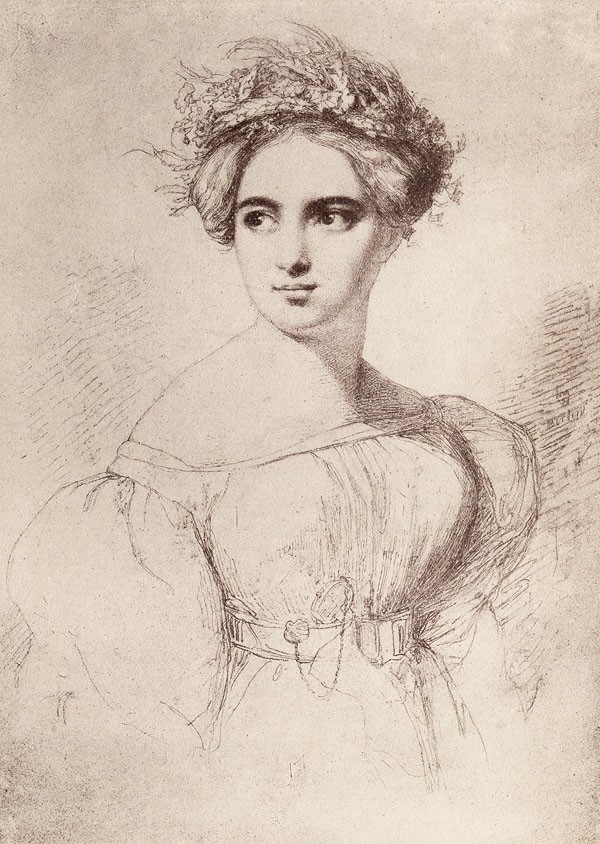
Fanny Mendelssohn-Hensel
Fanny Mendelssohn-Hensel: String Quartet in E-Flat Major (Quatuor Ébène, Ensemble)
Yet for much of her life, societal norms confined her creativity to the domestic sphere. Her father, Abraham Mendelssohn, famously wrote to her in 1820, “Music will perhaps become Felix’s profession, while for you it can and must be only an ornament.”
This pronouncement, rooted in the gendered expectations of bourgeois Berlin, ensured that Fanny’s works remained largely unpublished and unperformed during her lifetime. To celebrate her birthday on 14 November 1805, let’s explore some of her most ambitious creations, her piano sonatas.
Genius in the Shadows
Fanny’s compositional life unfolded against the backdrop of a musically rich but socially restrictive environment. Born into a cultured Jewish family that converted to Lutheranism, she received the same rigorous musical education as Felix, including lessons in theory, counterpoint, and piano from luminists such as Ludwig Berger and Marie Bigot.
By age thirteen, she could play all twenty-four preludes from Bach’s Well-Tempered Clavier from memory, and her early works included “Songs without Words” that paralleled Felix’s famous sets.
These poetic miniatures demonstrate a gift for melodic invention and harmonic subtlety. Yet publication was another matter. Felix, ever protective, published six of her songs under his own name in his Opp. 8 and 9, a gesture that both honoured and obscured her identity.
Fanny Mendelssohn-Hensel: Sonatensatz in E Major (Gaia Sokoli, piano)
Reclaimed in 2010
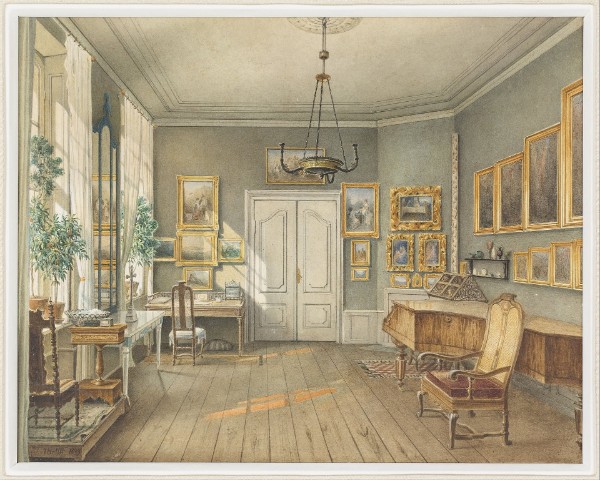
The music room of Fanny Mendelssohn-Hensel
Fanny’s marriage in 1829 to the painter Wilhelm Hensel provided some creative freedom. Their Berlin home became the venue for the renowned Sonntagsmusiken, private concerts where her works were actually performed.
Only three complete piano sonatas by Fanny survive in definitive form. The Sonata in C minor (1824) and the Sonata in G minor (1843). A third, the “Easter Sonata” (1828), was rediscovered in 1970 and authenticated only in 2010. Its manuscript bearing the cryptic inscription “F. Mendelssohn Bartholdy,” a pseudonym Fanny occasionally used to circumvent gender bias.
In addition, we find a “Sonatensatz,” a sonata movement in E Major (1822), composed when Fanny was only sixteen. It has been suggested that Fanny did not complete this Sonata because she was simultaneously working on the Piano Quartet in A-flat Major.
Fanny Mendelssohn-Hensel: Piano Sonata in C Minor – I. Allegro moderato e con espressione (Gaia Sokoli, piano)
Teen Thunder to Mature Magic
These works span nearly two decades of her creative life, bookending her development from a precocious teenager to a mature artist in her late thirties.
Each composition reflects the influence of Classical models, primarily Beethoven, Clementi, and Weber, while infusing them with Romantic expressivity. They also contain programmatic elements and “a distinctly feminine sensibility that scholars have begun to unpack.”
The Sonata in C minor (1824), composed when Fanny was nineteen, is a youthful tour de force that betrays no hint of compositional inexperience. Cast in three movements, it opens with a tempestuous “Allegro moderato” whose driving rhythms and chromatic harmonies recall Beethoven’s Pathétique Sonata.
Fanny Mendelssohn-Hensel: Piano Sonata in C Minor – II. Andante con moto (Gaia Sokoli, piano)
Sonata in C minor (1824)
The exposition’s first theme, a descending arpeggiated figure in the minor mode, surges forward with restless energy, while the second theme offers a brief lyric respite in E-flat major. Fanny’s development section is particularly daring as she fragments the main theme and then builds to a climactic retransition marked by thunderous octaves.
The “Andante” second movement, in A-flat major, is a songful aria with a central episode in the parallel minor that darkens the mood unexpectedly.
The Finale, “Presto”, returns to C minor and drives toward a coda of blazing virtuosity. Though unpublished in her lifetime, the sonata circulated in manuscript among family and friends, earning praise from figures like Clara Schumann, who reportedly admired its “masculine strength.” I am not sure this was actually meant as a compliment.
Fanny Mendelssohn-Hensel: Piano Sonata in C Minor – III. Finale: Presto (Gaia Sokoli, piano)
Sonata in G minor (1843)
Nearly twenty years later, the Sonata in G minor (1843) reveals a composer at the height of her powers. Written during a period of renewed creative confidence, this work now comprises four movements.
The opening “Allegro molto” establishes a brooding atmosphere with a descending scalar theme in G minor, its rhythmic vitality propelled by syncopations and cross-rhythms. Fanny’s harmonic language here is bolder. She employs Neapolitan relationships and enharmonic modulations with a freedom that anticipates Brahms.
Fanny Mendelssohn-Hensel: Piano Sonata in G Minor – I. Allegro molto agitato (Gaia Sokoli, piano)
This is followed by “Scherzo”, marked presto, that dances with Mendelssohnian lightness, its trio section featuring delicate staccato passages that showcase Fanny’s pianistic finesse.
The slow movement, “Adagio”, is a lyrical intermezzo whose melody unfolds over a murmuring accompaniment, evoking the intimate Lieder for which she was best known.
Fanny Mendelssohn-Hensel: Piano Sonata in G Minor – II. Scherzo (Gaia Sokoli, piano)
The Finale, “Allegro moderato,” integrates elements of sonata and rondo form, culminating in a prestissimo coda that races to a triumphant G major conclusion.
Critics have noted the sonata’s structural economy, as each movement feels “inevitable and contains no superfluous gestures.” Scholars consider these elements hallmarks of Fanny’s mature style.
Fanny Mendelssohn-Hensel: Piano Sonata in G Minor – III. Adagio (Gaia Sokoli, piano)
Fanny Mendelssohn-Hensel: Piano Sonata in G Minor – IV. Finale: Presto – Allegro moderato e con espressione (Gaia Sokoli, piano)
Easter Sonata (1828)
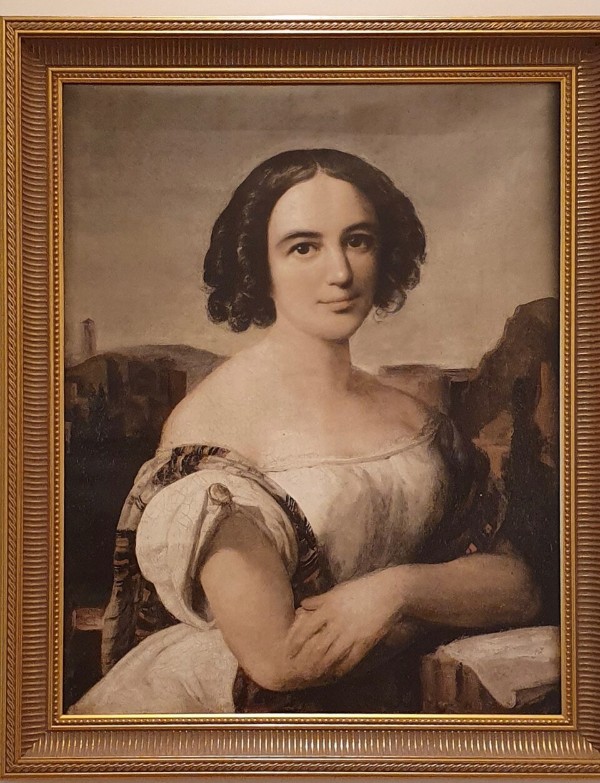
Fanny Mendelssohn-Hensel
The Easter Sonata (1828), perhaps the most intriguing of the three, was long misattributed to Felix until musicologist Angela Mace Christian’s groundbreaking research. Composed when Fanny was twenty-three, it is a single-movement work in four interconnected sections, a form that blends sonata allegory with programmatic intent.
The manuscript bears the date April 7, 1828; thus, the first movement was completed on Easter Sunday, and Felix actually performed it in Liverpool. The music traces a narrative arc from darkness to resurrection.
The opening “Allegro assai” in A Major surges with dramatic octave leaps and chromatic ascents, suggesting struggle or crucifixion. A central “Largo” in F major offers consolation, its chorale-like texture quoting the Lutheran hymn “Christ ist erstanden.”
Fanny Mendelssohn-Hensel: Piano Sonata in A Major, “Ostersonate” – I. Allegro assai moderato (Gaia Sokoli, piano)
The scherzo-like third section bubbles with Mendelssohnian fairy-light, while the finale erupts in A major, its pealing chords evoking Easter bells. The sonata’s rediscovery has sparked debate. Some scholars hear echoes of Beethoven’s late sonatas; others detect a uniquely personal voice.
Stylistically, Fanny’s sonatas occupy a fascinating middle ground between Classicism and Romanticism. Like Beethoven, she privileges motivic development and cyclic integration.
Yet her harmonic palette, rich in appoggiaturas, suspensions, and modal mixture, anticipates Schumann and Chopin.
Fanny Mendelssohn-Hensel: Piano Sonata in A Major, “Ostersonate” – II. Largo e molto espressivo (Gaia Sokoli, piano)
Cantabile Confessions
Her textures are often pianistically idiomatic, favouring cantabile melodies in the middle register supported by Alberti basses or arpeggiated figuration. Unlike Felix, whose music often radiates optimism, Fanny’s sonatas plumb deeper emotional depths. Minor keys predominate, and even major-mode passages carry a bittersweet undertone.
This expressive intensity may reflect her circumscribed life, and disclose music as both refuge and rebellion. Scholars write, “Gender profoundly shaped Fanny’s compositional voice.”
Denied the public platform afforded to male composers, she cultivated an intimate, confessional style that resonates with the Hausmusik tradition. Her sonatas, though virtuosic, were conceived for the salon rather than the concert hall, prioritising expressive nuance over empty display.
Fanny Mendelssohn-Hensel: Piano Sonata in A Major, “Ostersonate” – III. Scherzo: Allegretto (Gaia Sokoli, piano)
Subverting Silence
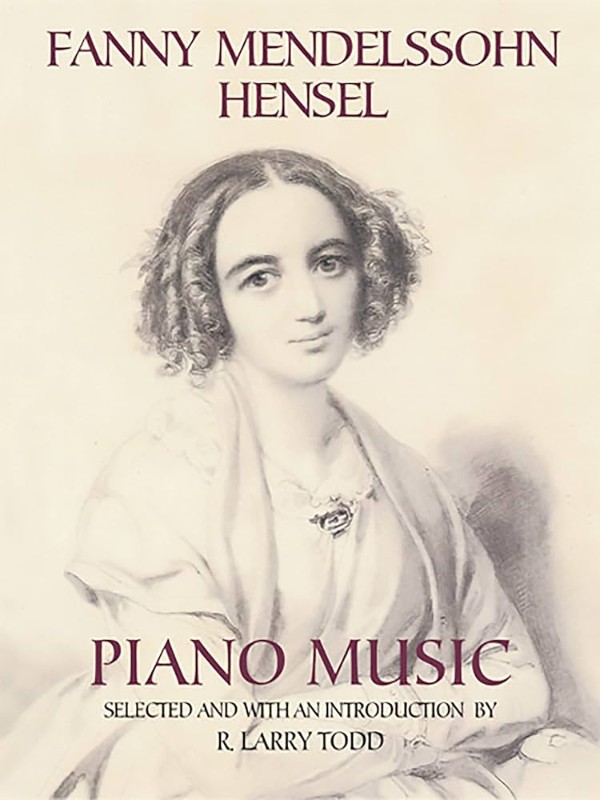
Fanny Mendelssohn-Hensel: Piano Music
Feminist musicologists such as Marian Wilson Kimber argue that Fanny’s works “subvert patriarchal norms by emphasising collaboration and community.” Her programmatic tendencies, evident in the “Easter Sonata,” align with the Romantic fascination with extramusical narrative, yet her narratives remain personal rather than epic.
Fanny Mendelssohn’s piano sonatas are more than historical curiosities. They are vital links in the chain of Romantic piano literature. They demonstrate that the sonata form, far from being a male preserve, could accommodate a woman’s voice.
Fanny Mendelssohn-Hensel: Piano Sonata in A Major, “Ostersonate” – IV. Allegro con strepito (Gaia Sokoli, piano)
In an era when female composers were expected to write trifles, Fanny crafted works of symphonic scope and Beethovenian ambition. Her sonatas challenge us to reconsider the canon, to listen beyond the familiar names and hear the silenced voices that shaped musical history.
Fanny Mendelssohn’s piano sonatas, like hidden gems finally brought to light, illuminate the richness of a compositional legacy that refuses to remain in the shadows.
For more of the best in classical music, sign up for our E-Newsletter