Édouard Lalo’s (1823-1892) fame in France rested almost entirely on his opera Le roi d’Ys, while the rest of Europe couldn’t get enough of his Symphonie espagnole. And let’s not forget that his Cello Concerto has retained a secure place in the repertoire.
Yet, his inclination led him, somewhat unfashionably, towards chamber music. By 1853, he had composed two piano trios, and he would add one more in 1880. Overshadowed by opera and orchestral music, this particular genre was almost entirely neglected in France at the time.
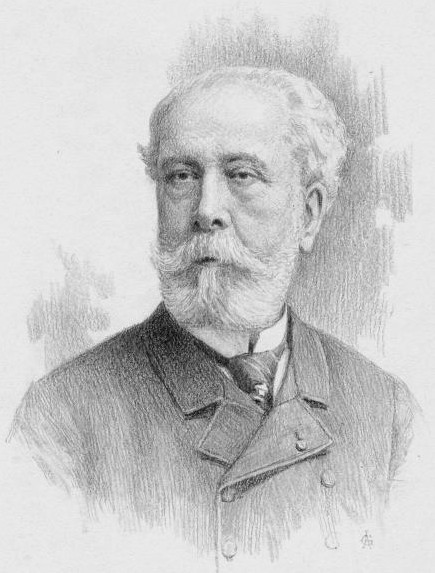
Édouard Lalo
Lalo died in Paris on 22 April 1892, and to mark the anniversary of his death, let’s explore the often-overlooked piano trios, which together trace a compelling narrative of artistic development.
Édouard Lalo: Piano Trio No. 1 in C minor, Op. 7
Between French Tradition and German Influence
The revival of French chamber music owes something to Lalo, who was a founding member of the Armingaud Quartet, in which he played the viola and later the second violin.
Lalo hailed from Lille, and he had moved to Paris to make his living as a violinist and teacher. He apparently submitted an overture to Hector Berlioz in 1848 and met the violinist Jules Armingaud. They played together in an informal setting before forming a definitive group in 1856.
Composers of French instrumental music laboured under the shadow of opera, and thus looked to German modes for guidance. And Lalo was no exception, as he later suggested that Germany might have been his true musical fatherland.
In fact, like many progressive composers at the time, Lalo was accused of imitating Richard Wagner. Lalo did admire Wagner, but their musical styles are decidedly different. Lalo once said, “It is hard enough doing my own kind of music and making sure that it’s good enough. If I started to do someone else’s, I am sure it would be appalling.”
Foundations and Influences
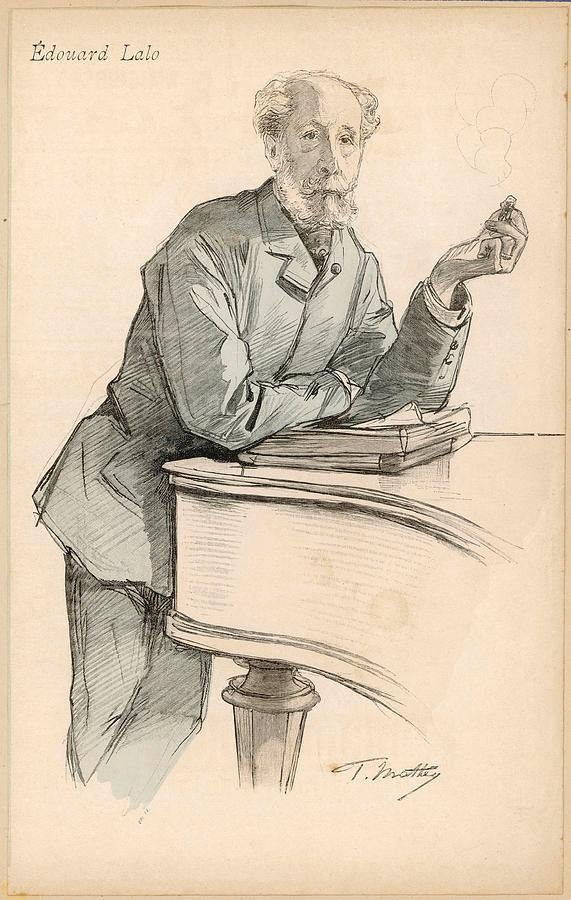
Édouard Lalo
Lalo dedicated his Piano Trio No. 1 to the singer Edmond Membrée. It probably dates from 1850, but there are no details of early performances. However, the influences of Felix Mendelssohn and Robert Schumann are strongly evident in its classical four-movement form and emphasis on motivic development.
Well-defined harmonies and smooth melodic lines dominate the opening movement. Both main themes are first heard in the cello, and Lalo adds a tightly argued development section. Energetic and rhythmically incisive, we sense restlessness throughout.
The slow movement opens like a “Song without Words” by Mendelssohn, with the violin and cello in dialogue over a supportive piano texture. An agile scherzo prepares the way for a finale combining counterpoint with forward drive.
This work of apprenticeship reveals the foundations upon which Lalo would later build. While the language is indebted to established models, Lalo offers a clear formal design and sensitivity to instrumental colour.
Édouard Lalo: Piano Trio No. 2 in B Minor (Leonore Piano Trio, Ensemble)
Towards a Personal Voice
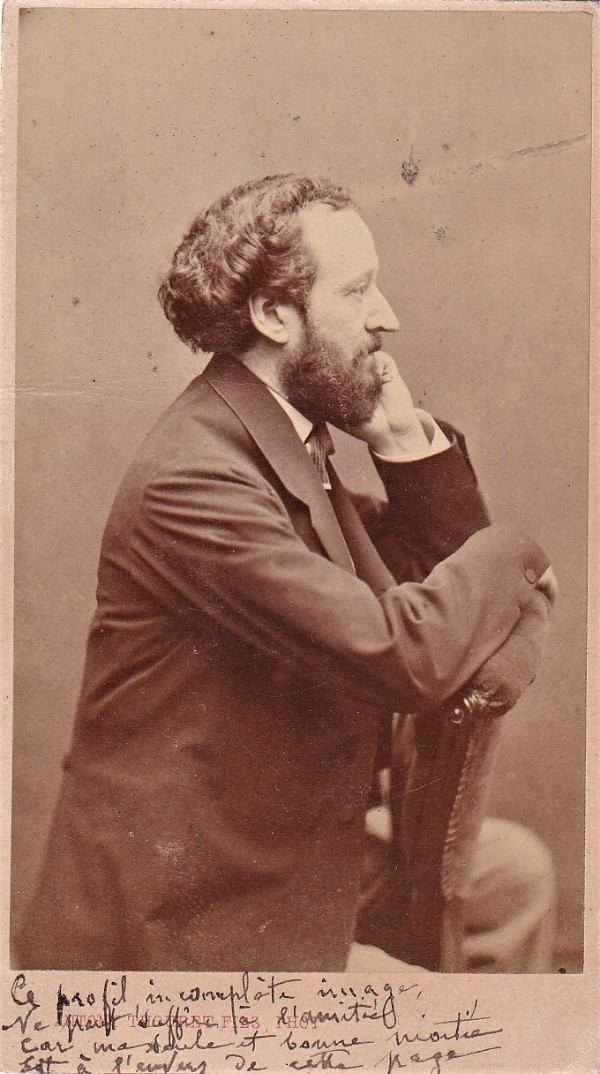
Jules Armingaud
Lalo’s Piano Trio No. 2 was published in October 1852, and it carries the dedication “à son ami J. Armingaud.” Scored in B minor, the work lacks an opus number, but it moves beyond imitation towards a more personal voice.
Violin and cello proclaim the opening thematic material, which is organically developed across the movement. We sense a more fluid musical structure, with the piano participating in genuine dialogue with the strings.
Avoiding overt sentimentality, the slow movement showcases Lalo’s rich melodic gifts. The atmosphere is introspective, and the interplay between instruments is carefully balanced. Full of rhythmic vitality, the scherzo creates a sense of unpredictability, with the trio section scored in the minor mode.
The finale movement of this transitional work exudes a sense of heightened drama and begins to hint at Lalo’s individual style. The influence of German Romanticism is less pronounced, as the expressive world becomes more nuanced.
Fulfilment and Mastery
After the completion of his second piano trio and disheartened by his lack of acceptance as a composer, Lalo wrote very little. His remarriage in 1865, however, provided the impetus for the opera Fiesque, which never made it to the stage. Ten years later, Pablo de Sarasate premiered his Symphonie espagnole, which finally gave Lalo the much-anticipated breakthrough he had been seeking.
The Piano Trio No. 3 dates from 1880, and we find Lalo’s mature artistic voice. Written during the period of his greatest success, it crowns the evolution of his musical language. Transparent textures and memorable thematic material are presented in concise and concentrated form.
The opening movement features a striking rhythmic profile, and the themes are introduced with directness and forward momentum. French lyricism emerges in the expressive slow movement, with elegantly shaped melodic lines and a colourful harmonic language contributing to a rich and emotive musical discourse.
Rhythmic ingenuity stands at the heart of the scherzo, its lightness and agility cast in the tradition of French clarity and wit. As expected, the trio offers a contrasting lyrical episode, yet it remains organised by a rhythmic undercurrent.
The finale provides a compelling conclusion, with Lalo recalling and transforming earlier materials. This adds a layer of structural and musical cohesion missing in his earlier trios. The early trios engaged with established models, while his final effort feels unified and secure in its sense of vitality and balance.
Chamber Music as Legacy
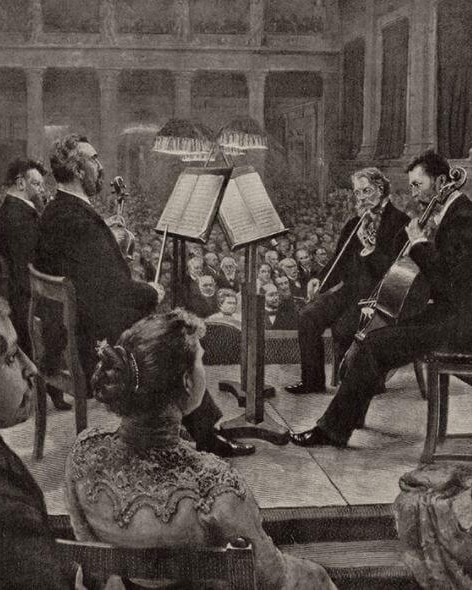
Armingaud Quartet
In the words of his biographer Georges Servières, Lalo’s reputation “will rest on having brought a ray of sunshine into French music, expressing joy, life, and chaste tenderness free of sentimentality, and burning passion without any unwholesome eroticism.”
Working outside the musical mainstream, Lalo developed a robust and forceful musical style, one that offered fresh rhythmic and harmonic invention. And this trajectory of development is best observed in his chamber music.
For more of the best in classical music, sign up for our E-Newsletter
Édouard Lalo: Piano Trio in A Minor, Op. 26 (Gryphon Trio, Ensemble)