Darius Milhaud (1892–1974), a key figure among the influential group of French composers known as “Les Six,” carved out a unique place in 20th-century music through his remarkably eclectic style. His compositions are marked by a vibrant synthesis of neoclassical clarity, daring polytonality, and rhythmic vitality. Milhaud drew inspiration from a rich tapestry of sources, including the lyrical charm of French folk melodies, the infectious rhythms and improvisatory spirit of jazz, and the vibrant musical traditions of his native Provence.
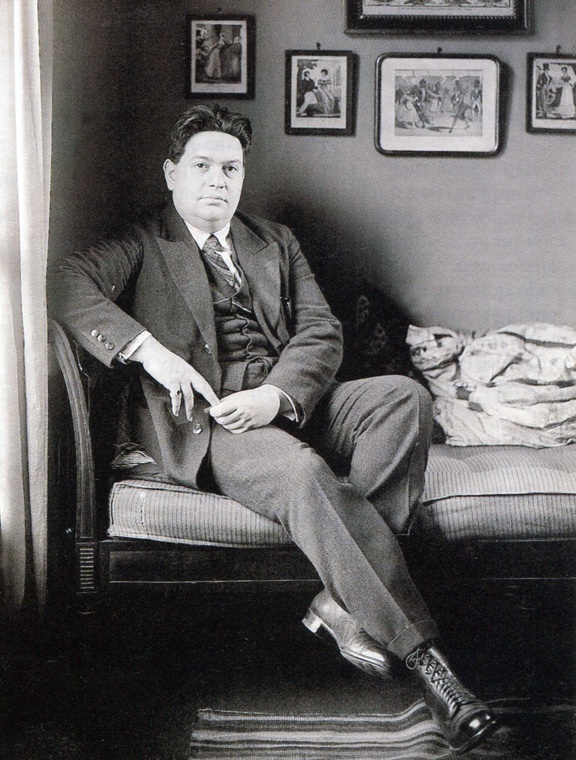
Darius Milhaud
In the mid-1940s, Milhaud had firmly established himself in the United States, where he took up a teaching position at Mills College in California. This period marked a significant phase in his creative life, as his compositional voice matured into a refined synthesis of the bold experimental techniques he had explored earlier with a more focused and intimate approach to chamber music. His American years thus represent both a continuation and a distillation of his lifelong artistic journey, producing chamber works that are at once inventive, accessible, and deeply expressive.
Milhaud composed a remarkable total of 18 string quartets over his lifetime, driven in part by his playful ambition to surpass Beethoven’s canonical set. Among these, String Quartets Nos. 14 and 15 occupy a special place, as they were conceived with a dual purpose in mind.
Each quartet is a complete and standalone work, fully satisfying the traditional chamber music format. Yet Milhaud also designed them to be performed simultaneously, merging the seamlessly into a single Octet for Strings. By allowing two independent quartets to coexist as one larger ensemble, Milhaud explored new realms of interplay and complexity, demonstrating both his technical mastery and inventive spirit.
Darius Milhaud: String Quartet No. 14 in Op. 291, No. 1 – I. Animé (Parisii Quartet, Ensemble)
Animé I
The opening “Animé” movement of String Quartet No. 14 is marked by a lively and energetic tempo, embodying Milhaud’s neoclassical tendencies. Characterised by vibrant polytonality and rhythmic vitality, it showcases Milhaud’s skill in blending clarity with modernist complexity.
Structurally, the “Animé” movement follows a complex and rondo-like form with distinct sections that recur in varied order. Fostering thematic interplay and development, the returning main section acts as a unifying thread, while the movement’s polytonal texture, with multiple key centres, creates a rich harmonic landscape.
The animated character of the movement is driven by syncopated rhythms and a whiff of jazz and Brazilian music influences. The intricate interplay among the instruments features rapid melodic exchanges and dynamic contrasts, enhancing the movement’s lively and engaging mood.
Darius Milhaud: String Quartet No. 15, Op. 291, No. 2 – I. Animé (Parisii Quartet, Ensemble)
Animé II
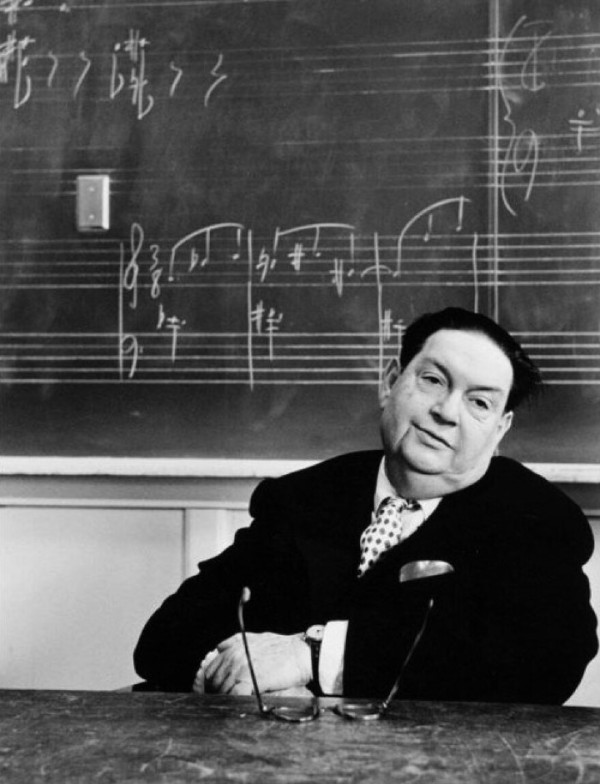
Darius Milhaud
Much like its counterpart in Quartet No. 14, the “Animé” movement of String Quartet No. 15 delivers a surge of restless energy. Full of dynamic momentum, the movement mirrors the structure of Quartet No. 14, deliberately designing a convergence of the two quartets.
This rondo-like form, with its recurring and varied thematic sections, creates a cohesive yet diverse musical narrative. Marked by polytonality, the movement features multiple key centres that produce a layered, occasionally dissonant soundscape, enhancing its animated character.
Fast-paced and rhythmically intricate, it incorporates syncopated and cross-rhythmic patterns, reflecting Milhaud’s jazz and folk influences. Short, sharp motifs are exchanged among the instruments, fostering a conversational texture that drives the movement’s engaging and lively energy.
Darius Milhaud: String Quartets Nos. 14-15, Op. 291, Nos. 1-2 (version for string octet) – I. Animé (Parisii Quartet, Ensemble; Manfred Quartet, Ensemble)
Octet Animé
The fun really starts when both movements are performed together as an octet. Together, they create a radiant and dynamic opening statement that is immediately captivating. While each quartet brings its own distinct vitality, together they intertwine to form a complex and layered dialogue. Essentially, it’s an exuberant polyphonic mosaic that sets the tone for the entire work.
When combined, the lively and buoyant energy of Quartet 14 and the incisive and rhythmically assertive character of Quartet 15 do not merge seamlessly, but rather maintain their distinct personalities while engaging in a spirited, often playful counterpoint. This simultaneous articulation of two animated worlds results in a rich texture where rhythmic motifs overlap, echo, and sometimes collide, yet never descend into chaos.
Milhaud’s hallmark polytonality reaches a dazzling height here. The coexistence of two independent harmonic planes creates a shimmering sonic environment, where tonal centres weave in and out of alignment. The result is a sense of motion that is both exhilarating and nuanced, inviting us to an interplay of colour and tension. Texturally, this movement presents moments where the two quartets align, creating brief flashes of unified sound, only to diverge again into independent streams of activity.
Darius Milhaud: String Quartet No. 14 in Op. 291, No. 1 – II. Modéré (Parisii Quartet, Ensemble)
Modéré I
The second movement of Milhaud’s String Quartet No. 14, marked Modéré, offers a reflective and lyrical interlude between the more animated outer movements. Its moderate tempo invites a sense of calm and introspection, as Milhaud carefully balances motion with stillness.
Milhaud’s signature polytonality is present but softened; instead of stark juxtapositions, the harmonic layers blend into one another to create a rich, atmospheric sound world. The tonal centres shift subtly, sometimes imperceptibly, and the resulting sonorities feel both familiar and elusive.
There is an undeniable elegance to the movement, a quiet intensity that suggests inner reflection rather than outward expression. Echoes of French impressionism emerge in the colouristic treatment of harmony and the finely shaded dynamics, but Milhaud’s voice remains distinctive—restrained yet emotionally resonant.
Darius Milhaud: String Quartet No. 15, Op. 291, No. 2 – II. Modéré (Parisii Quartet, Ensemble)
Modéré II
Unsurprisingly, the second movement of the String Quartet No. 15 also unfolds with a serene and introspective character. The moderate tempo allows for a nuanced exploration of texture and harmony, showcasing Milhaud’s mastery in creating depth within restraint.
Rather than the more overt harmonic clashes found in the other work, the juxtaposition of tonal centres is delicate, creating a rich tapestry of sound that feels both grounded and expansive. This approach imbues the movement with a sense of floating ambiguity, where harmonic direction is suggested but never really fully resolved.
The movement eschews overt lyricism in favour of fragmented motifs that emerge and recede, adding to the sense of an unfolding narrative. These motifs are often imbued with a sighing quality, expressing a deep emotional resonance. It is a space of quiet contemplation.
Darius Milhaud: String Quartets Nos. 14-15, Op. 291, Nos. 1-2 (version for string octet) – II. Modéré (Parisii Quartet, Ensemble; Manfred Quartet, Ensemble)
Octet Modéré
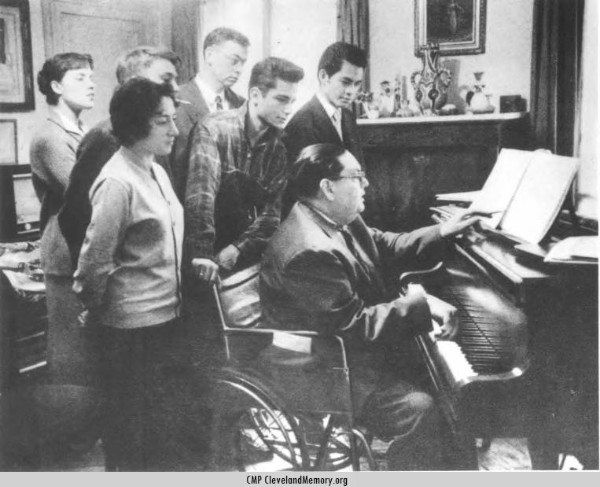
Darius Milhaud with his students
Superimposing the Modéré movements of both quartets creates a haunting and polytextureal meditation that is far more than the sum of its parts. Both quartets inhabit a similar emotional terrain, but when combined, subtle contrasts in rhythm, contour, and colour begin to surface.
The quartets do not mirror each other, but rather move in parallel, occasionally aligning and occasionally drifting apart. This divergence from the expressive essence of this movement is a kind of double meditation in which two independent musical thoughts coexist.
Milhaud’s polytonal language gains new depth in this context. With eight independent voices, the harmonic palette becomes denser but never unwieldy. Tonal centres shimmer and dissolve into one another, often with a sense of gravitational pull rather than conflict. At times, the movements seem to echo each other from opposite sides of a wide space, offering different emotional responses to the same ineffable subject.
Darius Milhaud: String Quartet No. 14 in Op. 291, No. 1 – III. Vif (Parisii Quartet, Ensemble)
Vif I
The final movement of Milhaud’s String Quartet No. 14, marked “Vif,” bursts forth with energy and clarity, providing a spirited counterbalance to the restrained introspection of the “Modéré.” Where the second movement was fluid and veiled, this closing movement is taut, rhythmically crisp, and sharply articulated. It brings the quartet to a vibrant conclusion, brimming with vitality yet never forsaking Milhaud’s refined sense of structure and textural economy.
There is a dance-like quality to the movement, particularly in its light-footed thematic material. Phrases often start with short, sharp motifs, essentially quick upward or downward darts, and are answered by off-kilter rhythmic responses. These gestures are repeated and transformed with subtle variation, giving the movement a quasi-developmental character despite its brevity. It feels episodic yet cohesive, stitched together by the underlying rhythmic tension.
In terms of form, the movement resists traditional expectations. Rather than following a clear sonata-rondo or scherzo design, it unfolds as a fast-paced, sectional dialogue, essentially a conversation that builds in intensity, recedes, and then reignites with new energy. It closes with a brief, exuberant gesture that feels less like a grand finale and more like a confident wink.
Darius Milhaud: String Quartet No. 15, Op. 291, No. 2 – III. Vif (Parisii Quartet, Ensemble)
Vif II
The closing movement of Milhaud’s String Quartet No. 15 concludes the work with a spirited flourish, but its energy is of a subtly different character than the “Vif” of Quartet No. 14. Where the earlier quartet’s finale is playful and rhythmically agile, this movement has a more incisive, almost driven quality. It feels leaner, more urgent, and more sharply sculpted.
The movement opens with a bold, declamatory gesture that immediately sets the tone: crisp, assertive, and tightly focused. The thematic material is built from short, rhythmic cells, essentially motifs that are less whimsical and more angular, and they are often stated in unison or stark rhythmic opposition. These figures are passed and reshaped across the ensemble with quicksilver precision, creating a sense of momentum that never quite lets up.
Polytonality here plays a more percussive role. Instead of providing harmonic richness or ambiguity, it becomes a kind of structural tension, like parallel tonal streams that seem to brush abrasively against one another, heightening the music’s forward thrust. The harmonic friction is tighter and more compressed than in the earlier movements, lending the finale a sense of tautness rather than spaciousness.
Octet Vif
When the final movements of Milhaud’s String Quartets Nos. 14 and 15 are performed together as the culminating movement of the Octet for Strings, the result is a kinetic tour de force. It is a dazzling convergence of two sharply distinct strands of musical energy, interwoven into a single, crackling organism. Where each quartet’s finale possesses its own rhythmic pulse and thematic identity, the octet juxtaposes them in real time, creating a layered, polyrhythmic interplay that is exhilarating in its complexity and clarity.
Milhaud’s use of polytonality becomes all the more pronounced in this combined context. While each quartet independently operates in layered tonal centres, their simultaneous performance amplifies this effect exponentially. Harmonic strata stack up and shift unpredictably, creating a brilliant surface of bright friction that is never harsh, but always restless. The ear is drawn not to any single harmonic goal, but to the perpetual shimmer created by the proximity of competing tonalities.
As the movement races toward its close, the sense of acceleration is palpable. The final gestures come not with grandeur but with brisk certainty. The ending is clipped, witty, and sharply executed, reinforcing the movement’s sense of rhythmic clarity over melodic or harmonic resolution.
Conclusion
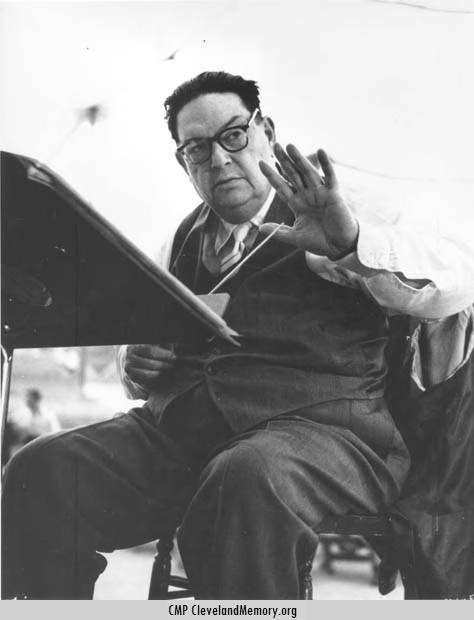
Darius Milhaud
The simultaneous performance of Darius Milhaud’s String Quartets Nos. 14 and 15 as an octet is one of the most quietly radical gestures in 20th-century chamber music. It is a work that embraces polyphony not only in voice, but in structure, form, and identity.
These are not twin quartets meant to mirror one another. Rather, they are parallel expressions, distinct yet intricately compatible, coexisting rather than converging. When brought together, they form an ensemble that is multidimensional.
Milhaud’s genius in this project lies in his restraint and precision. He doesn’t force unity between the two quartets but instead allows their individual characters to remain intact. The brightness and rhythmic charm of Quartet No. 14, with its buoyant momentum and lyrical ease, contrasts with the tauter, more concentrated energy of Quartet No. 15. Each voice is allowed to speak clearly, but in dialogue with another that is always close, sometimes overlapping, sometimes diverging.
The result is music that is deeply conversational in a way that two independent minds might share space, think aloud, interrupt, and reflect. It is a bold formal experiment and a quiet philosophical statement offering a profound modern vision of unity as coexistence.
For more of the best in classical music, sign up for our E-Newsletter
Darius Milhaud: String Quartets Nos. 14-15, Op. 291, Nos. 1-2 (version for string octet) – III. Vif (Parisii Quartet, Ensemble; Manfred Quartet, Ensemble)