In the first part of this article, we considered the vastly different experiences associated with classical concerts and concerts of other genres. We saw that “common sense” reasons for concert etiquette can veil much more intricate and meaningful matters, and looked at the silence expected of classical music audiences.
Richard Wagner: Lohengrin, Act III: In fernem Land, unnahbar eu’ren Schritten (Saimir Pirgu, tenor; Orquestra de la Comunitat Valenciana; Antonino Fogliani, cond.)
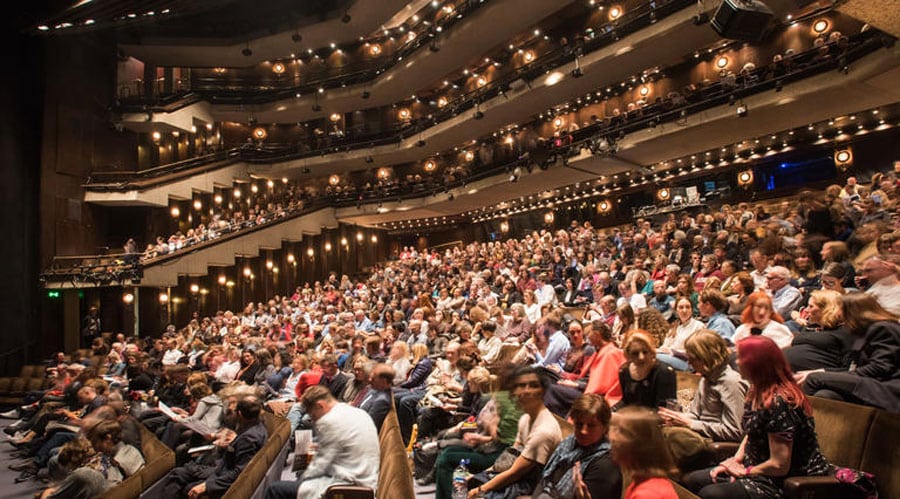
The “pseudo-silence” of the classical music audience sometimes allows the appreciation of tonal and timbral complexity, but at other times can be nerve-wracking or restrictive. Strangely, audience silence – the genuine, attentive, bated-breath kind – can arise spontaneously and collectively regardless of genre. Even in concerts where audiences are free and encouraged to be noisy, there are inevitably moments where audiences co-create a pseudo-silence, not out of duty but as a willing plural experience of something moving and profound. This tends to happen with ballads or songs expressing the more raw and tender emotions, or when a performer is clearly swept away by the moment or a particular groove of virtuosity. If silence is over-emphasised in the classical context, it may be undervalued as a phenomenon in non-classical concerts – after all, those musics deal in subtlety of affect and technique too, and can benefit from a backdrop of silence that allows detailed listening. This calls to mind a slightly notorious incident from pop culture: breakout New Zealand pop artist Lorde had reached the most vulnerable part of her ballad, “Writer in the Dark,” at a concert in 2017. The instruments had cut out, and she clearly wished to create a raw, stripped-back moment to reflect the intensity of the lyrics: “I am my mother’s child, I’ll love you ’til my breathing stops.” However, in the convention of pop gigs, the audience sang along with her, and Lorde – in frustration at not being able to create the intended effect she wanted, to play with rubato, to sing off-mic and hear herself fully – “shushed” the audience. Lorde faced a fair bit of ridicule for this. She reminded audiences that her concerts were otherwise highly collective events of co-singing and screaming, but the video clip of the shushing still became a piece of much-shared internet “news.”
Concert Spirituel
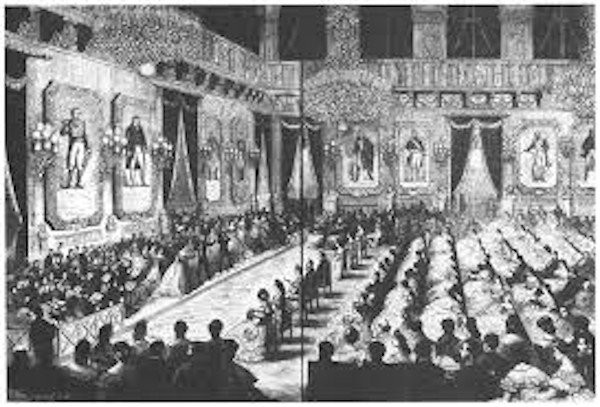
In contrast, silence and well-behavedness are actually after-the-fact constructions for many of the works in the classical canon. Mozart’s debut at the Concert Spirituel in Paris was with a D major symphony specifically tailored “to the listening culture and expectations of the city,” Service writes in his chapter, ‘Why are classical audiences so quiet?’ Mozart was delighted when, at the transition from a tranquil opening to a sudden forte, the audience erupted into applause – this was how he knew he had succeeded. From Monteverdi’s 17th-century operas to Elgar’s symphonies in the 20th-century, audiences stamped, hollered, shushed each other, and forced unplanned repeats and encores: they participated, shaped the course of events, and made noise. There was clearly a different power dynamic at play: the musicians were providing a service of entertainment to the audiences, who could act as a kind of mob of taste-makers, expressing pleasure, displeasure, or a lack of interest. It was Rossini’s biographer, Stendhal, who began to notice a shift in 1824, writing: “What will result from this scrupulous silence and continuous attention? That fewer people will enjoy themselves.”
Indeed, listening conventions were so different in the past that scholar William Weber devotes an entire article to the question, “Did people listen in the 18th century?” He contrasts the attentive concert-goers of the early 19th-century onwards with the less reverent approach of the 18th-century salon. The former, what James H. Johnson calls “absorption,” originated in the more reverent and religious posture towards art appreciation of the early 19th-century. In contrast, Peter Gay characterises the 18th-century approach as “shallow” and “sociable,” because 18th-century concerts and music-making could co-exist with other human purposes like eating, chatting, and even conducting informal business. Painter Michel-Barthelemy Ollivier captured this phenomenon well in 1766, portraying the relaxed guests at the Salon des Quatre-Glaces, who natter away insouciantly, ignoring young Mozart at the harpsichord. As Lydia Goehr writes in The Imaginary Museum of Musical Works, courtly, church, and salon “performances were background affairs… accompaniment either to serious or frivolous activities, they were rarely the immediate focus of attention.”
Broadly speaking, as music began to move from church and court settings to designated concert halls, the musicians were further away and audiences larger, necessitating more audience restraint. As music became less of a vessel for communion with God or glorification of royalty but a source of transcendence in itself, composers began to write what they saw as unified pieces of art rather than background or entertainment music. For example, Mahler specified in the score for the Kindertotenlieder that there should be no applause between movements. As Crystal Chan writes in ‘The History of Concert Etiquette, Abridged’, “a culture of quiet steadily became the norm.” With the rising Romantic concept of Werktreue – faithfulness to the score, which is the key to the work itself – “audiences were asked to be literally and metaphorically silent, so that the truth or beauty of the work could be heard.” The cult of Wagner and Bayreuth somewhat contributed to this, though it should be said that Wagner himself was shushed for crying “bravo” at a performance of Parsifal. In his lecture to the Royal Philharmonic Society in 2010, Alex Ross quipped that in silence and where to applaud, “Wagnerians were taking Wagner more seriously than he took himself.”
Where does this leave us? Should we applaud at the end of the third movement of Tchaikovsky’s Pathétique, as the music practically begs us to do? Should classical audiences continue as they were? The industry is already answering that question for us – new music composers are increasingly interested in other genres, including dance and club music, and are trying to bring hallmarks of those genres to the concert hall. A need for a greater variety of modes of concerts and concert-goers has been recognised. I fear, however, that simply borrowing from other genres is not a full solution. We cannot rely on other genres to revitalise a sense of agency, embodiment, and authentic enthusiasm in classical music. One of the loveliest classical concerts I ever attended was at a Zoology Museum in Cambridge, with the performers scattered through the exhibits, the audience free to wander and ponder the giant whale skeleton suspended from the ceiling. The irritating answer to “what kind of concerts, and concert audiences, do we want?” is: we want a great variety, with context-appropriate fluidity and nuance.
For more of the best in classical music, sign up for our E-Newsletter