Radu Lupu, born in Galați, Romania, on 30 November 1945, was one of the most enigmatic and revered pianists of the 20th and 21st centuries. Known for his reclusive nature and reluctance to engage with the media, Lupu let his music speak for itself.
His performances were marked by an extraordinary sensitivity to tone, a deep musical intelligence, and an almost spiritual connection to the works he played. Lupu was entirely free of exhibitionism and flamboyance, but he possessed total technical command, which contributed to the sense of effortlessness and inevitability in his playing.
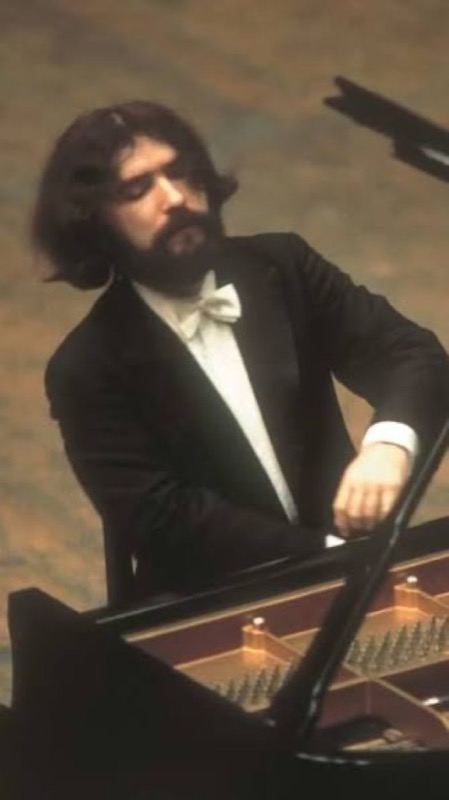
Radu Lupu
Lupu’s repertoire was carefully curated, essentially centred on the German-Austrian repertoire, yet his relatively selective discography contains some extraordinary interpretations. To celebrate his birthday, let’s sample some of his essential recordings.
Franz Schubert: Piano Sonata No. 21 in B-Flat Major, D. 960 (Radu Lupu, piano)
Schubert’s Intimacy
Some pianists are able to dazzle with virtuosity, while others overwhelm us with the sheer force of their personality. Radu Lupu, however, plays in a completely different league as he projects a combination of intimacy and almost conversational spontaneity.
One of his most important Schubert recordings brings together two sonatas from different periods of the composer’s life. Recorded in 1991 and released by Decca in 1994, the recording received a Grammy Award in 1996.
Lupu was described as “a lyricist in a thousand,” and naturally, he placed Schubert at the centre of his repertoire and “conjured from a seemingly recalcitrant black-and-white instrument a range of vocal colours and nuances that even a Souzay or Fischer-Dieskau might envy.”
Placing Lupu’s Schubert interpretations within the tradition of great song interpreters transports the sonata into a psychological landscape of profound beauty and depth. Lupu refuses to impose drama, instead revealing its emotional implications through the music itself.
Robert Schumann: Humoreske in B-Flat Major, Op. 20 (Radu Lupu, piano)
Schumann’s Unpredictability
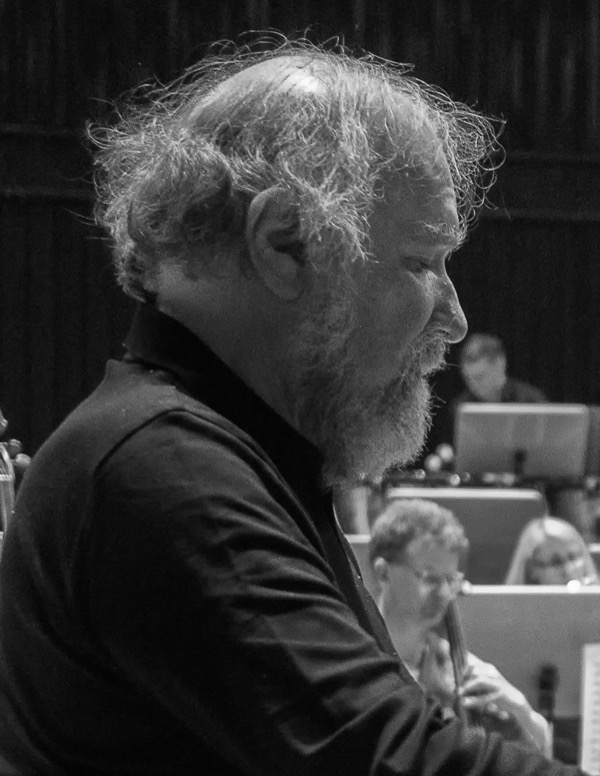
Radu Lupu (2012)
The almost mystical quality of Lupu’s Schubert interpretations becomes even more poetic and profound when he turns his focus toward Schumann. Released by Decca in 1995, his performance of Schumann’s Humoreske, Kreisleriana, and Kinderszenen might well be one of the most compelling documents of Lupu’s artistic personality.
This Schumann recording received an Edison Award in 1995. The Humoreske, in particular, is a frequently overlooked masterpiece. It’s not a conventional set of variations or a sequence of contrasting movements, but a fluid narrative with overlapping and transforming emotional states.
Here, Lupu is truly in his element as he brings out these shifting emotional landscapes. He never imposes a rigid structure on the music but revels in its unpredictability. Critical response focused on the Humoreske, with Florestan and Eusebius ever present.
Lupu disliked recording because of his self-confessed “microphone fright,” and also because of his concern for the integrity of creative inspiration, which he felt was compromised by the editing process. As Lupu once famously said, “Everyone tells a story differently, and that story should be told compellingly and spontaneously. If it is not compelling and convincing, it is without value.”
Ludwig van Beethoven: Piano Concerto No. 4 in G Major, Op. 58 (Radu Lupu, piano; Israel Philharmonic Orchestra; Zubin Mehta, cond.)
Beethoven’s Introspection
Among the five Beethoven Piano Concertos, Radu Lupu preferred the Fourth. And it is not difficult to understand why. It is, after all, one of Beethoven’s most original concertos because of its unconventional opening. There is no orchestral introduction, but the piano alone presents the principal theme.
This unusual opening is neither majestic nor grandiose, nor self-consciously poetic. It’s personal, and it’s private, inviting a dialogue in which both the orchestra and pianist influence one another.
As always, there is considerable freedom in Lupu’s playing, but his focus falls on the inner voices and the subtle changes of colour. This dialogue is carried over to the “Andante con moto,” where Lupu retains his lyrical composure. The final rondo is playfully energetic, but with Lupu, it never becomes mechanical.
Critics tended to be most enthusiastic about the “Andante,” suggesting that Lupu successfully realised Beethoven’s dramatic confrontation between orchestra and piano. To some, Lupu’s approach sounded excessively introverted, yet he always managed to draw the listener into the music.
Johannes Brahms: 6 Piano Pieces, Op. 118 (Radu Lupu, piano)
Brahms’ Vulnerability
The piano music of Johannes Brahms demands a performer who can navigate its thick textures, complex rhythms, and the subtle dynamic shifts while still conveying its emotional nuances.
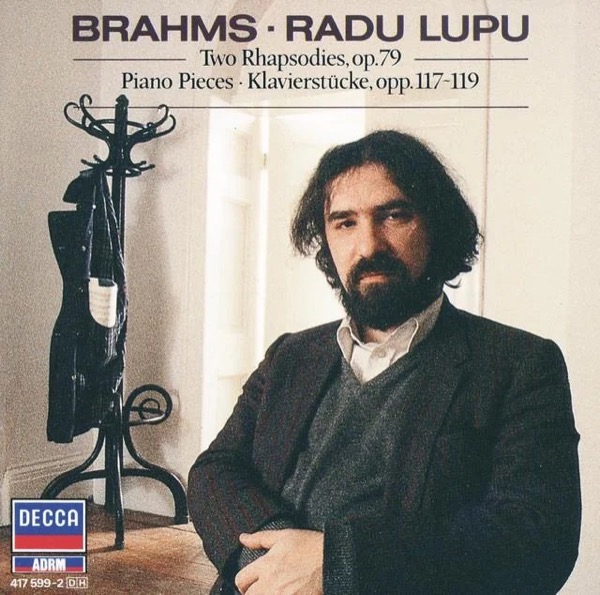
Radu Lupu’s Brahms album
This conversation between the intellectual and the emotional demands a careful balance between clarity and warmth, as well as precision and spontaneity, and Lupu’s introspective approach is a natural fit. After all, Lupu’s ability to create a singing tone and sustain long lyrical lines is legendary.
For many Brahms aficionados, the emotional resonance of his music is a primary draw. Brahms’ compositions often convey a sense of longing, nostalgia, and quiet introspection, tempered by moments of exuberance and joy. Lupu’s performances tap into this emotional core, offering interpretations that feel deeply personal yet universally relatable.
His ability to convey vulnerability without sentimentality is particularly suited to Brahms’ late works, which are often imbued with a sense of farewell. This shared sense of introspection creates a powerful connection between composer and performer, one that Brahms enthusiasts are likely to find compelling.
Wolfgang Amadeus Mozart: Piano Concerto No. 21 in C Major, K. 467 (Radu Lupu, piano; English Chamber Orchestra; Uri Segal, cond.)
Mozart’s Humanity
The music of Wolfgang Amadeus Mozart was an important part of Lupu’s repertoire. Specifically, his Decca recording of two Mozart piano concertos with the English Chamber Orchestra under Uri Segal, made in 1974, is worth exploring.
Lupu, as always, was tight-lipped about his preferences regarding individual composers, instead simply explaining, “I just want to make music, that’s all.” He did explain that he hears the complete sound of a composition in his mind, including its interpretative elements, and then tries to reproduce that sound at the piano.
At the very beginning of his career, Lupu actually wanted to be a composer. As such, it’s not surprising that he supplied his own cadenza for Mozart’s Piano Concerto No. 21, K. 467. For me personally, Lupu’s Mozart interpretations are most revealing.
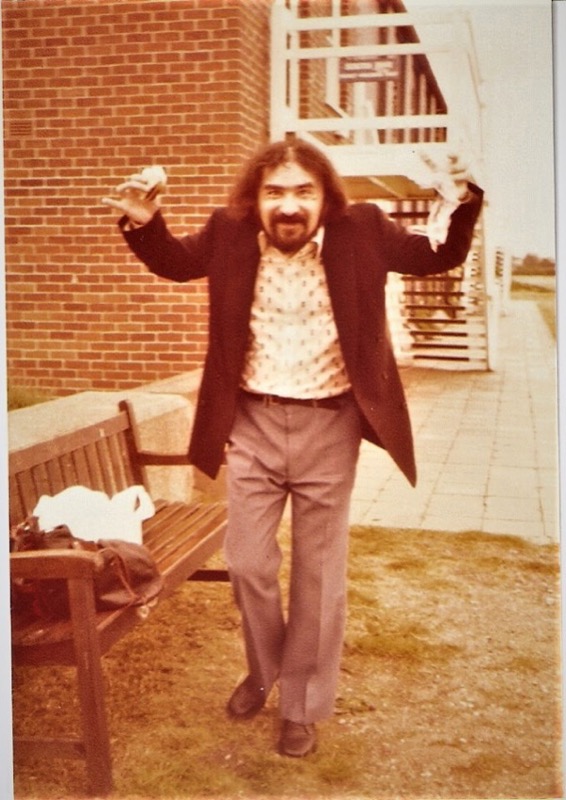
Radu Lupu
There is simply no place to hide behind the sheer weight of the music, and virtuosity alone will not do the trick. Everything depends on timing, articulation, and touch, and Lupu understands these things instinctively. The music doesn’t need unnecessary embellishment, and Lupu allows the elegance and humanity to emerge naturally.
For more of the best in classical music, sign up for our E-Newsletter