Antonio Vivaldi is one of the most famous composers of the Baroque era, best known today for his Four Seasons.
But there is much more to Vivaldi’s life and work than those four concertos.
From his childhood health problems and unusual path to the priesthood, to his controversial relationship with soprano Anna Girò and unlucky final years in Vienna, Vivaldi’s biography reads like a novel.
Today we’re looking at thirteen Vivaldi facts that explore some of the lesser-known details of his extraordinary life.
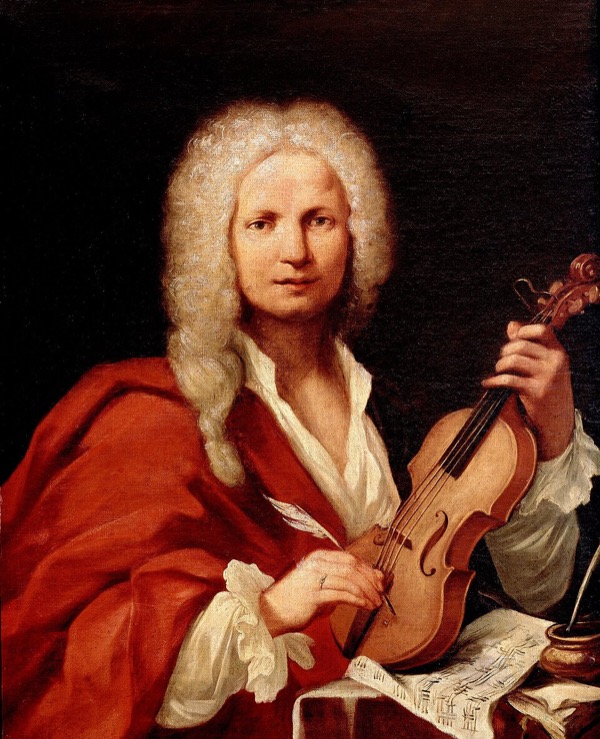
Antonio Vivaldi
1. Vivaldi was baptised at home by a midwife.
Vivaldi was born at his parents’ home in Venice on March 4th, 1678. He was baptised the same day by a midwife, not a priest, and his formal church baptismal ceremony didn’t take place until May 1678.
No reason is given in the official records for the delay, but one plausible explanation is that his parents feared for his life.
We wrote about his mysterious birth here: https://interlude.hk/on-this-day-4-march-antonio-vivaldi-was-born/.
2. His father was a barber who switched careers to become a professional musician.
Antonio’s father trained and worked as a barber before becoming a musician. He wasn’t just a dilettante, either; he won a position as a violinist in the prestigious orchestra of St. Mark’s Basilica.
He taught Antonio violin and brought him along to his various gigs across Venice, giving Antonio his first glimpse of life as a professional musician.
3. Vivaldi began studying to become a priest in 1693 when he was fifteen. He was ordained in 1703, when he was 25.
Vivaldi’s Gloria
This was a longer path than many priests took. It is possible that health problems may have interrupted his studies as a teenager.
In time, Vivaldi garnered the nickname il Prete Rosso, or the Red Priest. That, combined with his father’s nickname of Rossi or il Rosso, suggests that observers found the Vivaldi men’s red hair quite striking.
4. Vivaldi suffered from strettezza di petto, or “tightness of the chest.”
Some historians interpret this description as asthma, while others feel it may have been angina.
In any case, it affected his work. He was unable to play wind instruments, and he was even given a dispensation not to say Mass, since projecting his voice could make him feel unwell.
5. In September 1703, he became the violin master at the Ospedale della Pietà, a charitable institution for orphaned and abandoned girls.
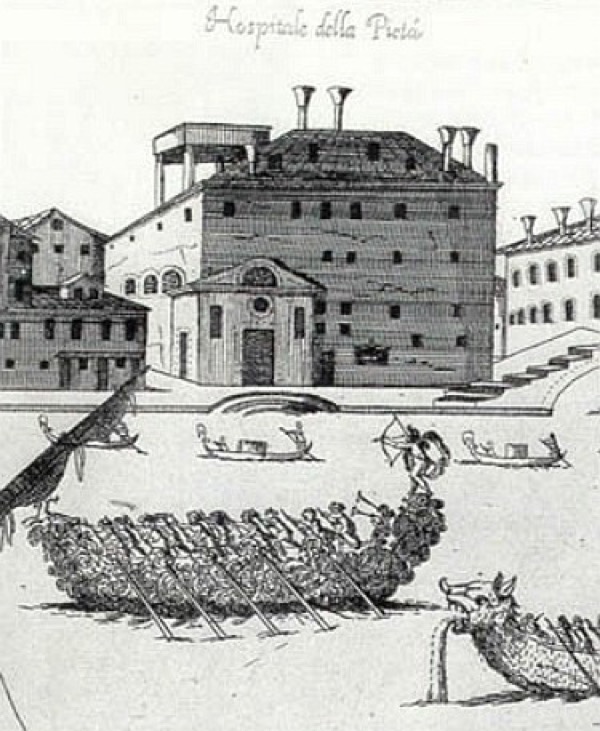
The Ospedale della Pietà
The Pietà was one of four “ospedali grandi” in Venice. The most musically talented residents, a contingent known as the figlie del coro (daughters of the choir), received musical training at the highest level.
They performed for tourists for money – albeit behind a grate to protect their modesty. That income then helped support the institution’s mission.
We wrote about the important work of the Pietà and the figlie del coro here: https://interlude.hk/vivaldis-internationally-renowned-orphanage-orchestra/.
6. Every year, the leadership at the Osepdale held a vote to determine whether or not Vivaldi’s contract would be renewed – and in 1709, it was not.
However, his exile was short-lived. He was re-hired in 1711, and even promoted in 1716 to maestro de’ concerti, a position that enabled him to focus on composing rather than just teaching.
7. While composing for the Ospedale, he was responsible for writing two violin concertos a month.
Vivaldi’s Violin Concerto in B minor, RV 387 (per Signora Anna Maria), Movement 1
Vivaldi’s contract dictated that he had to deliver a set number of new concertos, plus he was required to lead rehearsals at least twice a week.
8. His Op. 3, a set of twelve concertos he titled L’estro armonico (The Harmonic Inspiration), became an international hit in 1711.
Vivaldi’s Concerto for 4 Violins in B minor from L’Estro armonico
They were published by Estienne Roger, a major publishing house based in Amsterdam whose work was distributed across Europe.
The fresh, vigorous music in L’estro armonico made a major impression as far away as Germany, where Johann Sebastian Bach saw a copy. Bach was so impressed that he transcribed several of the violin concertos for keyboard.
We wrote about how Vivaldi inspired Bach here: https://interlude.hk/the-harmonic-inspiration-of-antonio-vivaldi-1678-1741-lestro-armonico/.
9. Pope Benedict XIII invited Vivaldi to play for him in his private apartments in 1724…or so Vivaldi claimed.
Later in life, when Vivaldi was searching for patronage and writing his resume, he claimed that a career highlight had been performing for the Pope.
It is true that Vivaldi was living in Rome at the time, so it is possible that such a meeting occurred, but no other record of it exists.
10. Each of the Four Seasons has a sonnet attached to it; they are often attributed to Vivaldi himself.
Vivaldi’s Four Seasons with the sonnets, synched to musical events
Sonnets were published alongside the concertos. Readers note that the poetry names specific phenomena portrayed in the music: things like bird calls, thunderstorms, and harvest dances. This fact suggests that the composer wrote the poems – or at the least, was extremely familiar with them.
We took a closer look at the poetry here: https://interlude.hk/poetry-and-music-vivaldis-four-seasons-spring-and-summer/.
11. In the 1720s, Vivaldi befriended singer Anna Tessieri Girò, who would become his foremost operatic interpreter.
Girò, generally described as a contralto or mezzo-soprano, had been born in Mantua around 1710, although her exact date of birth is unknown. After 1726, she appeared in almost all of Vivaldi’s operas.
She and her sister even lived with him: an arrangement that raised eyebrows despite Vivaldi’s continuous insistence that they were just colleagues.
The rumours grew so loud that in 1737, a cardinal in Ferrara actually barred Vivaldi from entering the city to oversee the production of one of his operas.
We wrote about their relationship here: https://interlude.hk/muse-musing-anna-red-priest-anna-giro-antonio-vivaldi/.
12. Vivaldi sold off his manuscripts to fund a late-in-life trip to Vienna.
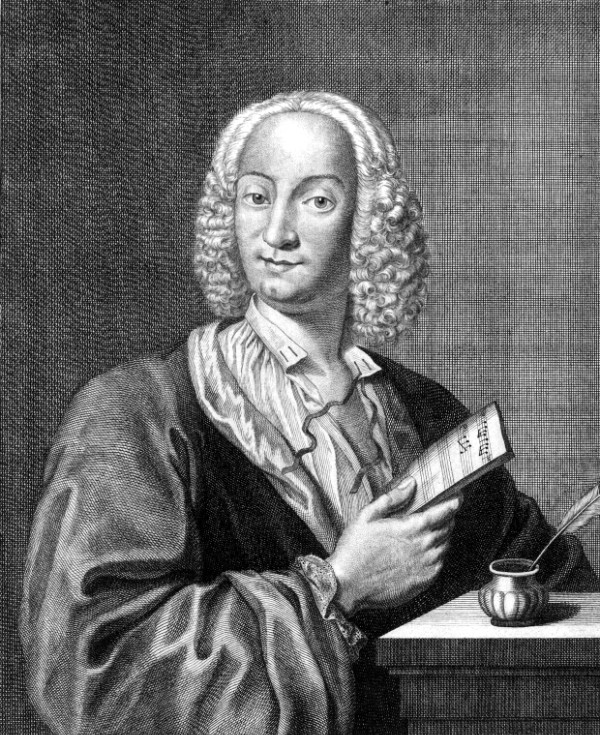
Antonio Vivaldi (engraving by François Morellon de La Cave, from Michel-Charles Le Cène’s edition of Vivaldi’s Op. 8, 1725)
During a visit, Emperor Charles VI had been impressed by Vivaldi’s music. Although Vivaldi was 62, he felt he still had another professional chapter left in him, so in 1740, he relocated to Vienna, hoping to gain royal patronage.
Unfortunately for his plans, Charles VI died in October 1740, and Vivaldi had no connection to the king’s successor.
Vivaldi’s health declined, and he died in July of 1741.
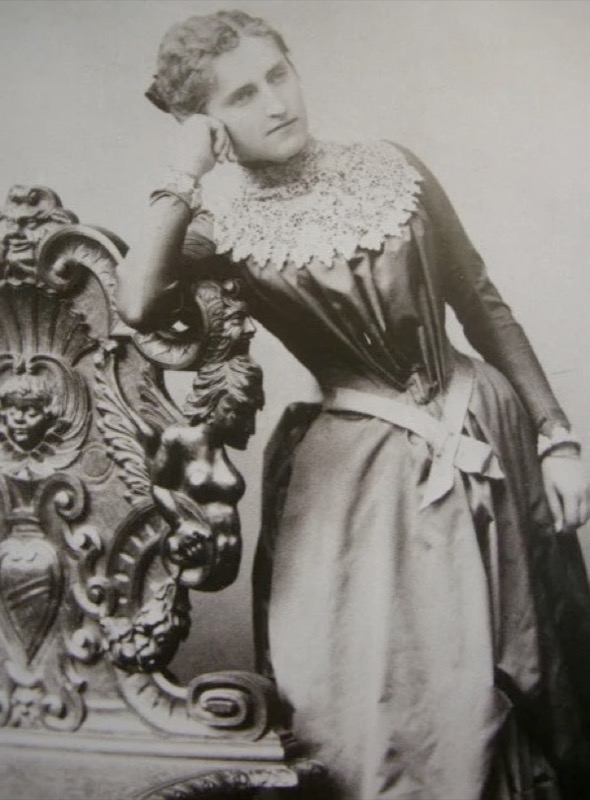
13. Poet Ezra Pound’s lover, violinist Olga Rudge, was instrumental in rediscovering Vivaldi’s work.
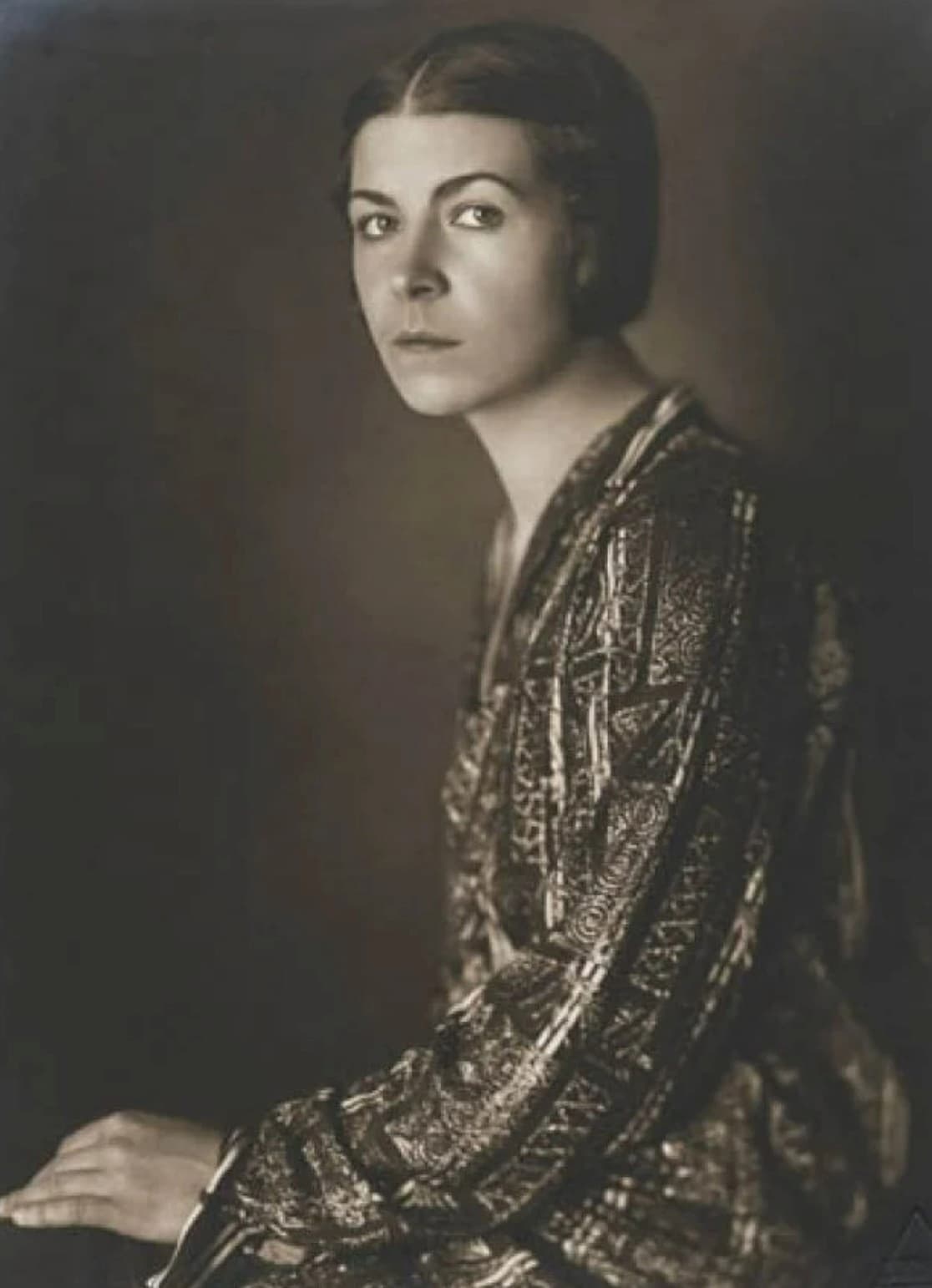
Olga Rudge
Today Rudge is well-known for her relationship with Pound, but she also contributed to important musicological discoveries in the mid-20th-century.
In the 1930s, she worked with the Accademia Chigiana in Siena, cataloguing his manuscripts, and in 1939, she helped to organise a promotional “Vivaldi week.”
From there, and with the help of other scholars and musicians, his compositions – long forgotten – began experiencing a major renaissance, after nearly two centuries of relative obscurity.
Today, thanks to these efforts, Vivaldi’s Four Seasons is one of the most popular pieces of classical music ever written.
We wrote about Olga Rudge here: https://interlude.hk/meet-olga-rudge-the-violinist-who-helped-rediscover-vivaldi/.
For more of the best in classical music, sign up for our E-Newsletter