Nestled in Germany’s industrial Ruhr region, Herne carries a proud coal-mining heritage alongside a quiet cultural resilience. Since 1976, this city has partnered with West German Radio (WDR) to become a capital for early music revival. Over five decades, WDR launched countless specialists’ careers and rediscovered forgotten scores through its broadcasts and recordings. This November, WDR’s celebrated Tage Alter Musik in Herne turned fifty.
© halloherne.de
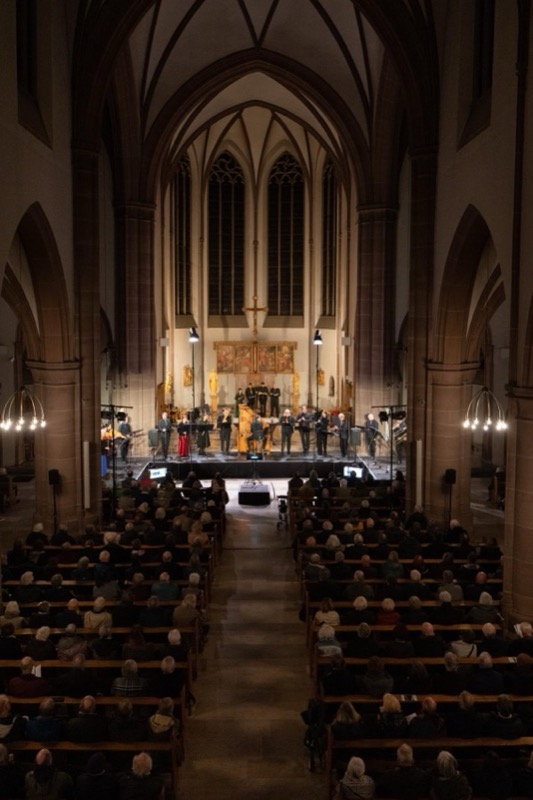
To mark this milestone with a grand opening-evening event, a meticulous Giovanni Gabrieli program took place at the Herz-Jesu-Kirche, delivered by Musica Fiata and La Capella Ducale under Roland Wilson. Recognising that modern audiences are already familiar with Venetian spatial acoustics, Wilson’s artistic intent was to showcase the music’s internal diversity. By shifting performer configurations and stage positions for every piece—from intimate six-part works to the massive twenty-part Magnificat—the concert functioned like a demonstration recital of Renaissance sonic possibilities. Highlights included a three-part In ecclesiis and theatrical spatial staging in the finale, though instrumental balances occasionally faltered, with heavy brass muffling strings in Sonata pian e forte.
© WDR / Thomas Kost
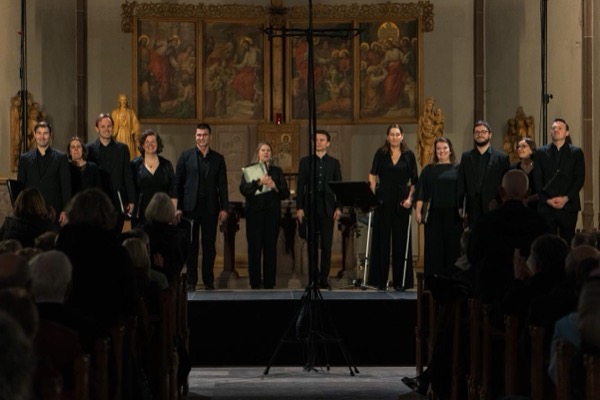
The next afternoon, the same church acoustics framed a vastly different vocal tradition. The renowned British ensemble Stile Antico presented an insightful matinee program spanning fifty eventful years of English history, from 1576 to 1626. Structured around the reigns of Elizabeth I, James I, and Charles I, the repertoire balanced sacred anthems and secular madrigals by English masters including Weelkes, Dowland, Byrd, Wilbye, Gibbons, and Tomkins. Twelve singers—three per voice part—filled the Herz-Jesu-Kirche with an extraordinarily refined and versatile sound. They actively shifted vocal configurations to capture each work’s unique timbral nuance. Artistic highlights included Wilbye’s atmospheric Draw on, Sweet Night and Tomkins’s grand twelve-voice finale, making for a deeply sensitive and triumphant afternoon.
© WDR / Thomas Kost
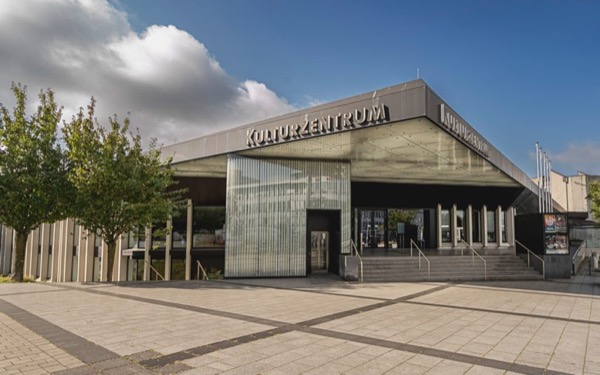
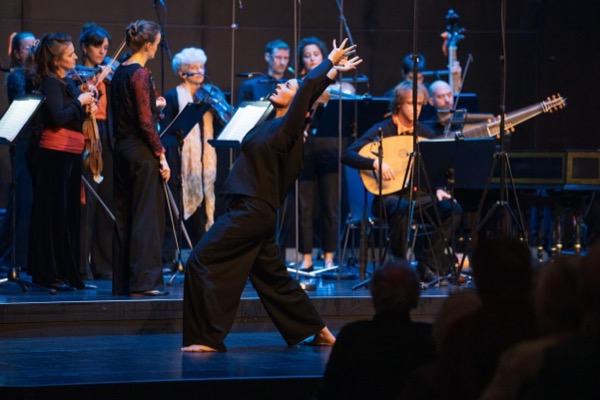
By evening, the festival moved from sacred polyphony to secular theatricality at the Kulturzentrum. Here, the Freiburger Barockorchester presented “Versailles Tanzt,” a vivid panorama of French Baroque courtly aesthetics under Louis XIV. Joined by dancer Luka Marie Putniņa, the program opened with André Campra’s Le Carnaval de Venise—featuring the first dance interpretation—before showcasing Jean-Féry Rebel’s varied dance forms and Jean-Philippe Rameau’s theatrical suite from Platée, complete with a dramatic thunderstorm. The second half highlighted royal festivities through Jean-Baptiste Lully’s Les Fêtes de l’Île enchantée and Ballet de la Nuit, concluding with Putniņa dancing again during Michel-Richard Delalande’s elegant Symphonies pour les soupers du Roy.
© WDR / Thomas Kost
On the third day, the focus narrowed to virtuosic chamber intimacy back at the Herz-Jesu-Kirche. Dressed in striking red, recorder player Stefan Temmingh and Baroque harpist Margret Koell explored “musical madness.” Their duo relied on hypnotic, repeating bass lines like the Follia and English divisions. The mood swung with considerable energy, moving from John Eccles’s gloomy The Mad Lover and Dario Castello’s abrupt sonata to Athanasius Kircher’s wild Tarantella—once thought to cure spider bites. After pieces by Weiss and Bellinzani, they closed with Marin Marais’s 32 dazzling variations, turning simple chords into pure euphoria. Koell performed on a replica of the famous Barberini harp, the most important surviving Italian Baroque chromatic triple harp. On the earlier day, Stefan Temmingh and his Freiburg University students delivered a performance on historic replicas alongside Adriana Breukink’s massive three-meter subcontrabass recorder, “Big Babe.” The program included a vibrant set spanning Elizabethan fantasies, Giovanni Bassano’s ornaments, and Purcell.
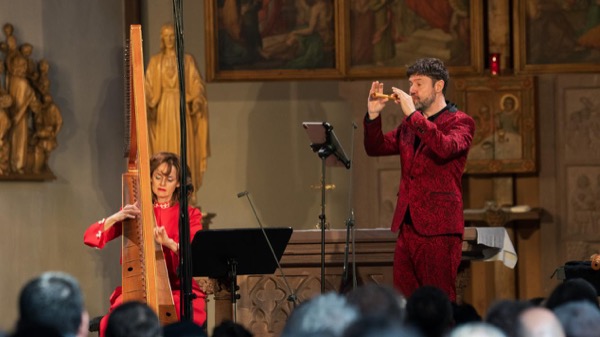
© WDR / Thomas Kost
The festival also took a bold curatorial risk for its jubilee edition. B’Rock Orchestra and Vocal Consort, led by Andreas Küppers, presented Da pacem, linking the Thirty Years’ War to our own unsettled times. It paired early Baroque prayers—mostly by Heinrich Schütz, alongside Samuel Scheidt and Johann Heinrich Schmelzer’s instrumental music—with modern field recordings by Inne Eysermans and Katherina Lindekens. The narrative arc moved clearly from war and grief to peace. Soprano and male soloists shone in intimate laments, while Staden’s Fröhliche Post finally brought welcome joy. Yet the overall live experience felt somewhat flat. Most works resembled simple church chorales, offering musicians few highlight moments to shine. Meanwhile, the tape sounds, with clucking hens, boat engines, and tolling bells, often dragged on or interrupted the music awkwardly, making it feel more like a sonic installation than a live concert.
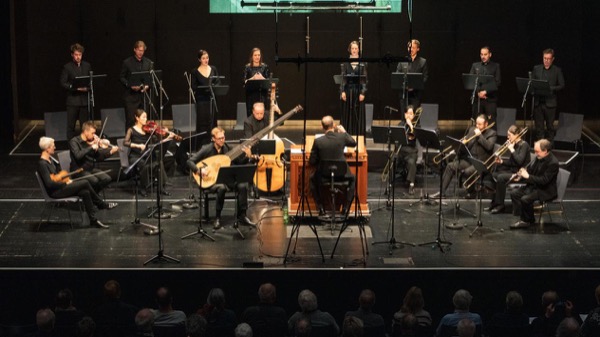
© WDR / Thomas Kost
A more engaging genre-crossing experiment unfolded at the industrial Flottmann-Hallen. In 1968, rock icon Jimi Hendrix moved into 23 Brook Street in London, right next door to George Frideric Handel’s former home. Young ensemble Apollo’s Cabinet turned this shared legacy into a bold musical dialogue. Blending Baroque instruments with electric guitar and drums, those young musicians dressed in showy style explored themes of passion, solitude, and rebellion. Handel’s Messiah overture met Hendrix’s Spanish Castle Magic, while arias like He shall feed his flock answered the lonely Burning of the Midnight Lamp. After a mashup of the Hallelujah, the night turned into a lively English pub session; following a brief intermission tutorial workshop, the audience was invited to dance traditional country dances from John Playford’s collections.
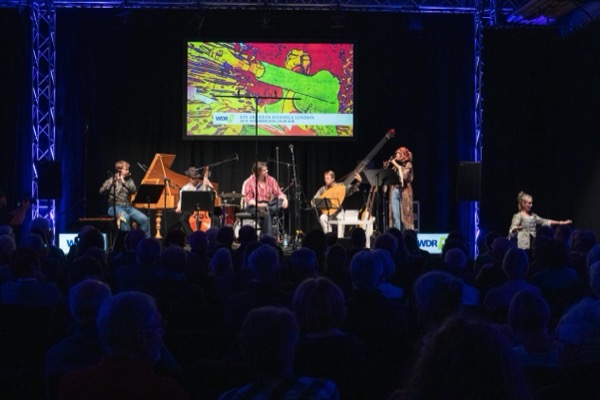
© WDR / Thomas Kost
On the final festival day, we returned to traditional historical reconstruction. Ensemble Leones, led by Marc Lewon, brought Emperor Maximilian I’s 16th-century court music to life at Herz-Jesu-Kirche. Inspired by the emperor’s massive Triumphzug woodcut frieze, the concert celebrated the newly reconstructed 1517 Schöffer-Liederbuch. Long thought lost, its missing vocal parts were recently recovered from bookbinding scraps and library donations. Voices, lutes, bagpipes, and Renaissance viols mingled seamlessly. The programme paired Burgundian wedding dances and Antoine Busnoys’s chansons with German Tenorlieder by Heinrich Isaac, Paul Hofhaimer, and Ludwig Senfl. The ensemble captured both grand imperial pageantry and intimate chamber music.
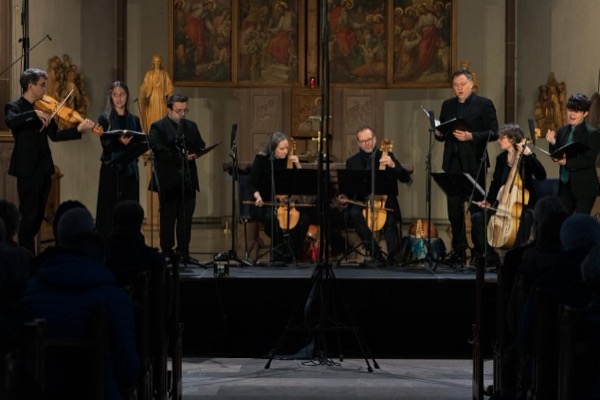
© WDR / Thomas Kost
Beyond the main church venues, the festival also uncovered a local historic treasure at St. Joseph church. English organist George Warren made his festival debut, showcasing the city’s oldest organ. Built around 1810, the historic instrument blends a bright Baroque core with later Romantic additions. Warren highlighted this wide palette through a colourful program spanning centuries. He started with William Byrd’s minimalist bell imitations in The Bells, followed by lively variations by Jean-Philippe Rameau and Johann Sebastian Bach’s sacred partita Sei gegrüßet, Jesu gütig. He closed with Felix Mendelssohn’s Sonata in A major, weaving Luther’s chorale melody into a dramatic Romantic fugue. Heard for the very first time at the festival, this instrument provided a truly unique experience.
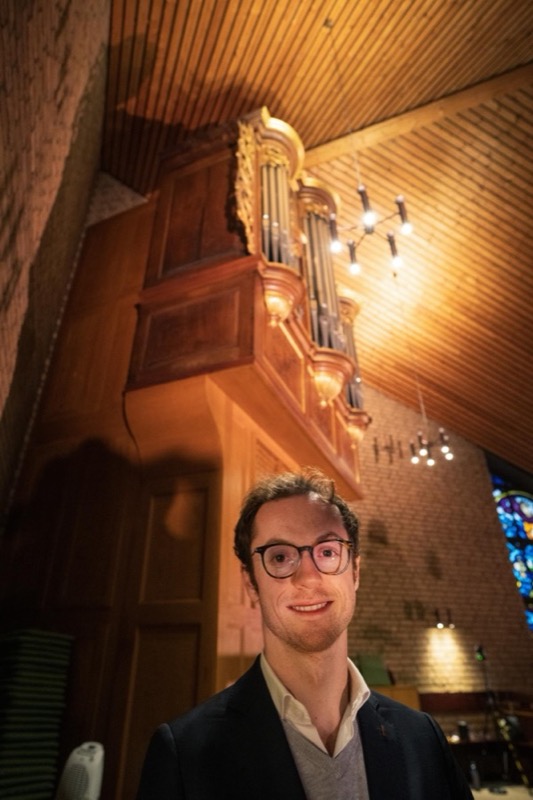
© WDR / Thomas Kost
Not every cross-temporal venture succeeded, however. Ensemble Hourglass attempted to bring the ancient Greek Hyakinthia festival to Herne. Inspired by Sappho’s verses and Gaspara Stampa’s Italian adaptations, singer Francesca Gaza blended Renaissance works with improvisation. Using historical flutes and a spinettina da gamba, the group traced the Spartan ritual from grief to rebirth across music by Josquin, Palestrina, and Willaert. While the concept behind this attempt was novel, the actual listening experience proved quite monotonous. Almost every piece became unrecognisable, shrouded in a meditative, New Age-like style, and the solo female vocals were equally unremarkable.
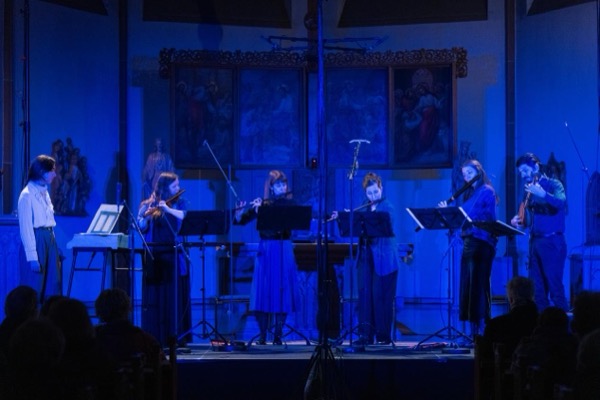
© WDR / Thomas Kost
For its fiftieth anniversary closing at the Kulturzentrum, the festival programmed Henry Purcell’s 1692 Hail! Bright Cecilia, honouring the patron saint of music. Concerto Köln and the WDR Rundfunkchor delivered clean choral fugues and crisp continuo work under Paul Krämer. Yet the vocal execution varied. Tenor Leonhard Reso stood out in the vocal trio, while soprano Inga Balzer-Wolf sounded forced, and the countertenor’s trumpet aria fell flat with a weak cadenza. More importantly, the programming itself felt puzzling. Running barely an hour, the ode relies more on poetic word-painting than direct theatrical punch, featuring more introverted moments than festive ones. Confined inside the Kulturzentrum’s dry acoustics, the music sounded flat and never fully released its energy—lacking real celebratory weight for a milestone finale.
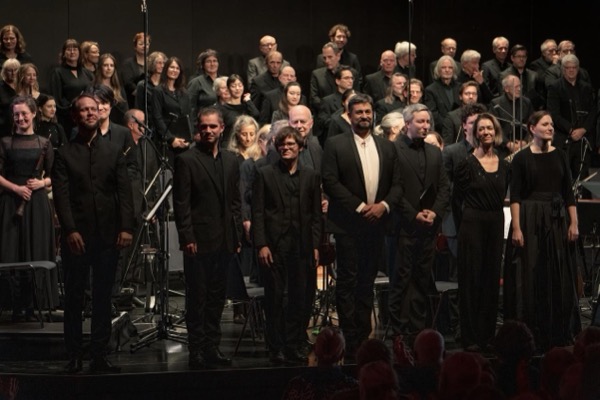
© WDR / Thomas Kost
Beyond the main stage, the festival offered a rich lineup of side events that brought early music into public spaces. Ensemble Alta Bellezza kicked things off outdoors, blasting 15th-century Piffari del Doge fanfares from the St. Bonifatius church tower. Inside the Kulturforum, Furore Ensemble and singer Mylène Kroon turned everyday shopping carts into instruments for Symphony of a Shopping Cart. Blending live Baroque music with Theo Voerste’s interactive electronics, they invited visitors to push carts around the room. Meanwhile, the Kulturforum foyer hosted two chamber concerts by talented young ensembles from local music academies. Together, these varied free programs opened up the festival to the public.
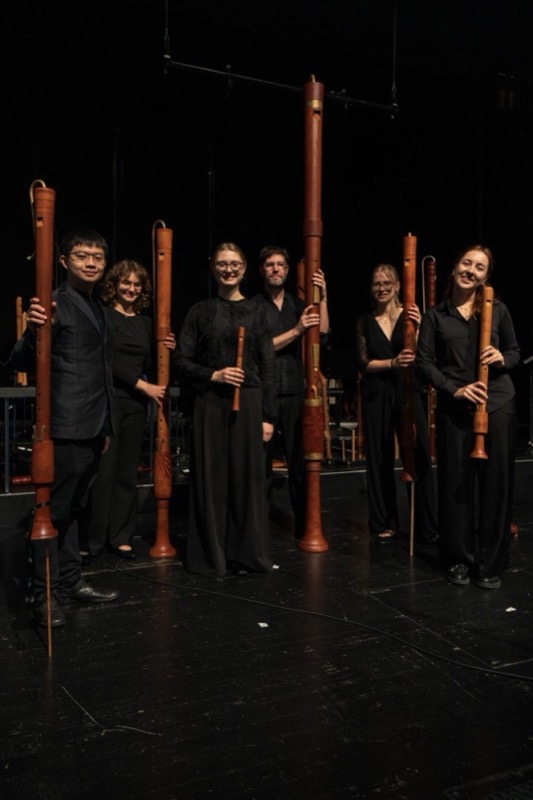
© WDR / Thomas Kost
Ultimately, this 50th-anniversary edition—curated under the vision of the festival’s new artistic director—clearly sought to honour early music traditions while becoming more inclusive and experimental. Yet in live performance, the results proved uneven. Aside from the absence of truly heavyweight flagship productions, too many programs suffered from heavy-handed concepts that overshadowed the actual musical substance.
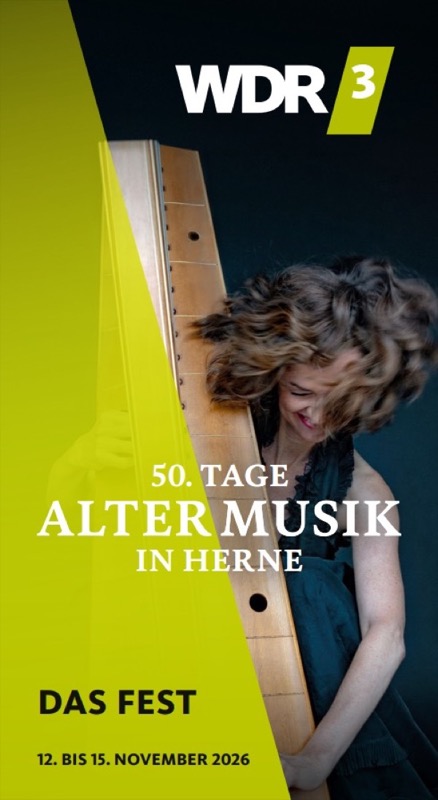
Festival Flyer Cover © WDR
For more of the best in classical music, sign up for our E-Newsletter
Live recording of opening concert “Feste Veneziane” (Replay available until 2026.12.12)
Live recording of concert “Versailles Dance” (Replay available until 2026.12.13)