Chopin didn’t invent the piano nocturne. Credit for that goes to the Irish composer John Field, whose first nocturnes were published in 1812: gentle, songlike pieces that combined a singing right-hand melody over a rippling left-hand accompaniment.
What Chopin did, was master Field’s template and then remake it, adding ornamentation, outbursts, adventurous new harmonies, and so much more.
Over the course of his career, Chopin wrote 21 nocturnes. Eighteen were published during his lifetime; the other three appeared after his death.
Part 1 of this guide covers Nocturnes Nos. 1 through 10, the four sets he published between 1832 and 1837. We’re starting with the Op. 9 nocturnes, a set finished when he was barely out of his teens, and ending with the Op. 32 pair, written when he was a freelance piano teacher for Paris aristocrats.
For each nocturne, you’ll find a recording, a composition date, and a few things to listen for.
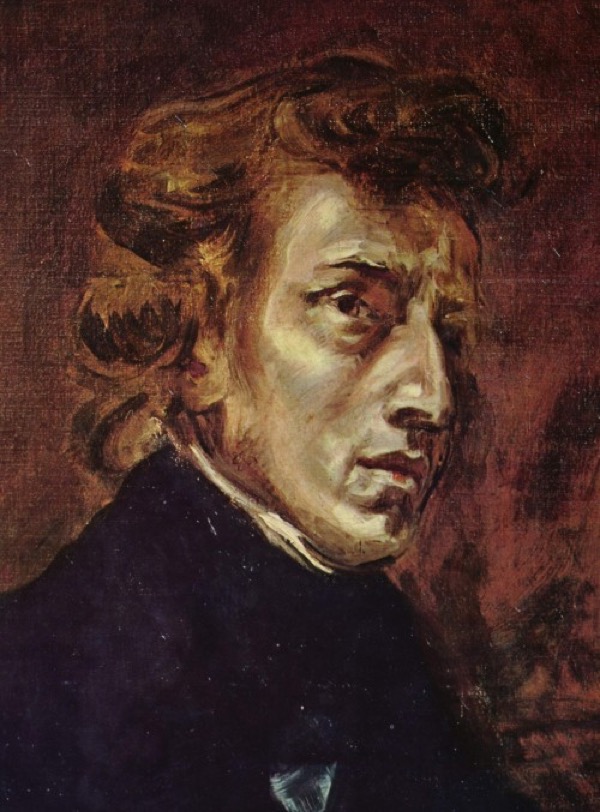
Frédéric Chopin
Nocturnes, Op. 9 (published 1832)
These three nocturnes were dedicated to fellow piano virtuoso Marie Pleyel, a free-spirited young woman who had just broken off her engagement to Hector Berlioz to marry Camille Pleyel, heir to the famous piano manufacturer, instead.
Nocturne No. 1 in B-flat minor, Op. 9, No. 1: A Polyrhythmic Nocturne
Composed: 1830–1832
- One of the challenges of this nocturne is balancing the steady rolling eighth notes in the left hand with the filigree that occurs in the right hand.
- The underlying melody is simple, but its filigree is elaborate and includes groups of eleven notes, twenty notes – even 22 notes! A player must be comfortable with polyrhythms (playing two or more separate, contrasting rhythms simultaneously) to successfully interpret the score as written.
- Its time signature is 6/4 instead of the more common 4/4 time, which contributes to the nocturne’s free, improvisatory feeling.
Nocturne No. 2 in E-flat major, Op. 9, No. 2: The Most Famous Nocturne?
Composed: 1830–1832
- This is one of Chopin’s best-known nocturnes, written when he was around twenty years old.
- It’s in 12/8 time, which lends it a swinging quality.
- Its initial theme (we’ll call it “A”) lasts for four measures; it is then repeated with additional decoration in the right hand.
- The A theme alternates with a contrasting B theme, returning in a more ornamented style each time, before new material and a flourish close the piece.
Nocturne No. 3 in B major, Op. 9, No. 3: The Fleet-Footed Nocturne
Composed: 1830–1832
- We usually think of nocturnes as slow, but this one is marked Allegretto, moving in playful fits and starts created by dotted notes, brief rests, and assorted chromatic wanderings.
- The opening theme is even marked scherzando, or joking.
- Its contrasting central section, marked Agitato (agitated), arrives without transition, leaping straight from B major into a stormy B minor.
Nocturnes, Op. 15 (published 1833–1834)
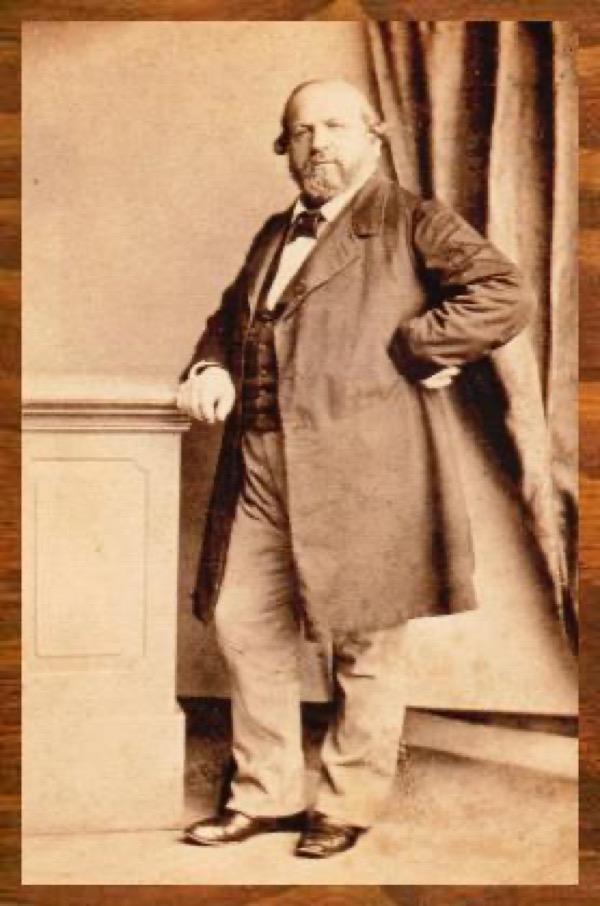
Ferdinand Hiller
These nocturnes appeared in different countries at different times between 1833 and 1834. They were dedicated to Ferdinand Hiller, a young German pianist and composer who was a close friend of Chopin’s.
Nocturne No. 4 in F major, Op. 15, No. 1: The Pastoral Nocturne with a Stormy Center
Composed: 1830–1832
- Marked Andante cantabile, this nocturne begins with a soft, simple, pastoral melody in the right hand, with triplets in the left hand.
- Like Op. 9, No. 3, it features a stormy middle section (in F minor, marked con fuoco, or with fire) with calm outer sections.
- The ending doesn’t contain a coda; instead, the nocturne finishes with two delicate arpeggios, their simplicity breathtaking.
Nocturne No. 5 in F-sharp major, Op. 15, No. 2: The Organically Noodling Nocturne
Composed: 1830–1832
- The opening theme of Chopin’s fifth nocturne is incredibly simple. The right hand goes on to noodle gorgeously up and down the keyboard; it sounds like we’re listening to Chopin experimenting in real time at the piano.
- The middle section here offers a gentler contrast than the ones in the third and fourth nocturnes: instead of startling us, it builds gradually in intensity.
- Pianist Theodor Kullak wrote that the return of the opening theme “touches [one] like a benediction.”
Nocturne No. 6 in G minor, Op. 15, No. 3: A Nocturne Inspired by Shakespeare?
Composed: 1833
- The sixth nocturne is marked Lento (slowly).
- Its most striking moment comes later in the piece, when the music becomes distinctly hymnal in character. (It’s even marked Religioso.)
- After attending a performance of Hamlet, Chopin wrote a subheading reading “At the cemetery”, possibly referring to the gravedigger scene in the play. However, in the end, he crossed out the words before the nocturne’s publication, declaring, “Let them figure it out for themselves.”
Nocturnes, Op. 27 (published 1837)

Thérèse d’Apponyi
Chopin’s next set of nocturnes, published as his Op. 27, consisted of just two works, compared to the earlier sets’ three. (It became his new standard practice; every future set of nocturnes would also contain two.)
He dedicated these two nocturnes to Countess Thérèse d’Apponyi, wife of the Austrian ambassador to France. She took piano lessons from Chopin and held famous Sunday salons at the Hotel de Monaco.
Nocturne No. 7 in C-sharp minor, Op. 27, No. 1: The Eerie Nocturne
Composed: 1836
- The opening to this nocturne is one of the eerier moments in Chopin’s output; it is unclear whether the music is in a major or minor key, resulting in a distinctly unsettling atmosphere.
- The left hand ripples like water in a brook, suggesting a restless, forward-moving narrative. Pianist David Dubal wrote that the Op. 27 nocturnes are “more aptly described as ballades in miniature” than traditional nocturnes.
- The music blooms into a desperate, determined dance in 3/4 time – before the drama recedes and the rippling left hand returns.
Nocturne No. 8 in D-flat major, Op. 27, No. 2: The Nocturne Liszt Echoed?
Composed: 1836
- Chopin’s eighth nocturne is one of his most popular works. It opens with an undulating figure in the left hand, then introduces a vocal-like melody marked dolce (gently).
- As this right-hand theme is repeated, it gets increasingly ornamented. Chopin also doubles it by using intervals like thirds and sixths, which creates harmonies that make it sound as if two similar voices are singing together.
- It is often compared to Liszt’s famous Consolation No. 3 in D-flat major, which was printed the year after Chopin died.
Franz Liszt: Consolations, S172/R12: No. 3 in D-Flat Major: Lento placido (Donka Angatscheva, piano)
Nocturnes, Op. 32 (published 1837)
Chopin dedicated his next set of nocturnes to Baronne Camille de Billing (née de Courbonne), a musical member of Parisian high society.
These are among the less frequently performed nocturnes, but they are intriguing in their own way.
Nocturne No. 9 in B major, Op. 32, No. 1: The Nocturne of Rambling and Ritardanos
Composed: 1837
- This nocturne begins with some perfectly lovely rambling, with multiple moments marked ritardando: slowing, then picking back up – like human breath.
- Its most startling feature comes in the final bars, with a darker, more intense section that sounds like an operatic recitative.
- Pianist David Dubal wrote that this coda “completely shocks the listener out of reverie.”
Nocturne No. 10 in A-flat major, Op. 32, No. 2: An Ending Recalling a Beginning
Composed: 1837
- After an initial set of slow chords, the expansive first theme of this nocturne begins, featuring a loping triplet accompaniment in the left hand.
- The nocturne then takes a turbulent turn; the time signature switches from 12/8 to 4/4, and the key into F minor (the relative minor of A-flat major) before shifting back to the original time signature and key.
- Rather than a grand cadence, the nocturne closes with the same quiet chords that opened it.
Conclusion
Over five years, between 1832 and 1837, between the ages of 22 and 27, Chopin published ten nocturnes.
By the end of that period, he’d altered the genre he’d inherited from Field. A nocturne was no longer just a mellow, polite piano piece. In Chopin’s hands, a nocturne could include anything from a funeral hymn to a ballade-like narrative.
Stay tuned to see where Chopin took the nocturnes in the years to come.
For more of the best in classical music, sign up for our E-Newsletter