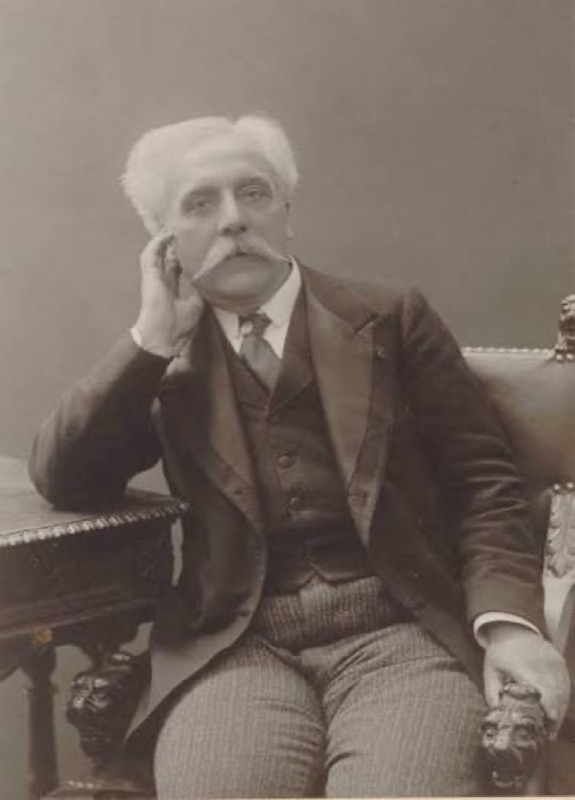
When György Cziffra made his Paris debut in 1956, one performance review carried the headline, “Franz Liszt has arisen from the dead in a demonic experience, eliciting the landscape and soul of Hungary like a vision in drama and transfiguration.”
Cziffra often spoke about his close spiritual and artistic connection to Franz Liszt. Both were Hungarian, both lived in exile, and both started playing the piano at a very early age. And, as he explained, “I was making people happy with my improvisations, just like him”.
A Kindred Spirit
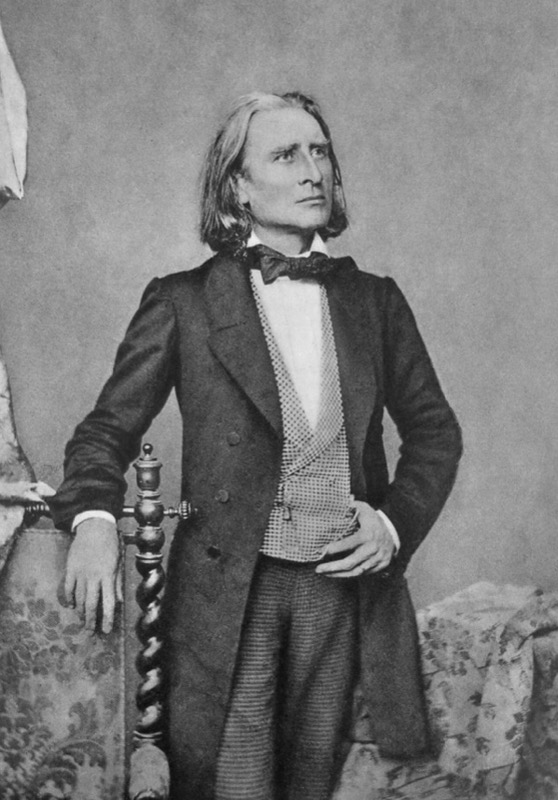
Franz Liszt
Furthermore, Cziffra considered his improvisation to be as much interpretation as actual creation. “So, I think, I am also a creator from another respect, certainly not to the same extent as Franz Liszt was, but some congenial trait we do share.”
To celebrate the birthday of this extraordinary pianist, born on 5 November 1921 in Budapest, Hungary, let’s feature some of his most stunning Liszt performances.
György Cziffra plays Liszt: Jeux d’eau
An Instinctive Bond with Liszt
In her doctoral dissertation, Elizabeth Loparits transcribed a 1984 radio interview with György Cziffra, conducted in Budapest by András Bálint Varga. Cziffra shared that he had a natural understanding of Liszt.
“I saw his work on paper, and somehow I found an immediate and innate connection with the music. This was such a phenomenon that I could hardly find an explanation for it. Still, today, I work on a Liszt piece extremely little. I learn them exceptionally quickly.”
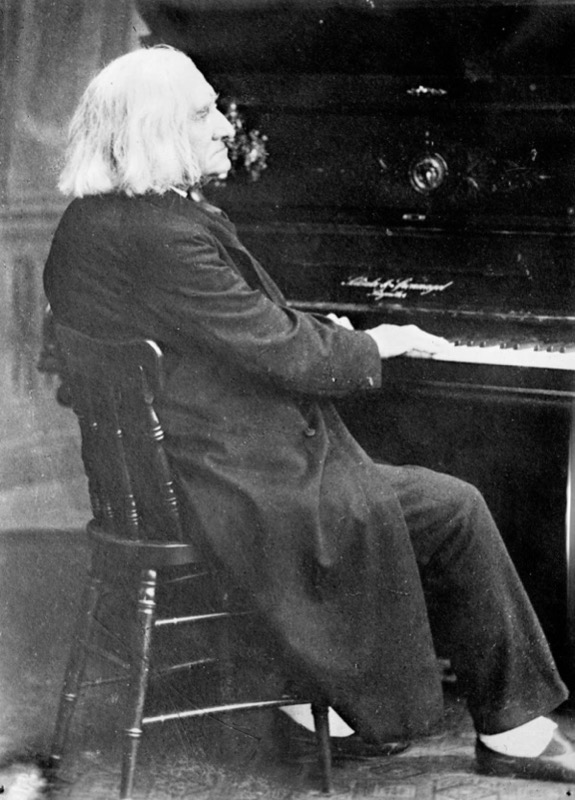
Franz Liszt at the piano
An almost obvious starting point is Cziffra’s Prague 1955 recording of Liszt’s Second Hungarian Rhapsody, and there is a good reason why this work has become one of the most recognisable piano showpieces.
The opening has an immediate sense of theatricality, gathering urgent momentum as if improvised. Rhythmic flexibility and dazzling fingerwork control the rubato and the build-up, yet the music always seems to teeter at the edge of a cliff.
Franz Liszt: 19 Hungarian Rhapsodies, S244/R106: No. 2 in C-Sharp Minor (György Cziffra, piano)
The Art of the Unexpected
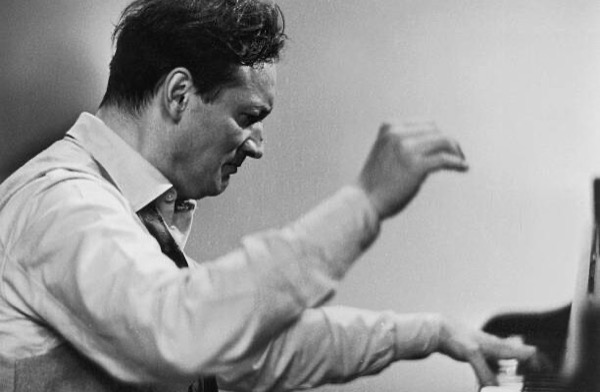
György Cziffra
For a sense of Cziffra’s infectious spontaneity, let’s turn to his performance of the Sixth Hungarian Rhapsody. The stately opening with its elaborate embellishments gradually gives way to an accelerating dance.
Probably the most appealing aspect is how Cziffra shapes the contrasting episode. Under Cziffra’s hands, the piano occasionally dances, declaims with great gravity, and then erupts in dazzling fireworks. The interpretation seems born in the moment, and it keeps reinventing itself as the music unfolds.
György Cziffra plays Liszt: Hungarian Rhapsody No. 6
A Wild Ride
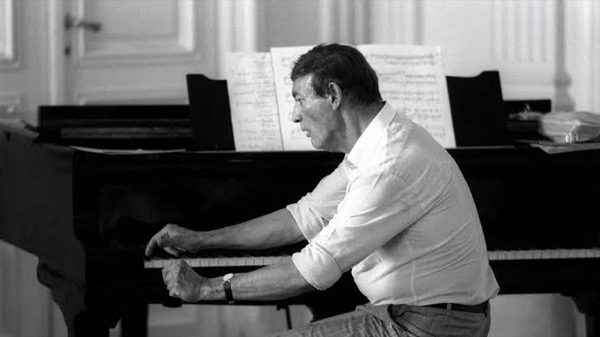
György Cziffra
It is always amazing to me how great a storyteller Cziffra was at the piano. And there is probably no better piece to experience this aspect of his playing than his performance of Mazeppa. This spectacular piece from the collection of twelve Transcendental Études is, of course, inspired by a literary legend.
As a wild horse drags Ivan Mazeppa across the Ukrainian steppe, the music becomes part of this increasingly desperate and exhausting ride. This is Cziffra’s musical landscape: relentless movement and thunderous chords that demand extraordinary stamina. The technical demands are never apparent, as Cziffra is completely focused on the dramatic narrative.
Franz Liszt: 12 Études d’exécution transcendante, S139/R2b: No. 4 in D Minor, “Mazeppa” (György Cziffra, piano)
Full of Mischief
Cziffra isn’t simply a master of thunderous chords, as he can dart to and fro with seemingly impossible agility. In “Gnomenreigen,” the music conjures a mischievous world of tiny, elusive creatures.
Rather than relying on brute force, Cziffra delights with precision and delicacy. And listen to his incredibly quick changes of register. All those technical difficulties dissolve into a sparkle of notes scattered across the keyboard. Among those touches of refracting light, there seems to be a good amount of humour, too.
György Cziffra plays Liszt: Gnomenreigen
Chasing Elusive Lights
Liszt’s mischievous imagination enters an elusive musical world in “Feux follets.” The title refers to will-o’-the-wisps, those mysterious flickering lights traditionally associated with marshes and nocturnal landscapes. It is probably one of the most technically treacherous pieces in the entire piano repertoire.
However, in Cziffra’s hands, the rapid double-note passages, often asymmetrical and unpredictable, become almost weightless. Nothing in Cziffra’s playing feels mechanical, as he draws out the whimsical, mysterious character implied by the title. Flashes of light appear and magically disappear, with the music chasing something it can never catch.
György Cziffra plays Liszt: 12 Études d’exécution transcendante, “Feux follets”
The Weight of History
With “Funérailles”, we enter an atmosphere of mourning and desolation that unfolds into an imposing funeral march. It is the seventh and one of the most famous pieces in Harmonies poétiques et religieuses (Poetic and Religious Harmonies).
It was written in response to the crushing of the Hungarian Revolution of 1848 by the Habsburgs. Composed in four distinct sections, it repeats three main themes throughout, and the central section features enormous octave writing that sounds orchestral under Cziffra’s hands.
I always marvel at the remarkable sense of gravity that Cziffra brings to the music. It might well resonate with his personal experiences, including his arrest and imprisonment before his eventual escape into exile. The piano becomes an instrument of grief and remembrance, and the emotional intensity is palpable in every note.
György Cziffra plays Liszt: Harmonies poétiques et religieuses, “Funérailles”
Final Encore
There is probably no better way to conclude this feature on Cziffra than to watch him play one of Liszt’s favourite encores. The Grand Galop Chromatique is a brilliant salon showpiece that became one of Franz Liszt’s great calling cards.
Cziffra notably achieved enormous audience success with his performances of the piece. We sense his seemingly unstoppable energy in the relentless chromatic motion and exhilarating momentum. Cziffra reawakens Liszt’s spirit, reminding us that the piano can entertain and sweep audiences off their feet.
Born into poverty in Budapest, and having experienced imprisonment and forced labour under the Communist regime before escaping Hungary during the 1956 revolution, György Cziffra left us with Liszt recordings that remain immensely compelling. Cziffra and Liszt shared a deep bond, as both combined unbelievable technical freedom with an unmistakable individual musical personality. In their hands, the piano turned into an instrument of boundless imagination.
For more of the best in classical music, sign up for our E-Newsletter