In the freezing winter of 1740, George Frideric Handel found himself at a creative crossroads. Having recently finished two monumental biblical oratorios, Saul (HWV 53) and Israel in Egypt (HWV 54), the composer sought a lighter, more refreshing subject for the upcoming London theatre season. The capital suffered from a shortage of top-tier Italian singers, making traditional opera difficult to stage. Handel needed an English work that would engage the public through novel theatrical and musical means. He found his answer in pure poetry. The result was L’Allegro, il Penseroso ed il Moderato (HWV 55)—a narrative-free, highly pictorial work that treats music like a painter’s canvas and stands as one of Handel’s most imaginative creations between his operatic years and his masterpiece, Messiah (HWV 56).
Mark Morris’ L’Allegro, Il Penseroso ed il Moderato | Great Performances on PBS
Handel’s close friend James Harris, an English writer, philosopher, and music enthusiast, originated the concept. In the summer of 1739, Harris conceived the idea of adapting John Milton’s celebrated 1645 companion poems, L’Allegro (“The Joyful Man”) and Il Penseroso (“The Thoughtful Man”). Harris drafted a libretto and passed it to Charles Jennens, who had previously crafted the librettos for Saul and Israel in Egypt, for further literary polish.
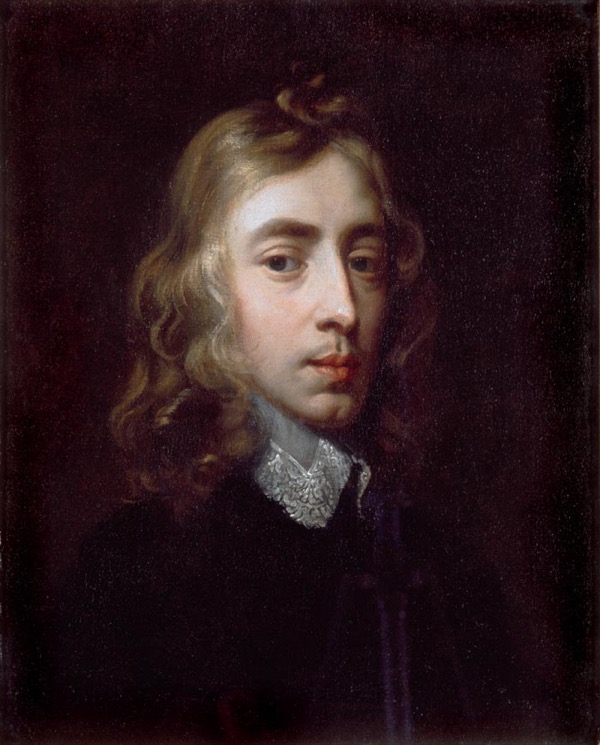
Hall portrait of John Milton (1608-1674) from Christ’s College, Cambridge
Rather than presenting Milton’s two poems sequentially—which might tire the audience with long stretches of darkness or unrelenting cheer—Harris and Jennens restructured the material into an alternating dialogue. They expanded Milton’s original five sections into sixteen contrasting vignettes. As Harris explained in his correspondence with Jennens, they aimed to show that joy and melancholy are not simple, flat emotions. Instead, each state contains distinct shades and landscapes. L’Allegro represents both rural pleasures—larks singing at dawn, hunting horns, ploughing farmers, milkmaids, and shepherds—and urban vitality, complete with crowded court assemblies, theatres, and lively dancing. Conversely, Il Penseroso explores the quiet hours of nature and reflection: nightingales, solitary moonlit walks, deep contemplation in lonely towers, and the solemn refuge of shadowy woods or grand cathedral choirs. Each section opens with a poetic rejection of the opposite state before immersing the listener in its own distinct world.
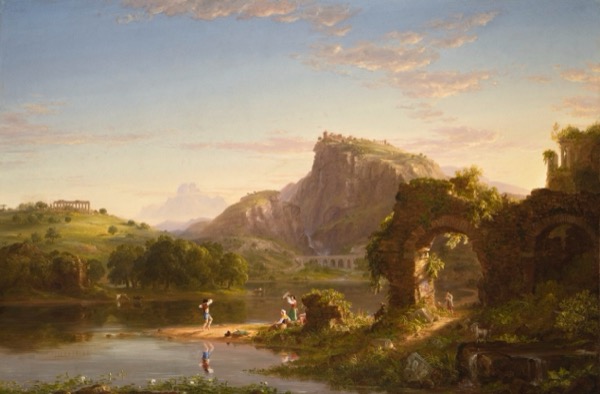
L’Allegro von Thomas Cole, New York City 1845
The libretto’s poetic imagery instantly inspired Handel. Between January 19 and February 4, 1740, he set the entire text to music in a remarkable seventeen-day burst of composition. Recognising the dramatic brilliance of these contrasting mental states, Handel requested a third section to bring the work to a satisfying conclusion. Jennens complied by writing Il Moderato (“The Moderate Man”), an original text designed to reconcile the two extremes. Drawing on Enlightenment philosophy and Shakespeare’s The Tempest, Jennens introduced the concept of the “golden mean”—the idea that human happiness is found not in wild ecstasy or deep sorrow, but in a balanced, rational harmony between the two.
Musically, Handel approached the text as a master landscape painter, deploying an extraordinarily rich orchestral palette to mirror nature and human feeling. The score is filled with inventive instrumentation and direct musical painting. Birds take centre stage in several famous numbers: a solo flute mimics the song of the nightingale in the aria “Sweet bird, that shun’st the noise of folly”, while a bassoon provides a rich, grounded foundation. Laughter appears in bright, staccato vocal lines in “Come, thou goddess fair and free”, and the bustling noise of 18th-century London comes through rapid coloratura in “Populous cities please me then”.
Handel also paints vivid natural soundscapes: hunting horns signal the chase in rural scenes, and carillon bells accompany a treble soloist, depicting country folk lulled to sleep by the afternoon sun in “Or let the merry bells ring round”. In darker moments, slow string suspensions evoke the solitary stroll under the moon. At the same time, a majestic organ entrance brings the solemn grandeur of church music directly into the auditorium during “There let the pealing organ blow”.
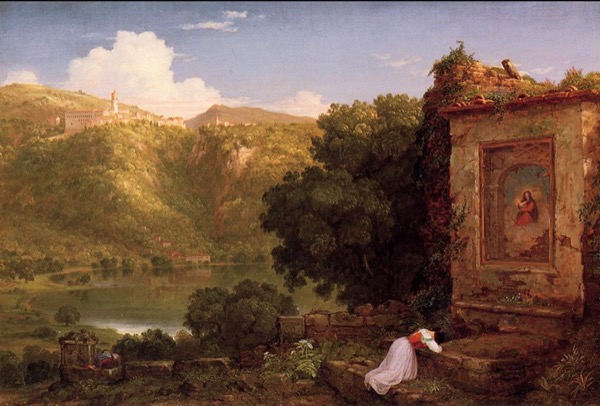
Il Penseroso von Thomas Cole, New York City 1845
The climax of the entire work resides in Part Three with the exquisite duet, “As steals the morn upon the night”. Set for soprano and tenor accompanied by oboes and bassoons, the piece adapts Prospero’s speech from The Tempest. As the two voices entwine, they describe the morning light gradually stealing over the dark, scattering the mists of ignorance and restoring clear reason. Here, Handel’s music reaches a transcendent spiritual height, demonstrating how harmony can elevate the human mind into balance with the cosmos.
The premiere took place on February 27, 1740, at the Royal Theatre in Lincoln’s Inn Fields, London. Handel carefully tailored the vocal casting according to Harris’s suggestions. The meditative persona of Il Penseroso was sung entirely by the French soprano Elisabeth Duparc (known as “La Francesina”). The energetic numbers of L’Allegro were split among three singers: tenor John Beard, bass Henry Reinhold, and a boy treble. Bass William Savage performed the rational reflections of Il Moderato.
Without writing a standard orchestral sinfonia, Handel opened and divided the performance with instrumental concertos, including his Organ Concerto in B-flat major (Op. 7, No. 1) and concerti grossi from Op. 6, performing the keyboard solos himself. The production was a notable success, despite a bitter winter spell in London that forced the theatre organisers to run multiple stoves hours before the show to ensure the hall remained warm for the audience.
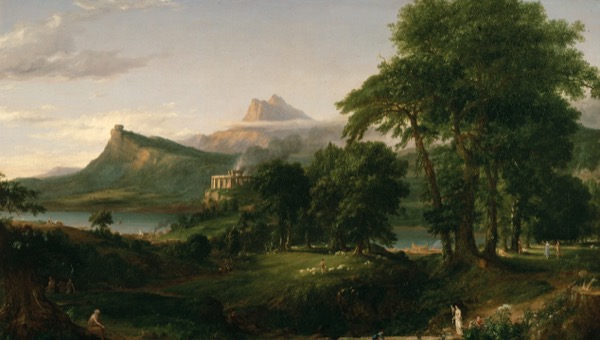
The Arcadian or Pastoral State von Thomas Cole, New York City 1836
L’Allegro, il Penseroso ed il Moderato remains one of Handel’s most original achievements. By abandoning traditional plot structures in favour of atmospheric mood-painting, Handel created an immersive musical journey through light, shadow, nature, and emotion—a timeless exploration of the human spirit in search of harmony.
For more of the best in classical music, sign up for our E-Newsletter