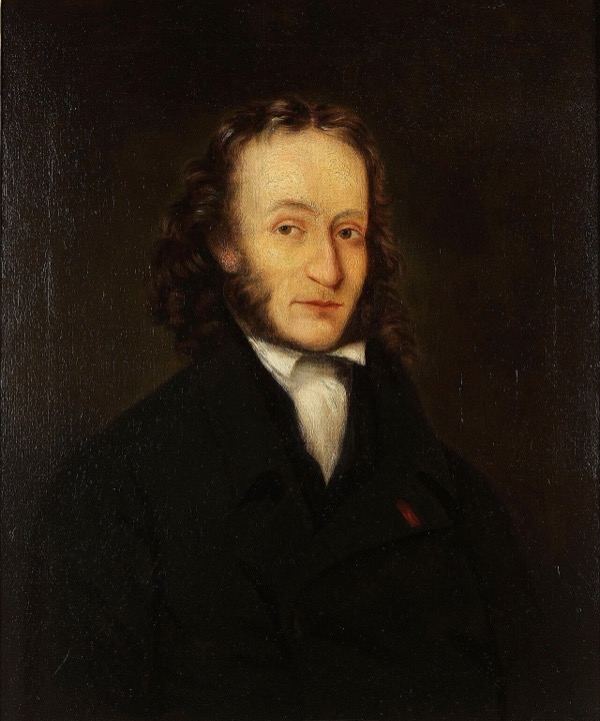
Vincenzo Bellini (1801–1835), born on 3 November 1801 in Catania, Sicily, was the undisputed master of writing gorgeous melodies. Sensuous in expression and pure in style, Bellini was closely connected with the “bel canto” style of the great singers of his day.
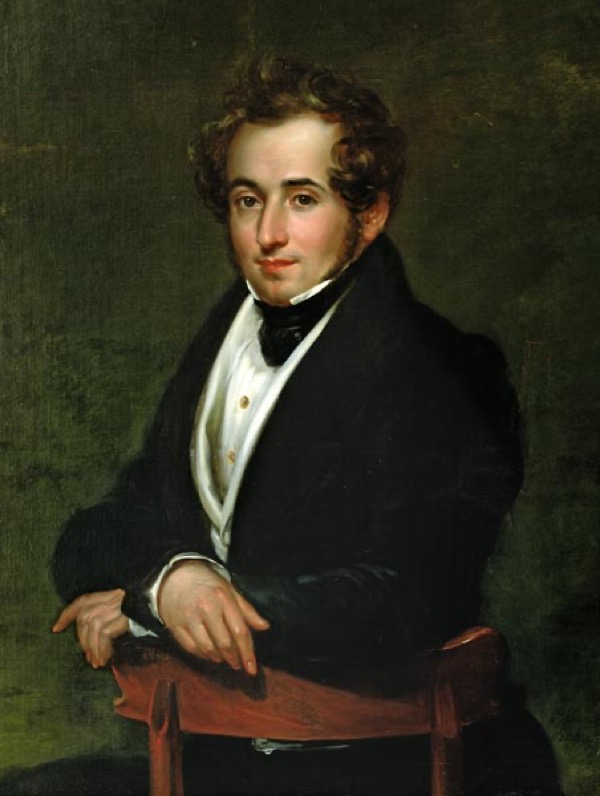
Vincenzo Bellini
In his opera Norma, he created an extraordinary fusion of sublime melody, vocal challenge, and dramatic power. Without a doubt, the soprano prayer “Casta diva” from Act 1 has become one of the most beloved arias in all of opera.
During his short life, Bellini composed ten remarkable operas. Each contains beautiful, dramatically compelling arias, and to celebrate Bellini’s birthday, let’s explore eight essential arias beyond “Casta Diva.”
Vincenzo Bellini: La Sonnambula, “Ah! Non credea mirarti”
Dream of Lost Love
Let’s get this list off the ground with one of my personal favourites, “Ah! Non credea mirarti” from La Sonnambula. This “sleepwalking opera” premiered in 1831, and the orphan Amina is engaged to the proud young farmer Elvino. Wedding bells are in the air, but then Count Rodolfo arrives, returning to his ancestral estate.
When Amina is later discovered asleep in the Count’s room, scandal explodes. Elvino, consumed by jealousy, breaks off the engagement despite Amina’s pleas of innocence. The villagers whisper; the Count protests her purity, but only one thing can prove the truth: Amina’s sleepwalking itself.
In the most famous scene, Amina drifts across a bridge in her nightgown, eyes closed, and sings her ethereal aria. She awakens in Elvino’s arms, and the tension dissolves into radiant forgiveness.
The vocal writing is pure bel canto, with luminous legato lines and crystalline trills. Her lament over lost love feels like a sigh that never ends, but the cabaletta bursts into radiant joy. By any measure, this has to be a top pick from Bellini’s arias.
Vincenzo Bellini: I Capuleti e i Montecchi, “Oh! Quante volte”
Love Meets Family Feuds
Bellini was asked to write an opera for the 1830 Carnival season at the Teatro La Fenice in Venice. He responded with I Capuleti e i Montecchi in about six weeks. The story comes from an earlier Italian version of the Romeo and Juliet tale, rather than the Shakespearean play.
Lorenzo is Juliet’s physician, and Tybalt, already engaged to Juliet before the curtain rises, wants to kill Romeo to avenge the latter’s earlier killing of Juliet’s brother in battle. It’s all a bit complicated, I know.
Romeo and Juliet already know each other, and he crashes the wedding party. The most famous number is Juliet’s romanza “Oh! Quante volte.” Sung while she waits for Romeo, this sombre lament expresses her frustration with everyone’s wedding plans.
It combines yearning and resignation in a melody that unfolds without ever reaching its destination. Time seems almost suspended as the emotional intensity emerges from extraordinary melodic restraint.
Vincenzo Bellini: I Puritani, “Vien, diletto, e in ciel la luna”
Heartbreak and Happiness
Bellini’s last opera, I Puritani, was first staged in Paris in January 1835, and it is based on an obscure French play set during the English Civil War. Nevertheless, it is undoubtedly one of Bellini’s most ambitious and beautiful works.
The action opens at a Puritan fortress near Plymouth, and Elvira has agreed to marry the Royalist sympathiser Arturo. At the same time, her father wants her to marry the Puritan officer Riccardo instead.
Elvira, believing herself betrayed, experiences a mental breakdown. In her madness, she mistakes Riccardo for Arturo, who finally agrees to help her if the two men will put aside their differences. Elvira eventually comes back to her senses, and everybody rejoices as Elvira and Arturo embrace their new happiness.
Bellini wrote this music at the summit of his creative powers, and this “Mad Scene” creates a remarkable portrait of psychological turmoil. A cornerstone of the bel canto repertoire, this aria is famous for its extreme coloratura and delicate trills, which portray a mind teetering between sorrow and elation.
Vincenzo Bellini: I Puritani, “A te o cara”
Great Tenor and a Beautiful Melody
Let’s stay with I Puritani for our next selection and the aria “A te, o cara” (To you, O dear one). This is Arturo’s first entrance aria, and it is one of the most soaring of all Bellini tenor arias. It is possibly the loveliest musical passage in his entire role.
Bellini wrote Arturo for the legendary tenor Giovanni Battista Rubini, whose extraordinary upper register defined the role’s vocal demands. The vocal writing reaches a spectacular high C in a moment of technical difficulty and dramatic significance.
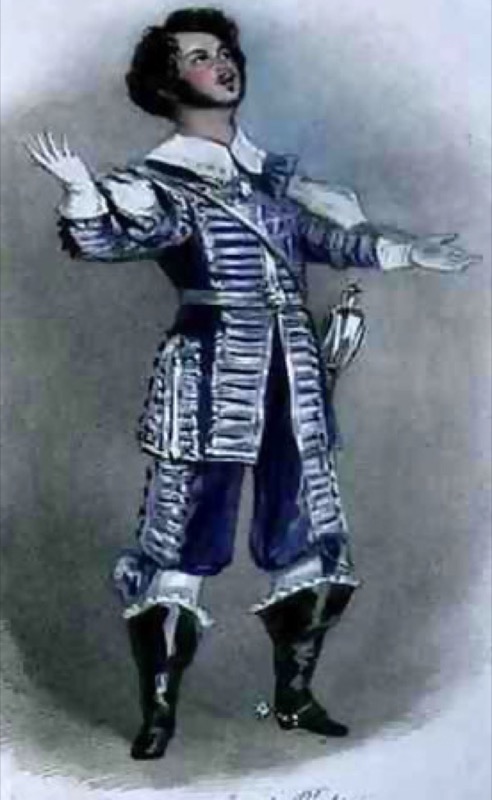
Giovanni Battista Rubini as Arturo in I Puritani
For Bellini, melody becomes the principal vehicle of human emotion. But it’s not that simple, as he makes Arturo’s melody almost fragile. Yes, there is a radiant and soaring melody, but there is also a sense of longing, and the pain that came before has not been forgotten.
Vincenzo Bellini: Il Pirata, “Col sorriso d’innocenza”
The Tormented Heroine
Almost everyone in music knows the famous recordings of Maria Callas singing Norma. However, she is just as impressive as Imogene in Bellini’s second opera Il Pirata, which premiered in 1827 at La Scala.
The exiled Count of Montaldo, Gualtiero, lives as a pirate while being pursued by his enemy, Ernesto, the Duke of Caldara. Both men love Imogene, and she has been forced to marry Ernesto. After Gualtiero is shipwrecked near Ernesto and Imogene’s castle, Imogene recognises him.
They reaffirm their love, but Gualtiero cannot convince Imogene to leave her husband and their young child. Ernesto returns to hear his wife admit her love for his enemy.
In the subsequent duel, Gualtiero kills Ernesto, and he is then sentenced to death. As he bids farewell, the despairing Imogene loses her mind.
In “Col sorriso d’innocenza,” we find a different side of Bellini’s craft, as he places a beautiful bel canto melody within a deeply disturbing situation. Imogene is caught between maternal love, guilt, and fear of the impending tragedy. This is not a simple, isolated aria; Bellini constructs a complete psychological portrait.
Vincenzo Bellini: La straniera, “Ciel pietoso, in si crudo momento”
Alaide’s Lament
Next, let’s look at a comparatively neglected Bellini opera: La straniera (The Foreigner). It premiered at La Scala in Milan in 1829, and here Bellini moves away from the conventional romantic heroine.
The central character, Alaide, is a mysterious woman living in isolation. She is actually of royal birth, but has abandoned her former life. Arturo has become fascinated by her, but he is already engaged to Isoletta.
Arturo’s obsession with Alaide threatens the impending marriage, and she recognises Isoletta’s unhappiness. She reveals herself and persuades the couple to enter the church and proceed with their marriage. She then remains outside, alone, and sings “Merciful Heaven, in such a cruel moment.”
The musical language is intensely personal, as Alaide is addressing Heaven because she has reached the limits of what humans can bear. She understands that Arturo must never hear her name again, and, realising that the marriage vows have been spoken, she collapses at the foot of a monument.
Vincenzo Bellini: La Sonnambula, “Vi Ravviso, o luoghi ameni”
Remembering the Past
Switching into the bass register for now, “Vi ravviso, o luoghi ameni” from La Sonnambula is surely one of the most beautiful and distinctive arias in the repertoire. Count Rodolfo sings it when he returns to the village of his childhood.
In a burst of nostalgia, he recognises the places and happiness of his youth. Yet, he quickly realises that although the landscape remains unchanged, he cannot recover the past.
In this unforgettable aria, Bellini composes music that sounds like a soprano cantabile transferred to the bass voice. The graceful melodies are built from extended phrases that flow naturally into one another.
The concluding cadenza is particularly difficult to sing, as it emerges naturally from Rodolfo’s recollection. It requires technical security and a deep understanding of the music’s emotional direction.
Vincenzo Bellini: Norma, “Qual cor tradisti”
Final Confession
“Casta diva” might well be the most celebrated number in Norma, but the opera offers several other unforgettable vocal moments. Just listen to Norma’s devastating final confrontation with Pollione, where love, betrayal and self-sacrifice all come together.
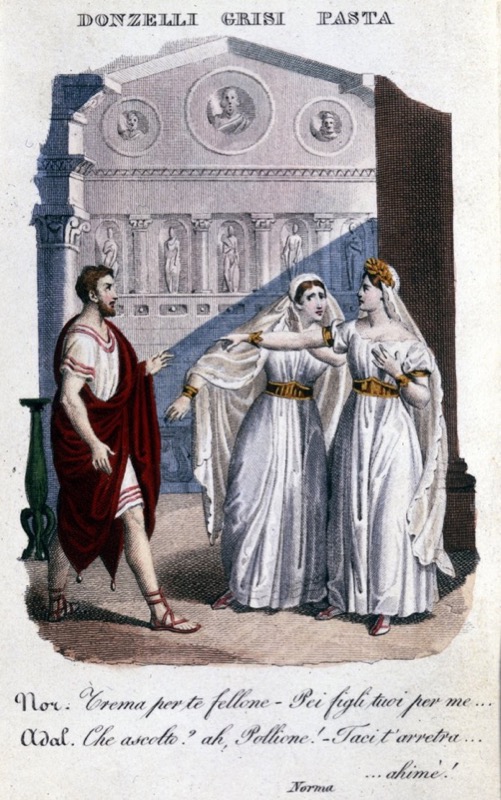
The Interpreters of the first performance of La Norma
This selection, like several others on our essential list, “Qual cor tradisti, qual cor perdesti” is not a self-contained solo aria but the opening of a larger finale. The dramatic setting couldn’t be more impressive.
Norma has discovered that Pollione intends to abandon her for Adalgisa. Desperate, she even contemplates killing her own children, but then entrusts them to Adalgisa. Norma confronts Pollione and demands that he abandon Adalgisa, and when he refuses, she threatens the younger woman with death.
But here comes the kicker, as Norma announces that a priestess has violated her sacred vows. When everyone demands to know the culprit, she condemns herself. And that’s when the aria begins.
Vincenzo Bellini rose from humble beginnings to conquer operatic stages in Italy, London and Paris by storm. Famous for creating sensuous vocal melodies, crafted with individual charm and elegance, Bellini wrote his musical jewels by slipping into the roles of his theatrical characters.
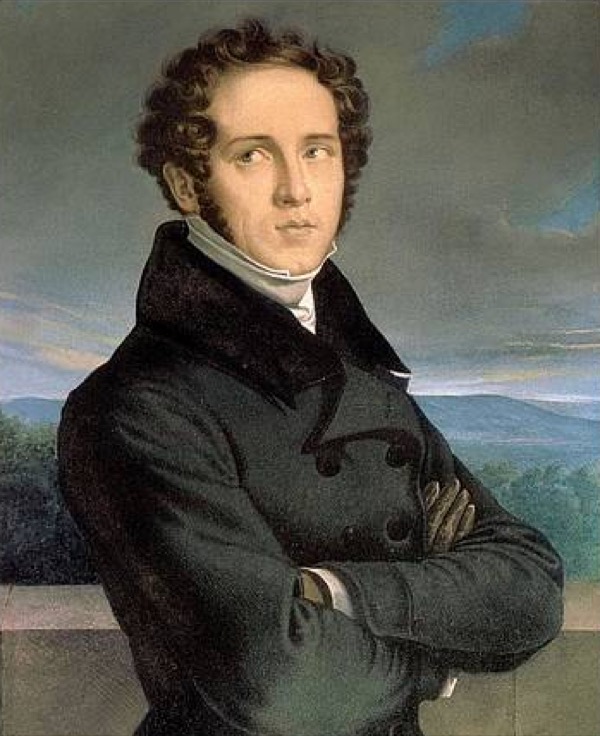
Vincenzo Bellini
His works greatly influenced later operatic compositions, but his unique capacity for expressiveness continues to resonate across the centuries.
For more of the best in classical music, sign up for our E-Newsletter