Charles Ives, born on 20 October 1874 in Danbury, Connecticut, is regarded as the leading American composer of art music of the early 20th century. He composed only in his free time, turned down a professional music career, and made his living in the insurance business for more than three decades.
Given this unusual career trajectory, Ives was long considered an isolated and idiosyncratic American figure. Yet he was an accomplished musician whose work drew on three musical traditions: American vernacular music, Protestant church music, and European classical music.
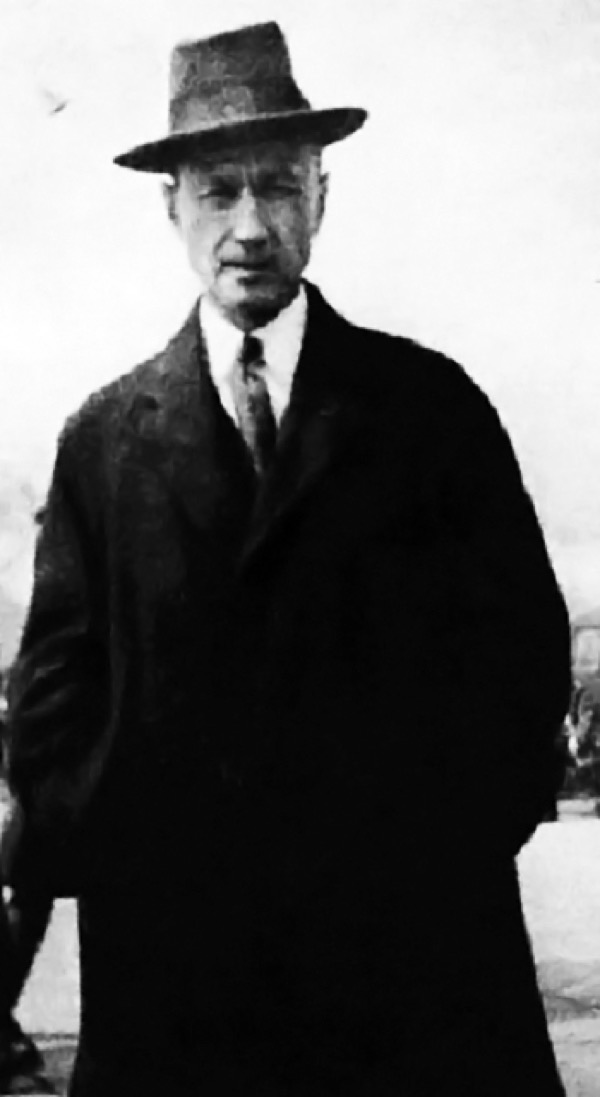
Charles Edward Ives (1913)
Ives had his finger on contemporary currents in American life, and he was influenced by a variety of intellectual currents, including what was later described as “New England Transcendentalism.” To celebrate his birthday, let’s take a closer look at one of his most remarkable works, his Piano Sonata No. 2, also known as the “Concord Sonata.”
Charles Ives: Piano Sonata No. 2, “Concord, Mass., 1840–60”: I. Emerson: Slowly – Slowly and quietly (John Kirkpatrick, piano)
Walden Pond

Henry David Thoreau by Benjamin D. Maxham
Ives’ “Concord Sonata” draws on the world evoked by Henry David Thoreau’s publication Walden; or Life in the Woods, first issued on 9 August 1854. In a series of 18 essays, Thoreau provides a vivid account of his two years living in isolation in a cabin on the shore of Walden Pond.
From the outset, Thoreau establishes the principal aim of his return to a simpler life. He writes, “I went to the woods because I wished to live deliberately, to front only the essential facts of life, and see if I could not learn what it had to teach, and not, when I came to die, discover that I had not lived. I did not wish to live what was not life, living is so dear; nor did I wish to practice resignation, unless it was quite necessary.”
Walden became one of the most influential and compelling books in American literature, and musicologist Agnieszka Jeż locates its publication within an original American philosophy subsequently described as “New England Transcendentalism.” This philosophical movement represented the values and concepts which were particularly esteemed by the thinkers of the New World: equality, independence, and autonomy.”
Charles Ives: Piano Sonata No. 2, “Concord, Mass., 1840–60”: II. Hawthorne: Very Fast (John Kirkpatrick, piano)
Four Wise People
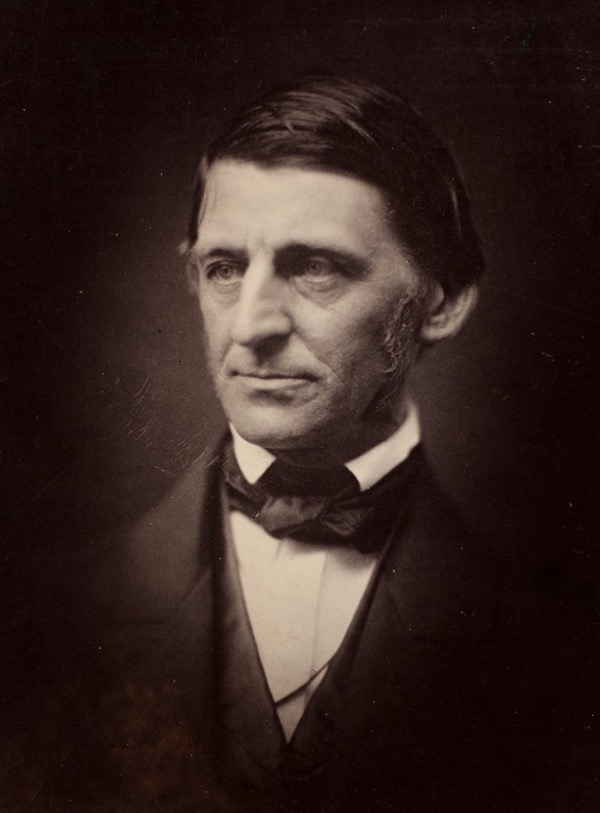
Ralph Waldo Emerson by Josiah Johnson Hawes (1857)
Ives dedicated his “Concord Sonata” to “four wise people” associated with the philosophy of transcendentalism: Ralph Waldo Emerson, Nathaniel Hawthorne, the Alcotts (Bronson and his daughter, Louisa May Alcott), and Henry David Thoreau.
They all lived in or were associated with Concord, Massachusetts, now part of the Greater Boston area. Founded in 1635 by a group of English settlers, the town became famous for the opening battle of the American Revolutionary War. In fact, the famous phrase “shot heard around the world” originated in the opening stanza of Ralph Waldo Emerson’s 1837 poem “Concord Hymn.”
Emerson was part of a rich literary community shaped by Transcendentalism that developed in Concord during the mid-19th century, and the author Henry James called Concord “the biggest little place in America.”
Charles Ives: Piano Sonata No. 2, “Concord, Mass., 1840–60”: III. The Alcotts: Moderately (John Kirkpatrick, piano)
From Manuscript to Memory
Although some material in the Concord Sonata dates back to 1904, Ives did not begin substantial work on the piece until around 1909. The work was mostly completed by 1915 and published in 1920. In January 1921, Ives sent copies of this sonata to hundreds of total strangers.
Moreover, Ives prefaced the sonata with “Essays Before a Sonata,” which essentially serves as a set of programme notes. In these essays, we find the philosophical ideas of the aforementioned American Transcendentalists and an exploration of how their thoughts influenced the composition.
Ives explains that the essays are intended to illuminate the ideas behind the sonata and invite readers to consider how music can articulate complex emotions and philosophies. He poses questions about the nature of music, its emotional impact, and how subjective experiences can be expressed through sound.
The first complete performance was given on 28 November 1938 by pianist John Kirkpatrick in a private setting, and on 20 January 1939, he played the work in New York from memory. The performance attracted considerable critical attention and helped to establish Ives in the American musical consciousness.
Charles Ives: Piano Sonata No. 2, “Concord, Mass., 1840–60”: IV. Thoreau: Starting Slowly and Quietly (John Kirkpatrick, piano)
An American Original
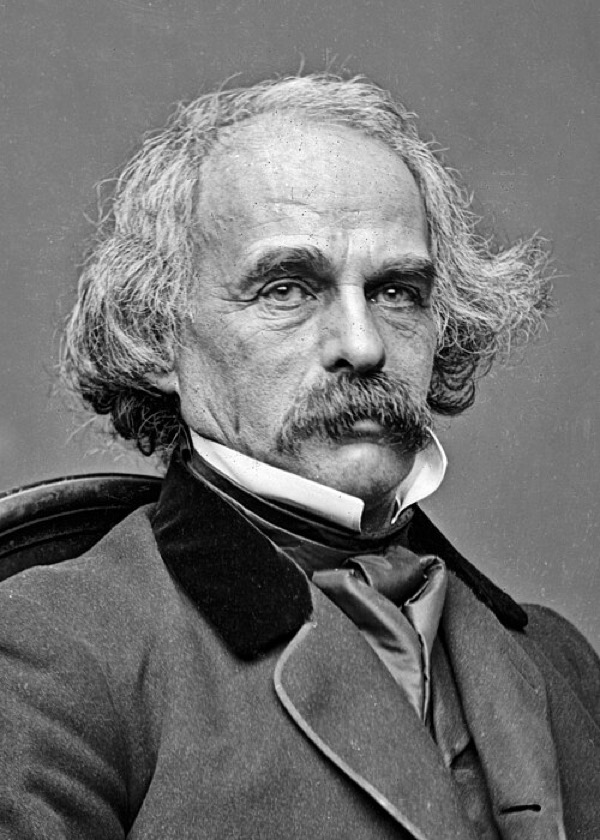
Nathaniel Hawthorne by Brady (1860–64)
None of the movements is pianistic, and we immediately notice the absence of familiar pianistic gestures. Instead, we find highly expressive chromatic harmonies, fast passages, and complicated rhythms bound together by the celebrated four-note “fate” motif from Beethoven’s Fifth Symphony. This motif shifts from a craggy, pounding emblem in “Emerson” to a hymn-like guide in “The Alcotts.”
The movement dedicated to Nathaniel Hawthorne concentrates on fairy-like elements associated with the world of children’s fantasy. Hawthorne dedicated part of his work to this topic, but most readers know him better for exploring the dark side of the human soul and creating an atmosphere of terror.
The third movement becomes more lyrical and delicate, as it is dedicated to the memory of Bronson Alcott and his daughter, Louisa May. This short movement is a mostly tonal and harmonious family portrait. We meet Bronson at the outset in the left hand, conversing with his friend Sam Staples in the right hand, in a moment of bitonality. We also meet the famous Louisa May, who portrayed a fictional version of her family in Little Women.
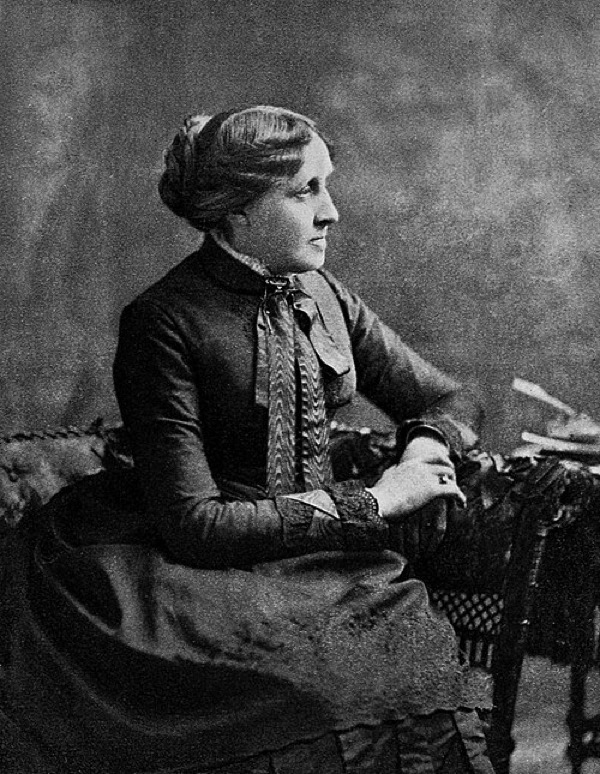
Louisa May Alcott
The Transcendental hero Thoreau, in the final movement, leads us away from society’s bustle and into the quiet of nature. Ives offers a detailed musical narrative, with the piano evoking a landscape of shifting sounds and silence. In its closing passage, a flute may join the pianist in one of the most extraordinary moments in a piano sonata.
For all the instinctive cohesion and sustained invention of the “Concord Sonata,” an improvisatory impulse governs its sense of flow and declamation. Ives never played the work the same way twice, and often added material, altered notes, and even interpolated passages that were not written out.
For Ives, this sonata always seemed unfinished. Nowadays, most pianists play from the standard 1947 edition, which incorporates many changes and corrections Ives had made over the years, including after the work first appeared in print. Yet, earlier sources show fascinating and plausible alternative readings. That said, the work broke the rules of its time and opened the door to a distinctly American voice.
For more of the best in classical music, sign up for our E-Newsletter