This landmark 2026/27 season celebrates the Elbphilharmonie’s 10th anniversary while aligning with USA250. Accordingly, the Hamburg operator ambitiously gathered nearly all top-tier American orchestras in the programme. However, just a week before taking the stage at the Elbphilharmonie, anxieties of a Cleveland musicians’ strike cast uncertainty over whether this much-anticipated tour would even happen. Fortunately, the crisis was resolved over a single weekend—after all, no musician could turn down the irresistible allure of a month-long European tour and the chance to perform in premier venues like Hamburg and Vienna.
Franz Welser-Möst on Shostakovich | Loss and Hope in Times of Uncertainty
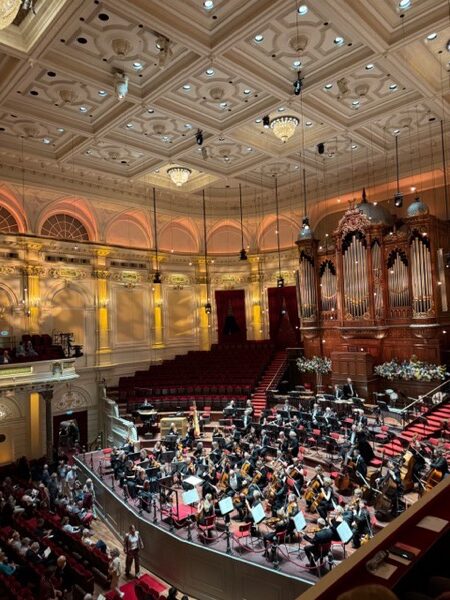
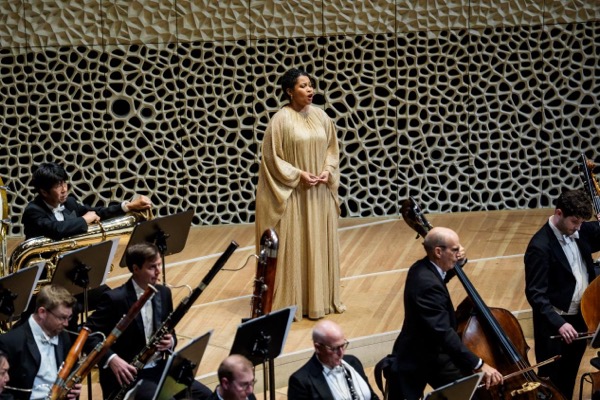
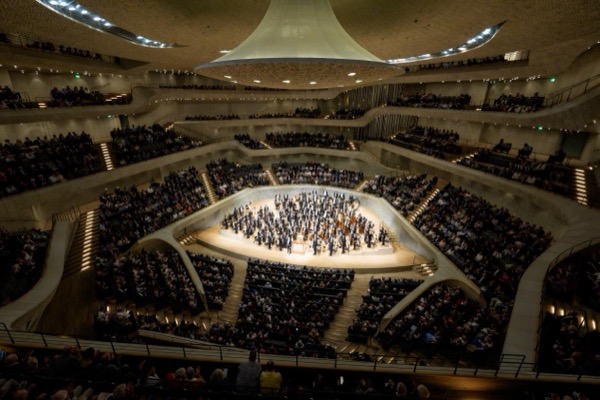
Adopting an American pit layout, the Cleveland Orchestra opened the evening with Richard Strauss’s Four Last Songs. Under Welser-Möst, the orchestra focused intently on internal listening and dialogue between voices. Instead of sounding overly saturated, Strauss was given a remarkably light and flowing interpretation, with a tempo that felt effortlessly natural.
Munich-based soprano Golda Schultz delivered a sound that was delicate and exceptionally transparent. Projected from deep behind the orchestra, Schultz’s voice carried through across Cleveland’s rich sonic landscape, making her vocal line feel even more sophisticated. Her timbre was full without being metallic, featuring a moderate vibration and a radiated warmth that was deeply sympathetic.
© Sebastian Madej
Although the published song order differed from Strauss’s original compositions, the arrangement still created a powerful sense of continuity. In the second song, “September,” Schultz was accompanied by sensitive woodwinds, vividly conveying the poetry of the lyrics through subtle changes in shade. The third “Beim Schlafengehen,” felt much more internal, and the concertmaster’s noble, vocal-like solo delivery was deeply impressive.
The opening of the final song, “Im Abendrot,” featured a delicate introduction from Cleveland before stepping together with Schultz into nostalgia. This farewell was clearly not a simple piece of sentimentality; instead, it felt relatively light, almost carrying a sense of frailty—a calm and satisfied way to say goodbye.
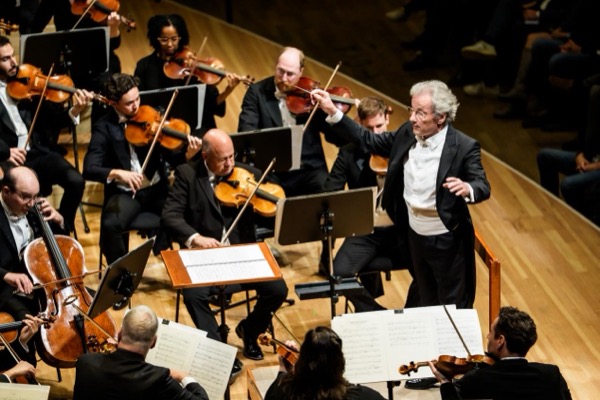
Pivoting from the refined swan song of Richard Strauss, the atmosphere of the second half of the concert changed drastically to the crushing weight of Shostakovich’s Symphony No. 8 in C minor. If Strauss managed to digest the destruction of the world with a sort of transcendence, Shostakovich had no access to that kind of bourgeois grace to deal with his external environment—nor, of course, was the cruelty he faced on anything remotely similar.
© Sebastian Madej
The Cleveland Orchestra unleashed the brutality, depression, and suffocating tension of the score with uncompromised determination. Like many of his symphonies, the work features a striking imbalance in movement lengths. From the very beginning, we were confronted with a vast expanse of desolation and emptiness carved out by the strings. Across this barren wasteland, the woodwinds frequently offered long monologues, while the internal tremors of the string section heavily reinforced an inescapable anxiety. Throughout the lonely first movement, rhythmic motifs reminiscent of the opening of Shostakovich’s Fifth Symphony resurfaced constantly. They passed back and forth between different voices, only to be repeatedly drowned out by the deafening violence of the brass. This cyclical loop was equally prominent in the massive closing movements.
Tucked in between, the three middle movements displayed sharply contrasting personalities. The second movement, an allegretto, possessed an elusive and bizarre character. The third movement provided perhaps the only moment of relief in the entire symphony. The Cleveland Orchestra delivered the composer’s signature perpetual-motion rhythms with a sense of gallows humour. They played it with a strange kind of cheerfulness that felt like a bitter memory of his earlier avant-garde days. The way the musical ideas were seamlessly handed off across different sections of the orchestra was astonishing.
© Sebastian Madej
Following this, the largo fourth movement plunged the hall back into a profoundly depressing atmosphere. The music felt stagnant for long stretches. The massive final movement maintained that lingering urge to break free, constantly beaten down and suppressed by oppressive forces. After a strange, twisted sequence of chamber-like sections for solo violin, cello, and woodwinds, which the orchestra executed well, this heavy curtain of suffocating work finally came to a fragile end.
Franz Welser-Möst “From Silence: Finding Calm in a Dissonant World”
Knowing well the immense psychological weight this symphony could place on an audience, Franz Welser-Möst offered a gracious encore: an orchestral arrangement of Schumann’s Träumerei. It gently nursed the audience back to a state of calm. Admittedly, the evening was by no means a comforting ‘classical’ concert. Writing this the very next morning, the author still finds the mind haunted by the roaring brass, the strings’ sustained notes, and the searching monologues of the woodwinds. Amidst these mechanical forces, the fragile human voice of Strauss felt all the more precious.
For more of the best in classical music, sign up for our E-Newsletter