The modern violin is around 500 years old, and over that time, an endless number of myths and misunderstandings have sprung up around it.
The violin’s greatest player was in league with the devil. Violin strings are made from cat intestines. The violin is so difficult, you have to start learning as a toddler to be any good.
We’ve gathered eight of the most common myths about the violin and are delving into music history and performance practice to explain exactly what they get wrong.
When you get done reading, you’ll have a better understanding of what the violin is – and maybe even want to pick one up yourself.
1. Old Italian violins are better than modern-day instruments.
The Paris Double-Blind Violin Experiment documentary
Nearly every major violin soloist uses an Italian violin from the 1700s, but blind tests have failed to prove that players and listeners actually prefer them.
In fact, if anything, we have evidence that they prefer newer instruments.
In a 2010 study led by acoustics researcher Claudia Fritz, professional violinists played a mix of new instruments and old Italian violins, including several Stradivaris, in a hotel suite while the participants were in town for the International Violin Competition of Indianapolis.
When asked to pick the best-sounding instrument, they often favoured a modern violin.
A 2012 follow-up, staged in concert halls in Paris and New York, produced the same result.
It has been a controversial finding. But it suggests that the multi-million-dollar value of old Italian violins is more about provenance, craftsmanship, and investment than sound alone.
2. Paganini sold his soul to the devil.
Violinist David Garrett playing Paganini in the film The Devil’s Violinist
Italian violinist Niccolò Paganini (1782–1840) had a violin technique so far ahead of his peers that audiences across Europe sought a supernatural explanation for what they were hearing.
He would toss off double harmonics, left-hand pizzicato, and ricochet bowing that no one had imagined before, let alone heard.
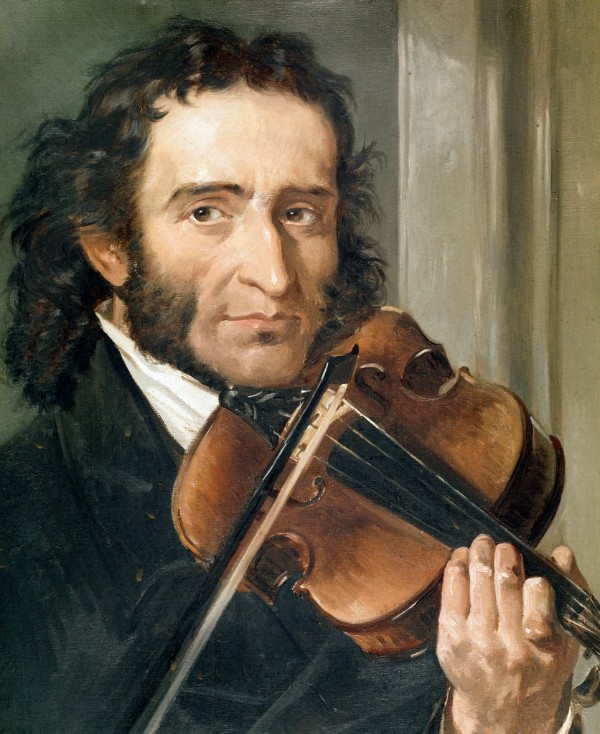
Niccolò Paganini
His gaunt frame and sallow skin fed the rumour of satanic collaboration. A great showman, Paganini leaned into it by dressing in all black and arriving at concert halls in a carriage pulled by black horses. Some concertgoers even claimed to see a cloven hoof or a shadowy figure guiding his bow arm.
However, his technique had earthly origins. Historians believe he had Marfan syndrome or a similar chronic disease, leading to the unusually flexible joints that made his innovation possible.
3. Violin strings are made of catgut.
How It’s Made: Gut Strings documentary
Cat-loving violinists can breathe a sigh of relief: their guts were never used to make strings.
In reality, the name refers to strings made from sheep or goat intestine, a material prized since at least the Renaissance for its flexibility and resonance.
Gut strings remain in use today, especially among early-music and period-instrument players, but most modern violinists use strings with steel or synthetic cores wrapped in metal winding.
The catgut myth may have stuck because the word “cat” resembled “kit,” an old term for a small fiddle – but the truth is, we don’t know the exact origins of the term.
Either way, the material never came from a cat.
4. Failed violinists play viola.
Mozart’s Duo for Violin and Viola No. 1
Spend any time in the orchestral world, and you’ll start hearing jokes about how violists are players who couldn’t cut it as violinists.
Why did the stereotype develop? Violas are bigger, unwieldy, and their strings take more pressure, weight, and time to sound. Plus, since they usually play harmony rather than melody, they typically have fewer notes to learn in orchestral parts. As if that weren’t enough, violinists have far more opportunities to play solos than violists. Put together, those traits suggest a certain kind of player.
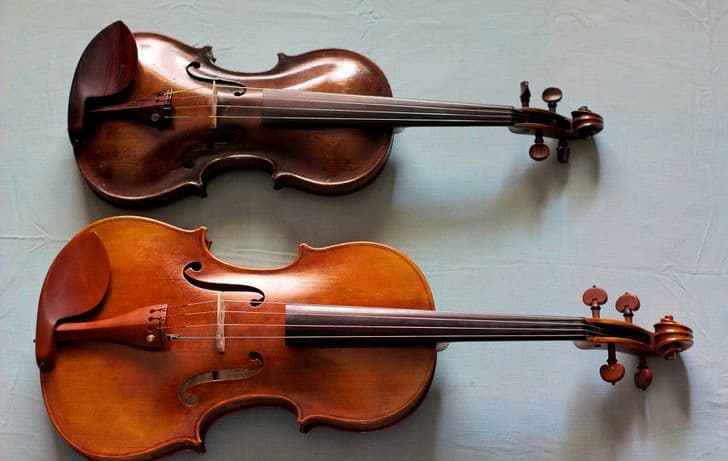
Violin (top) and Viola (bottom) © allshoreorchestra.com
It’s possible that generations ago, when technical standards were lower, and many orchestral musicians were underpaid, the stereotype had a grain of truth.
But today, thanks to advances in pedagogy and the organisation of professional orchestras, many first-rate violists are just as accomplished as their violinist colleagues.
That’s not even touching the fact that many composers – including Mozart, Dvořák, and Hindemith – were enthusiastic violists who wrote rich parts for their colleagues to enjoy.
In the end, the stereotype doesn’t hold up, and the jokes are just that: jokes.
5. You inherited a Stradivari.
Twoset Violin reacts to a Pawn Stars segment on a Stradivari
I once had a part-time job at a violin shop and watched a customer come in with a violin labelled “Stradivari.” He was excited to sell it and retire on the proceeds. Unfortunately, that didn’t happen.
Antonio Stradivari made roughly 1,100 instruments in his lifetime, and about 650 of those are known to survive today. Every one is catalogued, insured, and tracked by dealers, their archives, and organisations like the Stradivari Society.
It’s a once-in-a-generation fluke for a previously unknown Strad to turn up in someone’s attic.
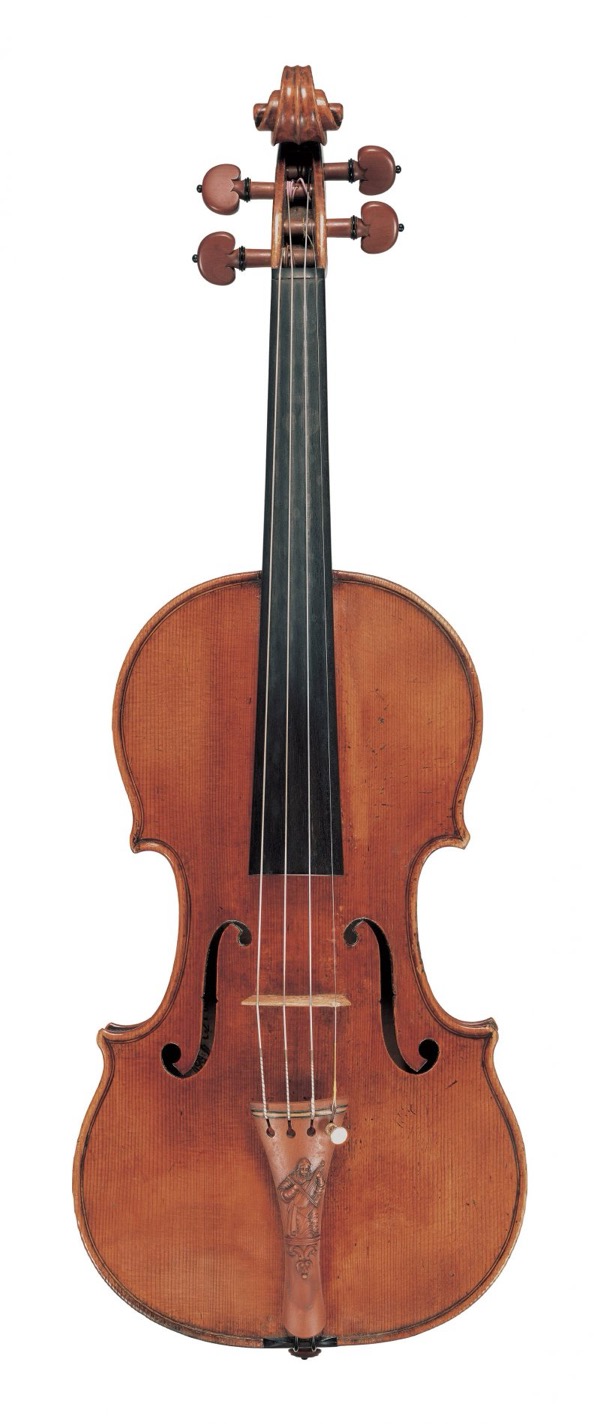
Antonio Stradivari, Cremona, 1727 violin, Sotheby’s, ex-Reynier
Turns out, many makers over the centuries included Stradivari labels in their own work. It wasn’t necessarily nefarious; some worked from models of Stradivaris and were paying tribute or worked in factories that made lines of instruments named after Stradivari.
In the end, a Stradivari label means next to nothing. Unfortunately, you’ll have to make alternate retirement plans.
6. The violin and fiddle are different instruments.
Violin vs Fiddle by Lawrence Golan
The classical violin and the fiddle sound so different that it seems impossible they’re the same instrument.
But the truth is, there’s no design distinction between the two. A fiddle is a violin, tuned and built the same way.
That said, the setup can change. Fiddlers sometimes use a flatter bridge to make it easier to bow multiple strings at once – a technique common in bluegrass, Irish, and old-time music. Steel strings are also more common in fiddle playing than in classical settings.
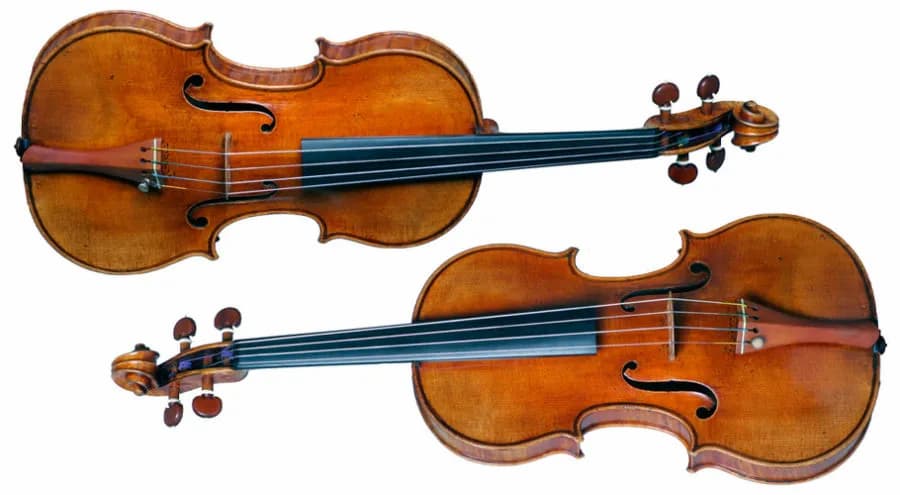
Violins vs. Fiddles © stringsmagazine.com
Technique can diverge, too. For example, a fiddle is sometimes held against the chest rather than the chin. Fiddling also places a high priority on ornamentation and improvisation – especially compared to classical violin playing, which tends to reward precision, score-reading skills, and extremely specific technique meant to avoid injury.
The good news? The fact that a violin and fiddle are the same instrument means that no matter what style you start with, you can always branch out – without having to buy a new instrument.
7. The best violinists are not necessarily the best teachers.
Finding a Good Violin Teacher
A beginner needs a teacher who can catch a collapsed wrist, a flat pinky, or a bow hold falling apart before bad habits calcify. Skill in diagnosing these issues originates from teaching experience, not performance experience.
Many conservatory-trained virtuosos make poor beginner teachers. This can happen for many reasons. Sometimes they learned their technique as a child and can’t easily break it down as an adult, or have spent time learning new repertoire instead of analysing others’ playing.
In an ideal world, a beginning violinist would work with a teacher who has a proven track record of satisfied students, who also keeps up their own playing and performing. That way, you get the best of both worlds.
8. You have to start at five to become a good violinist.
1 Year of Violin Progress…that is REALISTIC (Adult Beginner)
Getting an early start on an instrument can help. Neuroplasticity is real.
But an early start doesn’t guarantee you’ll reach your lifelong musical goals. Even if you started at three, there are still others who – whether because of talent, family wealth, social connections, or dozens of other variables – will be more advanced than you.
Indeed, adult beginners won’t win international competitions when put up against kids who started playing at three. But a musical life is about more than winning competitions!
With time and commitment, adult beginners can enjoy so many of the most rewarding experiences of a life in music, including winning spots in ensembles, playing for meaningful events like weddings or funerals (sometimes for money!), and learning beloved repertoire.
In the end, if you’re comparing a violinist who started at five but never practices, and an adult beginner who started at thirty-five and practices regularly, the adult is going to be the one making more progress.
Conclusion
Some of these myths are harmless fun. Nobody is hurt by picturing Paganini shaking hands with the devil, and the viola joke has kept string sections entertained for generations.
But others shape decisions that matter: what a beginner’s family spends on an instrument, who gets hired to teach a six-year-old, whether a talented adult beginner decides it’s too late to start.
The truth is usually less dramatic than the myth, but it’s often better news. A modern violin can sound as good as a Stradivari. A late start doesn’t close the door to a satisfying life in music. And nobody’s viola-playing colleague settled for anything.
For more of the best in classical music, sign up for our E-Newsletter