Nowadays, the music of violinist Niccolò Paganini has largely fallen out of fashion, save among violin nerds.
But Paganini was one of the earliest icons of the Romantic Era, and he lived a colourful life to prove it.
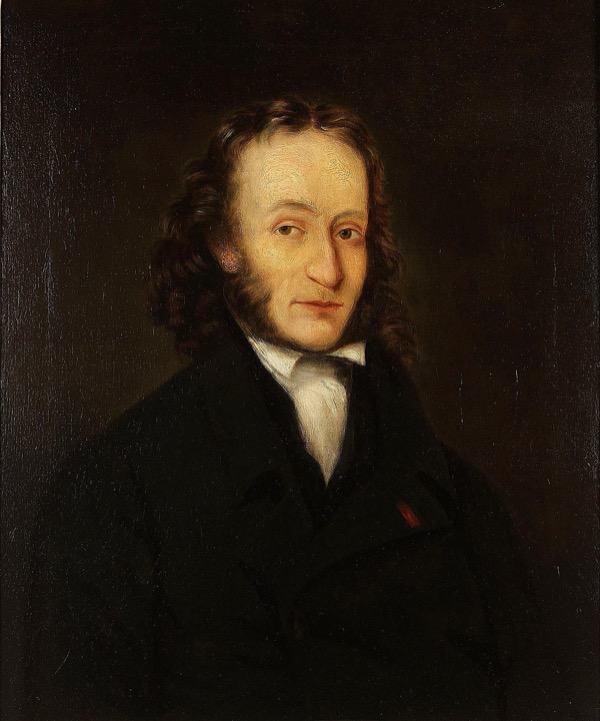
Niccolò Paganini
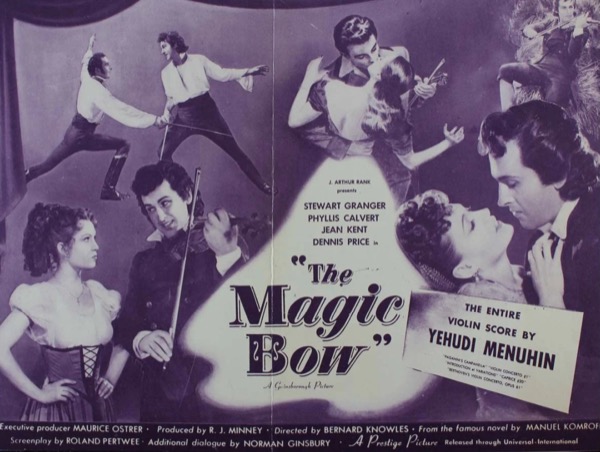
In 1946, The Magic Bow, a film about his life and music, was released.
The source material is incredibly rich, so one has to ask: is it still essential viewing for classical music lovers today – or can they feel free to skip this one in favour of other films about other Romantic Era titans?
Today we’re looking at The Magic Bow, starring Stewart Granger and Phyllis Calvert.
The first nine minutes of The Magic Bow
The casting of The Magic Bow was a bit of a nightmare…and it was never really envisioned as a serious Paganini biopic.
The Magic Bow is based on the 1941 book The Magic Bow: A Romance of Paganini by American writer Manuel Komroff.
Actor James Mason initially accepted the leading role, but after reading the script and realising it was less a biopic and more a treacly romance, he dropped out.
Swashbuckling British actor Stewart Granger then took the role. His fellow Briton Phyllis Calvert also joined the cast, accepting a role as Paganini’s extremely fictional love interest.
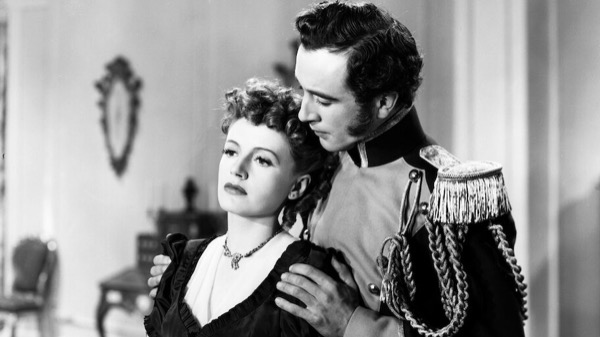
The producers claimed she was a mix of the women in Paganini’s life, but the result is a two-dimensional cardboard character.
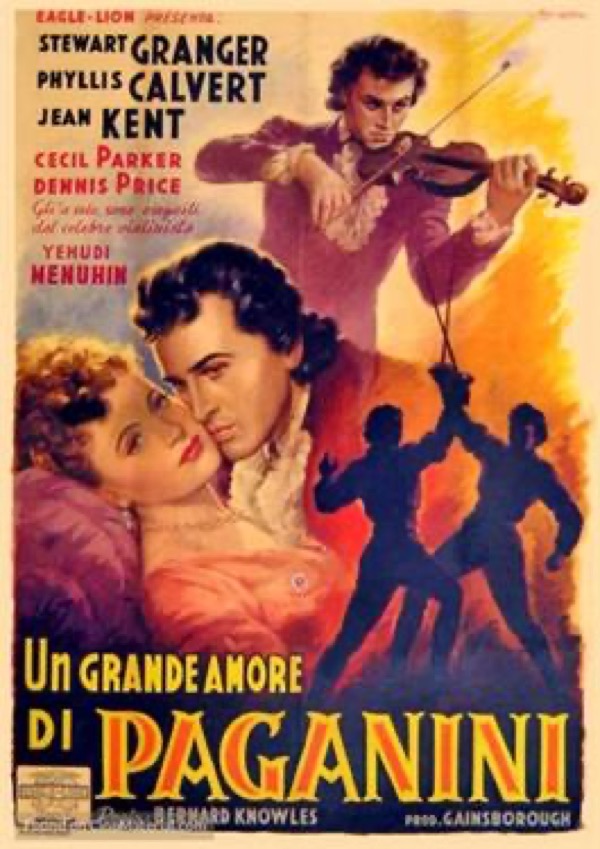
The Magic Bow
If you enjoy Paganini as a quippy, amusingly self-centred comedic character, there’s something to like here.
The first part of the movie has a striking tone.
It begins when self-obsessed violinist Niccolò Paganini is testing violins at a violin shop.
A beautifully dressed noblewoman – Jeanne de Vermond – drops in and invites him to play in the street at midnight for a friend in jail.
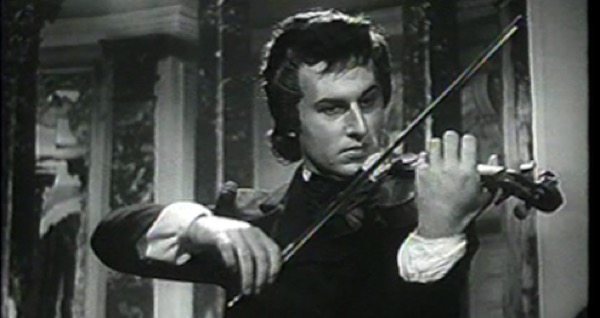
Paganini arrives at the designated midnight hour and greets the prisoner. He hears the town church bell and becomes inspired to write La Campanella in the street. (As great as this story is, obviously it didn’t happen in real life.)
The Magic Bow
Niccolò Paganini: Violin Concerto No. 2 in B Minor, Op. 7, MS 48: III. Rondo: Andantino – Allegro moderato, “La campanella” (Yehudi Menuhin, violin; Philharmonia Orchestra; Anatole Fistoulari, cond.)
Paganini plays, obliviously covering up the sound of the prisoner sawing through the prison bars.
When Paganini takes a break, the prisoner – not yet done with his escape attempt – hisses at him to continue. Paganini answers the mispronunciation of his name with a scornful “The name is Paganini, jailbird!”
Later, he has several sarcastic lines, including “The admiration of fools is an insult” and “They can’t tell the difference between a cadenza and a bowl of spaghetti.”
Great composers are usually placed on a pedestal in adaptations of their lives. To see them or their self-regard turning into the butt of a joke in a screenplay is amusing.
If you enjoy Paganini as a morose Byronic hero character, there’s something to like here.
The Magic Bow
However, this satirical tone doesn’t last very long. It’s soon revealed that the prisoner that Paganini unwittingly helped escape was actually Jeanne de Vermond’s father. Predictably, Paganini and Jeanne end up falling in love.
As soon as they do, the film turns into a formulaic romance. The movie’s tone immediately changes, and from there, it becomes a slog.
The soundtrack and violin playing are among the highlights.
The biggest star of the movie was arguably Paganini’s music.
Before Granger even accepted the role, violinist Yehudi Menuhin recorded the score in London. The process took six weeks: a long time for a movie!
Menuhin’s contribution is probably the most valuable one in the film. The New York Times wrote in its review:
“The behind-the-scenes playing of Yehudi Menuhin as the violinist, drawing his magic bow over the compositions of Paganini, Tartini and Beethoven, is in itself almost worth the price of admission.”
The Magic Bow
Philip Green: The Magic Bow: Romance on a Theme of Paganini (Yehudi Menuhin, violin; Gerald Moore, piano)
Stewart Granger makes for a surprisingly convincing violinist.
Granger fakes violin playing impressively. He had two tutors to help out, and it shows.
He has a very accomplished bow arm for an amateur. He keeps his shoulder low and his elbow on the right plane, especially as that plane shifts during string crossings. He even imitates vibrato in a semi-convincing way (a difficult motion that takes violinists years to learn).
It’s also interesting to see how he holds the instrument in the casual, absent-minded way that many real violinists do: fingering chords while chatting, plucking strings to pass the time, treating the instrument like a third arm.
That said, it’s pretty hilarious to see him in-character travelling from city to city without a violin case, exposing his priceless violin to the elements.
In the end, this movie wasn’t attempting to be great cinema. And that’s okay.
By the end of my viewing, I understood that this movie was never meant to be some great artistic statement.
It was meant to be a fluffy opportunity to see people in beautiful costumes play beautiful music – and that’s it.
The modern desire to see an accurate portrayal of Paganini’s life, exploring his real-life struggles and triumphs, was not what the producers were trying to do.
When watching an old movie, it’s always important to keep in mind what the makers and audiences were experiencing and wanting.
The film was released in 1946, when audiences were reeling from years of war, and many people craved this mix of humour and romance.
As a result, it may not be a film I’ll ever return to, and I can’t really recommend it to a modern viewer.
But I appreciate it for what it is, and the window it gives us into how people of the 1940s interacted with the story of the most influential violin soloist in music history.
For more of the best in classical music, sign up for our E-Newsletter