History is full of talented women whose achievements have been overshadowed or forgotten.
But few stories are as remarkable as that of Maria Antonia, Electress of Saxony, and her granddaughter Princess Amalie – two women composers who flourished at the Dresden court more than a generation apart.
Both composed operas; both published under pseudonyms; and both left legacies that deserve far more attention than they receive today.
Maria Antonia, Electress of Saxony: Her Family and Early Life
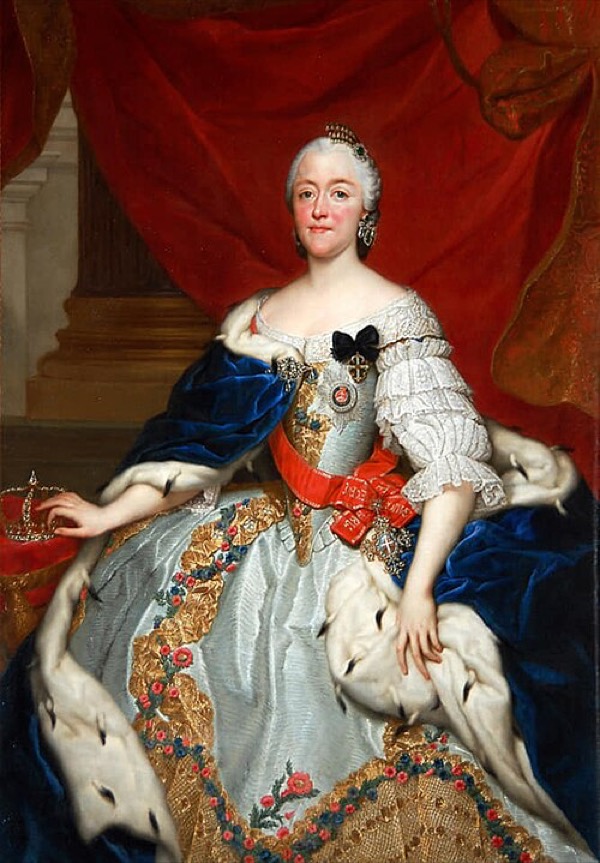
Maria Antonia
In July 1724, Maria Antonia was born in a palace in Munich to Archduchess Maria Amalia of Austria and Elector Karl Albert of Bavaria.
Her family tree was full of powerful European rulers – including the future Marie Antoinette, who was her first cousin.
The baby girl was baptised with a musical name: Maria Antonia Walpurgis Symphorosa. That name proved prophetic. She loved music, and operas were staged to celebrate her birth, engagement, and marriage.
As a girl, she studied with well-known Italian opera composers Giovanni Battista Ferrandini and Giovanni Porta, who had settled in Munich. She learned how to compose, sing, and play the harpsichord and oboe.
Maria Antonia’s Marriage
In 1747, just before her twenty-third birthday, she moved to Dresden and married a cousin named Frederick Christian, Elector of Saxony.
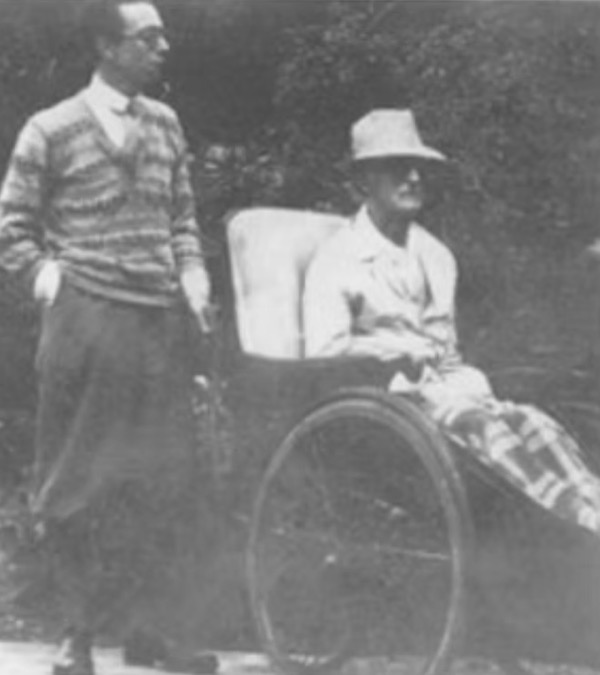
One of Frederick’s feet was paralysed, and he used a wheelchair. Finding it difficult to participate in more physical activities, he developed a deep love of music and Enlightenment philosophy.
Unlike many royal marriages of the time, theirs was a happy one, due at least in part to their shared interests.
After the wedding, she continued her musical studies with Dresden-based musicians. These included Nicola Porpora, who taught the superstar castrati singers of the age, and Johann Adolph Hasse, who was an influential opera composer.
Maria Antonia’s aria “Da me ti dividi aus” from her opera Talestri, Queen of the Amazons
Maria Antonia’s Life at Court
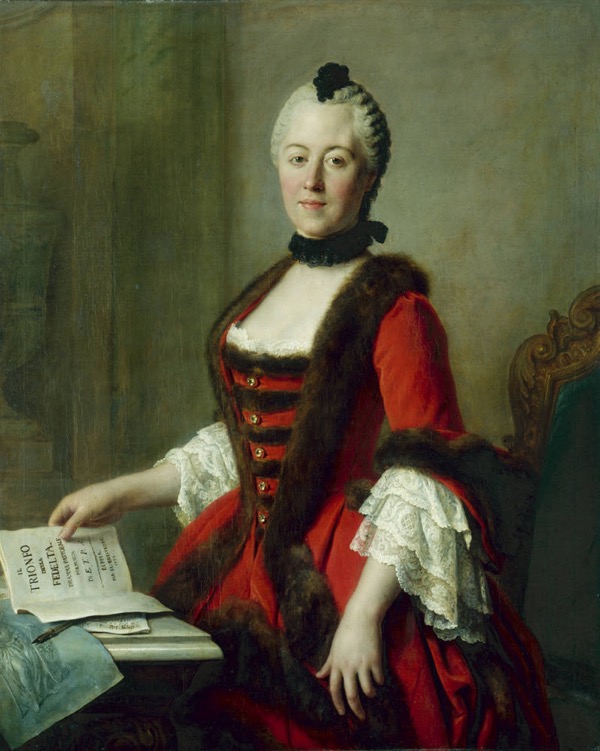
Maria Antonia
During the Seven Years’ War in the 1750s, Maria Antonia and her family fled Dresden.
After the war ended and her husband assumed power in 1763, they returned to the city.
Swaths of it were in ruins, and Frederick gave his wife the unusual responsibility of running a porcelain factory to help rebuild.
That December, Frederick died of smallpox – just two months after ascending the throne.
Maria Antonia’s eldest surviving son was too young to succeed his father, so the widowed Maria Antonia served as regent until he came of age.
Maria Antonia’s Opera: Talestri, Queen of the Amazons
Overture from Talestri, Queen of the Amazons
During the 1760s, while serving as regent and raising her children (she gave birth to nine in all), Maria Antonia composed two operas, including Talestri, Queen of the Amazons.
She wrote both the music and the libretto – and sang the lead role, too.
Writing, composing, and performing an opera about a queen made the music both a political and an artistic statement.
She published her works under the pseudonym E.T.P.A (Ermelinda Talea Pastorella Arcadia).
She died in 1780 at the age of 55.
Princess Amalie of Saxony: Early Life
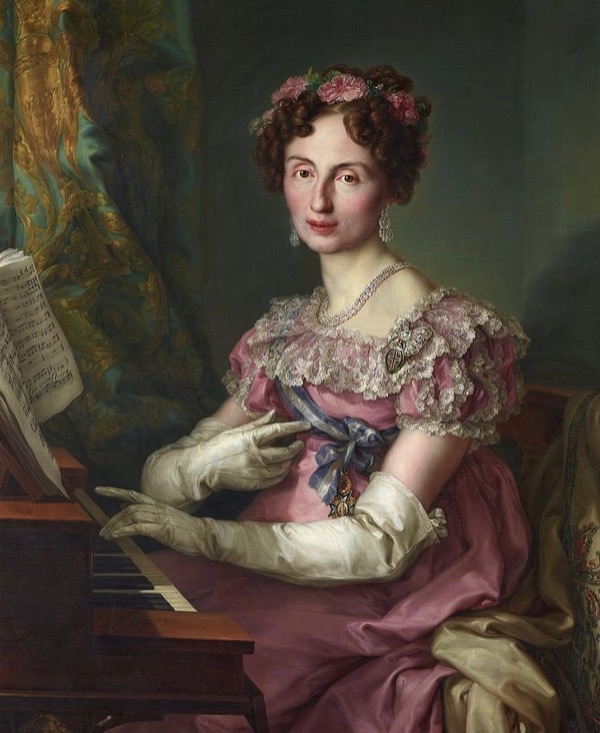
Amalie
Twelve years later, in 1792, Maria Antonia’s third son, Prince Maximilian of Saxony, married Caroline of Parma at the relatively advanced age of 33.
His daughter Princess Amalie was born two years later in Dresden. Her full name was Maria Amalia Friederike Augusta Karolina Ludovica Josepha Aloysia Anna Nepomucena Philippina Vincentia Franziska de Paula Franziska de Chantal.
The little girl’s childhood involved both grief and strife. First, her mother died in 1804. Then the Napoleonic Wars swept through Europe, causing dangerous upheaval, especially for royal families.
In 1809, she and her family made a dramatic flight to escape Dresden. They were forced to sleep on straw beds and occasionally even in chairs.
When she met Napoleon, he told her that although she surely hated him for going to war against her family, she’d eventually get used to the idea. She furiously – and fearlessly – assured him that some things, she’d never get used to.
Princess Amalie’s Stabat Mater
Princess Amalie’s Musical Life
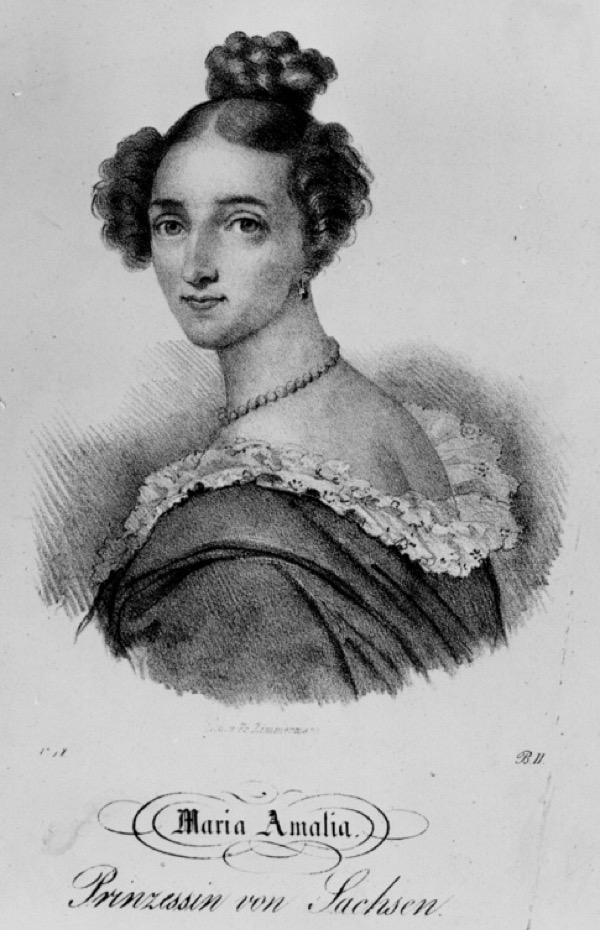
Amalie
Just like her grandmother, Amalie loved the arts, especially music. She studied piano, violin, and voice, and began composing as a teenager.
She studied with several composers, the best-known of whom was Carl Maria von Weber, who called her “highly talented.”
She wrote all kinds of music, including at least twelve operas and multiple works of sacred music, but her comic operas proved to be the most popular.
Many performances of her works took place in the family palace, where they were well-received by the private audience of Dresden’s elite.
Like her grandmother, she published her music under a pseudonym: A. Serena.
Overture from La fedeltà alla prova
Princess Amalie’s Plays
As if all that weren’t enough, she also began writing plays as a teenager.
She especially loved writing comedies. Some were presented anonymously or under the pseudonym A. Heiter. She continued writing through the 1840s, to great success.
Although her writing became quite successful, she lived modestly and donated much of her writing income to charity.
Her writing became so popular that it was translated into other languages. One English advertisement from the 1840s said of her work: “In her power of delineating character, and describing scenes of common life, Princess Amalie greatly resembles our own eminent novelist, Miss Austen.”
Princess Amalie’s Final Years
She married a man named Franciscus de Merendonque in 1817, but very little is known about him or their marriage.
She had failed cataract surgery in the 1850s, which blinded her, making both writing and composing nearly impossible.
She died in 1870.
Conclusion
Maria Antonia and Princess Amalie were separated by a generation, but united by the same drive to create, compose, and contribute – even when the world around them offered little encouragement.
They are two of the most intriguing women composers in classical music history.
For more of the best in classical music, sign up for our E-Newsletter