
Can you name the longest-running series of family concerts of classical music in the world? If you grew up in the second half of the 20th century, this is probably not a really difficult question.
The answer, of course, is “The Young People’s Concerts” with the New York Philharmonic. That particular series dates back to conductor Frank Damrosch, who directed a concert aimed at a younger audience in 1898. It developed steadily over the decades, but it was Leonard Bernstein who transformed this series into a cultural phenomenon.
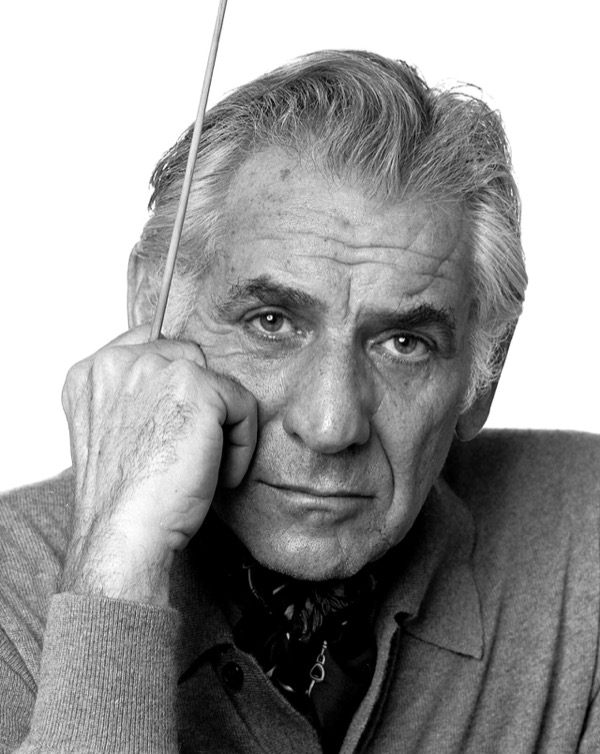
Leonard Bernstein (photo by Jack Mitchell)
As music director of the New York Philharmonic, Bernstein wrote, conducted, and narrated a total of 53 episodes from 1958 to 1972. Broadcast by CBS and syndicated in over 40 countries, the concerts brought classical music into the living rooms of the world. To celebrate Bernstein’s birthday on 25 August, let’s take a quick look at this extraordinary series that won five Emmy Awards and shared Bernstein’s excitement for music with generations of young people.
Leonard Bernstein: Young People’s Concerts, “What Does Music Mean?” (1958)
When Bernstein Took the Stage
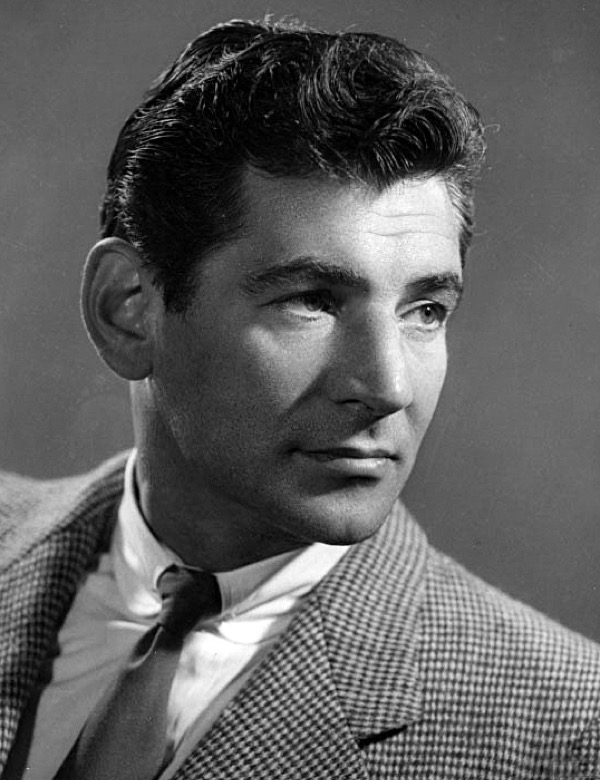
Leonard Bernstein, 1950s
We all know that Leonard Bernstein was the first American-born conductor to lead a major American symphony orchestra. He served as music director and chief conductor of the New York Philharmonic from 1958 to 1969. During his tenure, he did much more than conduct an orchestra. He basically opened the doors of the concert hall to millions of listeners and viewers.
In 1993, when Bernstein was looking back on the concerts, he wrote, “These concerts are not just concerts, not even in terms of the millions who view them at home. They are, in some way, the quintessence of all I try to do as a conductor, as a performing musician.”
“There is a lurking didactic streak in me that turns every program I make into a discourse, whether I utter a word or not; my performing impulse has always been to share my feelings, or knowledge, or speculations about music – to provoke thought, suggest historical perspective, encourage the intersection of musical lines.”
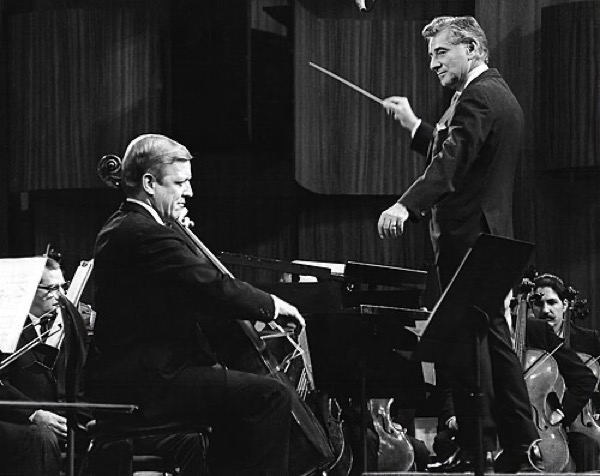
Lorne Munroe and Leonard Bernstein
“And from this point of view, the “Young People’s Concerts” are a dream come true, especially since the sharing is done with young people—that is, people who are eager, unprejudiced, curious, open, and enthusiastic. What more could an old incorrigible pedagogue ask for?” (Behind the Scenes, prelude, fugue & riffs, 1993)
Leonard Bernstein: Young People’s Concerts, “What Does Music Mean?”
Music for Millions
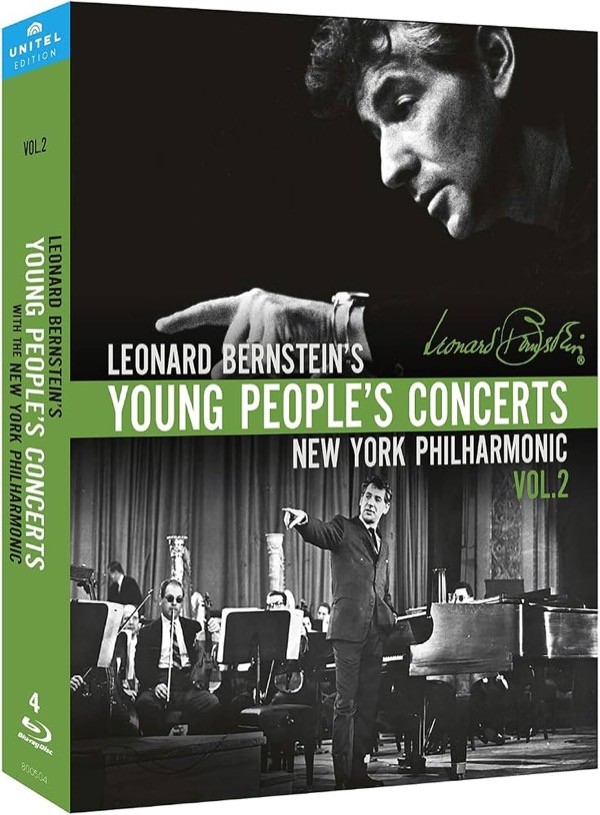
Leonard Bernstein’s Young People’s Concerts
One of the most popular events in the history of classical music, the Young People’s Concerts greatly benefited from the relatively new medium of television. This new technology greatly transformed the reach of classical music, and the series became so popular that CBS moved it to prime time.
Bernstein’s charisma and teaching method were central to the success of the series. He never talked down to his young audience. Instead, he introduced genuine musical ideas but slightly aimed above what he assumed they could already understand.
Essentially, his goal was to make young people listen and enjoy themselves. He certainly never talked down to them, but he always approached them as serious listeners. And to be sure, the subjects were intellectually serious, including titles such as “What Does Music Mean?” and “What is American Music?”
Leonard Bernstein: Young People’s Concerts, “What is American Music?”
Making them Curious
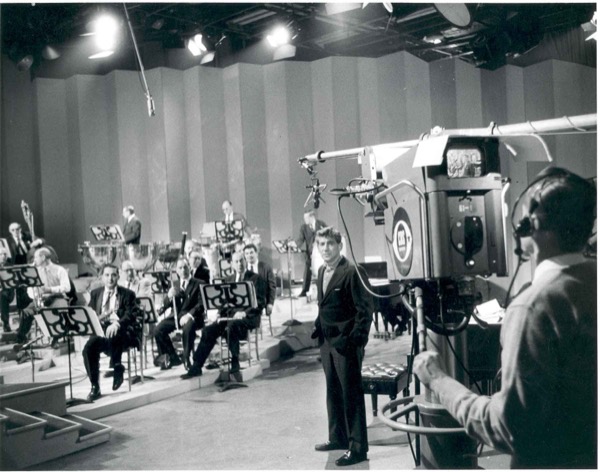
Leonard Bernstein with a television camera
The primary reason Bernstein was so successful as a teacher and educator is that he did not make music easy for his listeners; he made them curious. Bernstein had a natural ability to remove all complexity and make it accessible through musical examples and direct engagement with the audience.
Instead of talking down to his audiences, he made them part of the process. Above all, Bernstein strongly believed that children were capable of understanding music on a variety of levels, and rather than watering down his introductions to classical music, he issued invitations to think about it.
Bernstein had a deceptively wonderful spontaneity in his appearances, but everything took an enormous amount of preparation. Regular evening subscription concerts of the Philharmonic frequently followed his Young People’s Concerts. Essentially, Bernstein would be in the hall in the early morning for television filming, demonstrations, and script revisions, and then conduct again in the evening.
Leonard Bernstein: Young People’s Concerts, “What is Melody?”
Music as Naturally as Food
Over 14 years and 53 performances, Bernstein’s celebrity, charisma, and zeal for learning transformed the series into a far-reaching phenomenon. Bernstein was certainly passionate about integrating music into children’s education from an early age.
He testified before the House Subcommittee on Select Education in 1977, saying, “I propose that the reading and understanding of music be taught to our children from the very beginning of their school life,” he said, “and that they learn to participate with enthusiasm in the study of music from kindergarten through high school.” Every child possesses a natural ability to understand music, he continued. Young people can and should engage with music “as naturally as food.”
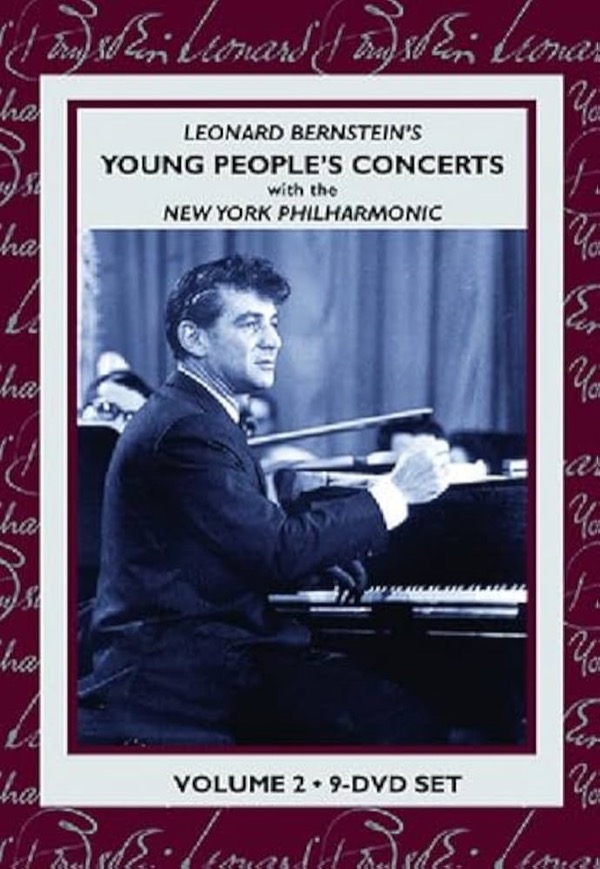
Young People’s Concerts
For several generations, people heard an orchestra for the first time at the Young People’s Concerts. And to be sure, it laid the groundwork for countless remarkable musical journeys. It also showed Bernstein at his absolute best as a passionate conductor and teacher.
He was a symbol of the merger between high art and pop culture, and Bernstein viewed Western music as a larger continuum, a tapestry between the academic and the everyday. To be sure, Bernstein was an eccentric who desperately pined for respect as a composer in both popular and concert idioms. He was a classical figure who behaved like a rock star, making the stuffy world of classical music approachable to all.
For more of the best in classical music, sign up for our E-Newsletter





My Flute Master Amos Eisenberg ( studying with William Kincaid) plays in Concert no.5 ; Ravel Introduction…..