Italian pianist Silvia Carlin’s debut solo album, Pensées fugitives, brings together collections of miniatures by Sergei Prokofiev, Clara Schumann, Samuil Maykapar, and Moritz Moszkowski, united by the idea of “fleeting thoughts.” For Carlin, the program is more than a carefully curated collection of short works; it reflects both her artistic identity and her fascination with discovering overlooked repertoire.
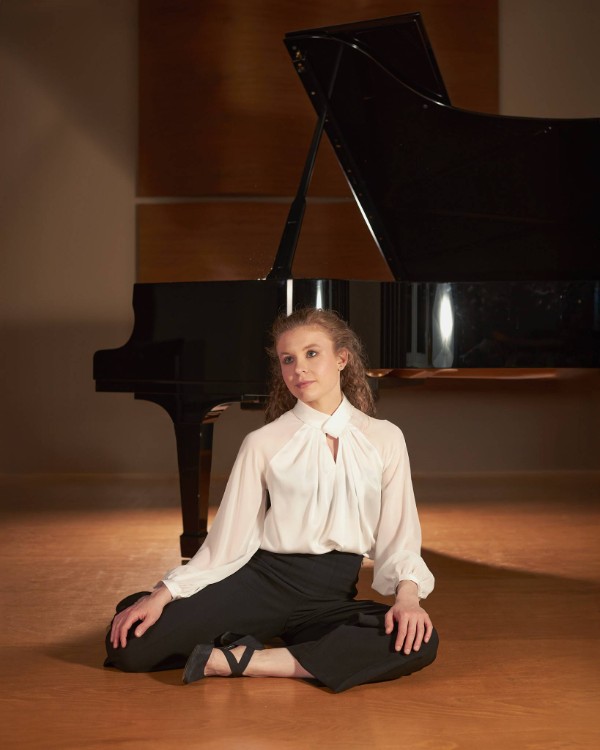
Silvia Carlin © Ivan Yaher
“A few years ago, I studied Prokofiev’s Visions fugitives, and I immediately fell in love with these extraordinary miniatures, each full of meaning and imagination. This is music that speaks for itself. Later, by chance, I discovered Clara Schumann’s Pièces fugitives, which immediately sparked my curiosity. That discovery led me to begin researching other works with similar titles, particularly collections called Pensées fugitives. Along the way, I uncovered many beautiful compositions by little-known composers, most of which had never been recorded. I began reading through these scores, exploring their unique musical worlds, and gradually selecting the works that I found most compelling. That course of discovery eventually became the foundation of this recording.”
Sergei Prokofiev: Visions fugitives, Op. 22 — Molto giocoso
Although the composers represented on Pensées fugitives come from different countries, generations, and musical traditions, Carlin hears a common artistic thread running through them.
“These works are undoubtedly very different and come from varied musical and cultural backgrounds,” she explains. “Yet they all seem to share the same elusive quality: they appear, disappear, and leave behind the feeling that they had always existed before we heard them.”
That fleeting quality has shaped not only the album’s title but also Carlin’s approach to performing these works. She compares listening to the miniatures to briefly opening a window onto another world before quietly closing it again. Their brevity gives every note unusual significance, requiring each piece to create a complete emotional world in only a few moments.
“When you perform a miniature, the greatest challenge is to grasp its essence in such a short span of time,” she says. “Sometimes you are given only a handful of notes, yet you have to reveal an entire world through them.”
Carlin believes this concentration of expression is also what makes miniatures so appealing in concert. Their constantly changing moods immediately capture listeners’ attention while rewarding experienced audiences with subtle details and unexpected connections. As a result, she frequently includes them in her recital programs.
Raised in a musical family, Carlin began piano lessons at the age of five and credits a succession of influential teachers with nurturing the curiosity that ultimately led to Pensées fugitives.
“I grew up in a musical environment, sleeping beside my sister as she played piano. I started music theory and piano lessons with her at age five. My musical career began at six under Nicoletta De Cian, who helped develop my sensitivity. At fourteen, I studied with Professor Antonio Rigobello at the Conservatory in Vicenza, making great progress through his encouragement. Filippo Gamba also influenced me with his musical insight, especially when discussing projects. I finished my training with Alexander Madžar, who taught me to focus on details and respect the composer’s intentions.”
Samuil Maykapar: Pensées fugitives, Op. 11, No. 4 — Allegretto
That curiosity has since developed into a broader commitment to reviving neglected repertoire. Although Prokofiev’s Visions fugitives is the best-known work on the album, Carlin was equally eager to introduce listeners to the music of Russian composer Samuil Maykapar (1867-1938). She describes the composer’s two featured collections as remarkably different in character: Op. 11 first attracted her with its lyrical melodies and sparkling, delicate writing, while Op. 23 captivated her through its darker, more introspective atmosphere.
More broadly, Carlin hopes Pensées fugitives will encourage audiences to explore music that has long remained outside the standard repertoire. Together with cellist Valentina Dubrovina, Carlin founded the REVISION Project, an initiative dedicated to rediscovering neglected composers and bringing their music back to today’s concert halls.

Silvia Carlin © Ivan Yaher
Clara Schumann occupies an equally important place in the album’s narrative. Carlin considers the Quatre pièces fugitives to be miniature masterpieces whose imagination, emotional richness, and poetic freedom perfectly embody the spirit of the recording.
Clara Schumann: Quatre pièces fugitives, Op. 15 — Un poco agitato
“I find her music remarkably fascinating,” Carlin says. “She was an outstanding pianist, and that is immediately apparent in her writing, which is anything but easy to perform.”
She especially admires the way Clara Schumann balances classical clarity with Romantic expressiveness, creating music that feels both carefully crafted and remarkably spontaneous. Carlin also hopes the album will encourage audiences to appreciate Clara Schumann not simply as Robert Schumann‘s wife but as an exceptional composer with a distinctive artistic voice.
Among all the works on the recording, Prokofiev’s Visions fugitives continued to reveal new surprises throughout the recording sessions. Each return to the score uncovered fresh colours, images, and musical ideas that had previously escaped her attention.
“Recording offers a very different perspective from live performance,” she explains. “Every nuance is exposed, allowing you to reconsider details that might otherwise pass unnoticed.”
With Pensées fugitives now released, Carlin intends to continue researching and performing overlooked repertoire.
“Time and again, this research leads me to discover true musical gems that, for various unfortunate reasons, never had the opportunity to become part of the standard repertoire. Bringing these works back to audiences is something I feel deeply committed to.”
She also hopes to continue exploring the world of musical miniatures through Robert Schumann’s works.
“I would love to explore his music more deeply, and if I can find a musical journey that truly reflects my artistic vision, my next project may be dedicated to his music.”
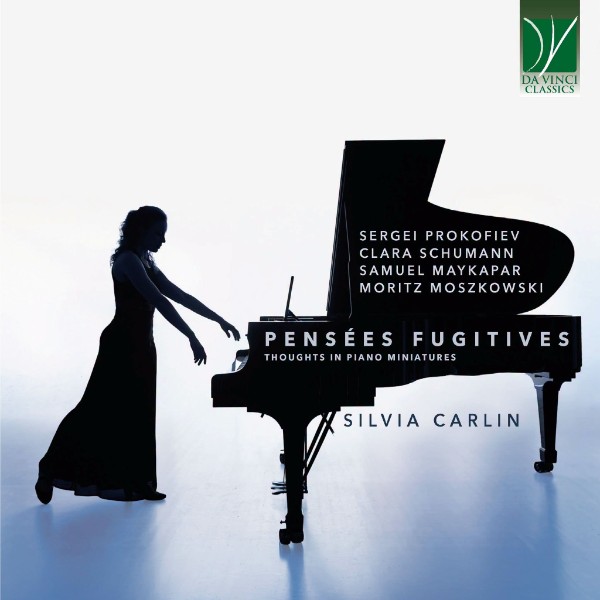
To learn about Silvia Carlin and her recording Pensées fugitives, visit https://silviacarlin.com/en/pensees-fugitives-2/.
For more of the best in classical music, sign up for our E-Newsletter