Giacomo Puccini is one of the most beloved composers in the history of opera. La Bohème, Tosca, Madama Butterfly: his works have never left the repertoire, and his name is remembered today by music lovers around the world. But what happened to the Puccini family after he died?
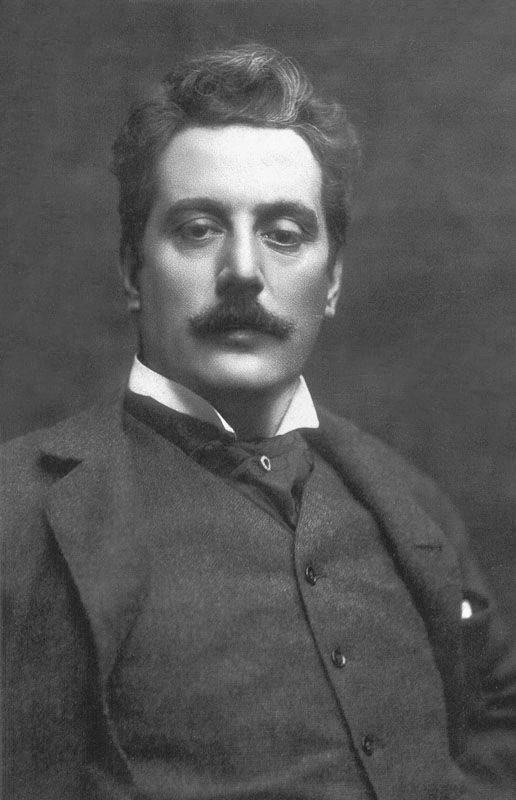
Giacomo Puccini
Puccini had one acknowledged son: Antonio, born in 1886 under scandalous circumstances and dead in 1946 without an heir.
Antonio’s life unfolded almost entirely in his father’s shadow – as a child at Torre del Lago during the years of Puccini’s greatest triumphs, as a young man caught in the crossfire of one of Italy’s most sensational scandals, and, finally, as the quiet custodian of a musical legacy he chose not to extend.
Born into Scandal: Antonio’s Origins
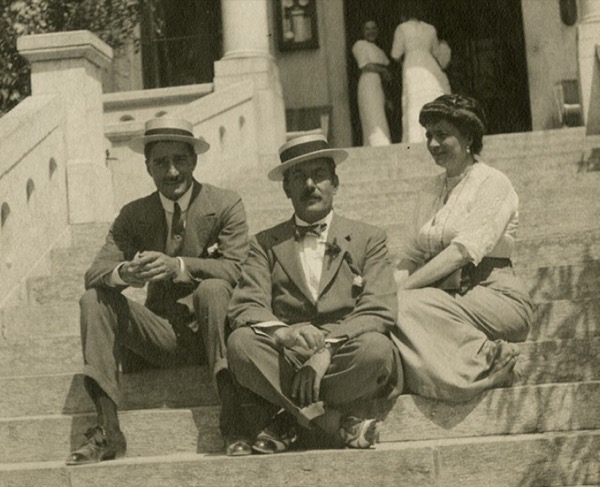
Antonio Puccini, Giacomo Puccini, Elvira Puccini
Giacomo Puccini was born in 1858 into a long-running musical dynasty in the Tuscan city of Lucca. (His great-great-grandfather, also a composer named Giacomo, was born in Lucca in 1712.)
In 1884, when Puccini was a 25-year-old up-and-coming composer, he began an affair with his former voice and piano student, Elvira Gemignani.
The Gemignani marriage was profoundly unhappy; Elvira’s husband was a serial cheater.
Puccini’s “Che gelida manina” from La Bohème
In early 1886, Elvira got pregnant by Puccini. Once she began showing, she left Lucca. On 6 December 1886, she gave birth to their son Antonio.
The name was no accident. Antonio had been the name of Giacomo Puccini’s first son – and, notably, one of Giacomo’s own middle names.
In choosing it for his illegitimate child, Puccini was quietly insisting on something: whatever the circumstances of his birth, this boy belonged to the line.
Growing Up Puccini: Life at Torre del Lago
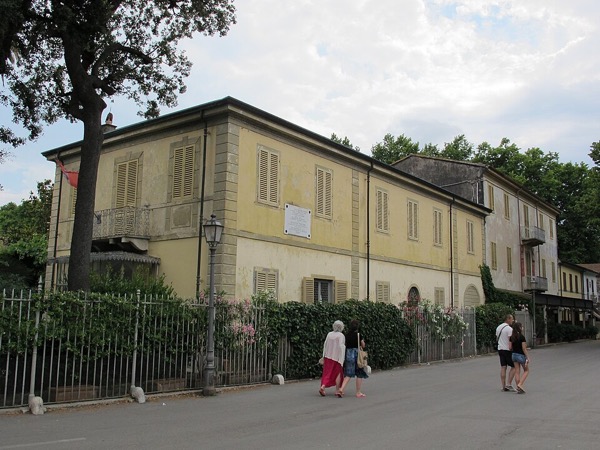
Villa Puccini
After Antonio was born, Elvira moved out of her husband’s home, bringing along her 6-year-old daughter, Fosca.
During Antonio’s childhood, Puccini busied himself by writing a series of masterpieces. In 1893, Manon Lescaut made Puccini an overnight sensation. La Bohème followed in 1896, and Tosca in 1900.
Starting in 1891, the young family began spending their summers in the lake town of Torre del Lago. After multiple financial successes, in 1899, he bought and began renovating a property that would become known as Villa Puccini.
A pivotal event occurred on 25 February 1903, when Antonio was 16. Puccini, Elvira, Antonio, and their chauffeur were in a car accident on the road between Lucca and Torre del Lago. Elvira and Antonio were flung clear of the vehicle, escaping major injury, but Puccini was pinned under it and severely injured.
The day after, a second pivotal event occurred: Elvira’s estranged husband was killed by one of his mistresses – opening the door for Puccini and the now-widowed Elvira to marry, which they did in 1904.
The Doria Manfredi Scandal and Its Shadow on the Family
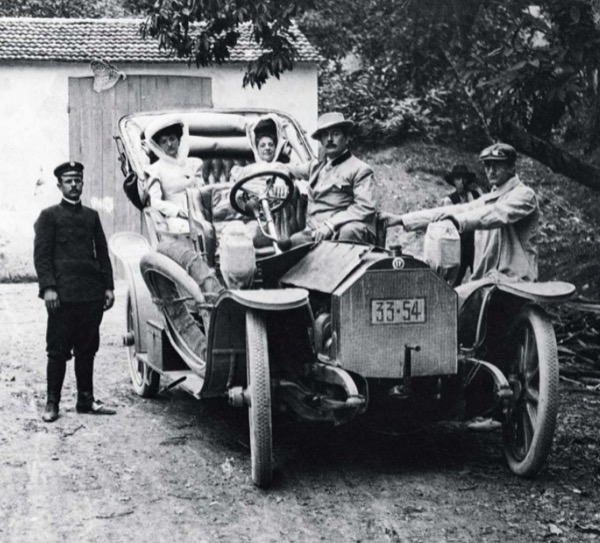
Puccini and automobile
That doesn’t mean the relationship with Elvira had been smooth sailing. Puccini had several affairs during their tumultuous relationship, with paramours ranging from famous singers to the wives of friends.
In 1909, an increasingly suspicious Elvira publicly accused her husband of having an affair with a maid, Doria Manfredi. Manfredi was so distressed by the accusation that she died by suicide – and her autopsy revealed she was a virgin.
This landed Elvira in legal trouble. She was prosecuted for slander and would have had to serve five months in prison, but Puccini paid the Manfredi family.
Puccini’s “Tu, che di gel sei cinta” from Turandot
In April 1909, Puccini sent a letter to his former mistress Sybil Seligman:
“Every day I have been meaning to write you, but I just have not the desire, or rather the peace of mind, to do so. Everything is getting so complicated. Elvira burst out at me in a rage about the lawsuit; she said I had done nothing to get it withdrawn, whereas I have, in fact, been trying and am still doing so. Even my son is not sympathetic to me…”
A wrinkle to this situation emerged in 2007, when the Manfredi family came forward with documentation that Puccini had been having an affair during this time – but with Giulia Manfredi, Doria’s cousin. It is believed that Doria may have served as a courier, delivering messages between Puccini and Giulia.
In 1923, Giulia had a son who may have been Puccini’s. He was also named Antonio.
Antonio’s Adult Life: Away from the Spotlight
Giacomo Puccini died in 1924. The following year, Antonio turned the Villa Puccini into a museum, creating a chapel space on the property. Puccini was buried in the chapel in 1926.
In 1929, Antonio had an illegitimate daughter named Simonetta Giurumello, who later adopted the name Simonetta Puccini. Simonetta never met her grandfather, but she would go on to devote her life to championing his legacy.
In 1933, Antonio married a woman named Rita Dell’Anna. They never had any children; Simonetta would remain his only child.
He lived quietly, not pursuing a music career or even a public career. The five generations of Luccan musicians would end with Giacomo.
Antonio Puccini died in 1946.
The Question of Other Heirs: Controversy and Competing Claims
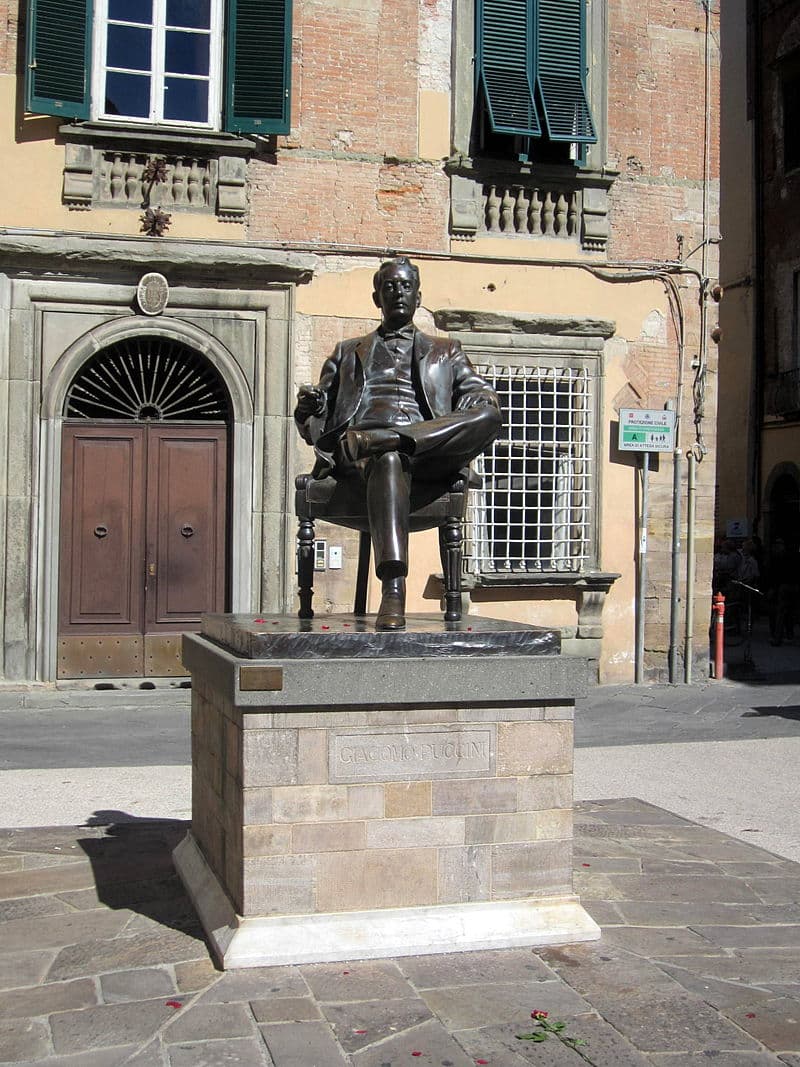
Statue of Giacomo Puccini in Lucca, Italy
Antonio Puccini’s death meant that his father’s considerable wealth – the equivalent of tens of millions of dollars – passed to his wife, Rita. Nothing went to Simonetta.
After Rita died in Monte Carlo in 1979, the inheritance battle heated up. The fortune was transferred to her brother, a flamboyant lawyer and self-styled count, Livio, who lived with his butler. After Livio died in 1986, what remained of the estate went to the butler.
Simonetta launched a legal battle, and after years, emerged triumphant in court. In 1996, she became the owner of the Villa Puccini, eventually raising the money to restore the property and preserve it for future generations. She died in 2017 in her late eighties.
Today, the villa is open to the public. Giacomo is buried there, as are Antonio, Elvira, Rita, and Simonetta.
Conclusion
Antonio Puccini lived 60 years and left very little in the public record. He did not compose, perform, or seek fame.
What he did do – convert Villa Puccini into a memorial and bury his father in the chapel he built – suggests a man who understood exactly what he was: the last of something. The musical dynasty that had run unbroken through five generations of Luccan composers ended not with a flourish but with quiet, meaningful acts of preservation.
The inheritance battles that followed his death have their own operatic quality, too: a self-styled count, a devoted butler, a daughter born outside marriage who spent decades fighting for what was rightfully hers. Simonetta Puccini won. And when she died in 2017, she was buried at the villa alongside her father, her grandmother, and the grandfather she never met.
For more of the best in classical music, sign up for our E-Newsletter