Franz Schubert (1797–1828) had a musical skill that was recognised when he was just a child and, with the sponsorship of Antonio Salieri, was sent off to the imperial-royal municipal seminary at age 9 for musical training and performance.
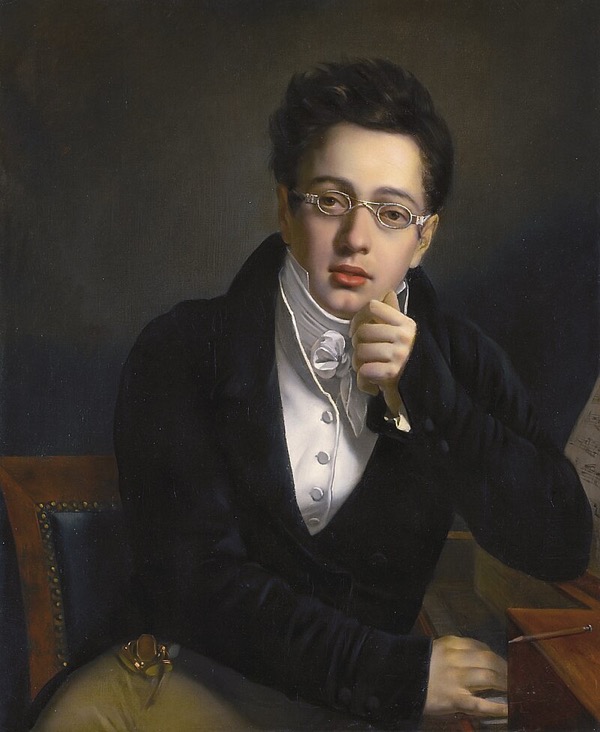
Josef Abel: Franz Schubert, ca 1814 (Kunsthistorisches Museum Wien)
He started composing at age 13, and he wrote across many genres: songs, chamber music (including works for piano four hands, a piano trio, and string quartets), orchestral overtures, and sacred works. His first symphony was performed in 1813, when he was just 16. Unfortunately, his grades at the academy and seminary were not good enough for him to continue to the upper classes, so he left one school and attended another for teacher training. This worked, helping him avoid military service, and soon he was back home, working as an assistant at his father’s school. This made his father happy because he thought that a life in music was not for his son, but it made Franz sad because he believed he was meant to be a composer. He escaped in 1816 and first lived with one family, then with his friend Franz von Schober’s family. This was also the year he composed Symphonies Nos. 4 and 5.
Symphony No. 4 is the only one of the two Schubert’s symphonies composed in minor keys (No. 4 and the two movements of the Unfinished). The linking key of C minor for Schubert’s Symphony No. 4 and C minor for Beethoven’s Symphony No. 5 (Destiny) supposedly inspired Schubert to give his symphony the title of Tragic. Unfortunately, Beethoven’s symphony didn’t get that nickname until 1840, in Schindler’s biography of Beethoven, by which time Schubert had been dead for over a decade.
True or not, the story does indicate the debt Schubert owed Beethoven and the awe he felt as he tried to follow someone who had loomed so large on the musical horizon. Unlike Beethoven’s Symphony No. 5, which goes from its C minor start to a triumphant C major ending, moving from dark to light, Schubert’s symphony is full of dramatic moods. Even in the first movement, which opens with a dark introduction, it soon lightens and culminates in a C major ending.
Franz Schubert: Symphony No. 4 in C minor, D. 417 “Tragic” – IV. Allegro
This recording was made in 1950 by the Niederösterreichisches Tonkünstler Orchester under the direction of Kurt Wöss.
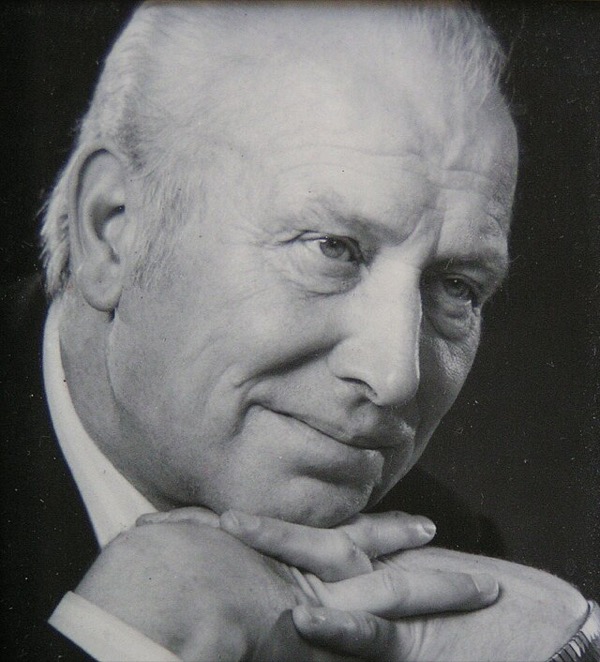
Kurt Wöss
Austrian conductor Kurt Wöss (1914–1987) studied conducting in Vienna while also doing musicological studies. He was conductor of the Niederösterreichisches Tonkünstler Orchester from 1948–1951 before becoming principal conductor of the NHK Symphony Orchestra in Japan (1951–1954), then chief conductor of the Melbourne Symphony Orchestra from 1956 to 1959, and also of the Australian National Opera. He returned to Austria in 1961, where he became chief conductor of the Bruckner Orchestra until 1976. He wrote a book in 1974 on performing Bruckner’s symphonies: Ratschläge zur Aufführung der Symphonien Anton Bruckners.
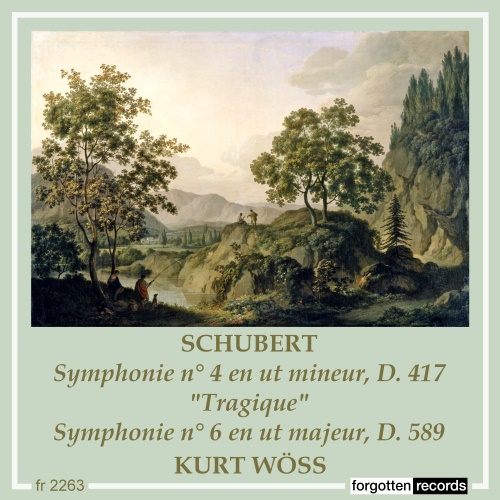
Performed by
Kurt Wöss
Niederösterreichisches Tonkünstler Orchester
Recorded in 1950
Official Website
For more of the best in classical music, sign up for our E-Newsletter