Credit: Thomas Ziegler
Credit: Thomas Ziegler
Part I: The Cradle of the Baroque Titans
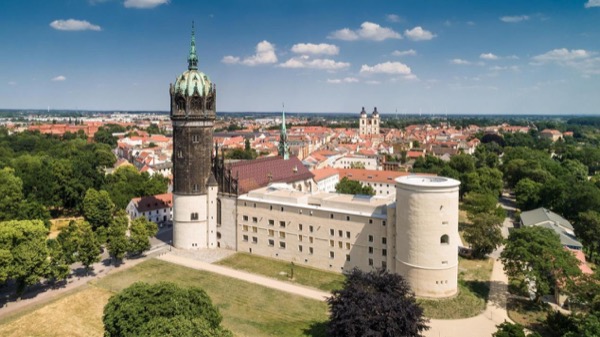
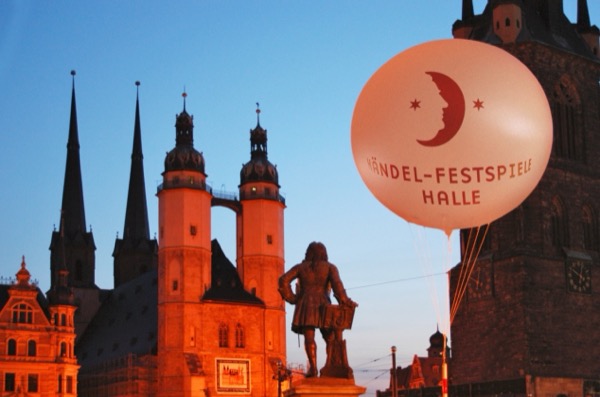
Dawn over the River Saale brings a crisp mist that clings to the silhouette of Halle’s five iconic towers, pierced by the deep pealing of the Marktkirche bells—the exact acoustic tapestry a young Georg Friedrich Handel stepped into in 1685. To wander here is to realise this medieval-turned-industrial town breathes music. Halle sits at the absolute epicentre of Baroque majesty; within a fifty-kilometre radius lie the domains of Germany’s greatest tonality architects: Bach’s Leipzig, Schütz’s Weißenfels, and Telemann’s Magdeburg. Yet, while its neighbours claim the intellectual and the sacred, Halle owns the theatrical. As the crown jewel of the world’s major Handel festivals, the Händel-Festspiele Halle offers an immersive pilgrimage into the very womb of the Baroque era.
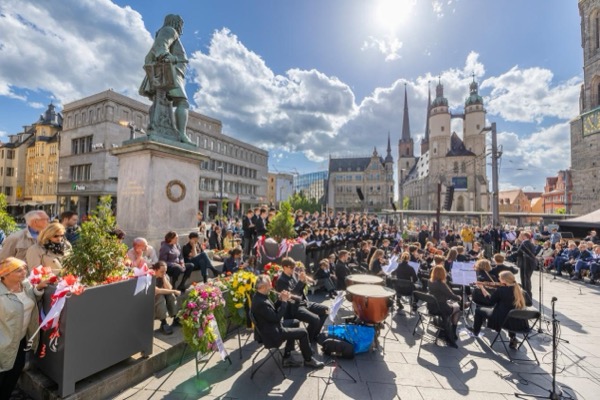
The deep bond between Halle and its native son stems from a fiercely independent civic pride. In 1859, the financial sacrifices of ordinary citizens erected the towering bronze Handel monument in the market square. By 1922, this local devotion blossomed into the first official festival, sparking the modern “Handel Opera Renaissance” with a trailblazing production of Orlando furioso. Established as an annual institution in 1952, the festival weathered the geopolitical storms of the Cold War as a laboratory for Historically Informed Performance (HIP), birthing the definitive Hallische Händel-Ausgabe critical score edition and the universal HWV cataloguing system.
Today, the festival has shed any lingering academic stiffness to become a vibrant, city-wide celebration. Recent seasons have traded rigid chronological themes for provocative, sensory concepts: shifting from the French courtly elegance of 2024’s French Inspirations, to the sunny Mediterranean flair of 2025’s The Young Handel in Italy, and culminating in the witty, gender-fluid exploration of masculinity in the 2026 season, Images of Manhood: Heroes, Rulers, and Heartbreakers.
The contemporary Händel-Festspiele actively builds artistic bridges (Brückenschläge), blending pristine 18th-century compositions with jazz, rock, theatre, and modern dance to entice a new generation of listeners. Performances now spill out of traditional concert halls into every corner of the city. From intimate chamber mornings in the Handel House to late-night cross-genre jams in historic ruins, Halle transforms entirely into a living stage, ensuring the composer’s sonic DNA remains thrillingly alive and accessible to every stripe of music lover.
Part II: Why we shall visit Händel-Festspiele Halle
1. The Imprimatur of the Birthplace
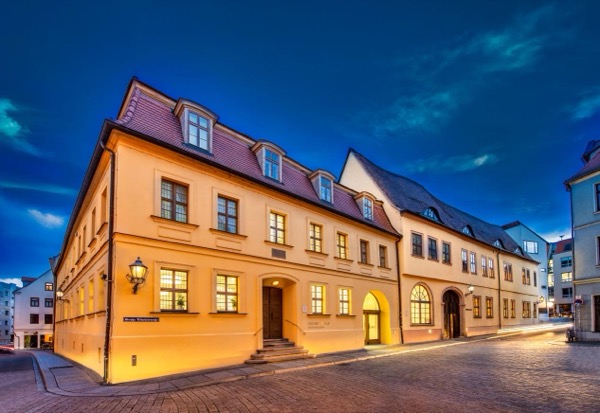
Handel House Museum (Credit: Thomas Ziegler)
There is an uncopyable gravity to hearing Handel in his hometown. Every performance is backed by the definitive Hallische Händel-Ausgabe score authority, serving as a launchpad for the radical Regietheater (Director’s Theater) that European critics adore. Here, ancient opera seria is fiercely deconstructed amid minimalist, starkly lit modern sets and high-contrast, neon-hued costumes.
2. Sonic Archaeology in Living Architecture
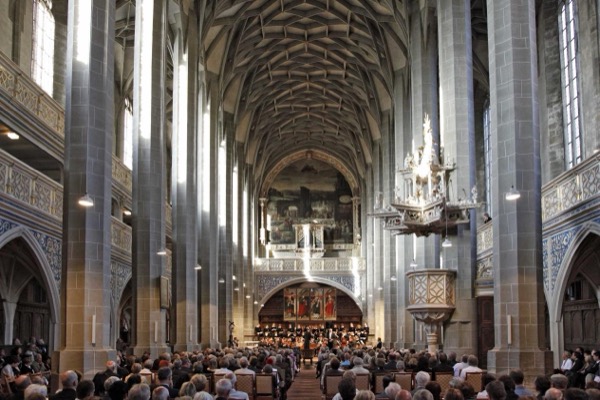
Marktkirche (Credit: Thomas Ziegler)
Halle’s historic spaces are active acoustic instruments rather than passive backdrops. Sitting beneath the Gothic vaulting of the Marktkirche while a monumental oratorio chorus washes over you creates a dizzying sense of physical presence that no modern, sterile concert hall can replicate.
3. A Gathering of Baroque Royalty
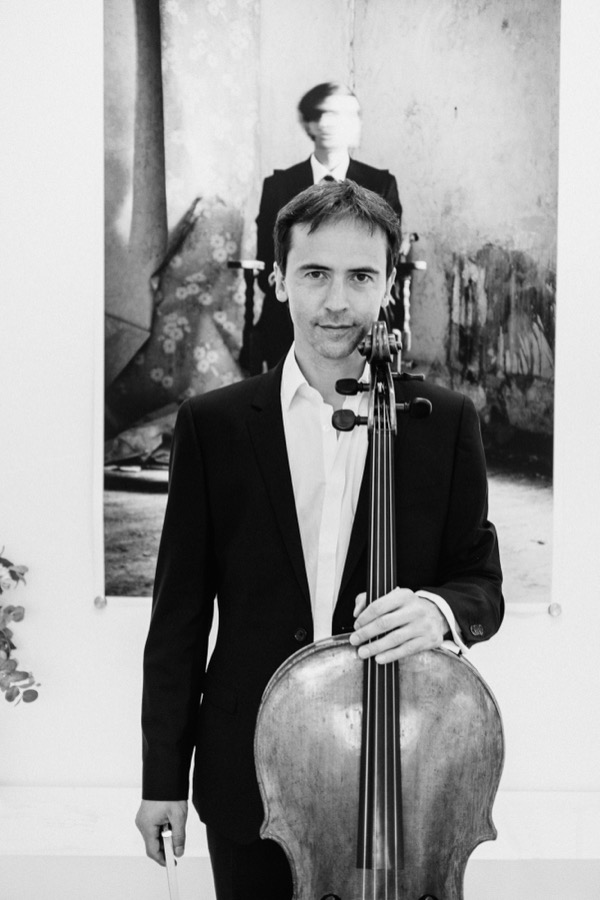
The festival boasts a dazzling array of talent, anchored by its own period-instrument Händelfestspielorchester. The current 2026 season elevates this pedigree further by welcoming well-known conductors like René Jacobs and Andrea Marcon, alongside a starry constellation of international vocalists who effortlessly master the acrobatic demands of the Baroque repertoire.
4. From Grand Stage to Intimate Solos
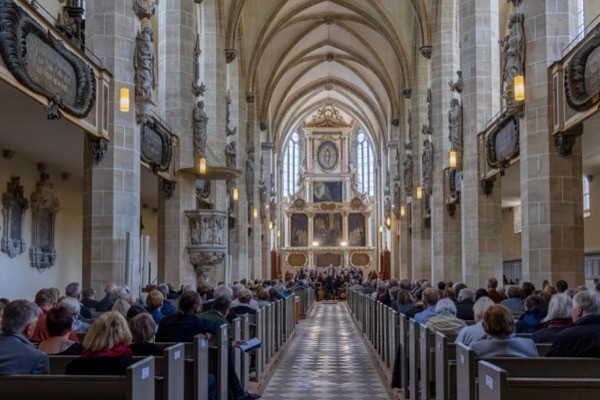
Dom Halle (Credit: Thomas Ziegler)
The vast programming accommodates every level of musical immersion. Within ten days, a traveller can easily glide from a sprawling, fully staged theatrical opera to a concert-format oratorio stripped to its raw dramatic bones, before winding down with intimate chamber music or candlelit harpsichord recitals.
5. Unearthing the Forgotten Canon
Beyond the hits, Halle is a treasure hunter’s paradise. The 2026 program stands out for reviving exceedingly rare gems like the original version of Ariodante and celebrating forgotten theatrical gems by Bavarian princess Maria Antonia Walpurgis, proving the Baroque era remains a wild, living musical ecosystem.
Part III: The Insider’s Venue Playbook
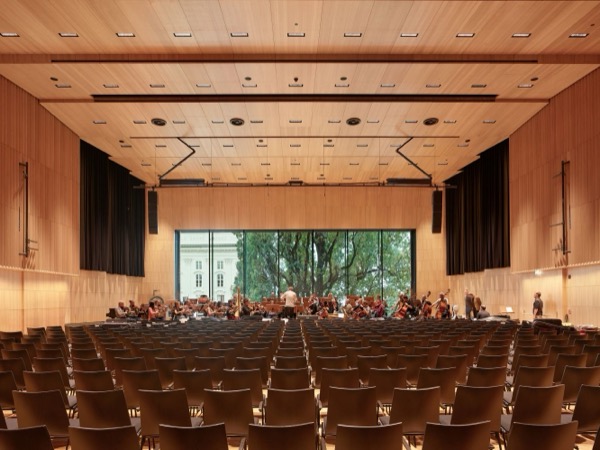
One of Halle’s greatest charms as a festival destination is its delightfully intimate scale. The historic city centre functions like a compact, walkable living stage; almost all core venues are clustered within a leisurely stroll of each other, allowing you to easily wander from an afternoon chamber recital to a pre-opera dinner. For venues slightly further afield, Halle’s impeccably efficient tram system offers a seamless, stress-free connection, meaning a handheld fan and a comfortable pair of walking shoes are the only logistics you truly need to master.
Dom zu Halle (Halle Cathedral)
The atmosphere inside this former monastery church feels incredibly solemn and austere, dominated by an unparalleled, multi-story altarpiece that draws the eye upward. Travellers should note that the acoustics carry a remarkably long reverberation time, making seating closer to the performance area ideal.
Franckesche Stiftungen (Francke Foundations)
A marvel of Enlightenment-era wooden architecture, this historic enclave offers an intellectually chic backdrop for the festival’s chamber sessions. The intricately preserved interiors provide an ultra-clear, warm sonic intimacy, making you feel like a guest at an exclusive 18th-century private salon.
Georg-Friedrich-Händel-Halle
The festival’s largest modern acoustic powerhouse sits directly adjacent to the MDR (Central German Broadcasting) studios. This sleek hall serves as the hub for the festival’s live radio broadcasts and proudly hosts the prestigious annual Handel Prize (Händel-Preis) award ceremony.
Händel-Haus (Handel House)
The holy grail of the pilgrimage. Standing inside the composer’s actual birthplace feels incredibly visceral; the venue’s dedicated historic recital room provides the perfect, intimate chamber setting to experience delicate solo performances.
Konzerthaus Ulrichskirche
A beautifully deconsecrated 14th-century monastery church turned high-profile concert hall. Its soaring Gothic brickwork creates a stunning visual, but the space suffers from an overly generous reverberation time; booking a seat right in the middle rows ensures the most focused sound.
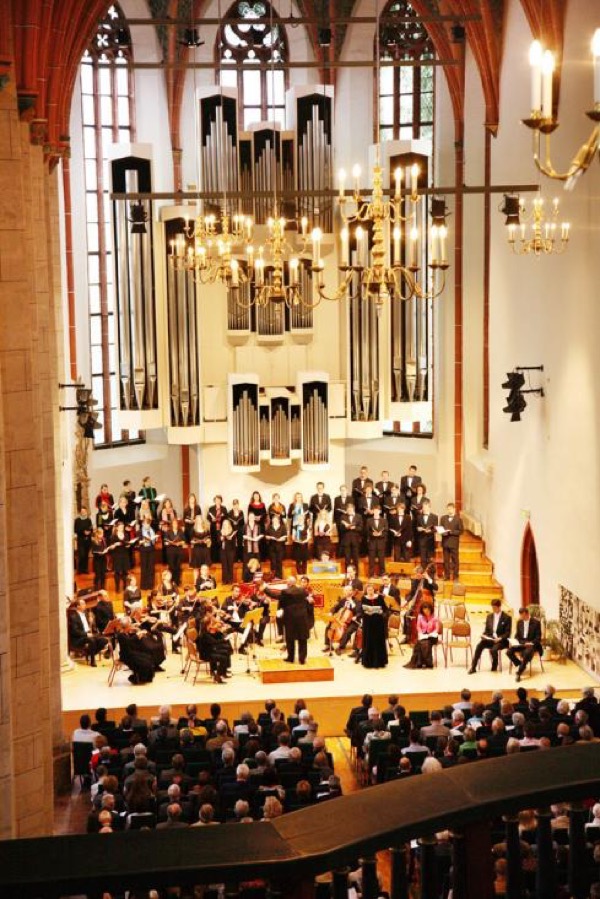
Credit: Thomas Ziegler
Leopoldina (German Academy of Sciences)
Perched elegantly on a hill, the grand neoclassical headquarters of the world’s oldest continuously existing academy of sciences doubles as an elite festival venue, offering a sophisticated atmosphere for high-profile chamber music.
Marktkirche zu Halle
The spiritual heart of Halle’s musical identity, where Handel was baptised. Inside, the church boasts a magnificent altarpiece. Musically, it offers an incredibly clear, sharply focused sound that brings monumental oratorio choruses to life.
Oper Halle (Halle Opera House)
The undisputed main stage for the festival’s theatrical fireworks. A vital insider tip for June festival travelers: the historic hall lacks modern air conditioning, so dressing in light, breathable layers is essential.
Goethe-Theater Bad Lauchstädt
An absolute must-go destination. This exquisitely small, jewel-box theatre sits within an idyllic architectural ensemble of gardens and a water pool. Be prepared, however, as the preserved 1802 wooden interior lacks air conditioning, making a handheld fan a stylish and necessary accessory for the June heat. Festival shuttle bus service (25mins one way) available from Halle city centre to the theatre.
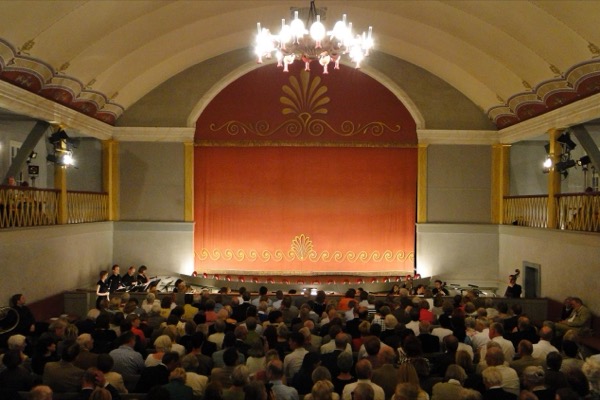
Credit: Thomas Ziegler
Part IV: The Modern Festivalgoer’s Travel Tip
Navigating the Händel-Festspiele smoothly requires a touch of strategic planning. While the ticketing process is refreshingly low-stress—the complete program lines up every January, making frantic early bookings unnecessary—the local hospitality scene tells a very different story. Premium hotel rooms in the historic centre are notoriously scarce; you must lock in your accommodations at least six months in advance to avoid astronomical last-minute rates.
Your culinary itinerary also requires an early clock. Local restaurants largely wind down kitchen operations by 9:00 PM. Since afternoon matinees usually kick off at 3:00 PM and evening highlights begin around 6:00 PM or 7:00 PM (depending on the length of the opera), your best bet is to indulge in a hearty, pre-concert dinner.
When packing, forget rigid European dress codes; there are no official wardrobe mandates here. Instead, cultivate a smart, adaptive style that prioritises physical comfort. Apart from the modern Georg-Friedrich-Händel-Halle, none of the historic venues features contemporary air conditioning or ventilation. For formal indoor opera nights, opt for light, breathable linens to beat the June stuffiness. However, if you are heading out for an evening concert inside one of the historic, stone-walled churches, be prepared for the opposite extreme, as these vast sacred spaces can turn remarkably chilly after dark.
Part V: The sightseeing in Halle & Surroundings (to be continued in Episode 2)
Credit: Thomas Ziegler
For more of the best in classical music, sign up for our E-Newsletter