Bilbao, the largest city and economic capital of the Basque Country, isn’t usually on opera lovers’ circuits. But a promising cast occasioned this trip to see Umberto Giordano’s Andrea Chénier, a coproduction between ABAO Bilbao (Asociación Bilbaína de Amigos de la Ópera/Bilbao Association of Friends of the Opera) and the Festival Castell de Peralada.
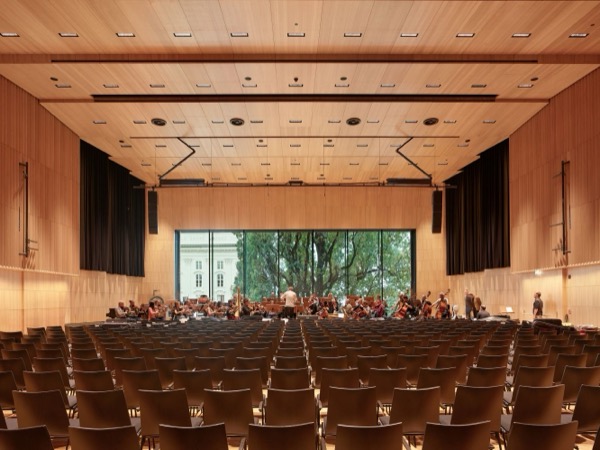
The ABAO performs at Palacio Euskalduna, an unsightly conference and convention facility, which, to its credit, offers excellent food and beverage options – a key attraction of the Basque region. The centre’s long and cavernous auditorium features comfortable stacked seats but unexciting acoustics. The large pit tends to drown out the sound of the orchestra, but conductor Guillermo García Calvo, in his ABAO debut, had no ambition to tease out any unknown nuances from Giordano’s score. He was leading the Bilbao Orkestra Sinfonikoa for a local audience of regulars, who seemed largely unfamiliar with the opera.
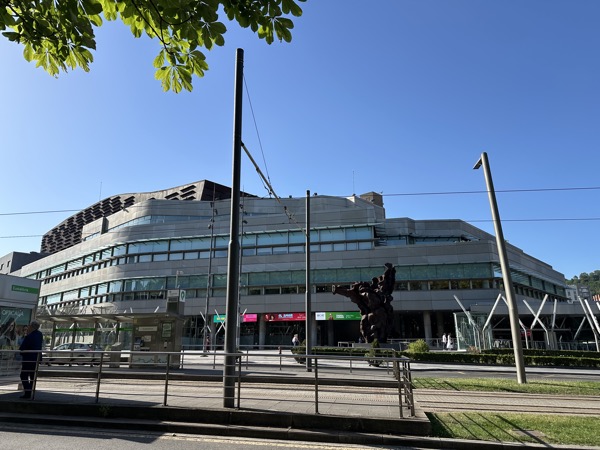
Palacio Euskalduna
The sets were simple, reasonably effective, and tending towards the traditional. The scenographer used the ballroom of the de Coigny mansion as the superstructure to support the entire show. An effective device, other than in the fourth act, where he had transformed the ballroom into an awkward prison with boarded-up windows, but kept the crashed candelabra (after everyone had been surrendering their personal valuables in an earlier scene).
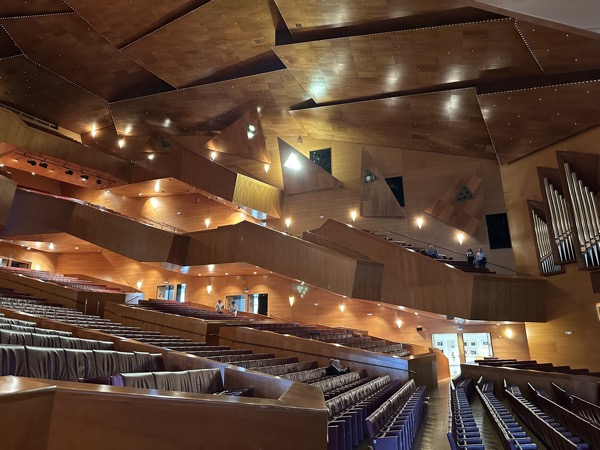
Palacio Euskalduna
The evening and the trip to Bilbao were made worthwhile by Saioa Hernández as Maddalena de Coigny, her debut at ABAO. The Spanish soprano, well known to opera aficionados but inexplicably not a global star, seduced the audience with her sumptuous, robust, shimmering and stunningly handled instrument. An engaging actress with a winning stage personality, Hernández must be among the finest sopranos this reporter has heard. Her act III showstopper, la mamma morta, was pure bliss and operatic perfection. For a voice such as hers, no destination would have been too far.
She was matched with Michael Fabiano in the title role of the revolutionary poet. The American tenor still possesses a warm and rich middle range, even if his heights can be somewhat pressured and hurried. And his tenor can still blade when needed.
Spanish baritone Juan Jesus Rodríguez put real meat to the role of Carlo Gérard, the servant turned revolutionary leader, providing vocal brilliance with dramatic nuance. He also proved to be an audience pleaser.
Smaller roles were well cast with Venezuelan mezzosoprano Nancy Fabiola Herrera performing both La Contessa de Coigny as well as the blind Madelon. She left a strong impression in both roles. The baritone Gabriel Alonso as Roucher is a talent worth keeping an eye out for. Veta Pilipenko was not a hugely impactful Bersi.
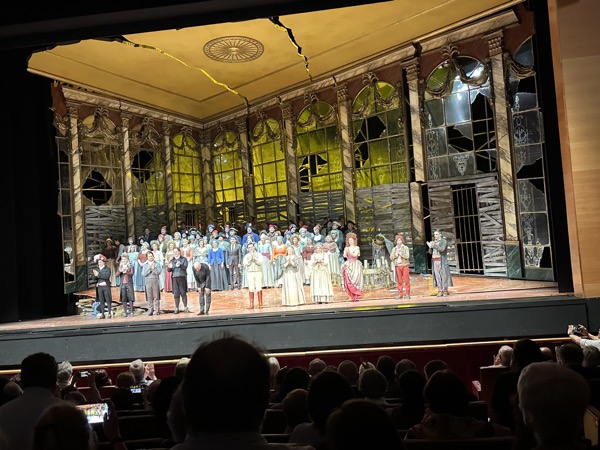
Andrea Chénier, ABAO Bilbao, 2026
If only Frank Gehry had built an opera house in addition to the Guggenheim Museum in Bilbao, culture tourists might have another good reason to visit this underrated city.
Performance attended: 26 May 2026
For more of the best in classical music, sign up for our E-Newsletter