
The early Romantic Era, which roughly corresponds to the first half of the nineteenth century, brought an explosion of emotional depth and individuality to classical music.
The stories we usually hear about the composers of the time focus almost entirely on men: figures like Chopin, Schumann, and Liszt.
In reality, dozens of women composers were also writing symphonies, operas, piano works, and chamber music that matched their male contemporaries in imagination and skill…and sometimes exceeded them.
The surviving works of rediscovered women composers remind us that the true spirit of the Romantic movement was never confined to men alone.
Here are twelve forgotten women composers who were born in the early Romantic Era.
Louise Bertin (1805–1877)
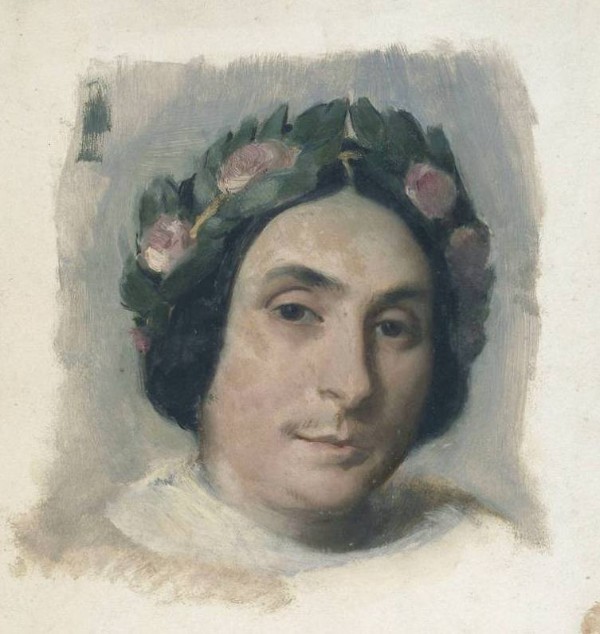
Louise Bertin
Louise Bertin: Fausto (Karine Deshayes, soprano; Karina Gauvin, soprano; Ante Jerkunica, bass; Nico Darmanin, tenor; Marie Gautrot, soprano; Diana Axentii, soprano; Thibault De Damas, bass; Les Talens Lyriques, Ensemble; Flemish Radio Choir; Christophe Rousset, cond.)
Born into an intellectual Parisian family, Louise Bertin was the daughter of the editor of the Journal des débats: a relationship that granted her access to Paris’s artistic elite.
She was a musical child and studied composition with François-Joseph Fétis, who taught a number of famous French composers of the day.
She was one of the few women of her time to compose large-scale operas.
Her Fausto (1831) and La Esmeralda (1836) – the latter with a libretto by her friend Victor Hugo, based on his recent novel The Hunchback of Notre-Dame – showed extraordinary dramatic instinct…but also provoked controversy, with critics claiming she’d only gotten it produced because of her family’s influence.
After La Esmeralda’s failure, Bertin turned away from opera and toward chamber music and poetry.
Leopoldine Blahetka (1809–1885)
Leopoldine Blahetka: Polonaise op. 19
Leopoldine Blahetka was born just outside of Vienna in 1809 to two teachers. Her father was friends with Beethoven.
As a child, she studied with Joseph Czerny (Carl Czerny’s father), Friedrich Kalkbrenner, and Ignaz Moscheles.
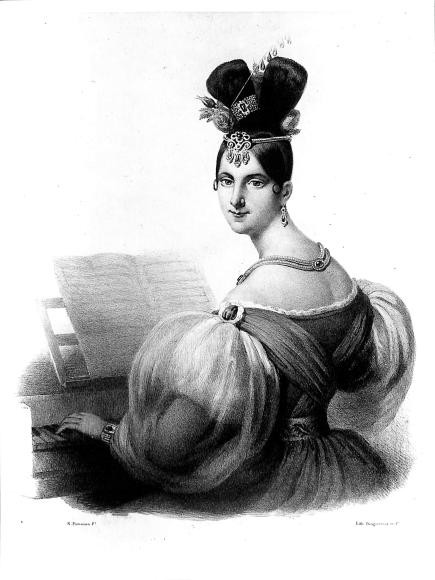
Leopoldine Blahetka
She made her debut when she was nine, and by eleven, she was including her own works on her recital programs.
As an adult, she toured Europe as a piano soloist for around twenty years.
Her contemporaries Chopin and Schumann both thought highly of her.
Josephine Lang (1815–1880)
A Collection of Lang’s songs
Josephine Lang was born in 1815 in Munich to the Munich Kapellmeister and his opera singer wife.
Although her health had been poor since childhood, she was a brilliant prodigy. She made her debut at eleven and started composing around the same time. (Felix Mendelssohn was one of her teachers.)
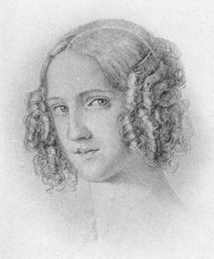
Josephine Lang
After a performance for the king and queen of Bavaria, the queen noticed her poor health and sent her to the mountain spa town of Wildbad Kreuth to improve her health.
While she was there, she met her future husband, lawyer Christian Köstlin. They married in 1842 and had six children together.
After his death from cancer, she sought refuge in music. She is especially renowned today for her lieder.
Kate Loder (1825–1904)
Loder’s Piano Trio in D-minor
Kate Loder was born in 1825 in Bath, England, to a flutist and his piano teacher wife.
She studied at the Royal Academy of Music and performed Mendelssohn’s first piano concerto in London in 1843, when she was seventeen.
At eighteen, she became the first woman harmony professor at the Royal Academy.
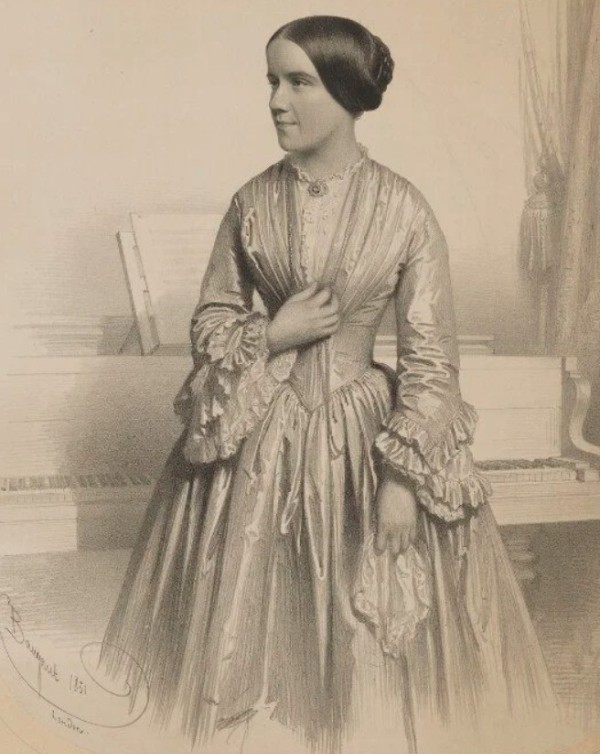
Kate Loder
She married a surgeon in 1851 and had three children with him.
She stopped playing piano in public, but continued composing and teaching.
Teresa Milanollo (1827–1904)
Impromptu pour violon et piano, Op. 8 – Teresa Milanollo – The Virtuosa Series
Teresa Milanollo was born in Savigliano to a luthier.
At four, after seeing a violin played at church, she insisted upon being taught, despite the fact that top-level women violin soloists were unheard of.
She was a child prodigy, and her family toured Europe during her childhood.
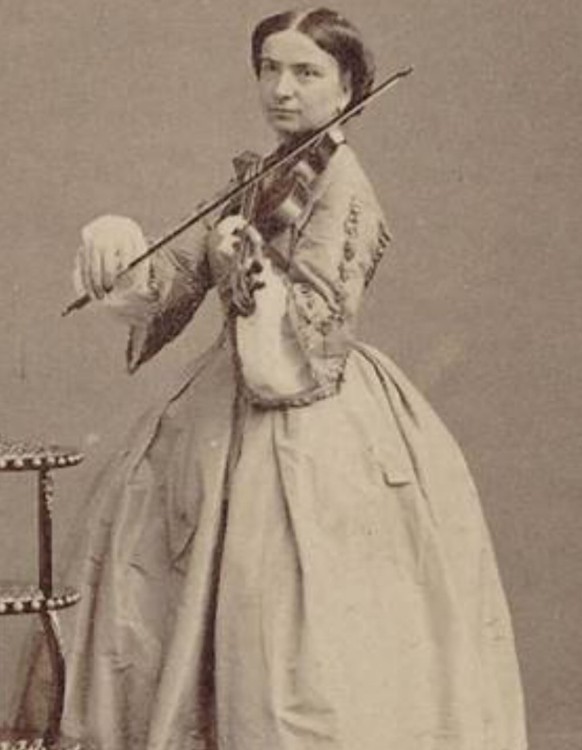
Teresa Milanollo
In time, she joined forces with her sister Maria, who also took up the violin and was five years her junior. Teresa was Maria’s only violin teacher.
The sisters became two of the most successful classical musicians in mid-century Europe, on par with Liszt and Paganini.
Maria died of tuberculosis in 1848 as a teenager. Teresa was devastated. But after a period of time away from the public eye, she returned to the concert stage.
She married a military engineer and amateur musician in 1857 at the age of 29. As was customary, she gave up her career to support her husband.
Laura Netzel (1839–1927)
Laura Netzel – Cello Sonata Op. 66 (1899)
Laura Netzel was born in Rantasalmi, Finland, in 1839, the youngest of six children. Her father brought the family to Stockholm when she was a year old.
She was a musically gifted child and studied piano, voice, and composition in Stockholm. She made her debut there at eighteen, playing the Moscheles piano concerto in G-minor.
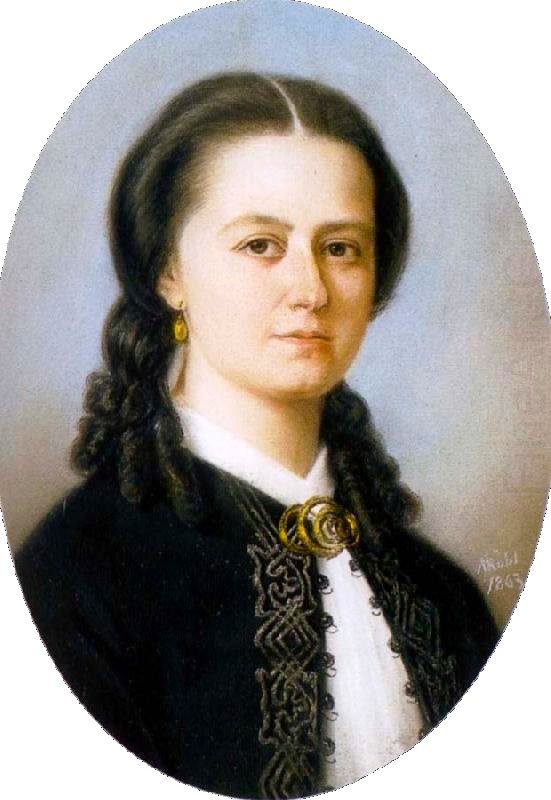
Laura Netzel
She also nurtured a talent for composition that she kept quiet for a long time. At 35, she submitted a piece to a Stockholm women’s chorus under the pseudonym “Lago.” Lago became an increasingly popular composer, but she kept her identity secret until the 1890s.
In 1866, she married a gynecology professor named Wilhelm Netzel. She became famous for the charitable work she undertook, with a special emphasis on supporting women and working people.
Alice Mary Smith (1839–1884)
Richmond Symphony Orchestra – Alice Mary Smith – “The Masque of Pandora”
Alice Mary Smith was born in 1839 to a wealthy family in London.
She was a musical child and took lessons from William Sterndale Bennett and George Alexander Macfarren.
She published her first song in 1857, when she was still in her teens.
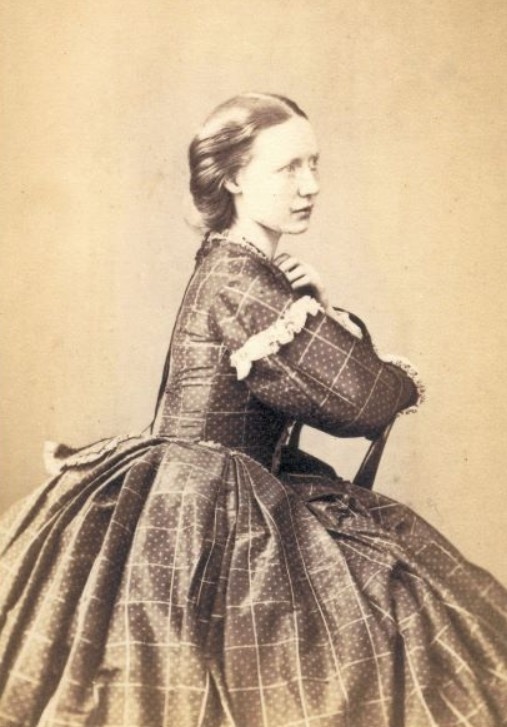
Alice Mary Smith
Her first symphony was written when she was 24 and performed that same year. She also wrote an operetta, cantatas, overtures, two symphonies, chamber music, a massive amount of choral music, and more.
In 1867, she married a lawyer, but she didn’t give up composing.
Ingeborg Starck Bronsart von Schellendorf (1840–1913)
Die Sühne (1909) – Ingeborg Bronsart von Schellendorf
Ingeborg Starck was born in St. Petersburg in 1840, the daughter of a saddle-maker and his wife, both amateur musicians.
Their daughter Ingeborg began playing the piano as a little girl and composing a year later. By fourteen, her music was appearing in print.
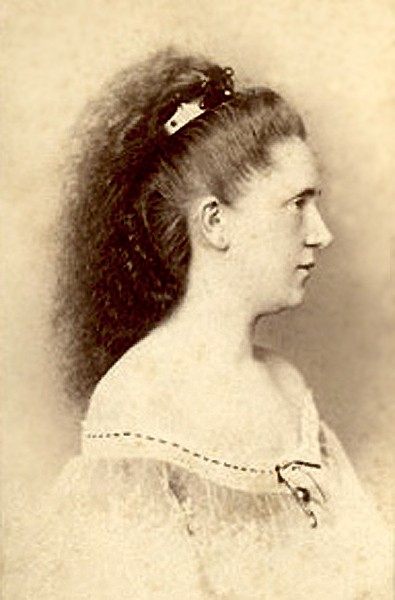
Ingeborg Starck
In 1858, she traveled to Weimar to study under Liszt. Three years later, she married fellow Liszt student and piano virtuoso Hans von Bronsart. They had a daughter in 1864 and a son in 1868.
In 1867, her husband was appointed Intendant at the court theater in Hanover. Wives of court officials were forbidden from making money, so she was forced to quit her career as a soloist and ended up turning to composing during the second half of her life.
She gravitated toward large forms and wrote four operas.
Elfrida Andrée (1841–1929)
Elfrida Andrée: Symphony No. 2 (ROCO)
Elfrida Andrée was born in 1841 in Visby, Sweden, to a liberal doctor and his wife.
The family embraced the women’s movement, and Elfrida was encouraged to study music and compose. She even became one of the first officially appointed female organists in Scandinavia.
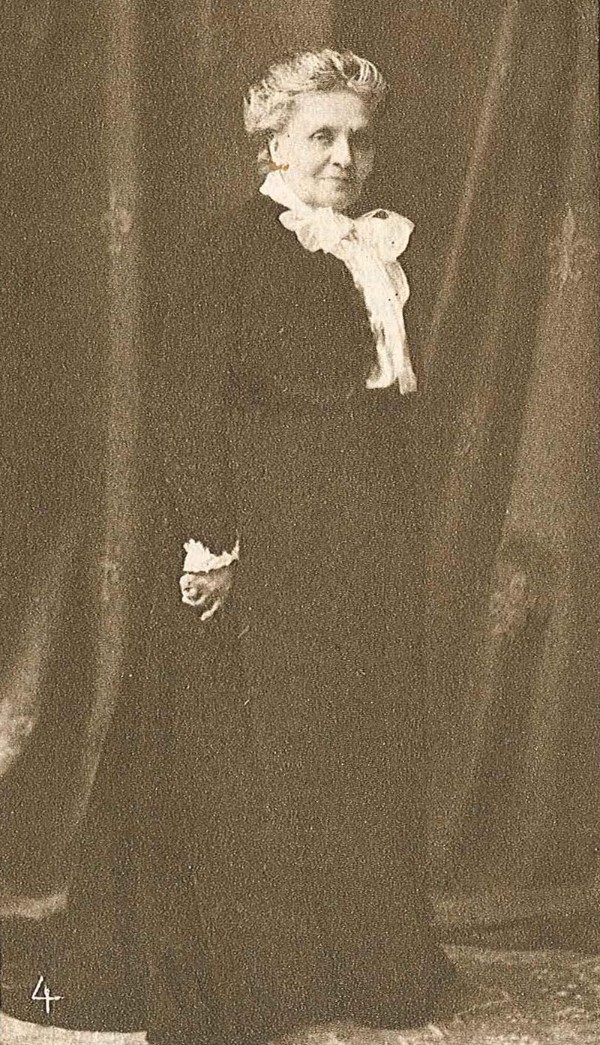
Elfrida Andrée
In 1897, she became the conductor of the Gothenburg Workers Institute Concerts, which made her the first woman to conduct an orchestra in Sweden.
She wrote an opera, two symphonies, a wide variety of tuneful chamber music, and a number of other works.
Louise Héritte-Viardot (1841–1918)
Louise Héritte-Viardot – Spanish Quartet, Op. 11, for violin, viola, cello, and piano
Louise Héritte-Viardot was born in December 1841 to Louis Viardot and Pauline Garcia-Viardot, the most popular mezzo-soprano of her age. (It’s worth noting that Pauline was also a talented pianist and composer.)
Louise was largely self-taught, musically speaking.
In 1863, she married a diplomat named Ernest Héritte and had a son with him, but they separated.
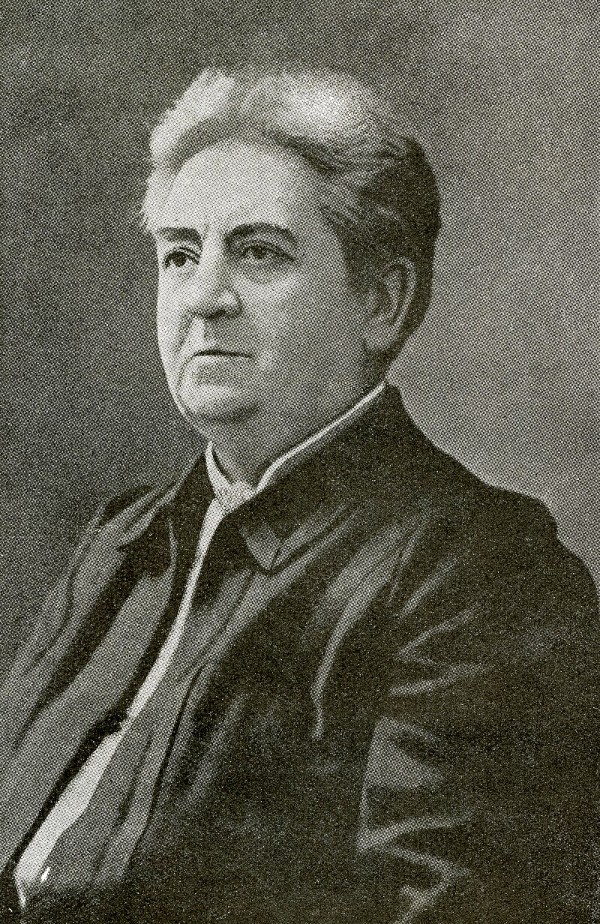
Louise Héritte-Viardot
To support herself, she taught voice in St. Petersburg, London, Frankfurt, and Berlin.
Many of her compositions have been lost, but the ones that survive suggest a truly delightful talent.
Marie Jaëll (1846–1925)
Ciompi Quartet performing Marie Jaëll’s String Quartet in G Minor (1875)
Marie Jaëll was born in 1846 in Alsace. She began studying piano at the age of six, and quickly developed into a child prodigy.
In 1862, the year she turned sixteen, she entered the Paris Conservatory. After just four months of study, she won the first prize in piano.
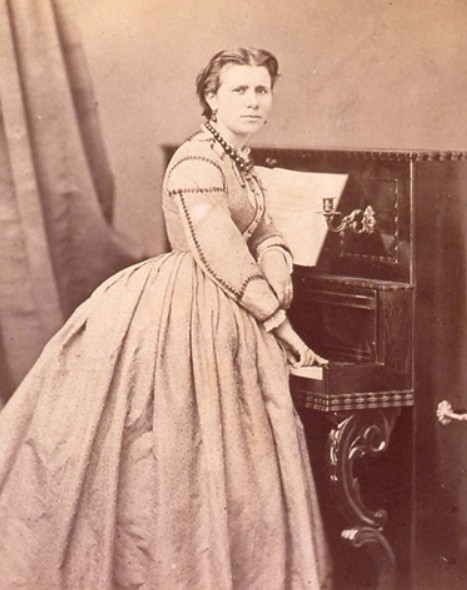
Marie Jaëll
She married her colleague, virtuoso pianist Alfred Jaëll, in 1866. She was almost twenty; he was 34. The couple often worked together.
After her marriage, she began taking lessons from César Franck and Camille Saint-Saëns, determined to become a good composer.
Her husband died in 1882. She devoted the rest of her life to studying music, the physicality of playing piano, composition, learning new repertoire, teaching, and more. Her appetite for music was voracious.
Josephine Amann-Weinlich (1848–1887)
Freie Gedanken (Free Thoughts), Josefine Weinlich – Esther Abrami & Her Ensemble @ SCL Festival
Josephine Weinlich was born in 1848 in a small town in present-day Slovakia.
Her father was a formerly wealthy ribbon manufacturer who lost a fortune during the Slovak Uprising of 1848-49. For his second act, he applied for a license to found a family folk music ensemble in Vienna.
We don’t know much about Josephine’s training, only that she played violin with her family band until 1865, when she started her own dance band.
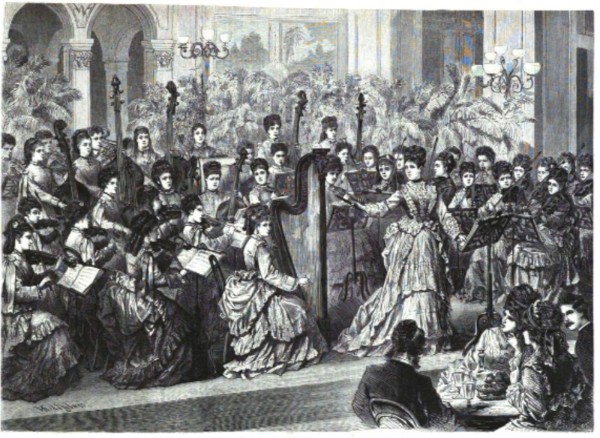
Josephine Weinlich with her orchestra in 1874
In 1867, she went a step further and started a ladies’ string quartet. The string quartet grew into one of the world’s first women’s orchestras.
Under Josephine’s leadership, the orchestra toured internationally and helped to get audiences used to the idea of women playing in orchestras.
During all of this, she composed, including irresistible dance music like the piece above (Freie Gedanken, or Free Thoughts).
Conclusion
The women who composed during the early Romantic era wrote fabulous music, even as they navigated the restrictions their society placed upon them.
Whether they were leading orchestras like Elfrida Andrée, composing operas like Louise Bertin and Ingeborg Bronsart von Schellendorf, or performing for Europe’s elite like Teresa Milanollo, they all carved out professional lives in a world that never made it easy for them to do so.
Their stories reveal a forgotten chapter of the long story of music history: one that is filled with persistence, resilience, and tons of great music.
Who’s your favorite woman composer from the early Romantic Era?
For more of the best in classical music, sign up for our E-Newsletter





Fascinating discoveries and engaging samples. Great research work.