In the long 19th century, when one’s drawing room was the performance venue of greatest popularity, musicians were desperate for material. If you were a virtuoso pianist, then your repertoire was expansive. If you were an amateur player on the piano or any other instrument, it was a bit more difficult to find something that would fit your expertise.
Enter the opera transcription. Operas are built around memorable melodies and, as with musicals, the best ones are those that you can go out the door singing just from hearing them in the performance. You may not know the words, and your grasp of the melody may be a bit less than complete, but what you know makes you happy, and you can always seek out the music later.
One of the highlights of Rigoletto (leaving ‘La donna è mobile’ aside) is the great quartet at the end of Act III, where Rigoletto and his daughter Gilda, spying on the Duke of Mantua, hear him wooing Maddalena, the sister of Sparafucile. This shows Gilda that her beloved is just adding her to his list of conquests and isn’t worthy of her love.
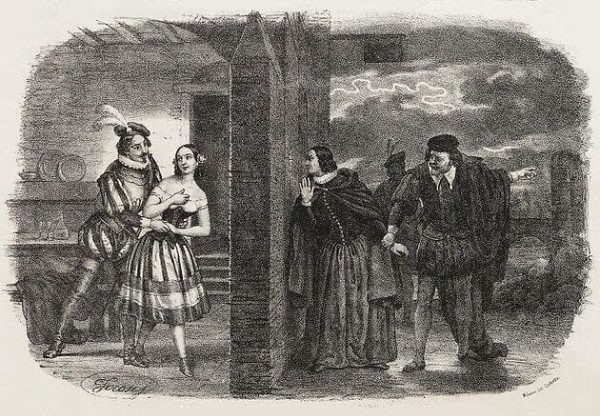
Roberto Focosi: Rigoletto, Act III: The Duke woos Maddalena while Gilda and Rigoletto listen, 1852
Giuseppe Verdi: Rigoletto (Highlights) – Act III: Bella figlia dell’amore (Duca, Maddalena, Gilda, Rigoletto) (Yordy Ramiro, tenor; Jitka Saparova, contralto; Alida Ferrarini, soprano; Eduard Tumagian, baritone; Slovak Radio Symphony Orchestra; Alexander Rahbari, cond.)
Unfortunately, it also makes Gilda decide that she can’t let him be murdered by her father, which leads to a terrible and shocking denouement at the end of the opera.
When Liszt created his paraphrase of Rigoletto, he focused solely on this scene to create Verdi’s world of love and lies, while adding his own colouration and figuration on top. Long runs ending in delicate trills, falling lines all go to create Verdi’s world.
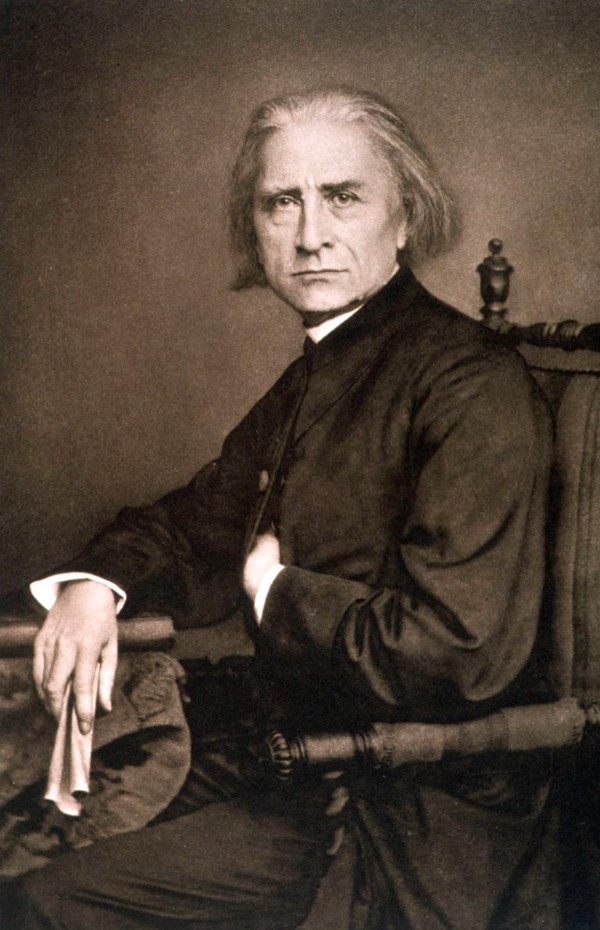
Franz Liszt
Franz Liszt: Verdi – Rigoletto: Paraphrase de concert, S434/R267 (Idil Biret, piano)
This model became a favourite. Italian guitarist Eugenia Appiani (1820–1870) based her paraphrase on Rigoletto around the Duke’s song to Maddalena. It’s much more virtuosic than Liszt’s version, but that’s to be expected.
Eugenia Appiani: Ballata nell’opera Rigoletto di Verdi (Ruben Micieli, piano)
Irish composer William Wallace (1812–1865) made his career on other continents, first in Australia (1835–1837), where he not only gave concerts and set up the first music conservatory and first music festival. From Australia, he travelled through South America to the Caribbean, finally arriving in New Orleans in 1842, where he made an immediate sensation before moving on to New York, where he was even more successful. He created his concert paraphrase after Rigoletto made its premiere in New York in 1855. He also focused on this same Act III ensemble.
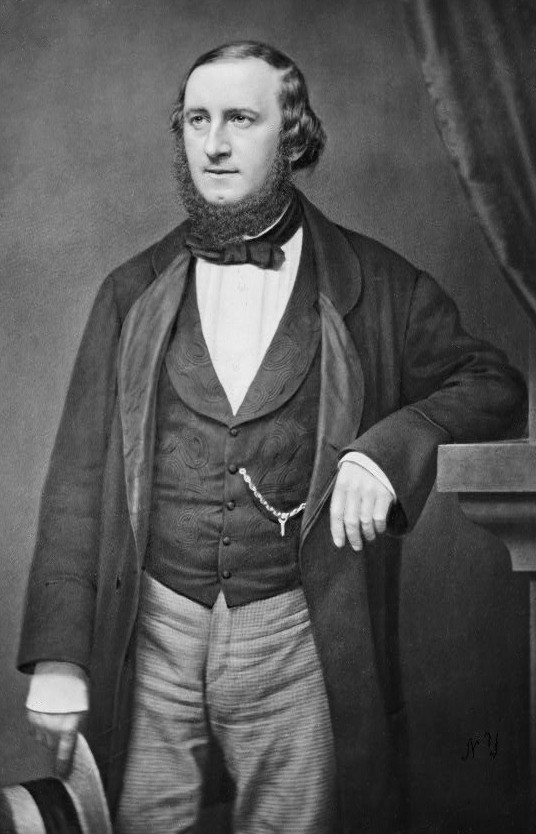
Mathew Brady: William Vincent Wallace, ca 1855 (Library of Congress)
William Vincent Wallace: Verdi – Rigoletto: Bella figlia dell’amore (Rosemary Tuck, piano)
Liszt wrote his Rigoletto paraphrase for his son-in-law, Hans von Bülow, who created his Arabesques sur un Thème de l’opéra Rigoletto on a different section of the opera, using Gilda’s Act I meditation on the name (Gualtier Maldè) of her beloved in the aria Caro nome for his inspiration.
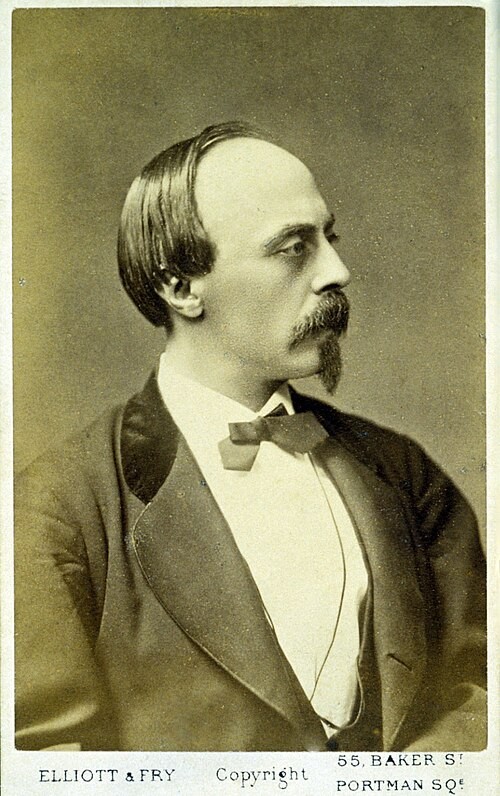
Hans von Bülow, 1865
Hans von Bülow: Arabesques sur un Theme de l’opera Rigoletto (Verdi), Op. 2 (Daniel Blumenthal, piano)
Sigismond Thalberg (1812–1871) was a virtuoso pianist who had been a student of Mozart’s student, Johann Nepomuk Hummel. The press invented a great rivalry between Thalberg and Franz Liszt while Thalberg was present in Paris in the 1830s. Liszt had retired to Switzerland with his mistress, Comtesse Marie d’Agoult. Princess Belgiojoso made a social coup when she persuaded the two virtuosi to play at her salon in a concert in aid of Italian refugees. Thalberg played his Moses Fantasy, and Liszt his new paraphrase from Pacini’s opera Niobe. The Princess declared Thalberg the first pianist in the world, while Liszt was unique. Everyone was a winner.
From Caro nome to Gilda and the Duke’s love duet E il sol dell’anima, the courtiers’ plotting in Zitti, ziti, and finally Bella figlia dell’amore are all part of Thalberg’s work.
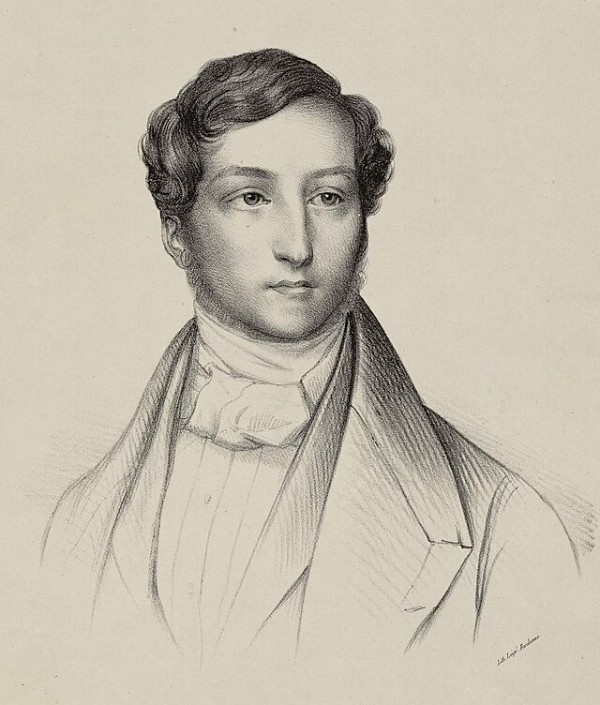
Sigismond Thalberg
Sigismond Thalberg: Souvenir de Rigoletto de Verdi, Op. 82 (Francesco Nicolosi, piano)
Of course, it wasn’t only pianists who made their versions of Rigoletto. The flute duo of Franz (1821–1883) and Karl (1825–1900) Doppler created their Rigoletto-fantasie as work for 2 flutes and string quartet. The use of two flutes permitted them to recreate many pianistic techniques.
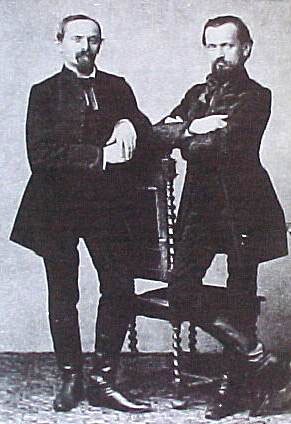
Franz and Karl Doppler
Franz Doppler: Rigoletto-fantaisie, Op. 38 (version for 2 flutes and string quartet) (Claudi Arimany, flute; Eduard Sánchez, flute; Sarasate String Quartet, Ensemble)
French cornetist Jean-Baptiste Arban (1825–1889) created fantasies for the cornet and piano on some 14 Verdi operas, including Rigoletto.
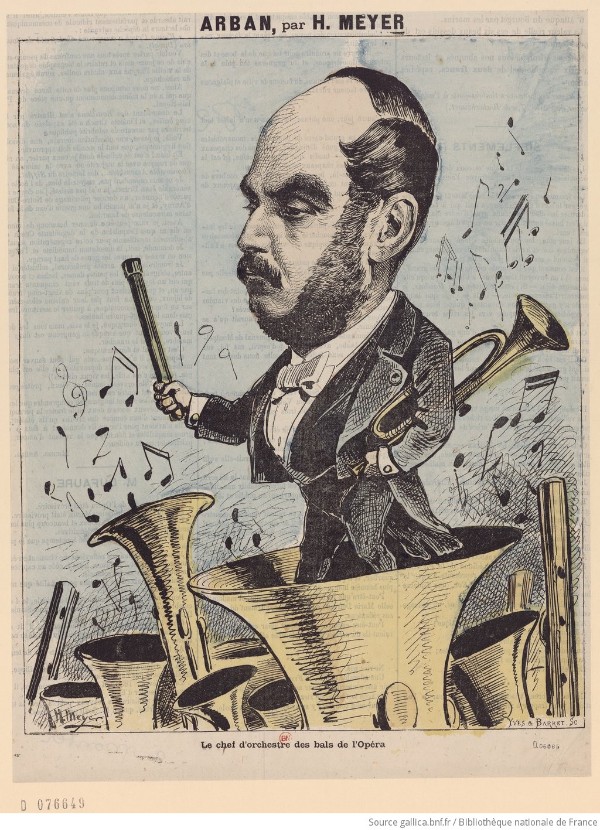
Jean-Baptiste Arban, ca 1860 (Gallica: btv1b10335344q)
Jean-Baptiste Arban: Fantasia on G. Verdi’s Rigoletto (Angelo Cavallo, cornet; Michele Fontana, piano)
German composer and flautist Wilhelm Popp (1828–1903) created his Rigoletto Fantasie in the same style as Arban, requiring extended playing techniques from the soloist.
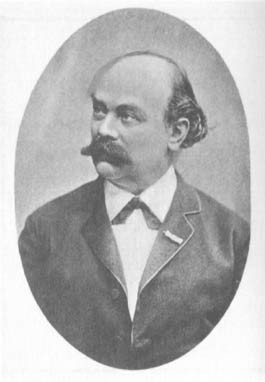
Wilhelm Popp
Wilhelm Popp: Rigoletto Fantasie, Op. 335 (Rita D’Arcangelo, flute; Giuliano Mazzoccante, piano)
Italian oboist and composer Antonino Pasculli (1842–1924) had the nickname of ‘the Paganini of the oboe’ for his virtuoso performances. In his compositions, he requires a player of extraordinary ability, as can be heard in his Rimembranze del Rigoletto. Originally written for oboe and piano, this recording has replaced the piano with a string orchestra for a more nuanced accompaniment.
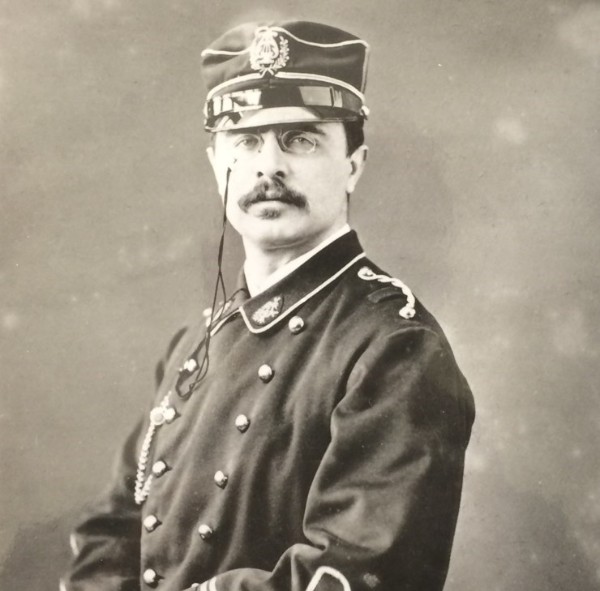
Antonino Pasculli, 1881
Antonio Pasculli: Rimembranze del Rigoletto (arr. S. Scinaldi) (Paolo Grazia, oboe; Orchestra Senzaspine; Matteo Parmeggiani, cond.)
For the clarinet, Italian composer Luigi Bassi (1833–1871) created his Fantasia da Concerto su motivi del Rigoletto, opening with the dramatic chords that are part of the orchestral prelude to Act I. Next, a clarinet cadenza, and we’re off with Gilda’s recitative ‘Mio Padre!’ (Act I). The quartet ‘Bella figlia dell’amore’ (Act III), the introduction ‘Della mia bella incognita’ (Act I), and the arias ‘Caro nome che il mio cor’ (Act I) and ‘Parmi veder le lagrime’ (Act II). Bravura passagework for the clarinet creates a work that has become one of the best-known Italian pieces for the clarinet.
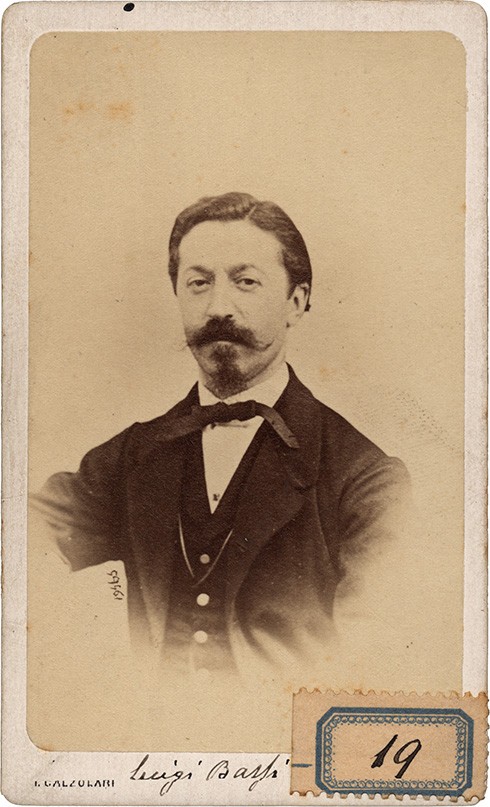
Luigi Bassi, before 1871 (Archivio Storico Riccordi)
Luigi Bassi: Fantasia da Concerto su motivi del Rigoletto (Giovanni Punzi, clarinet; Amedeo Salvato, piano)
In this focus on Rigoletto, you might have noticed the opera theme that doesn’t appear in any of these versions except for the one by the Doppler brothers. It’s well known that Verdi held back the aria ‘La donna è mobile’ until the very last minute because he knew it would be an instant hit. If he wasn’t careful, the song would be on the street and already tired before the opera ever hit the stage. His caution was right: after the premiere, the song was on the streets the next day. Even at the premiere, the performance of the tenor, Raffaele Mirate, was praised as the highlight of the evening. In the opera, by making the aria the opening of Act III, and by making it the characteristic melody of the Duke of Mantua, its reuse at the end of the opera, when Rigoletto understands that the body in the sack he’s about to dump into the river is not who he thinks it is, is particularly poignant. It might be that the work was too famous for our composers to take on as well. Or, it could be that, aware that their audience was largely female, arrangers didn’t feel that making a fantasy version of a song about how unreliable women were was a good career move!
Verdi created a hard and beautiful diamond in Rigoletto. Each of the composers who took up the themes from his works and made their own variations on them could only polish what was there. The original’s brilliance will always shine through.
For more of the best in classical music, sign up for our E-Newsletter