Violinist Joseph Joachim was one of the greatest violinists of the nineteenth century, and a dear friend of composer Johannes Brahms for decades.
But in 1884, while he was going through a brutal divorce, Joachim was blindsided by what he considered to be Brahms’s betrayal.
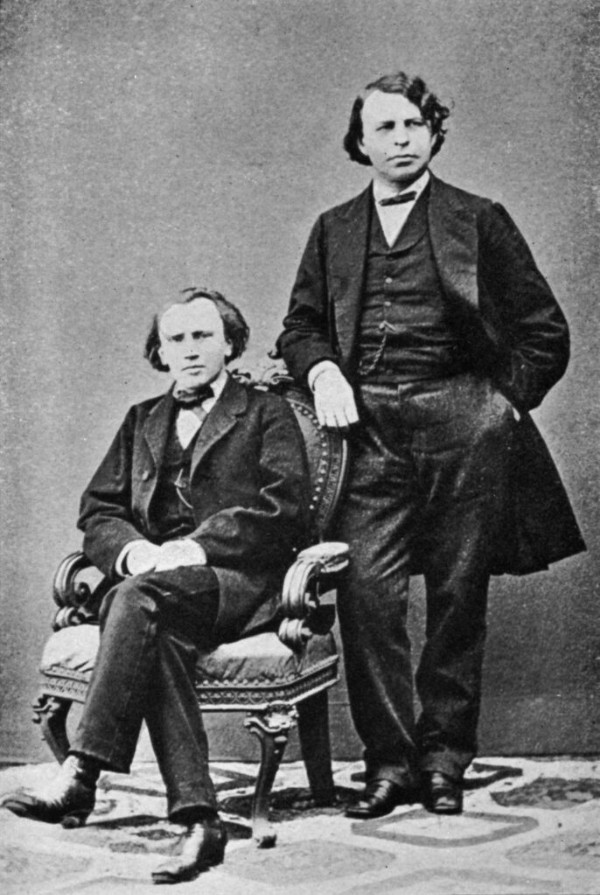
Johannes Brahms and Joseph Joachim
Today, we’re looking at the turbulent Joachim marriage and the role that Brahms helped play in dissolving it.
Joseph Joachim’s Biography
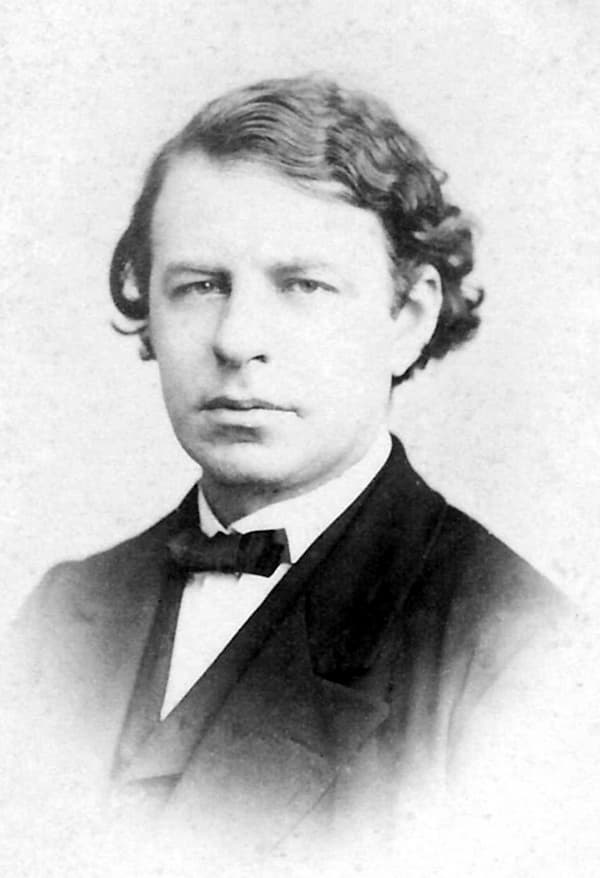
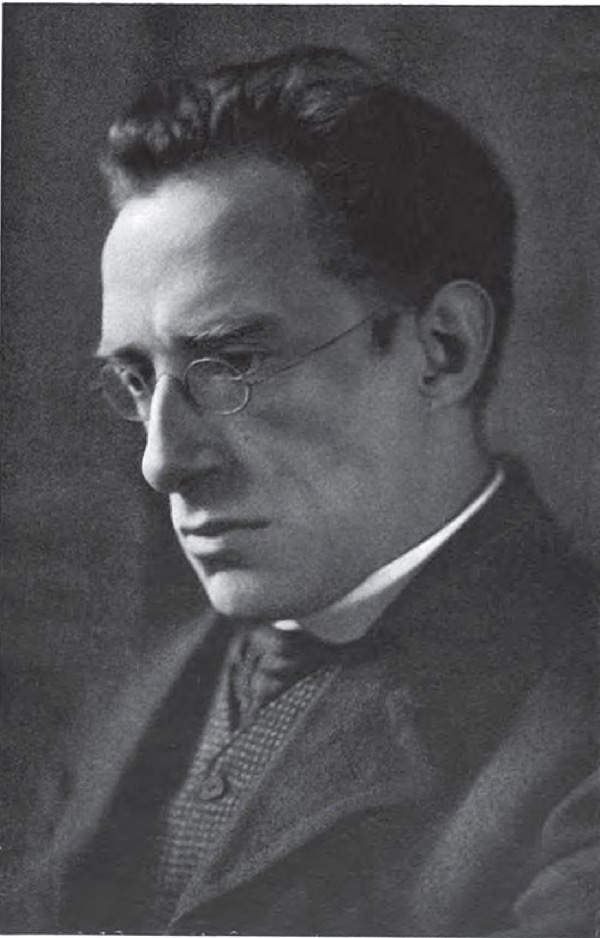
Joseph Joachim
Joseph Joachim was born in the Kingdom of Hungary in 1831.
He began playing the violin at five, made his public debut at seven, and became a protege of Felix Mendelssohn as a teenager.
Under Mendelssohn’s direction, Joachim played the Beethoven violin concerto. His advocacy for the concerto secured its place in the violin repertoire, where it remains today.
In 1852, he took a prestigious job leading the orchestra in Hanover. The position would allow him five months a year off to go on concert tours.
The following year he met and befriended Johannes Brahms.
Amalie Joachim’s Biography
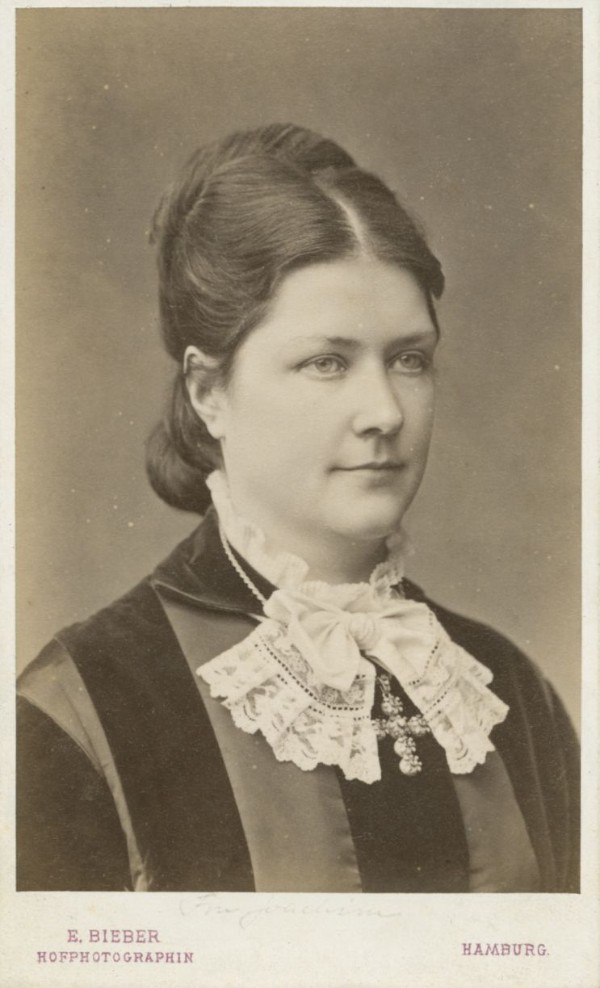
Amalie Schneeweiss Joachim
Joseph’s future wife, Amalie, was born Amalie Schneeweiss in 1839 in present-day Slovenia to two amateur musicians.
Her father lost his government job after Amalie’s brother became a revolutionary in the Hungarian Revolution of 1848. After the rebellion was suppressed, her brother fled the country.
Shortly afterwards, in 1851, her father died. Amalie, her mother, and her two sisters were left alone and economically vulnerable, and they were forced to become seamstresses to make ends meet.
Amalie was musically talented and, despite her poverty, began studying under a singing teacher in Graz. She made her operatic debut at the age of fourteen.
Between 1854 and 1862, she appeared in background roles at the Kärntnertortheater. But even as her career was starting to take off, tragedy kept striking her family: her mother and one of her sisters got ill and died. Young Amalie was the one who had to pay for their medical and funeral bills.
Meeting in Hanover
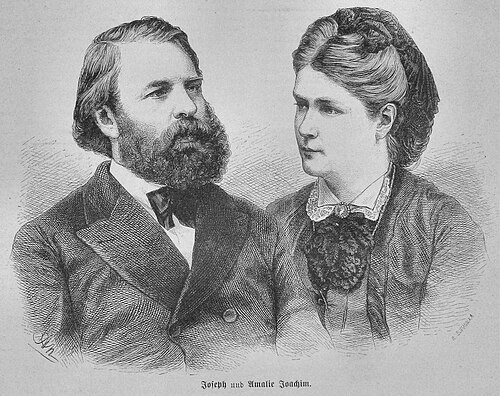
Joseph and Amalie Joachim
In April 1862, Amalie made her debut at the Hanover State Opera, singing, among other roles, the part of Leonore from Beethoven’s opera Fidelio. She was a triumph.
Amalie met Joseph when he was working as the orchestra’s concertmaster. After a few months of courtship, they announced their engagement in February of 1863.
The guests at their lavish wedding included the Queen of Hanover and various members of the local aristocracy.
Children
The couple had their first child in September 1864. They named him Johannes after Johannes Brahms.
To celebrate their marriage and baby, Brahms wrote a lullaby for viola, contralto, and piano called “Geistliches Wiegenlied” (Sacred Lullaby), using text by German poet Emanuel Geibel.
Anne Sofie von Otter – Brahms – ‘Geistliches Wiegenlied’
Between 1864 and 1869, Amalie had four children. After a break, she would have two more in 1877 and 1881.
Marital Tensions
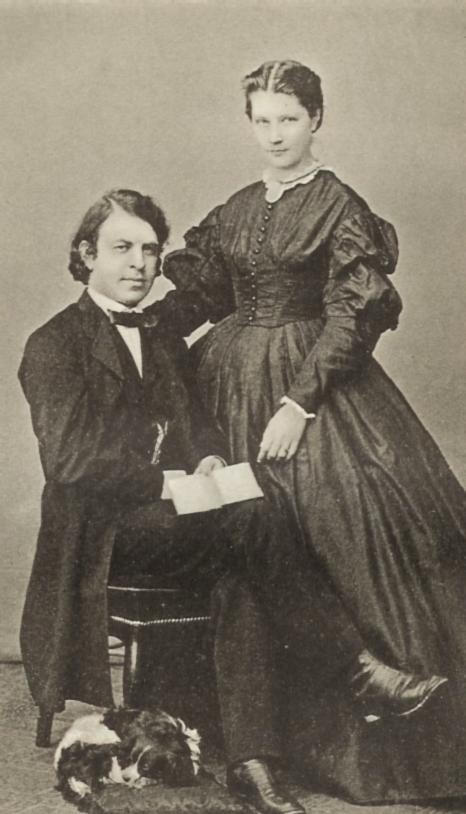
Joseph and Amalie Joachim
Unfortunately, the marriage suffered immense strain almost from the beginning.
Joseph was desperate for Amalie to conform to the late nineteenth-century Germanic ideal of womanliness.
Given her talent and the self-sufficiency that had marked her young adulthood, it was perhaps inevitable that Amalie would have great difficulty doing so.
The first serious cracks in their relationship appeared before the birth of their second son, when Amalie developed rheumatism that necessitated the use of a cane.
She also struggled with low self-esteem.
Just before she gave birth to her second baby, she wrote a depressed letter to Clara Schumann, “I am so sorry for Jo, buried here in dull Hanover, by the side of an unskillful housewife…[who] does not suffice him in other directions, as an artist – still less stimulate and inspire him!”
Amalie’s Professional Insecurities
It was clear that returning to the stage would be beneficial for her mental health, but both Joseph and Amalie had reservations.
Accomplished musical women of the era usually retired when they got married. This was especially true for opera singers, as making a living on the operatic stage was widely considered to be an unseemly and immoral occupation.
So instead of opera, Amalie concentrated on performing in recitals and oratorios. She herself vowed in 1868 that she would never return to the opera stage, writing passionately, “They always say whoever was in theater can’t leave and must return. God protect me from such idiotic sickness.”
In 1872, she went on an international recital tour with Clara Schumann. Clara Schumann admired Amalie so much that she would split their concert fee in half, even when Clara played much more.
Cheating Allegations
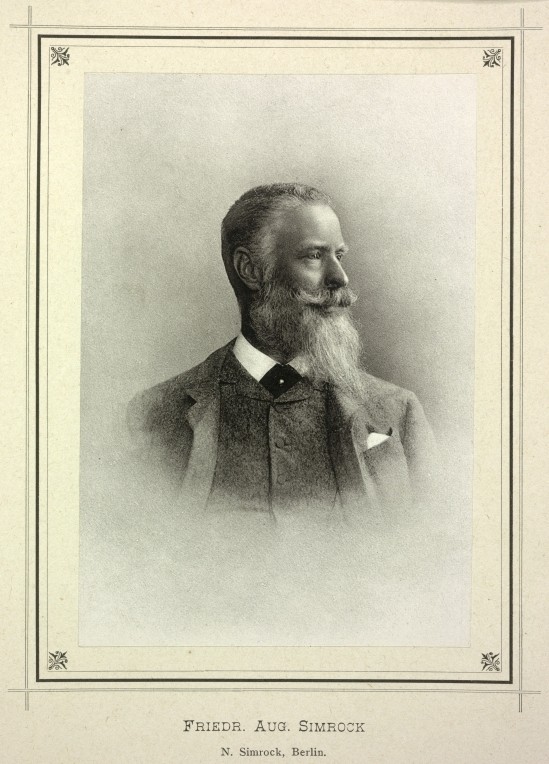
Fritz Simrock
Over time, the Joachim marriage continued to unravel. Joseph was upset about Amalie’s continuing professional ambition, and Amalie still yearned to sing more in public.
In 1874, Clara Schumann wrote an enigmatic letter to Brahms:
“Joachim has been imprudent enough…to forbid his wife to sing at [Julius] Stockhausen’s next concert… At a large party…Frau Joachim exhibited such passion…that I was quite angry. Meanwhile, of course, the so-called ‘good friends’ of whom Simrock was one, egged her on… Just imagine how Joachim’s enemies…rejoiced that she could make Joachim look such a fool.”
This behaviour made Joseph believe that Amalie was cheating on him with Fritz Simrock, who, awkwardly, was Brahms’s publisher.
Joseph’s Conflict With Brahms
Brahms was sceptical of his friend’s suspicions and felt that the two should reconcile.
In July 1880, when the conflicts in the marriage were hitting a breaking point, Brahms wrote to Joseph:
“[Your separation] has made me very sad and is constantly in my thoughts. You had so much in common, which gave promise of a long and happy life together. And now! – I find it hard to believe there is any really serious cause for it.”
Joseph responded:
“You know, dear friend, what great weight I attach to your judgment in matters of common humanity, that I reckon you as shrewd and upright, but in my experiences with the Simrock person I can go only on what I have found myself to be true… He has acted toward me like the most crafty scoundrel; through him, my life is night. I must learn to bear my fate like a man; but the poor, poor children! – that grieves me unutterably.”
Brahms’s Fateful Letter to Amalie
A frustrated Brahms then wrote to Amalie:
“Let me say first and foremost: with no word, with no thought have I ever acknowledged that your husband might be in the right…
Despite a thirty-year friendship, despite all my love and admiration for Joachim, despite all our artistic interests… I am very careful in my association with him…and would never think of wishing to live in the same city, joined with him in collaborative endeavours.
At this point I perhaps hardly need to say that, even earlier than you did, I became aware of the unfortunate character-trait with which Joachim so inexcusably tortures himself and others…
The simplest matter is so exaggerated, so complicated, that one scarcely knows where to begin with it and how to bring it to an end…
His passionate imagination is playing a sinful and inexcusable game with the best and most holy thing fate has granted him.”
After sending that letter to Amalie, Brahms wrote to Simrock:
“I am freed from a burden, that I could finally say to her a small part of what I’d like to.”
Amalie asked Brahms if she could use his letter as a character reference in future, should the need arise. He said yes.
Brahms’s Second Lullaby
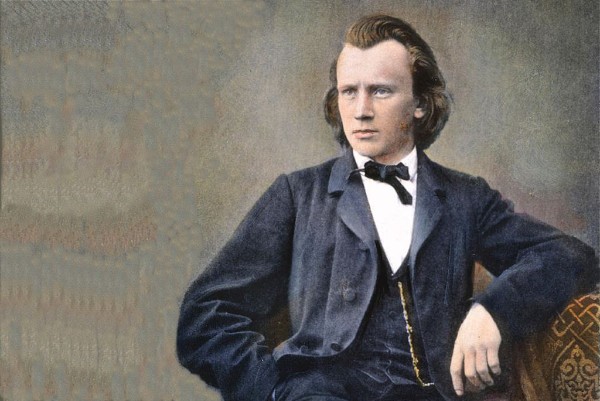
Johannes Brahms
In a touching, if misguided, attempt at encouraging his friends to reconcile, Brahms picked up his wedding gift for them and wrote a companion piece, “Gestillte Sehnsucht” (“Satisfied Longing”). It too was for viola, contralto, and piano, and featured text by poet Friedrich Rückert.
The two pieces for the Joachims were published in 1884 and first played in public in January 1885.
Wallis Giunta – Gestillte Sehnsucht (Brahms, Op. 91)
The Joachim Divorce
However, in the end, Brahms’s attempts at encouraging reconciliation failed. In 1883, Joseph filed for divorce, citing Amalie’s adultery as the reason.
He could produce no indisputable evidence that she’d cheated, whereas she had Brahms’s letter testifying to Joachim’s “passionate imagination.”
Although Brahms had not written that letter to be used in the divorce proceedings specifically, Joachim felt betrayed by it anyway.
He continued to perform Brahms’s music because he admired it so deeply, but their thirty years of friendship were strained to the breaking point.
The Joachims’ divorce was finalised in 1884.
Amalie faced an uphill battle in reclaiming her career because her ex-husband was so powerful and influential in the world of music. Nevertheless, she ultimately did innovative work as a teacher, concert programmer, and singer.
Brahms’s Explanation to Joachim
In late 1883, in the middle of the legal turmoil, Brahms wrote bluntly to Joachim:
“In the sad affair of your wife, I could never be on your side; I always had to deplore most profoundly the way you proceeded in this matter…
I can never regret having written that letter. For me, it was a good deed, a release, to be able to say to your troubled wife the same thing that I had often enough said to you…
But what a mess was brought out at the trial!”
This explanation didn’t help patch things up.
Brahms’ Double Concerto
By the summer of 1887, the break with Joachim was still clearly bothering Brahms.
So he sent Joachim an olive branch: the manuscript to a brand new concerto for violin and cello. He inscribed the manuscript with the phrase, “To him for whom it was written.”
Joachim accepted the overture of friendship, if perhaps a little reluctantly. His love of Brahms’s music had never wavered.
Brahms : Double Concerto/Anne-Sophie Mutter, Maximilian Hornung
Farewells
In 1889, Brahms helped to plan and pay for celebrations surrounding the fiftieth anniversary of Joachim’s debut on the concert platform.
The last time Brahms conducted an orchestra was in 1896 with the Berlin Philharmonic. At the after-party, Joseph Joachim began a toast: “To the greatest composer…” and Brahms immediately interrupted with, “Here’s to Mozart’s health!”
Their friendship would never be as close as it had been early in their lives. But when Brahms died of liver cancer in 1897, the two giants had been reconciled.
For more of the best in classical music, sign up for our E-Newsletter