In the world of music, where boundaries between genres often seem rather rigid, Kirill Gerstein is a shining exception. He is a pianist whose journey from a self-taught jazz prodigy to a Grammy-nominated classical virtuoso redefines what it means to be a modern musician.
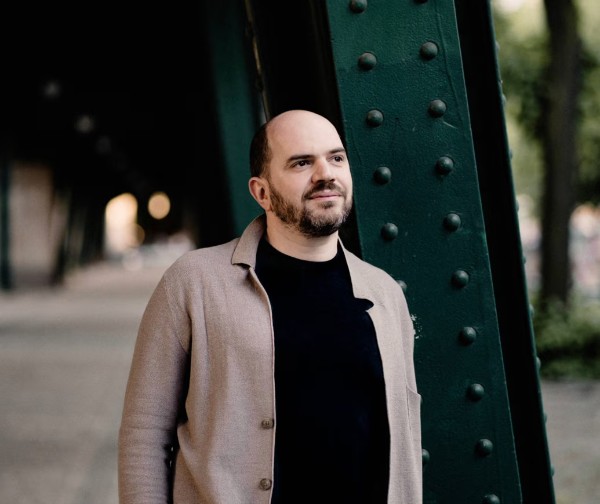
Kirill Gerstein
Born on 23 October 1979, in Voronezh, Russia, Gerstein’s story is one of relentless curiosity, fearless exploration, and a seamless blending of musical worlds. His early immersion in jazz sparked the foundation for a career that would see him become Berklee College of Music’s youngest-ever student at 14.
To commemorate his birthday, let’s trace Gerstein’s extraordinary path as he ascended to the pinnacle of classical music with performances that pulse with improvisational flair.
Kirill Gerstein plays Gershwin: “I Got Rhythm” (arr. E. Wild)
Young Revelations
Gerstein’s musical journey began in the Soviet Union, in a household where music was both a refuge and a revelation. At age two, he was already drawn to the piano, guided by his mother, a musicologist, and his father, a mathematician with a passion for records. By 10, Gerstein was captivated not by the classical scores typical of a young pianist’s training but by the syncopated rhythms and improvisational freedom of jazz.
Teaching himself from his parents’ vinyl collection filled with recordings of Thelonious Monk, Miles Davis, and Oscar Peterson, Gerstein absorbed the genre’s spontaneity and emotional immediacy.
This self-directed exploration decisively forged Gerstein’s music identity. Jazz, with its emphasis on individuality and in-the-moment creation, gave him a lens through which he would later view even the most structured classical compositions.
Kirill Gerstein plays Schumann: Carnaval, Op. 9
Nurturing a Rare Gift
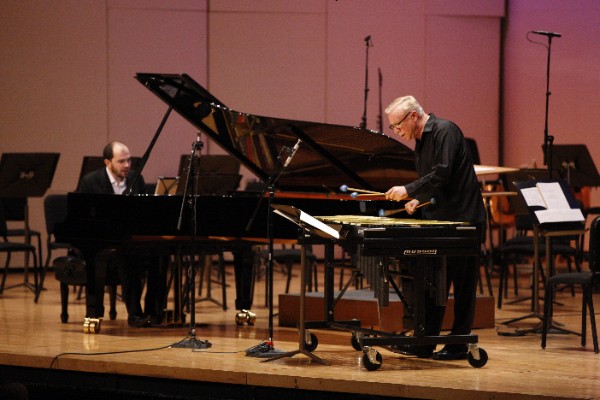
Kirill Gerstein and Gary Burton
At 14, Gerstein’s prodigious talent caught the attention of vibraphonist Gary Burton, then dean at Berklee College of Music in Boston. Burton, recognising a rare gift, offered Gerstein a full scholarship and made him the youngest student in the institution’s history.
Berklee, a hub for jazz and contemporary music, was an unconventional choice for a teenager destined for classical stardom, but it proved transformative. There, Gerstein immersed himself in jazz theory, improvisation, and ensemble playing, honing a musical intuition that thrives on freedom and adaptability.
Burton’s mentorship was pivotal, encouraging Gerstein to embrace risk-taking, a quality that would later define his approach to classical music. Yet, even as he thrived in jazz, Gerstein felt the pull of classical music’s depth and complexity.
Kirill Gerstein performs Chopin: Grande Valse nouvelle in A flat Major, Op 42
Expanding the Palette
Gerstein’s transition to classical music was not a rejection of jazz but an expansion of his musical palette. After Berklee, he pursued formal classical training at the Manhattan School of Music, studying with luminaries like Solomon Mikowsky and Nina Svetlanova.
This shift required him to master the technical precision and interpretive nuance demanded by composers like Beethoven, Chopin, and Liszt. Yet, unlike many classical pianists bound by tradition, Gerstein brought his jazz sensibility to the concert hall.
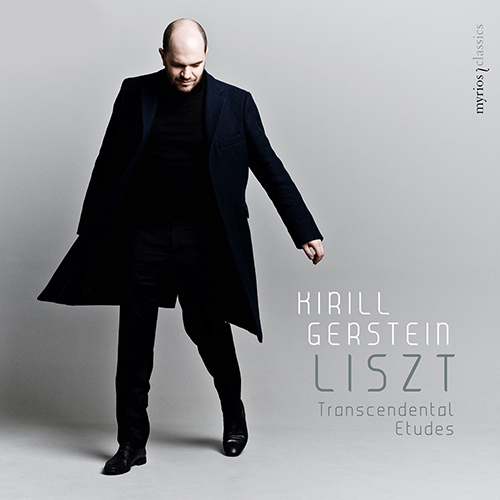
His performances are marked by a fluidity that echoes jazz improvisation, even within the strictures of a written score. This is nowhere more evident than in his Grammy-nominated recordings of Franz Liszt’s works, particularly the Transcendental Études and Piano Concerto No. 1, released on the Myrios Classics label in 2016.
Franz Liszt: 12 Études d’exécution transcendante, S139/R2b (Kirill Gerstein, piano)
Liszt as a Canvas
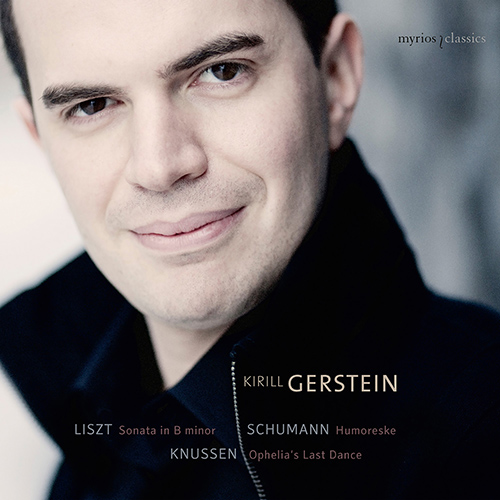
The music of Franz Liszt is an ideal vehicle for Gerstein’s jazz-inflected approach. His rendition of the Transcendental Études is a revelation. Gerstein navigates the technical pyrotechnics with a clarity that feels almost conversational, as if improvising in real time.
The New York Times praised his “boundless curiosity” and “improvisational flair,” noting how he makes Liszt’s music feel alive, as if composed on the spot. This jazz-classical synthesis is not merely stylistic but reflects Gerstein’s philosophy of music as a living, breathing art form.
In interviews, he has spoken of jazz as teaching him to “listen differently” and to approach scores with a sense of possibility rather than dogma. For Gerstein, a classical score is not a sacred text but a framework for dialogue, much like a jazz standard.
Franz Liszt: Piano Sonata in B Minor, S178/R21 (Kirill Gerstein, piano)
Curating Connections
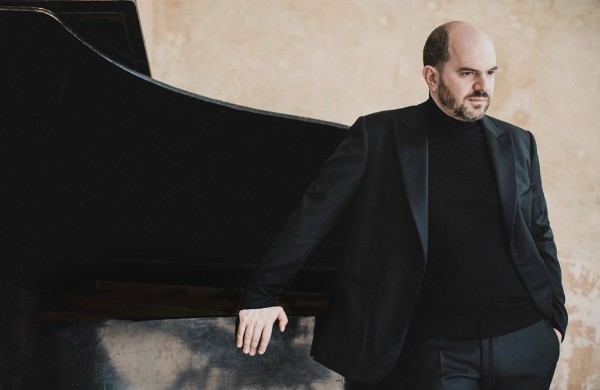
Kirill Gerstein © Marco Borggreve
Gerstein’s genre-blending approach extends beyond performance to his curatorial projects. His “Music in Time of War” album, which pairs Liszt with Ferruccio Busoni, explores music as a response to conflict.
His work with Armenian composer Komitas, whose WWI-era compositions reflect cultural survival, showcases Gerstein’s commitment to music as a vehicle for storytelling and healing.
In an era where classical music often struggles for relevance, Gerstein’s vibrant, fearless, and deeply human work reminds us that music thrives when it embraces the unexpected. As he continues to perform, teach, and innovate, we find in Kirill Gerstein a musician who sees no boundaries between past and present, jazz and classical, or art and life.
For more of the best in classical music, sign up for our E-Newsletter