Born on 5 September 1960 in Somero, Finland, Karita Mattila’s journey from a small-town upbringing to the grand stages of the world’s most prestigious opera houses is a testament to her extraordinary talent and unwavering dedication.

Karita Mattila
Her luminous voice and magnetic stage presence, blending vocal purity with emotional depth, would go on to redefine operatic excellence. Mattila’s career is a remarkable tapestry of artistry, versatility, and fearless exploration. From her early triumphs in Mozart and Strauss to her later, daring interpretations of Wagner and Janáček, she has consistently pushed the boundaries of her craft.
Mattila’s ability to inhabit roles with both vocal brilliance and dramatic intensity has made her a favourite at venues like the Metropolitan Opera, Covent Garden, and the Salzburg Festival. On the occasion of her birthday on 5 September, let’s sample some of her most iconic recordings and performances.
Karita Mattila sings Mozart: “Or sai chi l’onore” Don Giovanni
A Voice of Transcendence
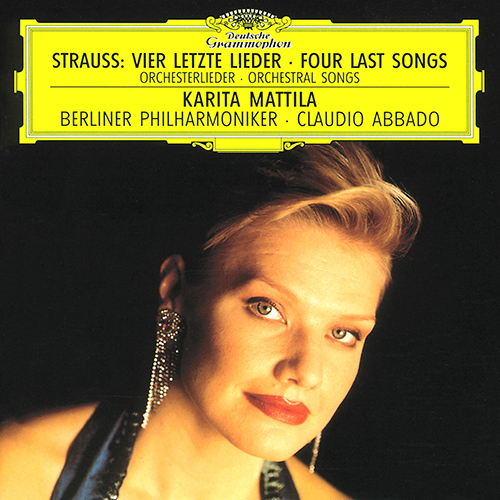
Karita Mattila’s rendition of Richard Strauss’s Four Last Songs is a crowning achievement in her illustrious career, a recording that has become a touchstone for vocal artistry. Captured with Claudio Abbado conducting for Deutsche Grammophon, Mattila’s performance radiates a luminous warmth, her voice weaving through Strauss’s lush, elegiac melodies with effortless grace.
Her ability to balance ethereal clarity with profound emotional weight brings the themes of mortality and transcendence to life. Each phrase unfolds with a natural flow, her golden tone illuminating the intricate orchestration like sunlight through autumn leaves.
Mattila herself has named this recording among her favourites, reflecting her deep affinity for Strauss’s music, which demands both technical precision and heartfelt expression. Critics have universally lauded this performance as a benchmark, with Gramophone describing her interpretation as “a revelation.”
Richard Strauss: 4 Letzte Lieder (4 Last Songs), TrV 296 (Karita Mattila, soprano; Berlin Philharmonic Orchestra; Claudio Abbado, cond.)
Passionate Journey
Karita Mattila’s portrayal of Floria Tosca in Puccini’s Tosca is a defining highlight of her storied career, blending vocal splendour with a riveting dramatic presence. Her performance, particularly in the 2006 Metropolitan Opera production under James Conlon, brought to life the fiery passion and aching vulnerability of the Roman diva.
Mattila’s voice, with its radiant power and expressive nuance, navigates Puccini’s soaring melodies with ease, capturing Tosca’s journey from ardent lover to desperate heroine. Her ability to embody the character’s emotional extremes makes her interpretation unforgettable, delivering a Tosca that is both larger-than-life and deeply human.
Critics have celebrated Mattila’s Tosca as a triumph of vocal and theatrical artistry. The New York Times described her performance as “electrifying,” praising her “full-bodied, shimmering tone” and specifically, her poignant delivery of “Vissi d’arte.”
Karita Mattila sings Puccini: “Vissi d’arte” Tosca
Soulful Brilliance
Karita Mattila’s portrayal of Eva in Richard Wagner’s Die Meistersinger is a shining example of her ability to bring lyrical warmth and dramatic vitality to a role. In the 1995 Decca recording with the Chicago Symphony Orchestra under Sir Georg Solti, which won a Grammy Award for Best Opera Recording in 1998, Mattila’s Eva radiates youthful passion and emotional depth, her voice soaring with a golden clarity.
Mattila’s Eva is not merely a romantic figure but a vibrant character who navigates the opera’s emotional and comedic currents with finesse. Critics have consistently praised Mattila’s interpretation for its vocal and dramatic excellence.
The Chicago Tribune noted that while Mattila occasionally scaled back for the recording, her Act III performance, particularly in the quintet “Selig, wie die Sonne,” was marked by a slightly worn but affecting quality, suggesting great emotional depth. Mattila’s Eva remains a definitive portrayal, celebrated for its vocal beauty and heartfelt characterisation.
Karita Mattila sings Wagner: “Selig, wie die Sonne” Die Meistersinger von Nürnberg
Evoking the Cosmos

Karita Mattila
Disclosing her vocal prowess and deep connection to her Finnish heritage, Mattila’s performance of Jean Sibelius’s Luonnotar, Op. 70 is a mesmerising showcase for adding authenticity to storytelling.
Mattila brings to life the mythical creation story from Finland’s national epic, the Kalevala. Her voice navigates the tone poem’s demanding vocal line with a blend of ethereal clarity and dramatic intensity, capturing the primaeval mystery of “Luonnotar,” the goddess who descends to the sea to create the world.
Karita Mattila’s extraordinary career, marked by her luminous voice and fearless artistry, continues to inspire audiences worldwide. Her performances, from Strauss to Puccini to Sibelius, remain a testament to her enduring legacy as one of opera’s most captivating sopranos.
For more of the best in classical music, sign up for our E-Newsletter