Isaac Stern, born on 21 July 1920 in Kremenets, Ukraine, was a legendary American violinist whose extraordinary talent and charismatic presence made him one of the most celebrated musicians of the 20th century. His family immigrated to San Francisco in 1921, and Stern began studying the violin at eight. His prodigious skills quickly propelled him to international acclaim, with a debut at Carnegie Hall in 1937 that marked the start of a remarkable career spanning over six decades.
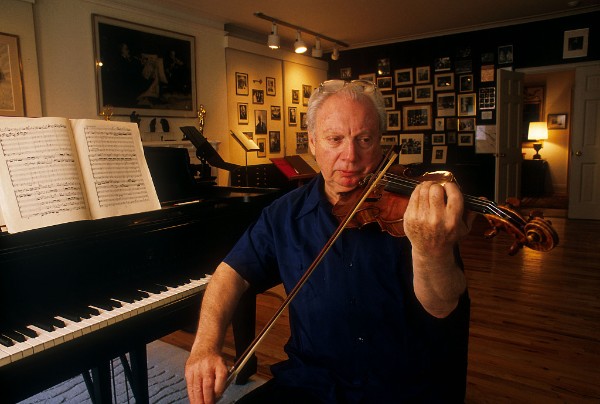
Isaac Stern
Renowned for his warm, expressive tone and technical precision, Stern brought unparalleled emotional depth to his interpretations of classical masterpieces by composers like Bach, Beethoven, and Brahms. His performances with leading orchestras and conductors captivated audiences worldwide, and as a dedicated advocate for music education, he mentored the next generations of exceptional string players.
Stern’s impact extended far beyond his virtuosity. In the 1960s, he led a successful campaign to save New York’s Carnegie Hall from demolition, securing its place as a cultural landmark.
His commitment to the arts, combined with his prolific recordings and global performances, cemented his status as a cultural icon whose influence continues to resonate in the world of classical music.
Isaac Stern Performs Mendelssohn’s Violin Concerto in E minor, Op. 64
Blend of Passion and Precision
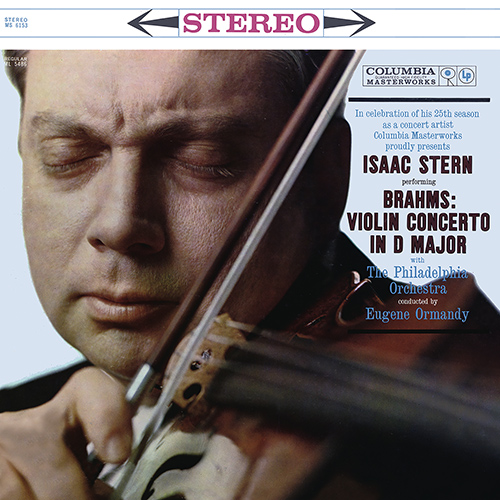
Isaac Stern’s 1958 recording of Brahms’ Violin Concerto in D Major with the Philadelphia Orchestra, conducted by Eugene Ormandy, remains a towering achievement in his discography. Celebrated for its blend of fiery passion and architectural clarity, Stern’s approach is both commanding and deeply personal.
Stern navigates Brahms’ intricate melodies with a rich and singing tone and a sense of inevitability. Critics praised Stern’s ability to balance the concerto’s virtuosic bravura with its lyrical introspection, noting how his bow “seemed to breathe with the music’s emotional ebb and flow.”
Stern’s ability to maintain clarity in the concerto’s fiendishly difficult passages earned accolades for its virtuosic flair without sacrificing musicality. Critics and enthusiasts alike have praised this performance for its “life-affirming quality.”
Johannes Brahms: Violin Concerto in D Major, Op. 77 (Isaac Stern, violin; Philadelphia Orchestra; Eugene Ormandy, cond.)
Elegance and Joy
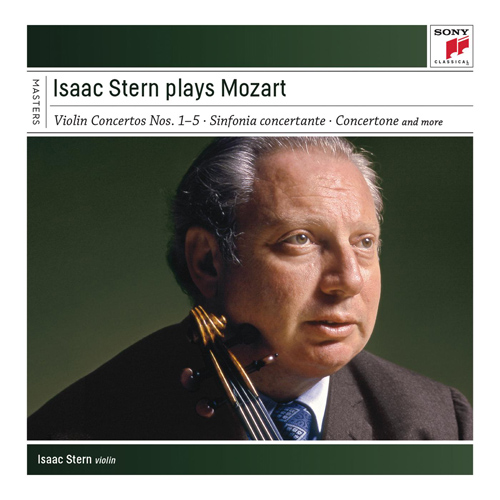
Isaac Stern’s 1975 performance of Mozart’s Violin Concerto No. 3 in G Major with the Orchestre de Chambre de Radio France, conducted by Alexander Schneider, is a radiant example of his mastery of the Classical repertoire, blending effortless virtuosity with a profound sense of joy.
The Strad praised Stern for his ability to capture the concerto’s playful yet refined spirit, noting how his phrasing danced with a natural, conversational ease. Stern’s violin sings with a crystalline clarity, and his warm and golden tone illuminates Mozart’s graceful melodies.
The collaboration with Schneider, a longtime friend and collaborator, amplified the spontaneity of interpretation and created a chamber-like intimacy. Critics lauded the performance for its “sparkling vitality, buoyant articulation, and sunny character.”
Wolfgang Amadeus Mozart: Violin Concerto No. 3 in G Major, K. 216 (Isaac Stern, violin; Cleveland Orchestra; George Szell, cond.)
Baroque Brilliance
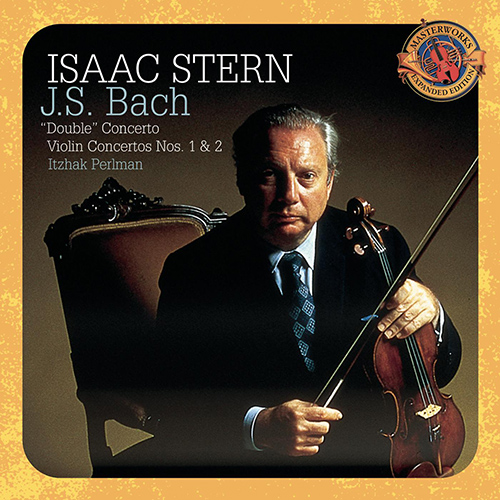
Isaac Stern’s 1976 recording of Bach Violin Concertos with the English Chamber Orchestra, conducted by Alexander Schneider, is a luminous showcase of his ability to blend Baroque precision with expressive warmth. Stern’s violin radiates a vibrant and singing quality, his rich tone and articulate phrasing bringing out a joyful momentum.
Critics, including those from The New York Times, praised Stern for his ability to maintain the concerto’s structural clarity while infusing it with a personal, almost Romantic glow, a balance that set his Bach apart from more austere interpretations of the time.
The collaboration with Schneider and the English Chamber Orchestra creates a lively dialogue, with Stern’s buoyant runs and crisp ornamentation dancing alongside the orchestra’s nimble textures. Enthusiasts described this performance as “exhilarating,” noting how Stern’s commanding presence makes every phrase feel both purposeful and spontaneous.
J.S. Bach: Violin Concerto in E Major, BWV 1042 (Isaac Stern, violin; English Chamber Orchestra; Alexander Schneider, cond.)
A Triumphant Archduke
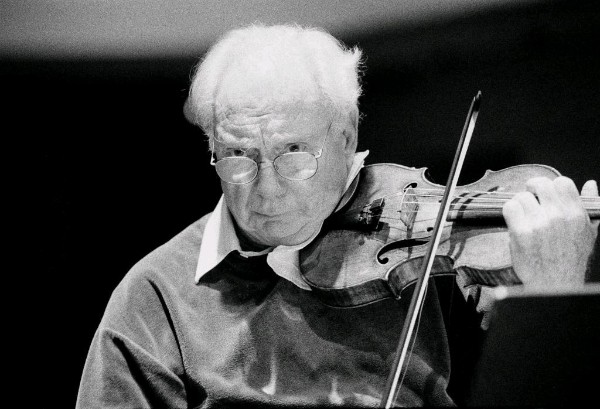
Isaac Stern
In their 1960s performance of Beethoven’s “Archduke Trio,” Isaac Stern, Leonard Rose, and Eugene Istomin deliver a performance of extraordinary cohesion and emotional richness, capturing the work’s grandeur with a rare blend of intimacy and power.
Critics have described this interpretation as “unforgettable,” praising the trio’s ability to balance Beethoven’s bold, assertive themes with moments of lyrical tenderness. Stern’s expressive phrasing, particularly in the movement’s soaring second theme, complements Istomin’s nuanced touch and Rose’s robust yet sensitive support, creating a dialogue that feels both spontaneous and meticulously crafted.
Isaac Stern’s legacy as a violinist, mentor, and cultural advocate endures as a beacon in the world of classical music. In his most iconic performances and recordings, Stern showcases a rare fusion of technical mastery, emotional depth, and interpretive insight. His discography remains a timeless treasure, inviting listeners to rediscover the true soul of music.
For more of the best in classical music, sign up for our E-Newsletter