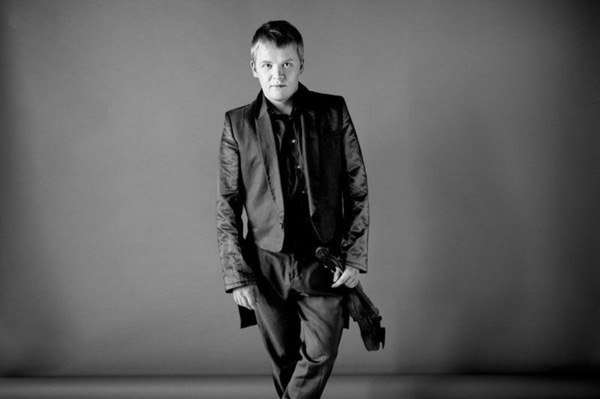
The exceptional French baritone Stéphane Degout, born on 9 June 1975 in Bourg-en-Bresse, France, has built a remarkable career spanning a richly diverse repertoire. It encompasses everything from Baroque music and Mozart to French Romanticism to contemporary works.

Stéphane Degout
Beyond opera, Degout has made a commitment to art song, and he collaborates with leading pianists in venues like Wigmore Hall and Carnegie Hall.
To celebrate his birthday on 9 June, let us explore Degout’s delicate art of French mélodie through a musical selection marked by refinement and subtlety.
Ravel : Histoires naturelles (Stéphane Degout / Barbara Hannigan)
Between Speech and Song

Stéphane Degout (Photo by Jean-Baptiste Millot)
In 1995, Stéphane Degout was admitted to the Lyon Conservatoire. He was only 20 years old, and he recalled that people looked at him with some disdain. They said that he had a small voice, not very interesting, but that he could always sing French mélodie.
Today, Degout looks back at this early assessment with a good deal of irony. He did become one of the foremost interpreters of French song while simultaneously celebrating triumphs on the world’s great opera stages. French mélodie was never just a fallback option, but a central pillar of his artistry.
For Degout, Mélodie is fundamentally about poetry and language. He recalled that already as a child in primary school, he loved learning poems, and that Jacques Prévert was his favourite poet. As he explains, French song begins with the text and the poem, while opera is dominated by story and theatrical action.
Claude Debussy: 3 Mélodies (Stéphane Degout, baritone; Alain Planès, piano)
From Illusion to Intimacy
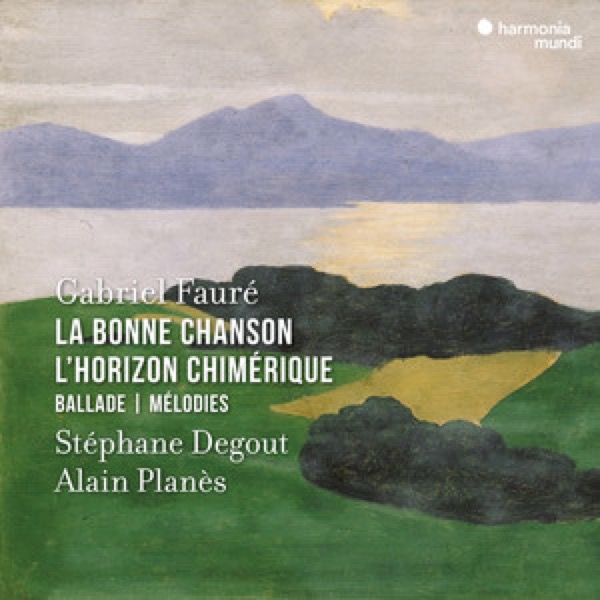
Gabriel Fauré: La Bonne Chanson, L’Horizon Chimérique — Stéphane Degout, Alain Planès (Harmonia Mundi)
Degout has also spoken of French as a language rich in vocal colour and subtle inflection. These qualities of the language are essential to mélodie, as emotional moments are rarely declaimed outright, but rather implied.
Mélodie, for Degout, is a demanding art form that requires a different kind of artistic exposure. As such, he has often drawn a clear distinction between the operatic and the recital stage.
On the operatic stage, the singer is supported by costume, staging, orchestral texture, and other characters, all of which shape the dramatic illusion. In recital, all of that is stripped away. As Degout has often suggested, recital singing places the performer in a state of heightened vulnerability.
Gabriel Fauré: La bonne Chanson, Op. 61 (Stéphane Degout, baritone; Alain Planès, piano)
From Declamation to Musical Line

Stéphane Degout (Photo by Cédric Roulliat)
Degout consistently frames mélodie as a fundamentally collaborative art. This essentially means that the pianist is a true partner, and not merely an accompanist. In his long-standing partnerships with pianists Alain Planès, Simon Lepper, and Cédric Tiberghien, Degout strives for a single interpretive space where meaning is created through interaction.
Degout’s art of French mélodie is rooted in declamation, as speech is transformed into the musical line. This kind of transformation is achieved without exaggerated dynamic or emotional contrast.
In his recitals, Degout habitually avoids large vocal gestures, preferring instead to shape the vocal arc through small adjustments. There are no operatic projections on the recital stage, just fine gradations of tone.
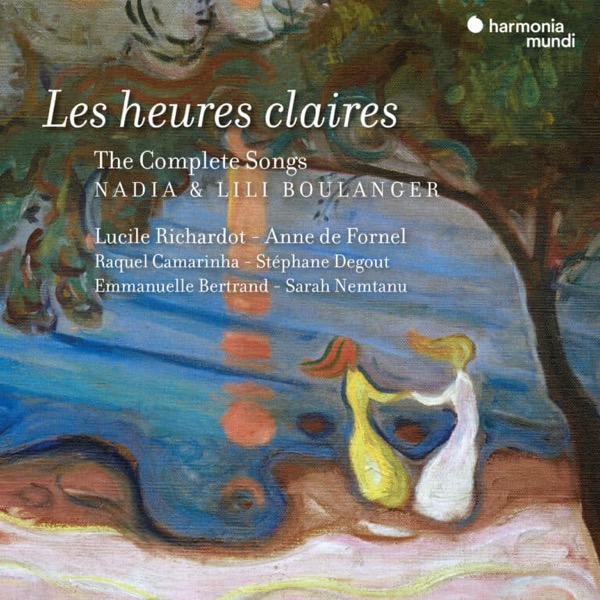
Les Heures Claires: The Complete Songs of Nadia & Lili Boulanger (Harmonia Mundi)
Nadia Boulanger | Allons voir sur le lac d’argent | A. de Fornel, L. Richardot, S. Degout
At the Centre of French Song Today

Stéphane Degout
It is hardly surprising that critics have hailed the emotional transparency of his recordings and performances. He is considered by many to be one of the most important performers of French song in our time.
And this framing is significant, as he is no longer treated as an opera singer who also sings mélodie. Rather, he is a central figure in modern interpretations of the genre.
For more of the best in classical music, sign up for our E-Newsletter