Today, Désirée Artôt is best remembered for her brief engagement to composer Pyotr Ilyich Tchaikovsky.
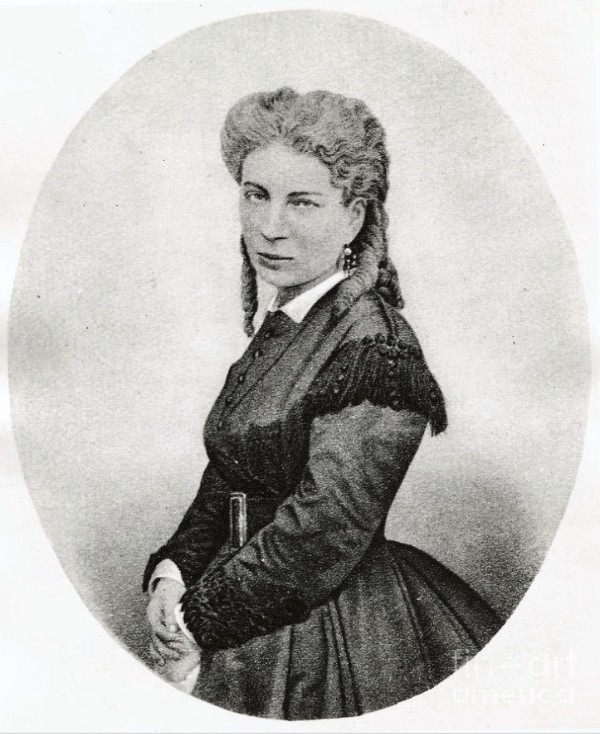
Désirée Artôt
However, Artôt was more than just a great composer’s love interest. She studied with opera icon Pauline Viardot and traveled the world, impressing critics in countries across Europe, and refusing to retire after her marriage.
Today we’re looking at the life story of Désirée Artôt, as well as the music we know she inspired…and the music she might have.
Désirée Artôt’s Birth and Background
Désirée Artôt
Désirée Montagney Artôt was born Marguerite-Joséphin-Désirée Montagney Artôt on 21 July 1835 in Brussels.
She came from an artistic family. Her father was Jean Désiré Artôt, a professional horn player and professor in Brussels. One uncle was a well-known violinist, and another was a portrait painter.
Artôt’s Early Career – And First Big Break
Not much is known about her childhood or early training, but as a young woman, she studied with Pauline Viardot and Francesco Lamperti in London and Paris.
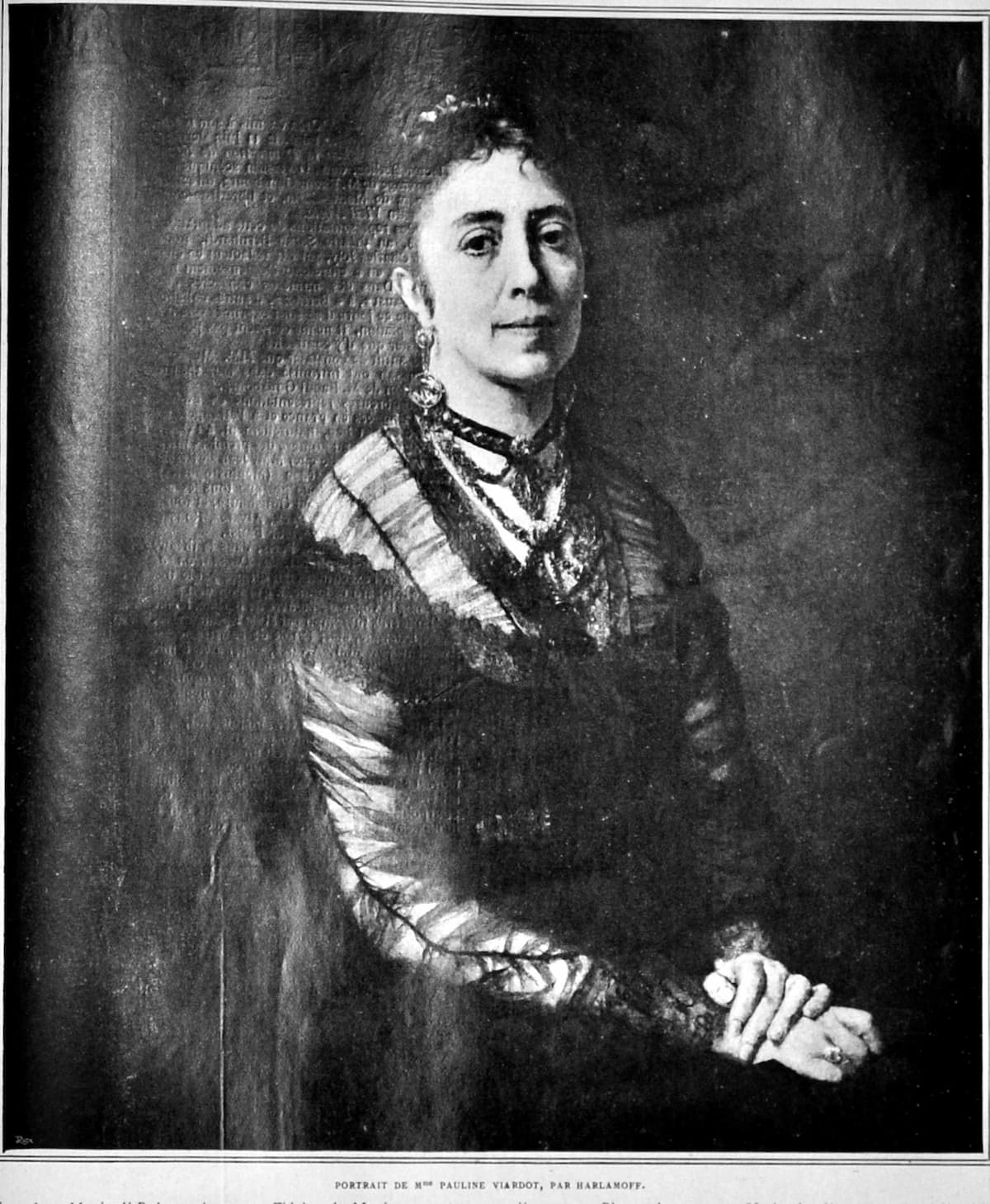
Pauline Viardot in 1910
In February 1858, when she was twenty-three, she got her first big break.
Composer Giacomo Meyerbeer hired her to perform the role of Fidès in a production of his five-act grand opera Le prophète (The Prophet), at the prestigious Paris Opéra.
This was a major role that had been originated a decade earlier by her teacher, Pauline Viardot.
The performance was Artôt’s Paris Opéra debut. She was praised by composer Hector Berlioz, who, at the time, was renowned for his reviews as well as his composing.
Mezzo-soprano Mimi Aarden, singing the role of Fidès, in an aria from Le Prophète
Making a Name for Herself
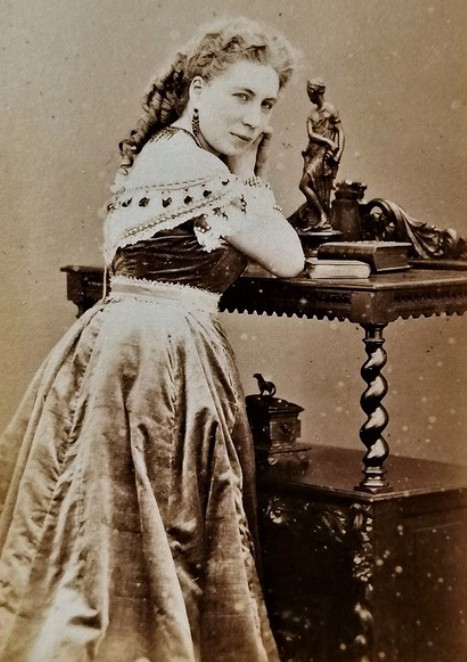
Désirée Artôt
Despite her promising reception in Paris, after performing in Le prophète, she left France to study in Italy and perform Italian repertoire.
There she learned how to sing roles by Rossini, Verdi, and others.
During the late 1850s and early 1860s, she toured throughout Europe, making especially frequent appearances in England.
In addition to her fiery temperament, she became famous for throwing herself into preparation for her roles.
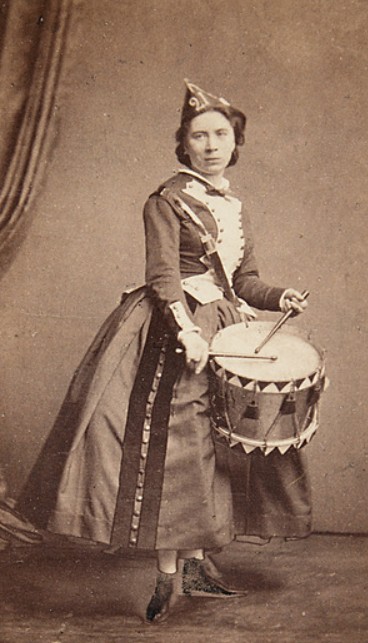
When she took a role in the Donizetti opera La fille du régiment (The Daughter of the Regiment), she studied the snare drum for months. English conductor Frederic Hymen Cowen wrote in his memoirs that she “used to play it herself in the first act as efficiently as any professional drummer.”
She was proving to be deeply musical, incredibly intelligent, and completely committed to her art and career.
La Fille du Régiment: “Chacum le sait” — Natalie Dessay (Met Opera)
A Fateful Trip to Russia
In 1868, at the age of thirty-three, she signed a contract with a touring Italian opera company and traveled with them to Russia.
By all accounts, the company was mediocre, but on the plus side, that meant she became the star of the show.
In short order, she conquered the musical world of Moscow, attending a swirl of receptions and parties in order to network with powerful patrons and the best musicians in the city.
Meeting Tchaikovsky
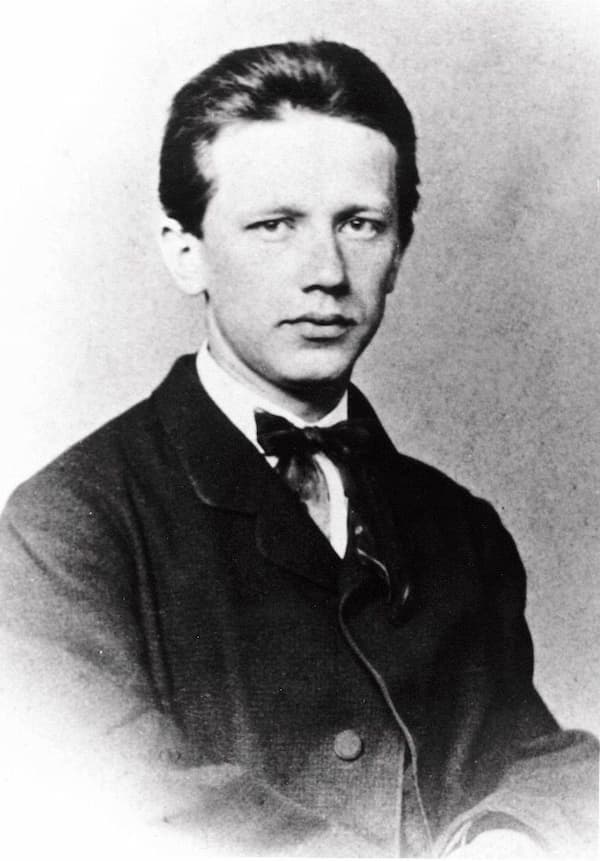
Pyotr Ilyich Tchaikovsky
In the spring of 1868, she met 28-year-old Tchaikovsky at one of these gatherings.
Their paths continued to cross during her months-long stay, and yet they never sat down to properly befriend each other.
That autumn, she remarked to him that she was surprised she’d not seen him more. Tchaikovsky promised that he would make it a point to visit her.
However, Tchaikovsky also had a shy, neurotic streak to him, and wasn’t particularly inclined to follow through with his promise.
In the end, composer Anton Rubinstein persuaded him to go watch more of Artôt’s operatic performances before she left Russia.
She also began sending Tchaikovsky daily invitations for evening meetings, and – uncharacteristically – he started accepting them.
Their Friendship Deepens
Tchaikovsky later wrote to his father, “Soon we were inflamed with the most tender feelings for one another, and mutual declarations of them followed forthwith.”
Tchaikovsky was a gay man and was never physically interested in women. However, clearly, he was still fascinated by Artôt.
His closest confidant was his brother Modest (also a gay man, to whom Tchaikovsky felt he could tell the truth about his love life). He wrote to Modest that Artôt possessed “exquisite gesture, grace of movement, and artistic poise.”
He wrote to another brother, Anatole, “I am now on very friendly terms with Artôt and enjoy her very noticeable favour; rarely have I met a woman so lovely, intelligent, and kind.”
We also have a fascinating account from one of his friends, who claimed that Tchaikovsky said about Artôt:
…It’s difficult to impress me, but that woman has really made me crazy. I swear, I never imagined that I could become so obsessed.
When she sings, I experience something I have never known before! Something new and wonderful!…
What hands she has! … I haven’t seen such hands for a long time! Those hands alone, with their grace in every movement, are capable of making me forget everything in the world…
The Relationship Turns Romantic
This was certainly the most romantic language that Tchaikovsky ever used to describe a potential female lover, but it’s still worth noting that he was most interested in her talent and personality.
It was a striking step when he dedicated his Romance in F-minor to her in tribute.
Tchaikovsky: Romance in F Minor, Op. 5 – Sviatoslav Richter, Piano
He also contributed some music for a production of the Daniel Auber opera Le Domino noir (The Black Domino) that she performed in.
A Quiet Engagement – and Reservations
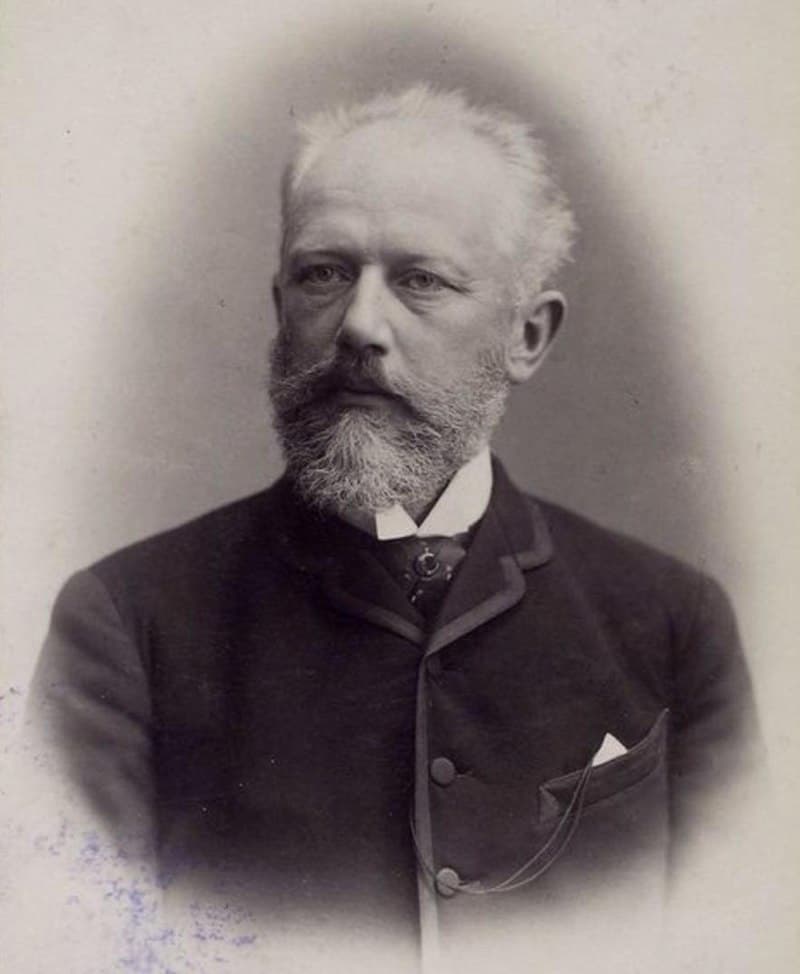
Émile Reutlinger: Pyotr Il’yich Tchaikovsky, 1888
Soon, the two friends began considering the possibility of marriage.
Tchaikovsky’s father gave his blessing to the match. But Artôt’s mother, who was traveling with her daughter as companion and chaperone, voiced her doubts about the wisdom of Désirée’s choice. (Those doubts, of course, were well-founded.)
Before they wed, there were important questions that needed hashing out.
Artôt was at the height of her power and popularity, and she wasn’t yet ready to give up her career to become a wife and mother.
Meanwhile, Tchaikovsky was a twenty-something composer who was in a different stage of his career, and (like so many men, especially of his era) he was leery about the idea of being upstaged by a celebrity wife.
Also, Tchaikovsky wasn’t Artôt’s only suitor. She had a fan who sat in the front row of all of her performances. This fan weaseled his way into Mrs. Artôt’s confidences, telling lies about Tchaikovsky’s finances. He may have even gossiped about Tchaikovsky’s rumoured homosexual tendencies.
When Artôt ended her Russian tour, she and Tchaikovsky were tentatively engaged, but also opted not to publicise it. Instead, they made plans to take a breath, think it over, and meet again at her estate in Paris the following summer to reassess where they stood.
Tchaikovsky had reservations. At the start of 1869, he wrote to his brother Anatoly, “This affair is beginning to fall apart somewhat.”
Ghosting Tchaikovsky
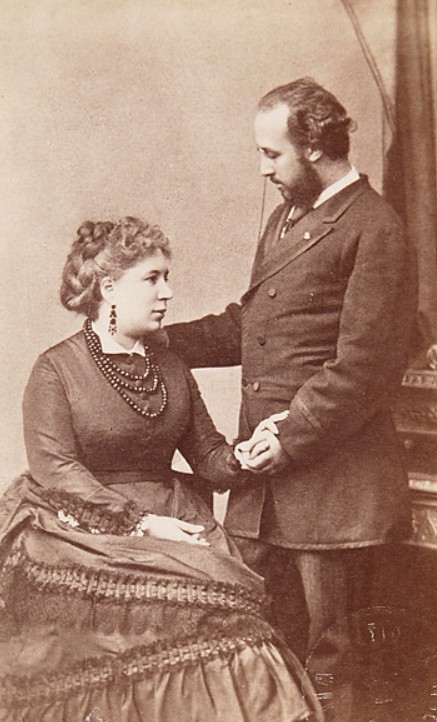
Désirée Artôt and her husband
Historians don’t know for sure, but as legend has it, Pauline Viardot was the one who ultimately convinced Artôt not to marry Tchaikovsky.
Artôt ended the engagement in a way that would hurt him. In September 1869, while on tour in Warsaw, she suddenly wed a baritone colleague named Mariano Padilla y Ramos….without ever officially breaking things off with Tchaikovsky first.
When Anton Rubinstein found out about the sudden marriage, he went to find his friend to give him the news. Tchaikovsky, shaken, went pale.
Did She Show Up in Tchaikovsky’s Music?
It seems possible that he later mined the relationship for inspiration.
One Tchaikovsky classic that may include nods to her is his Romeo and Juliet Overture, completed just weeks after her sudden marriage. Its famous main love theme is in the key of D-flat major, a potential reference to her initial.
Connecting a woman named Désirée to the key of D-flat major might seem like reaching, but at least one of his contemporaries drew a straight line between the piece and Artôt. His composer colleague Mily Balakirev wrote Tchaikovsky quite a vivid letter commenting on the overture:
The second D flat tune is delightful… It is full of tenderness and the sweetness of love… When I play it I imagine you are lying naked in your bath and that the Artôt-Padilla herself is washing your stomach with hot lather from scented soap.
Tchaikovsky: Fantasy Overture ‘Romeo and Juliet’
Not many listeners know that the slow movement of Tchaikovsky’s first piano concerto (dating from 1874-75) includes a French tune that Artôt sang, Il faut s’amuser et rire (You have to have fun and laugh).
Musicologists have also noticed that the first movement’s second subject begins with the notes D-flat and A, which in German reads Des-A: another potential reference to her name.
Tchaikovsky: Piano Concerto No. 1, Op. 23
Awkward Encounters
A year later, she returned to Russia. Tchaikovsky attended one of her performances and was seen crying during it.
But they never sought each other out to meet, and it’s unclear whether he was weeping because of how their relationship had ended, how beautifully she was singing, or for some other reason altogether.
Their paths crossed awkwardly again in 1875, when she came to Moscow and they ran into each other at the Conservatory. They were both so shocked that they said nothing to one another and hurried away.
Artôt’s Marriage and Musical Daughter
After Artôt’s marriage, she continued performing with her husband. They played opera halls all across Europe together for years.
She also became a mother, although the date of birth of her only daughter is disputed; it happened sometime between 1876 and 1880.
This daughter, who went by the name Lola Artôt de Padilla, became a famous soprano in her own right. She would actually grow up to sing in the Berlin premiere of Richard Strauss’s Der Rosenkavalier (she played the breeches role of Octavian; Strauss thought she was the best Octavian to ever sing the role).
A snippet of Octavian in Der Rosenkavalier
Artôt’s Retirement, And Meeting Tchaikovsky Again
Artôt retired from the stage in 1884 at the age of forty-nine and settled in Berlin. She continued her musical life by teaching.
In December 1887, she went to a performance of Berlioz’s Grande Messe des morts. While there, she ran into Tchaikovsky, who was traveling in Germany.
This time they didn’t run away from each other, and they exchanged pleasantries.
The following February, Tchaikovsky passed through Berlin again. Each of the five days he was in Berlin, he came to visit her.
On the night of February 7, they spent a memorable evening together, according to his diary:
This evening is counted among the most agreeable recollections of my sojourn in Berlin. The personality and the art of this singer are as irresistibly bewitching as ever.
That night, she requested a romance from him. He ultimately complied with six: the Six French Songs, which were completed that October.
Tchaikovsky: 6 French Songs, Op. 65
He wrote a letter to her that month, kindly saying, “One is a little intimidated when one is composing for a singer one considers the greatest among the great.”
It seems that, in the end, the two found closure about their rocky relationship.
Artôt’s Death and Legacy
Artôt’s husband died in late 1906. Four months later, in early 1907, she died, too.
Despite her international career, for a long time, Artôt’s main role in music history was that of a cold-hearted vixen who broke Tchaikovsky’s heart…and who also, conveniently, gave cover to scholars who didn’t want to discuss the composer’s attraction to men.
However, in recent decades, as the fact of Tchaikovsky’s homosexuality has become more accepted and better understood by historians, Artôt no longer needs to serve as Tchaikovsky’s posthumous beard in the historical record. Accordingly, and unfairly, she has faded somewhat into the historical background.
Nevertheless, Désirée Artôt had an important career separate from Tchaikovsky. Hopefully, a time is coming when more research can be done to paint a fuller picture of the role that she played not only in Tchaikovsky’s life and music, but in nineteenth-century opera.
For more of the best in classical music, sign up for our E-Newsletter