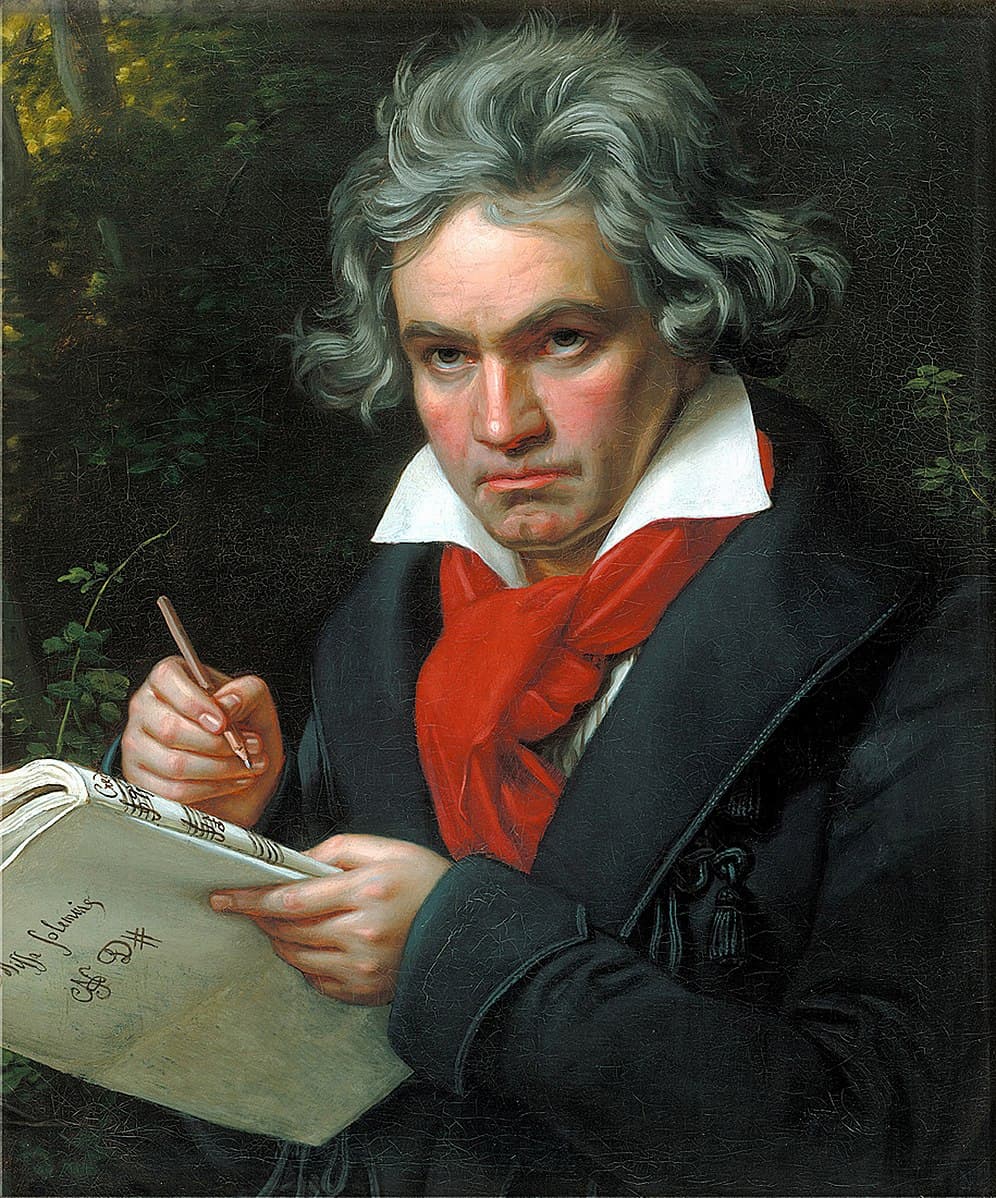
Ludwig van Beethoven is famous for composing deeply emotional music. After all, the nickname of one of his most famous melodies is “Ode to Joy.”
But which of his works are sad? And which of those are the saddest?
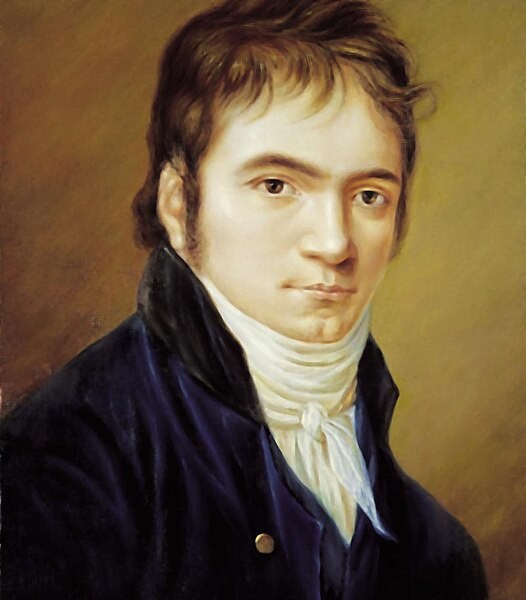
Christian Honeman: Ludwig van Beethoven, 1803 (Beethovenhaus Bonn)
Today, we’re looking at six of the saddest pieces of music ever written by Beethoven, from the improvisatory wistfulness of his Adieux Sonata to the string quartet movement that he said he cried while writing.
Piano Sonata No. 26, Movement 2
Ludwig van Beethoven: Piano Sonata No. 26 in E-Flat Major, Op. 81a, “Lebewohl, Abwesenheit und Wiedersehen” (Les Adieux, l’Absence et le Retour) – II. Abwesenheit (L’Absence): Andante espressivo (In gehender Bewegung, doch mit viel Ausdruck) – (Boris Giltburg, piano)
Beethoven wrote his twenty-sixth piano sonata between 1809 and 1810. Its nickname is “Les Adieux” (“The Farewell”).
English translations of the titles of the three movements are Farewell, Absence, and Reunion.
It was written for Beethoven’s patron Archduke Rudolf of Austria, who was forced to leave Vienna for a time during the Napoleonic invasion of the city.
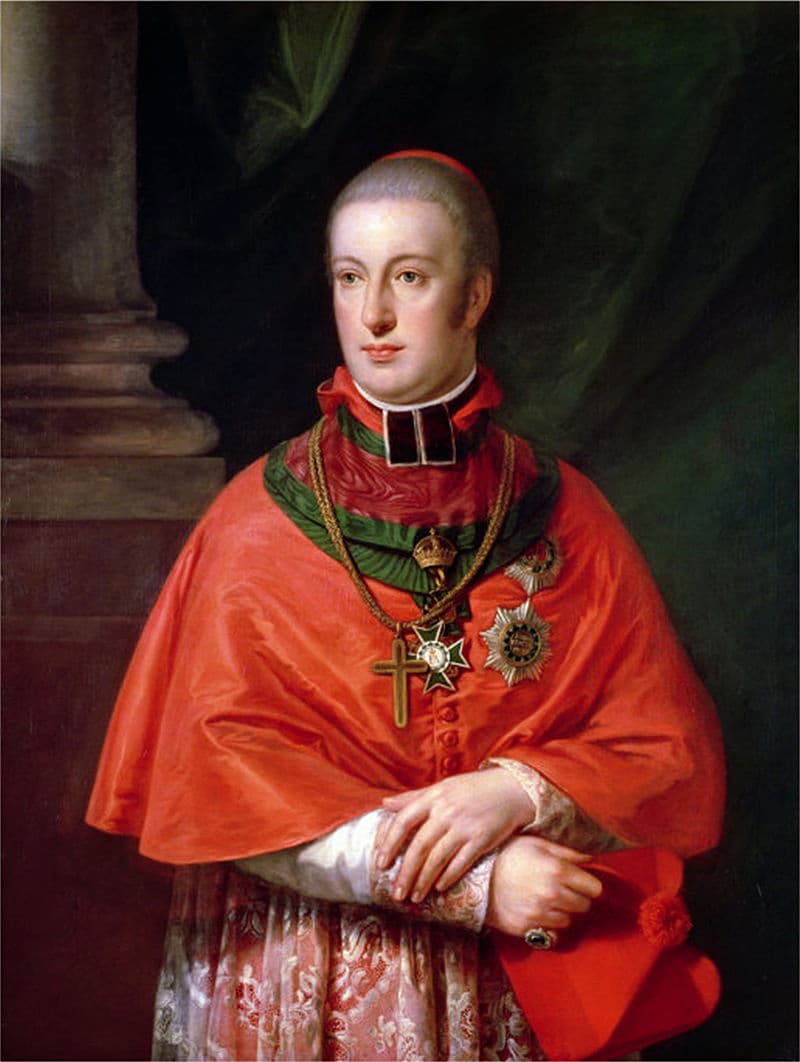
Archduke Rudolf
Some believe the sonata is Beethoven’s goodbye to the Archduke specifically. Others interpret it as Beethoven’s response to war more generally.
Regardless, it’s safe to say that the specific flavor of sadness Beethoven portrays here was inspired by emotions surrounding exile, war, and political unrest.
The middle movement has improvisatory qualities, enhancing an especially wistful character.
It’s melancholy, but not among the most tragic of Beethoven’s works.
Verdict: This is sadness that resonates during times of separation or isolation, especially in periods of political upheaval.
Symphony No. 3, Movement 2
The slow movement of Beethoven’s Third Symphony is titled “Marcia funebre” (Funeral March).
It lasts for around fifteen minutes: an unusually long length for the era.
So what person (or idea) was important enough to warrant a funeral march of this unprecedented length and scale?
Beethoven wrote this symphony in 1803-04, inspired by the rise of Napoleon Bonaparte and the downfall of old social orders. Through that lens, the march can be interpreted as a funeral march for an entire outlook on life.
According to his friend Ferdinand Ries, when Beethoven was told in 1804 that Napoleon had just named himself king, he grew highly agitated and exclaimed:
“So he is no more than a common mortal! Now, too, he will tread under foot all the rights of Man, indulge only his ambition; now he will think himself superior to all men, become a tyrant!”
If Ries’s story is true, it changes the connotations present in the funeral march: now it can be interpreted as a funeral march for a hero-turned-despot.
The symphony was ultimately published with the subtitle “Heroic Symphony, Composed to celebrate the memory of a great man.”
Verdict: This is noble sadness for times of uncertainty, separation, or transition, whether political or personal.
Symphony No. 7, Movement 2
The most popular slow movement of all of Beethoven’s nine symphonies is likely this one, from his seventh symphony.
Like so many of Beethoven’s most tragic works, the main theme employs a funeral march rhythm.
It begins with a ringing chord in the woodwinds, followed by hushed, dark colours in the violas, cellos, and basses.
Eventually, the violins state the melody, which gradually – and masterfully – builds to a thundering climax, punctuated by timpani for emphasis.
The entire movement gives the air of some noble, unavoidable tragedy.
This work has since become one of Beethoven’s most popular. Even at its premiere, this movement in particular was singled out to be encored.
Verdict: This is the sadness you feel when you know something tragic but unavoidable is coming…or has already come.
Piano Sonata No. 14, Movement 1
Ludwig van Beethoven: Piano Sonata No. 14 in C-Sharp Minor, Op. 27, No. 2, “Moonlight” – I. Adagio sostenuto (Claudio Arrau, piano)
Beethoven’s fourteenth piano sonata is best known by its nickname Moonlight Sonata, given to the work because it reminded a nineteenth-century author of moonlight reflecting on a lake.
The opening movement features a tolling melody in the right hand while the left hand plays a transfixing accompaniment in slow triplets.
The end result can be counted out as a kind of funeral march, like so many of Beethoven’s other sad works.
Few piano sonatas of the era began this way: most began with high drama or virtuoso flash. Instead, Beethoven draws listeners in with a quiet, simple, devastating opening in a minor key.
Verdict: This is sadness for when it’s dark, and you feel alone.
String Quartet No. 13 in B-flat Major, Movement 5
Beethoven wrote his thirteenth string quartet in 1826. By this time, he had been completely deaf for close to a decade.
As he grew older and his hearing loss progressed, he began experimenting more and more with new sounds and ideas. Those new ideas often found their way into his late string quartets.
Here, he experimented with length and the number of movements. The quartet is around fifty minutes long, with six movements instead of the traditional four.
Having a longer work with more movements allowed him to include this second slow movement, which a more traditional structure wouldn’t have allowed for.
Beethoven said that he was in tears while writing this music, and that he had never been so emotionally affected by his own work before.
Verdict: This is sadness for when you’re remembering what you’ve loved and lost…and also, how far you’ve come.
Piano Concerto No. 4, Movement 2
The slow movement of Beethoven’s fourth piano concerto is a deeply affecting dialogue between piano and orchestra.
It begins with a foreboding march in the lower strings. When the piano comes in, it is quiet and heavenly. There is a sense here of a single person surrendering to fate and immovable forces surrounding them.
However, the piano keeps talking, gradually hooking the fiercely defensive orchestra into a conversation.
Eventually, the pianist claims enough space to embark on a mournful, improvisatory, almost Chopinesque train of thought.
The orchestra seems to understand what the piano is saying, and both parties seem to come to some kind of understanding toward the end. It’s the only potential bright spot in a movement of high, almost operatic tragedy.
Verdict: This is sadness when you feel weak and small, when impossibly heavy pressures are bearing down on you.
Final Thoughts
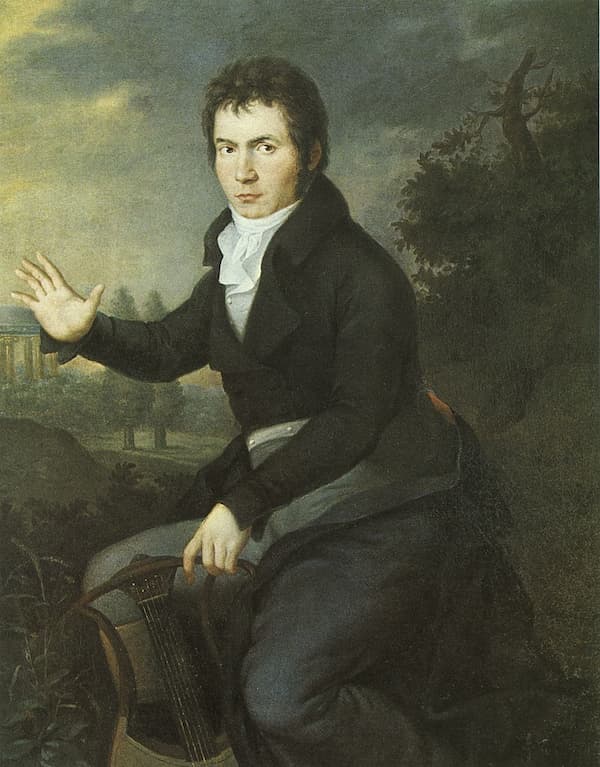
Joseph Willibrord Mähler: Ludwig van Beethoven, ca 1804–1805 (Vienna Museum)
Which of Beethoven’s works do you find to be the saddest? Let us know which ones we missed, or what Beethoven you listen to when you’re feeling sad.
For more of the best in classical music, sign up for our E-Newsletter