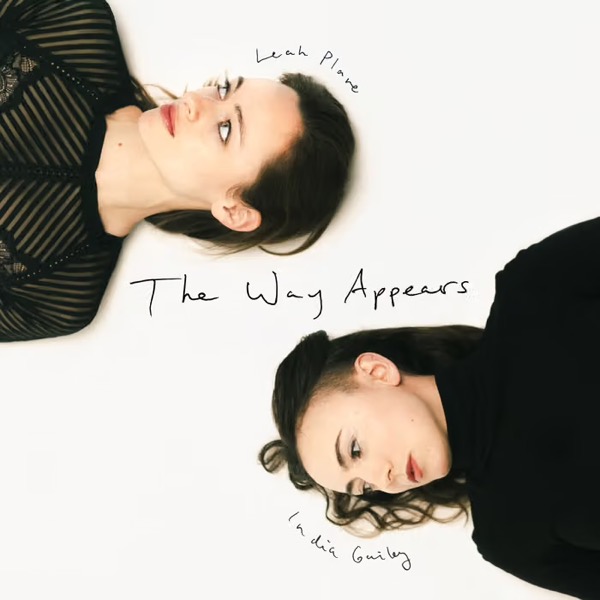
The Way Appears album cover (Redshift Records)
Love the cello? Then perhaps you’d like to know about a unique collaboration between two cellists, India Gailey and Leah Plave, who have unveiled a new collection of music for two cellos. The Way Appears was just released on CD, digital, and Dolby Atmos on Redshift Records.
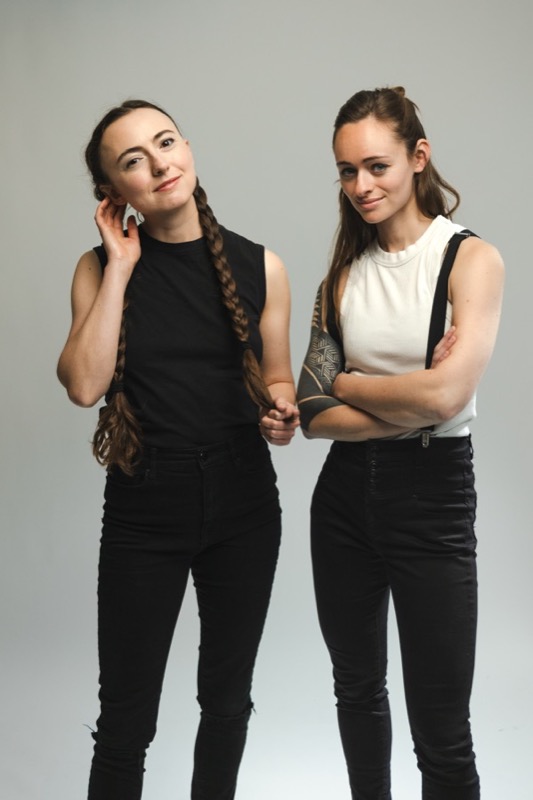
India Gailey and Leah Plave
The composers whose works are featured on the album have been commissioned to feature both cellists equally. The results are colourful, unique pieces that celebrate collaboration, with the composers using the concept of emergence. Taking their inspiration from the natural world, they’ve asked themselves how birds manifest their flocking behaviour, or how honeybees coordinate their roles in a self-organising team. Each composer’s music on the album endeavours to convey the powerful idea that when we come together, it leads to greater success, even magic at times.
“This is sort of an inner undertone of the album, just trying to encourage human cooperation, because I think that’s the only way we’re going to survive as a species. I just hope for people to be moved, to glean some sense of hope and wonder from the music.” Says Gailey in an interview for Ludwig Van magazine on October 26, 2026.
Triptych by Emily Kennedy asks the two cellos to play pizzicato, drones, harmonics, and fast string crossings, incorporating some chanting and multiple tracks. Mesmerising visuals of the cellists, some out of focus, fade in and out, sometimes superimposed with close-ups of swirling hands. The results, in a beautiful production, are hypnotic and compelling.
Emily Kennedy – Triptych | Leah Plave & India Gailey
In the album The Way Appears, Gailey and Plave share their passion for developing and stretching the classical music genre, even challenging their formal training. The reviewer Bob Osborne in Different Noises, agrees:
“By pairing Gailey’s knack for poetic, post-minimalist soundscapes with Plave’s cross-cultural, genre-fluid approach, the duo transforms the pairing of two cellos into an expressive, deeply resonant dialogue that bridges distinct corners of the modern experimental landscape.”
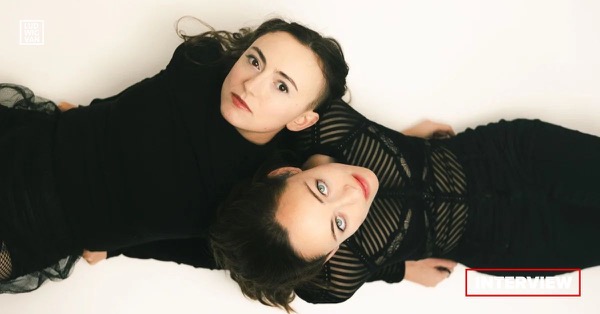
India Gailey and Leah Plave
The album features contemporary Canadian composers Adam Vincent Clarke, Cris Derksen, Emily Kennedy, Leilehua Lanzilotti, Matthias McIntire, Kelly-Marie Murphy, and Jeff Reilly. Sadly, the innovative Indigenous cellist, Derksen, passed away suddenly earlier this year. Gailey and Plave hope to honour her memory with their performance of her piece, The Bee and Her Wildflower.
The Adam Vincent Clarke duo Voix Lointaines, or distant voices, utilises the lovely singing quality of the cello. The cellos play in thirds and parallel lines, moving as classical duos have in the past.
The title piece, The Way Appears by Kelly-Marie Murphy, in contrast, is jazzy and vigorous. The piece opens with irregular and driving rhythms. Halfway through, there is a beautiful cadenza-like solo for one cello, and it feels improvisatory. When the second cello enters, momentarily in unison, then breaking away, the two play in an imitative style reminiscent of a round with some lovely pizzicato punctuations. The rhythmic beginning soon returns, and the duo ends with bravado.
Leilehua Lanzilotti’s silhouette, mirror, is quite different—virtually arhythmical, with long notes and low register harmonics. But listeners, be ready for a middle section of col legno (played with the stick of the bow, resulting in percussive effects), scratching, tremolo, thrown bows, and ponticello (played on the bridge). This piece, I think, does stretch the classical music genre and what we would expect the cello to sound like.
Islands by Matthias McIntire seems to me in the same vein, once again without a discernible meter. The open A string drone, double notes, and harmonics break into a passage where the cellos play in thirds and then octaves, but the seemingly aleatoric sections return and continue. Now this is where I felt stretched. The video shows the artists placing pieces of earth onto a cello, eventually covering it totally, and adding strange cartoon-like cutouts. Nearing the end, the pieces of earth are gradually removed. I can’t say I understood the composer’s point.
The next work on the album, Jeff Reilly’s Surfacing, begins high with fast notes. Again, we hear harmonics and quick string crossings. Two minutes into the piece, an insistent melody enters, but it is quickly suppressed by frenzied notes, scratching, and tremolo. After very high passages for both cellists, the work ends with high harmonics fading out.
I felt these three aforementioned pieces exhibited a sameness. Perhaps I would’ve appreciated them more if they’d been stand-alone pieces on a recital flanked by contrasting works.
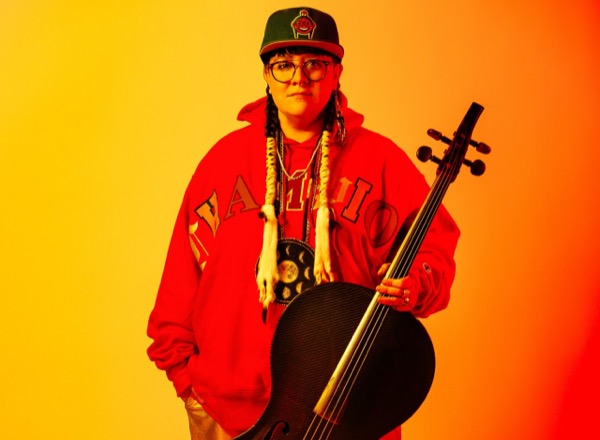
Cris Derksen
The Bee and Her Wildflower by Cris Derksen is a captivating and enjoyable composition. The piece opens with a quick string crossing passage, which continues as a loop, and to me represented an introduction to the passionate melody played by one cello, with the second cello coming in with a counter melody. The middle section is a compelling and thought-provoking slow section of held notes, echoing with high harmonics and low string drones. The opening string crossing motif returns, as does the melody, and the journey ends with gratifying gentleness.
Derksen’s music merges her Cree heritage with Western classical idioms and sometimes electronic elements, creating a distinctive voice and body of work. She is considered a trailblazer in the Canadian classical music landscape, and her loss is keenly felt. It’s evident she was a cellist herself from the writing of The Bee and Her Wildflower, and I hope many others will also perform this noteworthy duo.
A little about the cellists.
India Gailey is a Canadian cellist, improviser, composer, and multidisciplinary artist who works most often in the realms of classical and experimental music. She performs as a solo artist, chamber musician, and interdisciplinary collaborator who crosses eras and genres with daring spirit. Her most recent album consists of her own compositions, Butterfly Lightning Shakes the Earth (2024), which earned an East Coast Music award for Composer of the Year and a Juno nomination for Classical Album of the Year in 2025.
Currently based in the Netherlands, Leah Plave has lived and toured extensively across North America, China, and Europe. Plave embraces not only classical music but also contemporary, electronic, non-Western, and experimental music. She performs as a member of Pi Quartet, and she frequently collaborates with living composers from around the world seeking interdisciplinary, cross-cultural projects. Her 2020 album Impressions: The Rediscovery of Henriette Bosmans, hailed as “a revelation” (Limelight), revived the unjustly forgotten work of the Dutch composer and pianist, whose music was banned by the Nazi regime. Some of you may know I’m an ardent fan of Bosmans’ music, especially her cello sonata: https://interlude.hk/featuring-cello-music-gems-by-women-composers-boulanger-smyth-bonis-and-bosmans/.
I’m looking forward to hearing more from Gailey and Plave in the future.
For more of the best in classical music, sign up for our E-Newsletter