Taking his cue from Arthur Rubinstein’s 1970 album on RCA, The Chopin I Love, pianist Peter Donohoe (b. 1953) makes his own list of the Chopin he loves. These are the works that resonate with him within the entire world of Chopin (1810–1849).
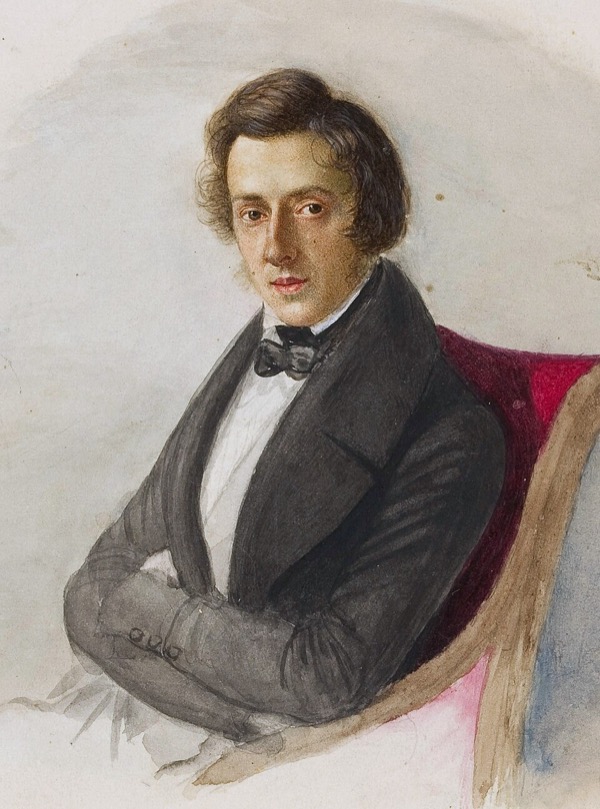
Maria Wodzińska: Frédéric Chopin, 1835 (Warsaw: National Museum)
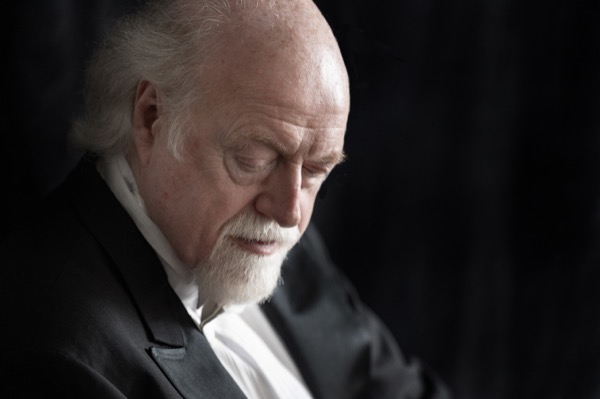
Peter Donohoe, 2023
Donohoe opens with the Préludes, Op. 28. He considers this work, despite it being produced at an early stage in Chopin’s career, as one of the great landmarks of music, not just piano music. Chopin’s ‘harmonic invention, diversity of moods and pure originality’ take it beyond what was being created at the time. Although he mentions that Chopin considered the Préludes works that should be performed in groups of 4 or 5 pieces, not as an entire set in one sitting, he finds satisfaction in presenting it as a single piece with 24 movements rather than 24 separate pieces.
For Donohoe, the second prelude, with its dark tragedy in A minor, sets the tone for the entire Prélude set.
Frédéric Chopin: Préludes, Op. 28 – No. 2 in A Minor
The other pieces on the CD include the Barcarolle, Op. 60; Polonaise-Fantaisie, Op. 61; 2 Nocturnes, Op. 62; les 3 Écossaises, Op. 72, No. 3, and the Berceuse, Op. 57. Each has a special place in Donohoe’s Chopin list (and his heart).
The playful rocking of the Barcarolle, Op. 60, successfully conceals the demands that Chopin made for his players.
The Polonaise-Fantaisie, Op. 61, leads Donohoe’s list as ‘one of the most beautiful but enigmatic works in the piano repertoire’. Its double role as a representation of a Polish national dance, followed by the extravagance of the Fantaisie, makes it important to the development not only of Chopin’s distinct sound but also of late 19th-century piano music.
The 2 Nocturnes, Op. 62, Chopin’s final contributions to the nocturne genre, remain as the finest representations of nocturnes in the 19th century.
3 Écossaises, Op. 72, No. 3, are examples of the music that first entranced Chopin as a child. Donohoe says that when he was just 5 years old, his family acquired a wind-up gramophone and some discs, including one by the ‘wonderful Ukrainian and French pianist Alexander Brailowsky playing Chopin’s Grande valse brillante, Op. 18, and these Écossaises’. These were, in fact, the first Chopin Donohoe loved, and over the ensuing 60-some years he has only fallen in love with more and more Chopin.
Despite their high opus numbers, these works were early compositions and were published only posthumously. Chopin wrote the Préludes between 1838 and 1839, with one last prelude in 1841; the Écossaises date from 1826, when Chopin was just 16.
Frédéric Chopin: 3 Écossaises, Op. 72, No. 3
The final work on the recording is the Berceuse, Op. 57. Although the work originally indicated that it was a variation set (Variantes), it seems less like a traditional variation set than a ‘series of short, continuous contemplations upon a simple, nocturne-like theme, each arising organically and naturally from its predecessor’.
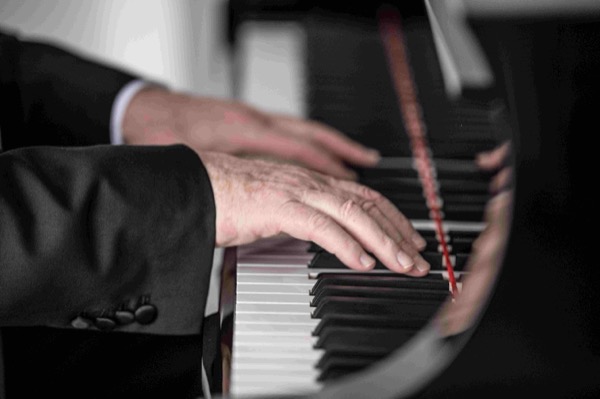
Donohoe’s hands
Donohoe has the advantage over Rubinstein in that his CD has over 80 minutes of music, whereas Rubinstein’s CD had a little over 45 minutes. That’s what permits Donohoe to play the entirety of the Préludes, for example. In creating this collection, Donohoe permits us to share his life with Chopin. The early, light Écossaises that capture the heart of childhood are balanced by works the pianist considers the finest in their genres, such as the nocturnes. The skill required for a work such as the Barcarolle is never on display; we can sit back and listen to a master at the keyboard.
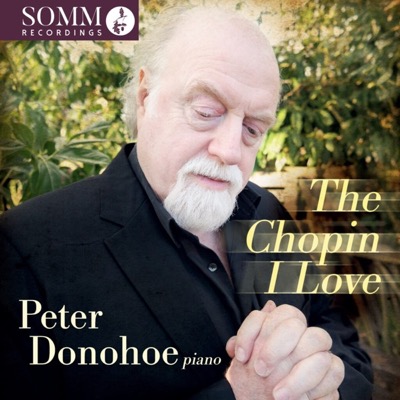
The Chopin I Love
Peter Donohoe, piano
SOMM Records SOMMCD 0726
Official Website
For more of the best in classical music, sign up for our E-Newsletter