Mana-Zucca is, beyond a shadow of a doubt, one of the most interesting American composers you’ve never heard of.
She was a child prodigy who debuted in Carnegie Hall with the New York Symphony, was admired by Puccini, and was a professional singer, actress, and composer.
And yet she’s almost entirely forgotten today. Let’s fix that!
Mana-Zucca’s Origins
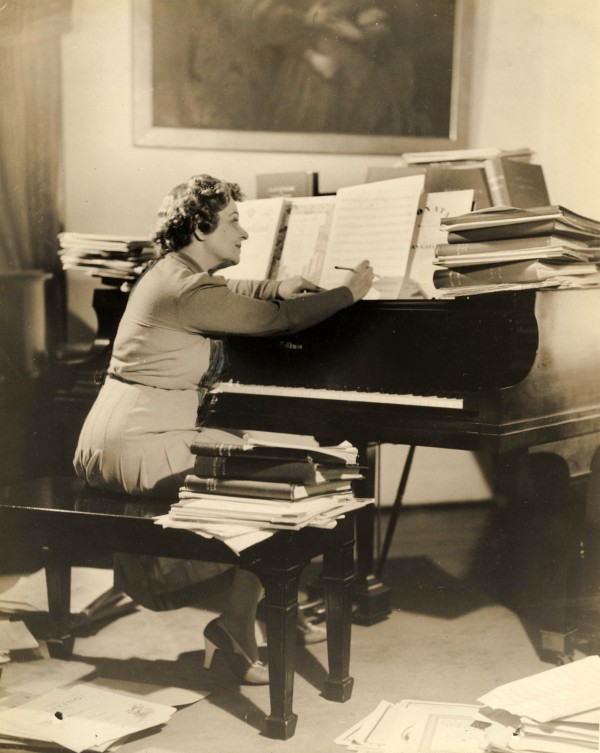
Mana-Zucca
Mana-Zucca was born Gizella Zuccamanof in New York City on Christmas Day, 1885.
Like many child prodigies of her generation, she fudged that date consistently to make her seem younger than she really was.
Her parents were Polish immigrants, and she was the youngest of six children.
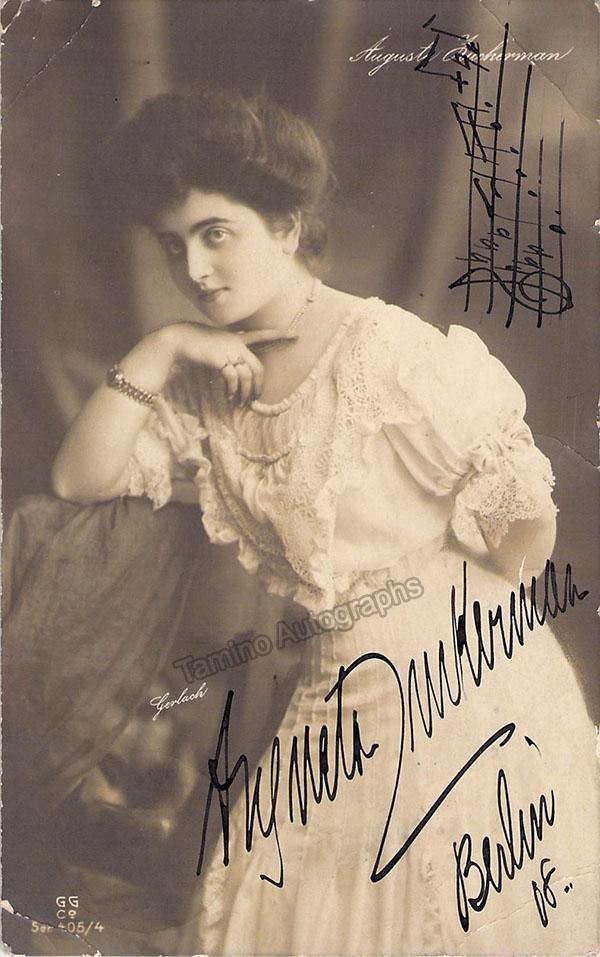
She used a variety of names as a young person, including Gizella Zuccamanof and Augusta (or even Gussie) Zukerman. At one point, she even went by Dolly.
She was musical from early childhood…and always had a knack for self-promotion. When she was two, she toddled out to the stoop of her house and sang. Passersby started tossing coins her way, kickstarting her career as a professional performing musician.
Realising She Was a Prodigy
The intensity of her musical talent was made apparent one day when she was given a toy piano. She was just three years old and was furious that it had no functional half-steps.
Later in life, she told an interviewer with the Miami Herald:
I happened to hit on a tune in G major, and I couldn’t find F sharp. The black keys (sharps and flats) were just painted on. I was looking under the piano for that note and crying, “This piano’s no good.”
The people around her quickly realised that such a sharp-eared little girl should take piano lessons. Her first piano teacher was a neighbour, but she quickly switched to another teacher.
Astonishingly, she ended up giving her debut recital at three and a half. And when she was just four, she secured a scholarship at the National Conservatory of Music in New York City.
Mana-Zucca’s Education and Training
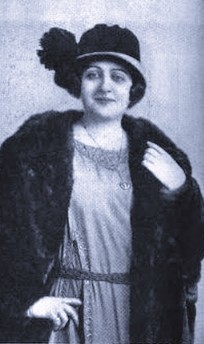
Mana-Zucca
At seven, she began studying at the New York College of Music under Alexander Lambert, teacher of Tin Pan Alley great Jerome Kern and film composer Alfred Newman. She would study with him for nearly a decade.
For a time, Lambert actually had the girl move into his home, a common practice in the nineteenth century.
As a young person, she focused so intensely on her studies and cultivating her relationships with talented adults that she never played with other children. She would later reminisce about all the “famous laps” she sat on during her childhood.
In addition to piano, she also began studying music theory and composition.
She was just a student when she composed her first published work: a Moment Musicale for Violin and Piano.
An Amazing Carnegie Hall Debut
At eleven (although she’d later claim eight) years old, she was the soloist in a performance of Beethoven’s first piano concerto with the New York Symphony.
The concert took place at the then-new Carnegie Hall in 1897, and renowned conductor Walter Damrosch was on the podium.
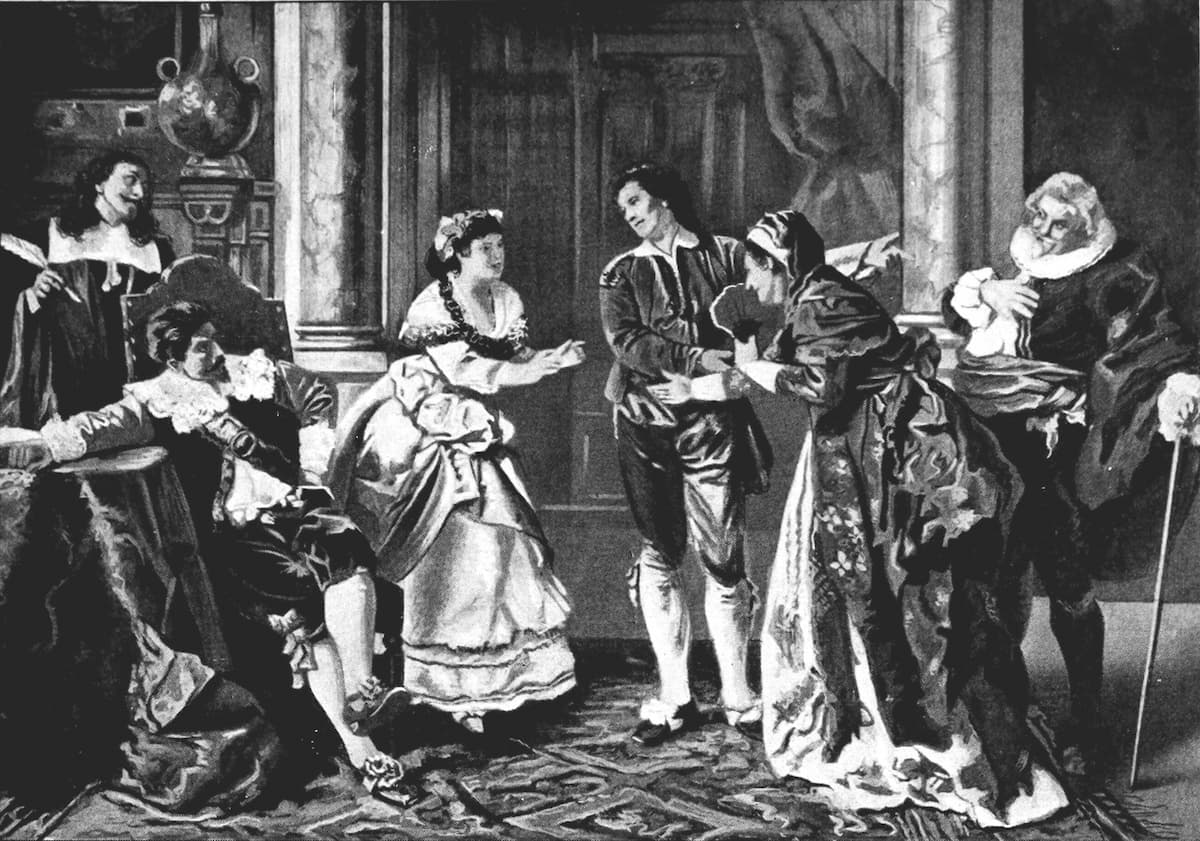
Beethoven’s Piano Concerto No. 1
“I was like Shirley Temple,” she later remarked. “Everyone knew me as a child prodigy.”
She used to walk out on the stage hand-in-hand with an invisible companion, who she later confessed was God. She’d ask him for assistance during especially difficult passages. “He was a good friend of mine!” she declared in her later years.
Moving to Europe
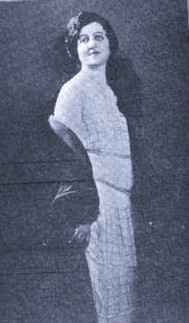
Mana-Zucca
When Mana-Zucca was in her early teens, she sailed to Europe with her elder sister Bess to finish her training.
They found their way to Berlin, where she made her concert debut at the Bechstein Saal.
According to her, she charmed violinist Joseph Joachim into attending her recital by going directly to his home and offering him two free tickets. The presence of the legendary violinist – one of Brahms’s dear friends – created great PR buzz.
She also accepted an offer to tour with Spanish violinist and composer Juan Manén. Over three years, they traveled together throughout Germany and Russia.
Mana-Zucca’s violin concerto
At the time, American instrumentalists were not taken seriously as European ones, so throughout her career, she went through a number of tongue-twisting stage names.
She ultimately settled on the exotic-sounding Mana-Zucca: a rearrangement of the letters in her last name.
Branching Out Creatively
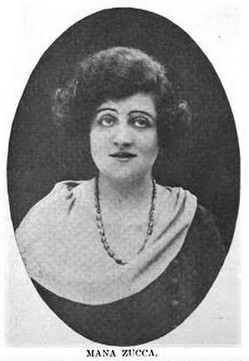
Mana-Zucca
She continued her keyboard studies in Berlin. She studied piano in masterclasses with composer and pianist Ferruccio Busoni, and also took private lessons from Leopold Godowsky.
But importantly, she also began branching out beyond piano-playing.
She studied voice with a few teachers, including Brahms protégé Raimund von zur-Mühlen…and her studies paid off.
In 1914, she debuted in a performance of Franz Lehár’s The Count of Luxembourg. According to Mana-Zucca, that unlikely debut came about by accident. While she was staying with wealthy friends in London who were hosting Lehár, she sang one of his songs for him impromptu, and an English manager who was also present was apparently so charmed that he signed her as a vocalist.
Over the next few years, she appeared in a string of musical comedies, both singing and dancing.
An excerpt from The Count of Luxembourg
Composing (And Puccini Praise!)
She also studied composition with composer Hermann Spielter. In 1919, she premiered her own extravagantly romantic piano concerto, which had been written when she was a student.
Mana-Zucca’s piano concerto
Her music received praise from unexpected quarters. According to Mana-Zucca, a mutual friend of Puccini once took some manuscripts of her songs to Italy to share with the master.
The friend returned with good news: he’d shown Puccini about fifty songs, and Puccini had picked out Mana-Zucca’s as the best, claiming, “That young American fellow is the most talented composer in America!”
The friend replied by asking, “Would you like to see a picture of that young fellow?” When a picture of Mana-Zucca was pulled out, Puccini was astonished. “A girl wrote this?”
A girl had, indeed, written this!
Becoming a Cultural Icon
Mana-Zucca
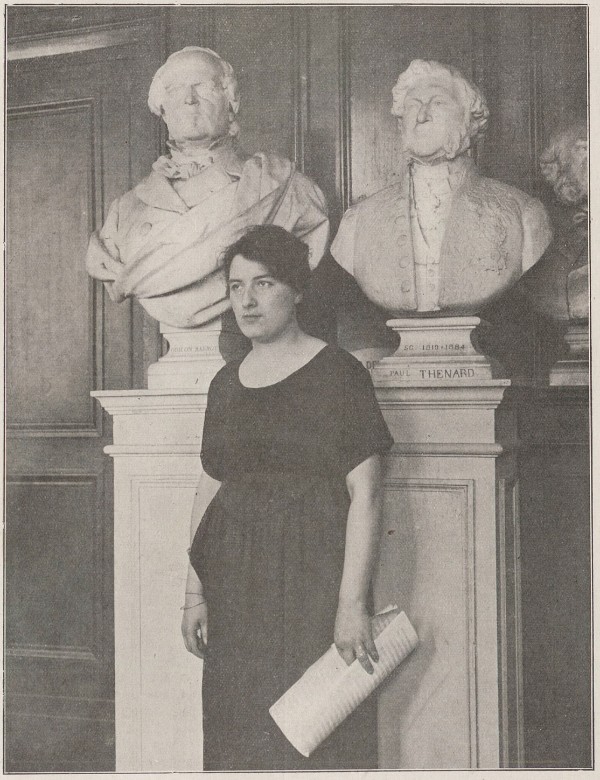
Because of Mana-Zucca’s fame and success on the stage, she was photographed extensively. Her likeness was even used to sell consumer goods like cigarettes.
In 1928, there was a musical club formed in Miami called the Mana Zucca Club, whose mission was to “promote interest in the best music, to stimulate literary productions and further social relations among resident musicians,” according to Musical America. (Mana-Zucca herself served as the president.)
More than once, she was dubbed the “Chaminade of America”: a reference to the composer Cécile Chaminade, whose large musical output inspired women around the world to form similar clubs in her honour in the early 1900s.
Marriage
In September 1921, she eloped with Irwin M. Cassel. He was a financier and co-owner of New York’s Cromer-Cassel department store, with interests in Miami. They had known each other for a long time. He got her to cancel an extensive Midwestern tour to marry him and move to Miami instead.
Despite that, he was generally extremely supportive of her musical career and even wrote lyrics for many of her songs. They agreed to spend half of the year in New York at her home and half in Miami at his.
In July 1925, she gave birth to their first and only child, Marwin Cassel. The first name came from merging her stage name with her husband’s first name. She later dubbed Marwin “my greatest composition.”
Marriage and motherhood meant that she took a step back from music…albeit temporarily.
Mana-Zucca’s Prelude, op. 73
Giving Home Concerts
After the birth of Marwin, the family elected to spend more time in Miami. They moved into a massive stucco home near Biscayne Bay that she dubbed Mazica Hall.
Inside her home, she had an eighty-foot living room that could hold 300 people, and she hosted over 500 concerts there. Her weekly concert series grew famous.
These concerts made her a musical institution not just of Miami, but of the American Southeast. One writer went so far as to dub her home the Carnegie of the South.
Superstars Misha Elman, Fritz Kreisler, Josef Hoffman, Jose Iturbi, Alma Gluck, Leonard Rose, and Efrem Zimbalist all visited and performed there, as well as countless others.
Her Compositional Output and “I Love Life”
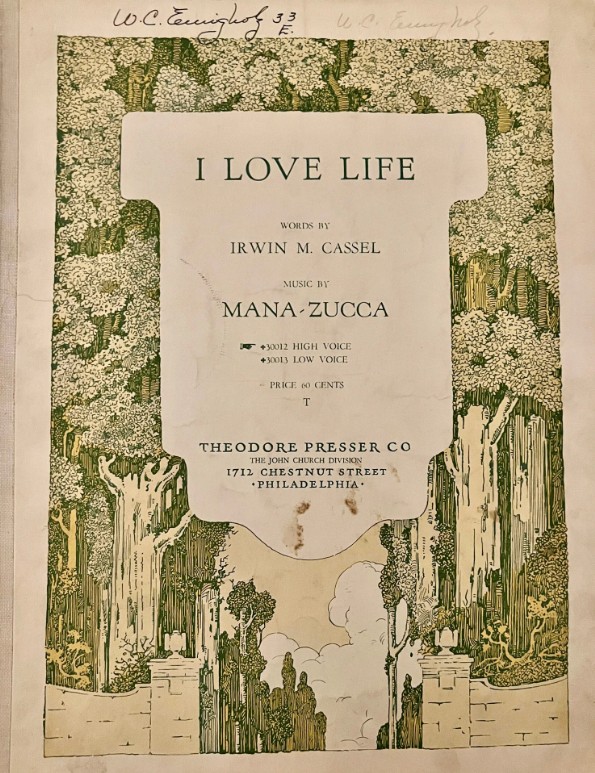
Mana-Zucca: “I Love Life”
In addition to her careers as a singer and concert pianist, Mana-Zucca composed over a thousand works and published more than four hundred of them.
She wrote two operas, a ballet, a piano concerto, a violin concerto, and a set of 366 daily piano pieces called “My Musical Calendar,” among many other works. (She composed 366 to account for leap years.)
Her most famous composition, though, is her song “I Love Life,” which has a precious origin story.
After the birth of her son, her husband encouraged her to return to composing.
She wrote a few short piano pieces, but he said, “No, that’s not what I mean.” He was thinking of something like a song.
So she suggested that he write the lyrics for one, and she’d set them to music.
He did, and she wrote the music within half an hour. “I Love Life” ended up becoming her most famous composition.
Initially, she regarded it “a cheap little song” and was dismissive about it, but as more and more famous singers took it into their repertoire (including Nelson Eddy and Laurence Tibbett), she changed her mind about its value.
Mana Zucca’s “I Love Life”
Later Life in Miami
Although she spent much of her career outside the global musical meccas of New York, Paris, or Berlin, Mana-Zucca did receive recognition for her accomplishments, earning an honorary doctorate from the University of Miami.
In her middle age, she began publishing her own music and even recording it.
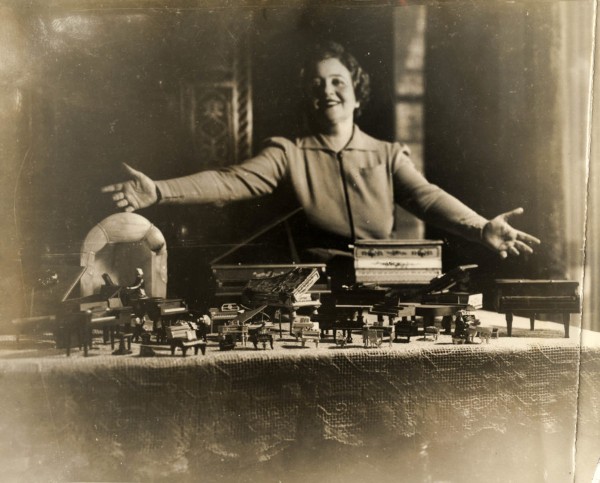
She also began collecting piano miniatures, a pursuit inspired by her young son carving her a little plywood piano.
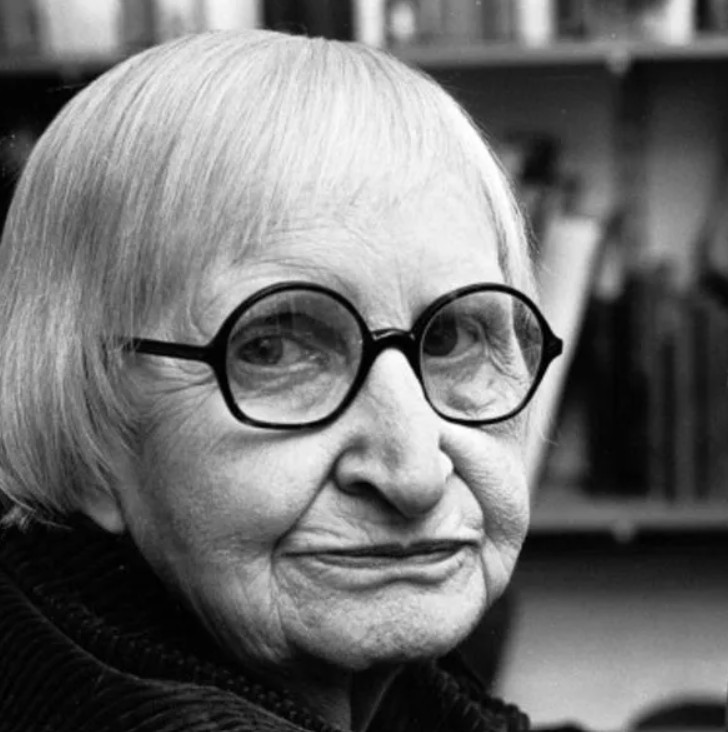
Throughout her life, she gave a number of charming interviews to the press. In 1979, she wryly remarked to the Miami Herald, “People always think I am older than I really am because I started so young as a prodigy.” At the same time, the impression she gave was always one of irrepressible youth and energy.
Remarkably, she continued composing into her nineties.
Her beloved husband Irwin died in 1971. She died in Miami ten years later.
The Legacy of Mana-Zucca
Mana-Zucca
Her son, Marwin Cassel, became a lawyer. Upon his mother’s death in 1981, he inherited 38,000 items from his parents, charting his mother’s extraordinary career, stored across a whopping 76 boxes.
After his death, his widow donated them to the Florida International University in Miami, where they’re waiting to be fully explored and interpreted by modern scholars.
Such an incredible life clearly deserves a long biography! Hopefully, we’ll get one sooner rather than later, because there was no other American composer quite like Mana-Zucca.
For more of the best in classical music, sign up for our E-Newsletter