The Carnival Season in 1715 was a time of great uproar – not only for the two months of the Carnival season but also because Europe was in a time of change. In France, Louis XIV had just died, leaving a 5-year-old heir. In Scotland, the Jacobites, supporting James Stuart, are threatening England’s new King George I. The Ottoman army has taken the eastern peninsula of Greece and is pushing up into Romania, taking the whole area from Venice.
In Venice, they didn’t care about the Ottomans (yet), but the opening of the theatres. Venice was still the capital of opera, and in 1715 it had three major opera houses: the Teatro San Giovanni Grisostomo (managed by the Grimani family), the Teatro San Moisè (managed by the Giustinian family), and the Teatro Sant’Angelo, where Vivaldi began his opera career in 1713 with Orlando finto pazzo. The three theatres were very different in size: San Moisè could accommodate 500 patrons, the Sant’Angelo could hold 800, and the San Giovanni could hold 1,000. Another theatre, the Teatro San Cassiano, a major opera centre, had been inactive for several years, and it came down to Sant’Angelo and San Giovanni Grisostomo fighting for primacy.
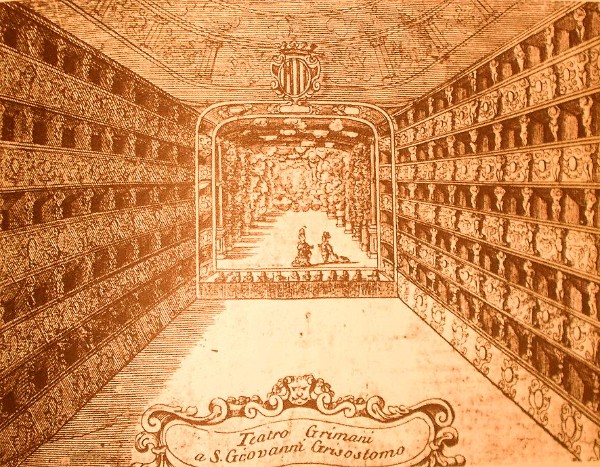
Vincenzo Maria Coronelli: Teatro San Giovanni Grisostomo, Venice during an opera performance, 1709
At the opening of the 1715 season, the San Moisè opened with Lorenzo Baseggio’s Laomedonte, and the Sant’Angelo was planning on opening with Fortunato Cerelli’s Alessandro fra le amazzoni. San Giovanni waited until Carnival season started on December 26 to open with Antonio Lotti’s Foca superbo.
Lotti was the older generation of Venetian composers against whom young composers such as Vivaldi were striving.
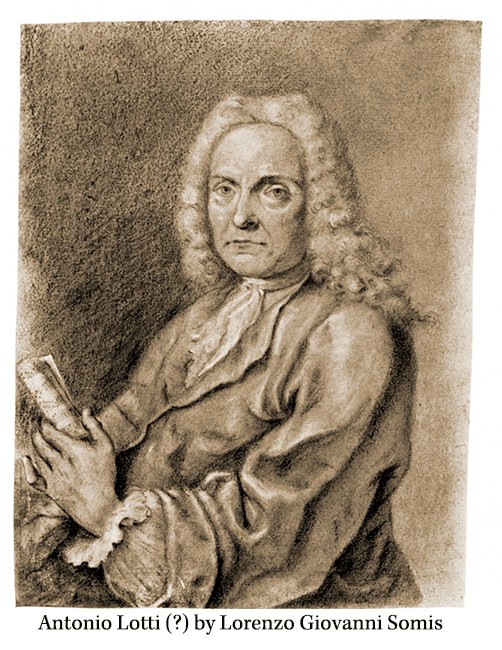
Lorenzo Giovanni Somis: Antonio Lotti
The opera, with the deep pockets of the Grimani family behind it, placed three of the most celebrated castrati on stage: the Roman Stefano Romani, the Lucchese Andrea Pacini, and the phenomenal Girolamo Albertini, better known as Momoletto. The cast included the young tenor Annibale Pio Fabbri, making his Venetian debut. The opera was an immediate hit and ran for over a month.
In the other two houses, things were in flux. At the Sant’Angelo, the Chelleri opera ran into payment problems (the composer wanted 450 ducats, but the house had only agreed to pay him 400 ducats). The opera was withdrawn, and the replacement opera, Albinoni’s L’amor di figlio non conosciuto, was not a success. The house opened 10 days later (on 4 January) with a failure, and it was replaced by Francesco Gasparini’s Il più fedele fra i vassalli.
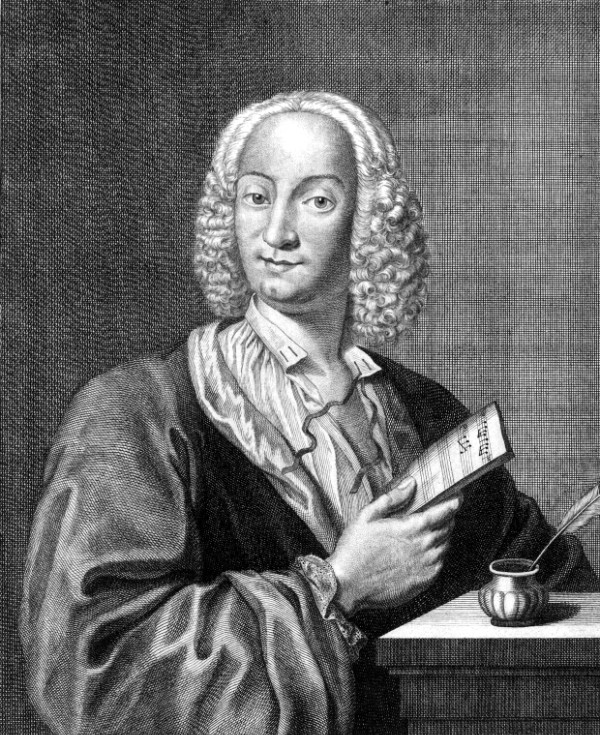
Antonio Vivaldi (engraving by François Morellon de La Cave, from Michel-Charles Le Cène’s edition of Vivaldi’s Op. 8, 1725)
At the San Moisè, Laomedonte was followed by Gasparini’s La fede tradita e vendicata, a revival, while they awaited the censor’s approval of Vivaldi’s work. On 12 January 1716, the censor’s approval was given, and the opera opened on 19 January.
Antonio Vivaldi: La costanza trionfante – Sinfonia
Vivaldi’s new work, La costanza trionfante degli Amori e degli Odij, was an immediate success. Houses were full through 25 February, the last day of Carnival before all the theatres shut for Lent and Easter.
With San Moisè packed and Sant’Angelo having found its audience with Gasparini’s Il più fedele fra i vassalli, San Giovanni Grisostomo was struggling. Lotti’s Foca superbo closed and was replaced with Carlo Francesco Pollarolo’s Germanico, based on a story from Tacitus. Pollarolo was an even older composer than Lotti, having premiered his first opera in 1678, the year of Vivaldi’s birth. The martial drama was a failure compared to the fun on Vivaldi’s stage, and was replaced after 10 days with Pollarolo’s Ottone. A musicologist noted that ‘everything about this substitution suggested haste: the uncommon choice of a revival at that point in the Carnival season, the absence of a dedicatee, and a rushed libretto which even failed to include the performers’ names!’. With this substitution, the San Giovanni season ended in humiliation while the San Moisè rose to the top with Vivaldi’s work.
The libretto, by the poet Antonio Marchi, was written, in his words, not for the ages, but ‘to entertain the listener, to make him believe the truth of the story, and to enrich it with plausible events, so that he remains curious and satisfied as he listens…’. There’s a blend of humour, irony, and provocation that the works at the other houses lacked. This was the poet’s first work with Vivaldi, and from the enthusiasm he expresses in the various ‘Notice to the Reader’ he was a strong advocate for Vivaldi as a composer.
Antonio Vivaldi: La costanza trionfante, Act I.2 – Hai sete di sangue (Doriclea)
The story revolves around the many battles between Rome and Parthia in the first century AD. In a one-sentence summary: the tyrant ‘Artabano, King of the Parthians, defeats the Armenian King Tigrane and abducts Queen Doriclea, with whom he falls desperately in love’. By the end, as the extended title promised, ‘after many trials, the royal couple are reunited; the tyrant is defeated yet magnanimously pardoned; and constancy does indeed triumph over the love and hatred of the cruel Artabano’.
In the staging at San Moisè, the singers were not the latest and greatest, as on the stage of San Giovanni Grisostomo, but rather Italian, but non-Venetian singers, unknown on the Venice stage. It was the propitious first step for many of these singers who went onto substantial careers after this Venetian debut. To take one case in point, the role of Artabano was sung by Antonio Denzio in his Venetian debut. Denzio went on to appear on the other Venetian stages before moving to Bohemia in 1724 to be the impresario and principal singer at the court of Count Sporck. Sporck was one of Vivaldi’s patrons, and Denzio was key in spreading Vivaldi’s operas through Bohemia.
What happened to the music? Despite the opera’s success from its premiere in 1716 and its travels around Italy and Central Europe between 1719 and 1732, no complete score exists today. It has been reconstructed based on references in the extant librettos (new versions would be written where needed for new productions), and a number of the arias have been found. In addition, parodic references to the opera’s arias in other Vivaldi operas have led to the discovery of more arias. Vivaldi frequently borrowed music from the best composer he knew, himself, for use in later operas. Self-borrowing is well known in the Baroque era, with Handel, another composer who did so extensively.
The original version of La costanza trionfante contained 35 numbers, including arias, duets, and choruses. No duets or choruses remain extant, but 18 arias have been identified to date. Of those 18 arias, 11 were part of the 1716 premiere (or in the 1719 revivals in Venice, Hamburg), 2 are probably replacement arias (and as such, are not mentioned in the printed libretto), and the last 5 were used in later Vivaldi scores. This leaves 17 numbers lost, but the editors have been able to reconstruct 2 of them based on ‘textual, formal, or metrical concordances with other Vivaldi arias’.
In this new recording by I Barocchisti, under Diego Fasolis, with Romina Basso and Ann Hallenberg, the focus is on arias, most of which are previously unrecorded. They have omitted arias that have already been recorded, including two arias already recorded by Diego Fasolis and I Barocchisti with Topi Lehtipuu (Naïve, Edition Vivaldi, Volume 40).
Because the opening sinfonia is lost, the Sinfonia in F major RV 135, in its version with two horns, has been used. To end the opera, a chorus would have been used, and the editors chose here to substitute the music from a hunter’s chorus composed by Vivaldi later in 1716 for Arsilda regia di Ponto and adapted the final chorus text from the libretto for the occasion, giving us the proper triumphal ending with the return of Tigrane to claim the much-put-upon Doriclea.
Antonio Vivaldi: La costanza trionfante, Act III. Ultimo – Chorus: Viva Amor, viva al pace
It’s a wonderfully triumphant recording and will do much to advance Vivaldi research. The singers, mezzo-sopranos Ann Hallenberg and Romina Basso, bring authoritative voices in Baroque music and fill the roles beautifully. The liner notes (in English and French) are marvellously detailed about the sources and reasoning behind the inclusion and appearance of each aria and should serve as a model for this kind of work and research. A full set of texts and translations is included.
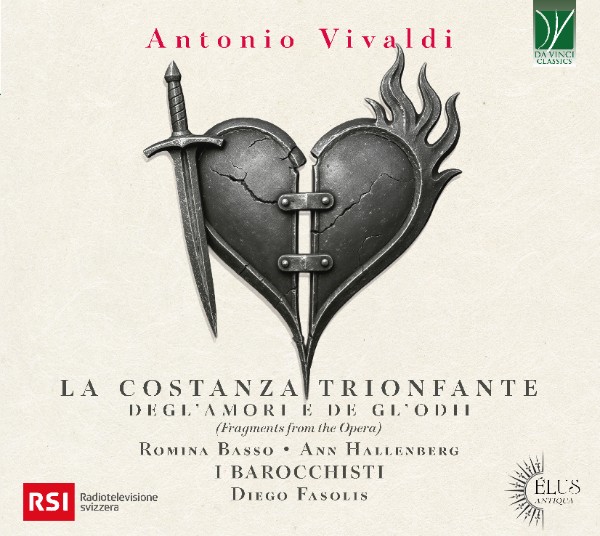
Vivaldi: La costanza trionfante degli Amori e degli Odij, RV 706-A
Ann Hallenberg, Romina Basso, mezzo-sopranos; I Barocchisti; Diego Fasolis, conductor
Da Vinci Classics 1178
Release date: 19 June 2026
For more of the best in classical music, sign up for our E-Newsletter