In his role as the leading keyboard virtuoso of his day, J.S. Bach (1685–1750) published 4 books of keyboard music under the title of Clavier-Übung, following the precedent set by his predecessor at the Thomaskirche in Leipzig. Johann Kuhnau had published 2 sets entitled Neuer Clavier-Übung in 1689 and 1692.
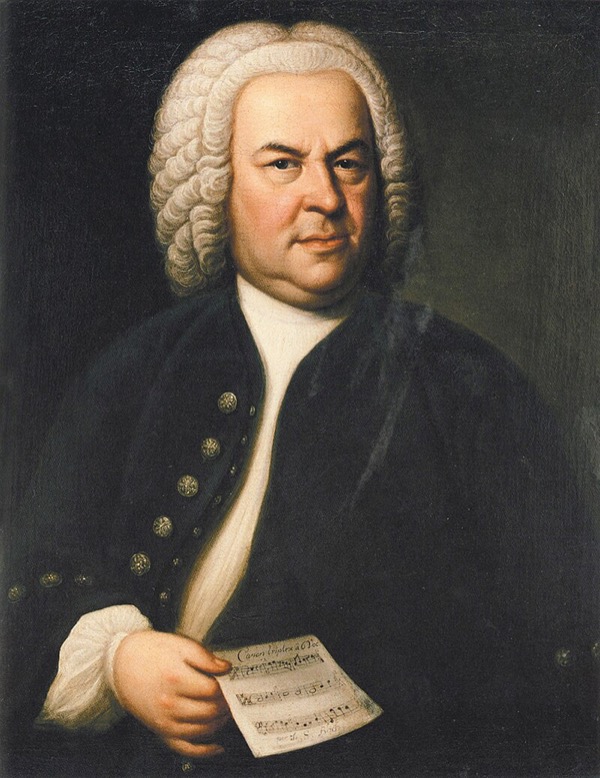
Elias Gottlob Haussmann: Johann Sebastian Bach, 1748 (Leipzig: Bach-Archiv)
Kuhnau’s 1692 book was a set of 6 Partitas, a fashionable term in German musical circles, originally Italian, denoting sets of variations. Bach’s Partitas are built around the traditional dances: Allemande, Courante, Sarabande, and all but one end with a Gigue. Although Kuhnau’s Partitas were grouped into a set in major and a set in minor keys, Bach did his ones as 3 major and 3 minor, in no particular order.
Each of Bach’s 6 Partitas opens with a different movement: Präludium, Sinfonia, Fantasia, Overture, Praeambulum, and a Toccata, before continuing onto the dance movements.
Partita No. 3 in A minor, BWV 827, opens with a two-part Fantasia, not unlike a two-part Invention. Next follows the Allemande, the Corrente (the Italian title for the Courante), and then a Burlesca and Scherzo. The latter two are not dance names, but the music itself is in dance form. In a later copy of the Burlesca, in the Notebook for Anna Magdalena Bach, the work is retitled ‘Minuet’. The Scherzo, whose name we associate with Beethoven, who used it in his symphonies, is the only use of the word by Bach.
The final movement is a Gigue. The gigue was a Baroque dance that traces its roots back to the English Jig. It came to France in the mid-17th century and was almost always used to end a suite. It was also common in France to end the play with a gigue, including music and dancing. This fast, concluding dance was a way to wind down the suite with music that signalled ‘the end.’
J.S. Bach: Partita No. 3 in A minor, BWV 827 – Gigue (John Gillespie, harpsichord)
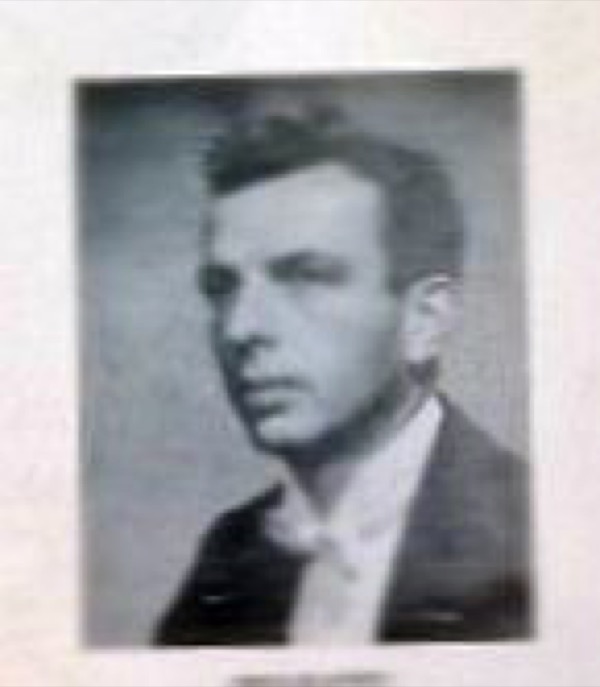
John Gillespie, 1960
This was recorded in 1952 with John Gillespie on harpsichord. American harpsichordist and pianist John Gillespie (1921–2003) did undergraduate degrees in German and piano at DePauw University in Indiana. After WWII, he attended the Paris Conservatoire, studying organ. Returning to the US, he was awarded a master’s degree in piano in 1947, an M.A. in Musicology in 1948, and a Ph.D. in musicology in 1951.
As Assistant Professor of Music at the University of California at Santa Barbara, he was integral to the music department’s move towards becoming a centre for music research and performance. His books, such as Five Centuries of Keyboard Music (1964), The Musical Experience (1968) and other works on both Western and non-Western cultural traditions placed him at the centre of historical music in California and the US. He continued to perform, with one notable set of concerts based around Bach’s music for one, two, three, and four harpsichords, performed with the other UCSB faculty. He was noted both for his brilliant keyboard technique and his ability to sight-read any score.
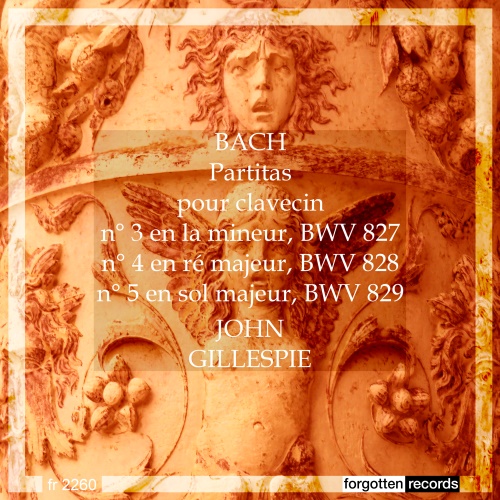
Performed by
John Gillespie
Recorded in 1952
Official Website
For more of the best in classical music, sign up for our E-Newsletter