Australian violinist Alma Moodie was one of the most important figures in early twentieth-century classical music.
Her international career burned bright in between the world wars, and she inspired multiple major works by German composers in the 1920s.
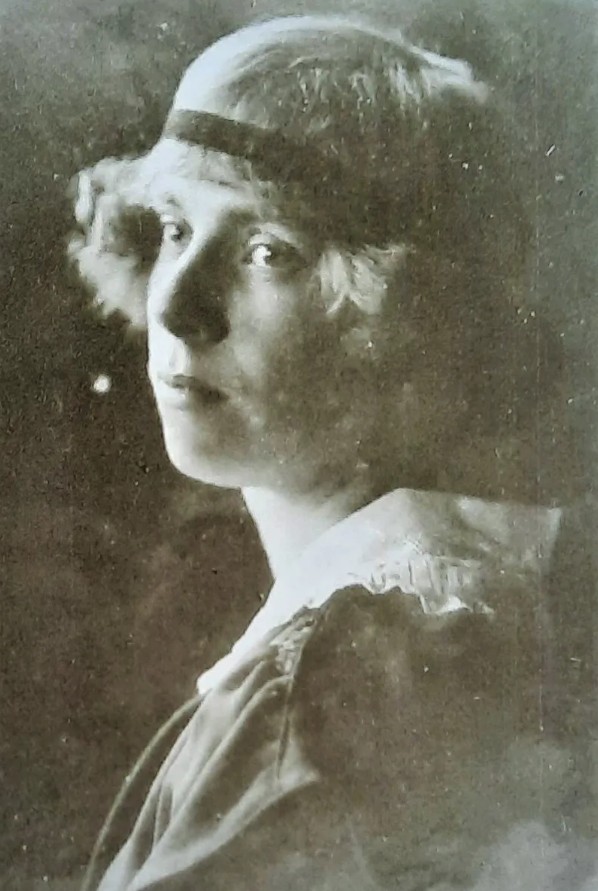
Alma Moodie
But she has been almost entirely forgotten today.
How did such a major figure just disappear into the pages of musical history…and why?
Alma Moodie’s Tragic, Precocious Childhood
Alma Moodie was born Alma Mary Templeton Moodie in Queensland, Australia, in September 1898.
Her father was a Scottish ironmonger and, tragically, died of tuberculosis before Alma’s first birthday.
Her mother was a music teacher from Irish stock and was her first violin teacher.
When she was five, Alma began studying with violinist Louis D’Hage. The following year, she gave her first public performance.
Attending the Brussels Conservatory
In 1907, when Alma was nine, she earned a scholarship to study at the Brussels Conservatoire. She and her mother moved to Belgium, where her mother began supporting herself and her daughter by teaching music.
Alma’s teachers at the Brussels Conservatoire included Oskar Back and César Thomson, who would later quarrel over credit for her success.
In June 1910, just short of her twelfth birthday, she was granted a “premier prix” (first prize) at the conservatory. It is believed that afterwards she continued her studies privately.
Despite her accomplishments, she was a very small and frail girl. Throughout her life, she would suffer from periods of ill health.
Time in London and a Brush With Auer
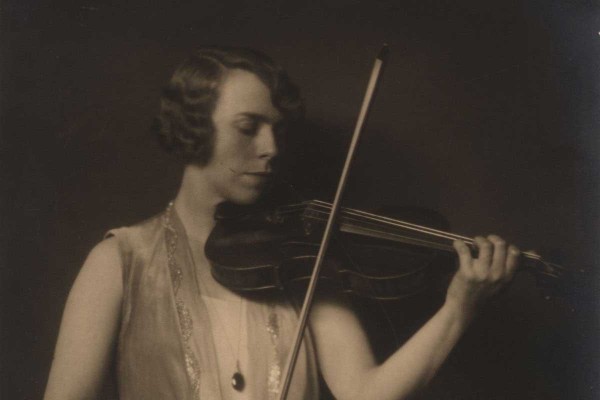
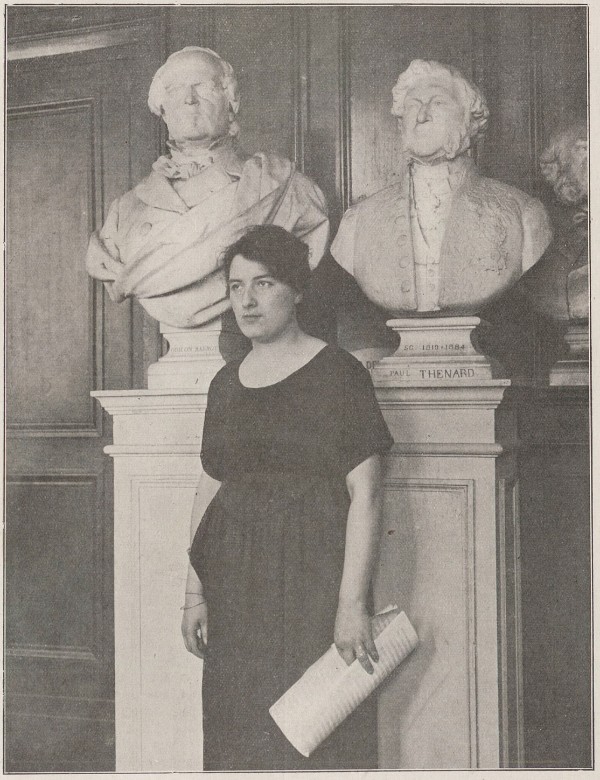
Alma Moodie, 1927
In the 1910s, she began to play at society concerts in London.
Legendary Russian teacher Leopold Auer, teacher of Jascha Heifetz, was traveling in Britain at the time, heard her play, and offered to teach her.
However, the Moodies didn’t have the money to pay Auer, and Alma’s mother was reluctant to relocate to St. Petersburg.

Leopold Auer
Still, it’s intriguing to imagine what might have happened if Moodie had joined the famous Auer studio, which included stars like Jascha Heifetz.
Auer left her one piece of parting advice: to never drink alcohol, because it would affect her ability to bow passages smoothly.
Meeting Max Reger
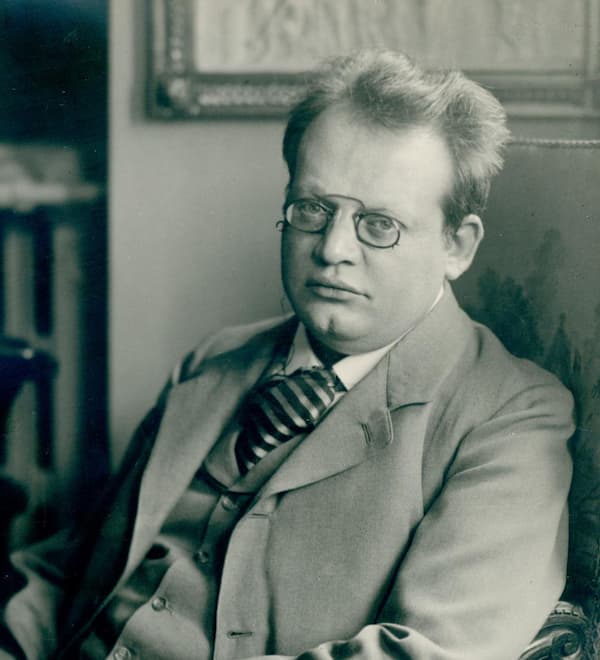
Max Reger
While still a teenager, her talent captured the imagination of composer Max Reger.
The day he first heard her play, he wrote in a letter to a patron that “hers is the biggest violin talent I have ever encountered.” He confessed that her playing brought him to tears.
In 1914, he dedicated one of his dramatic Präludium und Fuges for solo violin to her.
Max Reger: 6 Preludes and Fugues for Solo Violin, Op. 131a
She became close with both Max Reger and his wife, so much so that they became her adopted parents. Her mother made plans to visit family in Australia and leave Alma with the Regers, but the outbreak of war in August 1914 changed her plans.
World War I
World War I would prove to be catastrophic for Alma. Max Reger died in 1916, and Alma’s mother died in 1918.
Life in Brussels was difficult, as the city was occupied by German forces for four years. Residents endured economic collapse and widespread political unrest.
Alma would later claim that she didn’t play the violin for four years. This was an exaggeration, as documentation exists of various scattered performances during this time. But her artistic development was certainly arrested, and at a crucial point.
A Splashy Return to Music
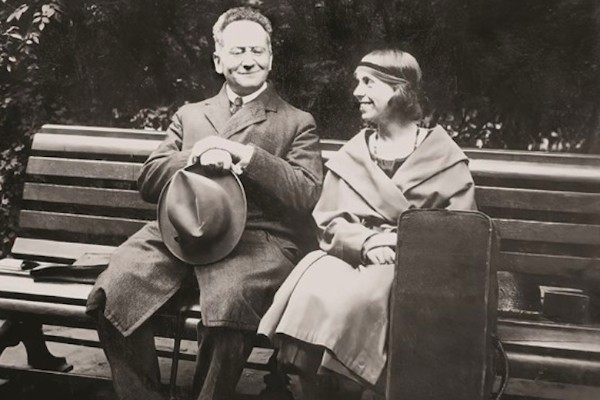
Alma Moodie and Carl Flesch
In 1919, after the war, at the age of twenty-one, Moodie decided she wanted to return to music.
She began studying with Carl Flesch, the teacher of legendary violinists like Ivry Gitlis, Ida Haendel, Josef Hassid, Ginette Neveu, and Henryk Szeryng.
Despite the dozens of talented violinists who passed through his studio, Flesch would later claim that his favourite pupil out of all of them was Alma Moodie.
The respect was mutual. Moodie continued to study with Flesch for many years to come, even after she became a violin professor and an international touring artist herself.
She made her debut in a staggering program with the Berlin Philharmonic in November 1919. She played the Brahms concerto, Paganini’s first concerto, and Karl Atterberg’s Violin Concerto in E-minor, which had been written just before the war.
Kurt Atterberg: Violin Concerto in E Minor, Op. 7
In 1922, she embarked on a season-long international tour.
Befriending Werner Reinhart, Stravinsky, and Rilke
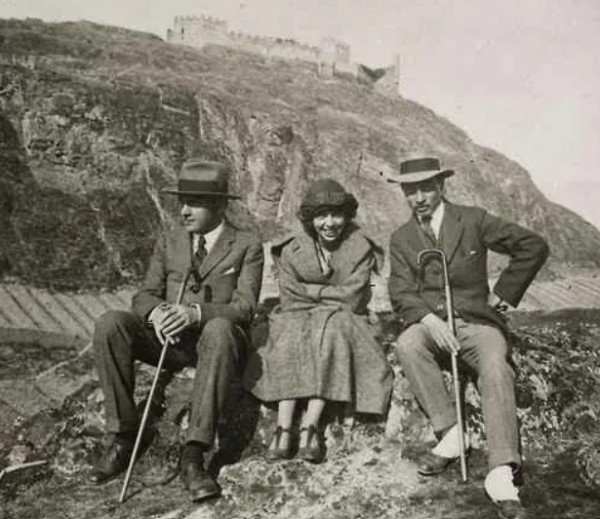
Alma Moodie with Werner Reinhart and Rainer Maria Rilke
Sometime around 1922, she befriended Swiss merchant, philanthropist, and musical patron Werner Reinhart, whose Villa Rychenberg in Winterthur, Switzerland, was a famous meeting place for composers, performers, artists, and writers.
Today, Reinhart is best known for his support of composer Igor Stravinsky and poet Rainer Maria Rilke, both of whom were impressed by Alma.
Stravinsky arranged music from his ballet Pulcinella for violin and piano and premiered the resulting “Suite Italienne” with Moodie in 1925.
Reinhart purchased eight months of performance exclusivity, enabling Moodie to premiere the work with Stravinsky in various European cities.
Stravinsky: Suite Italienne
The work has since become one of the most famous neoclassical works in the violin repertoire.
Rilke, meanwhile, recognised her as a peer, comparing her playing to his own work, writing, “What a sound, what richness, what determination. That and the ‘Sonnets to Orpheus’, those were two strings of the same voice.”
Championing Hans Pfitzner and Ernst Krenek
After the war, Moodie developed a reputation for advocating for new music.
In 1923, composer Hans Pfitzner wrote a stormy, mercurial violin concerto for her, which she premiered in Nuremberg, Germany, in the summer of 1924, to great acclaim.
Hans Pfitzner: Violin Concerto Op. 34
At the same time, Alma was working on a violin concerto with composer Ernst Krenek.
Krenek married Anna Mahler, the daughter of Gustav Mahler, in March 1924, but the couple was badly suited for one another, and he and Alma Moodie ended up having a brief affair.
Ernst and Anna’s marriage unravelled within months of their wedding. They divorced in January 1925, just a few days after Alma gave the premiere of Krenek’s concerto.
Ernst Krenek: Violin Concerto No. 1
Although their romantic relationship was short-lived, Moodie clearly made a big impression on Krenek, as he also dedicated his 1924 sonata for solo violin, op. 33, to her.
Ernst Krenek: Sonata for Solo Violin No. 1
Reaching the Top of Her Career
Countless musicians were bewitched by Alma Moodie’s talent.
In addition to these important premieres, she also performed in non-premiere performances of important contemporary works by Bartok and Szymanowski, helping to solidify their places in the repertoire.
As she wrote to her teacher Carl Flesch in 1924, “Of course I am ambitious, very much so in fact, and it is my wish to have introduced and popularised a few good compositions.”
In 1925, conductor Arthur Nikisch, longtime conductor of the Berlin Philharmonic, wrote to Moodie’s teacher Carl Flesch, “For me, this girl is a phenomenon artistically so delightful that I regard it as my natural duty to promote the interests of this blessed creature as much as I am able.”
By the late 1920s, she was on top of the world.
An Ill-Advised Marriage
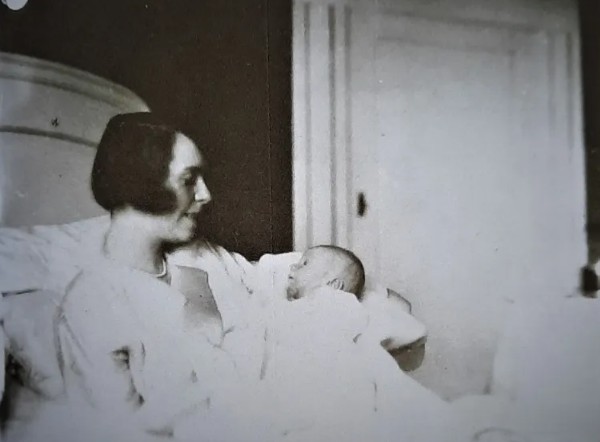
Alma Moodie and her son
In 1927, at the age of twenty-nine, Moodie married a German lawyer named Alexander Spengler. She was tired of the constant travel required of a globetrotting soloist and wanted to settle down.
She would have two children with him: George in 1928 and Barbara in 1932.
Unfortunately, the match would prove to be disastrous. Spengler was habitually unfaithful to his wife and unsupportive of her career, even as he himself traveled frequently for work. He also joined the Nazi Party.
Moodie took a job teaching at the Hoch Conservatory in Frankfurt, Germany. It doesn’t seem like she had very strong political feelings or interests in any direction. She was upset at the displacement of her Jewish colleagues, but she also took no stand against the Nazi regime.
Final Years and Legacy
By the start of the Second World War in 1939, Moodie had slipped into nicotine, drug, and alcohol addictions. She suffered from hyperthyroid troubles and began relying on pills to sleep.
But she was still playing. In February 1943, she wrote to her patron Reinhart about her ongoing project of performing the Beethoven sonatas in various cities under threat of Allied bomb raids.
She died suddenly on 7 March 1943, during a bombing raid of Frankfurt. Historians are divided about whether she died accidentally of thrombosis (as the doctor’s report indicates) or deliberately by suicide.
Disappointingly, despite her fame and influence, Moodie never made a professional studio recording. Her performances were often broadcast on the radio, but no recordings are known to have survived.
Although in her day she was feted as one of the most important figures in German music, Alma Moodie has largely disappeared from the historical record today.
Rightly or wrongly, her posthumous reputation has suffered, between her lack of surviving recordings, her early death, and her inability to understand the gravity of the threat posed by the Nazis.
For more of the best in classical music, sign up for our E-Newsletter