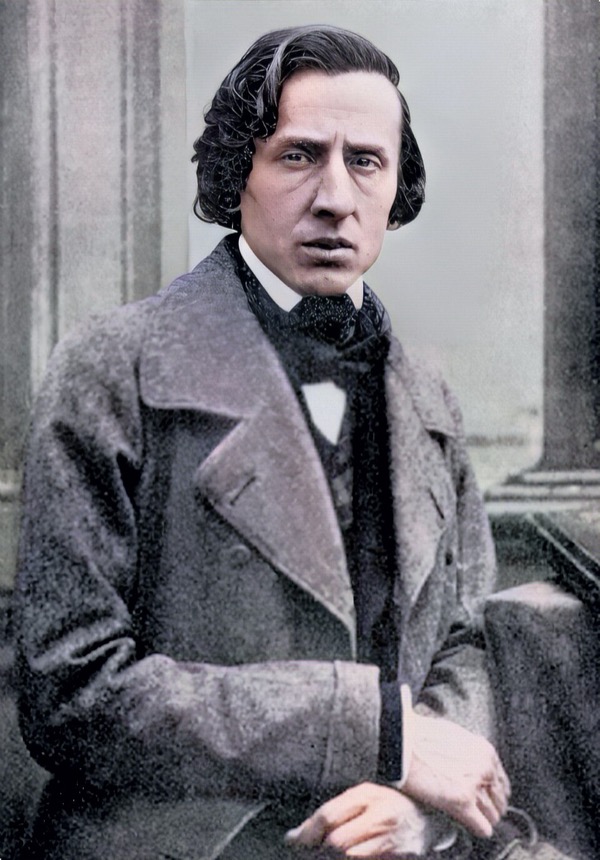
Over the course of his career, Chopin wrote 21 nocturnes. Eighteen were published during his lifetime; the other three appeared after his death.
Part 1 of this guide covers Nocturnes Nos. 1 through 10, the four sets he published between 1832 and 1837. In this second part, we’re looking at the nocturnes Chopin wrote in the later part of his career, as well as those three posthumously published ones.
For each nocturne, you’ll find a recording, a composition date, and a few things to listen for.
Nocturnes, Op. 37 (published 1840)
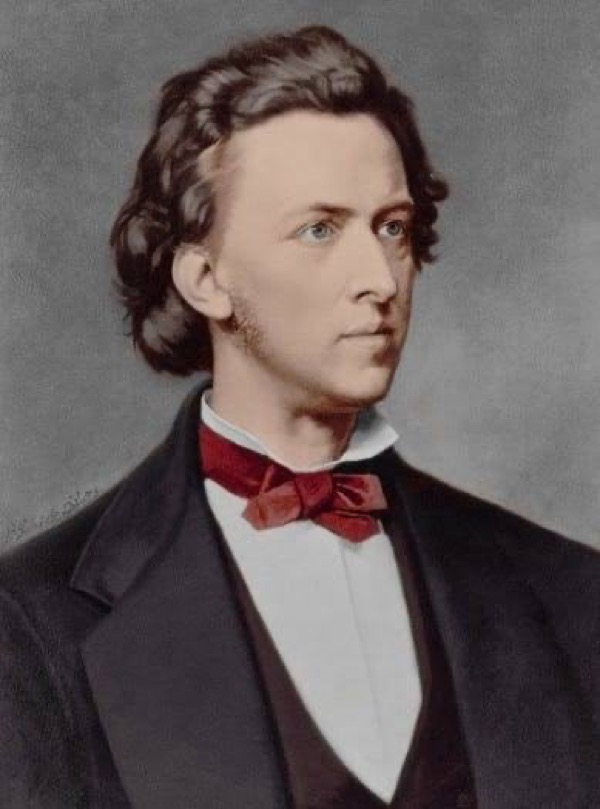
Frédéric Chopin
In 1838, Chopin began a romantic relationship with novelist George Sand. In the winter of 1838–1839, the couple travelled to Majorca for a few months; Alan Walker has described this trip as a kind of honeymoon. The relationship marks an important hinge point in Chopin’s life and career.
Although we are not sure exactly when they were written, the early stages of this relationship were the emotional backdrop to the creation and publication of these nocturnes.
They have no dedicatee.
Nocturne No. 11 in G minor, Op. 37, No. 1: The Nocturne Inspired by Sacred Music
Date composed: 1838–1839
- This nocturne is a cross in style between the simplicity of Chopin’s Op. 32 and the narrative-driven drama of his Op. 27.
- It opens with a wistful theme. The contrasting theme sounds like something out of a hymnal, which has led some pianists to interpret it as a tribute to religious faith.
- According to his student Adolphe Gutmann, Chopin forgot to mark a tempo increase in the central section.
- In the end, the wistful theme returns, and the chorale-like tune vanishes into memory.
Nocturne No. 12 in G major, Op. 37, No. 2: The Venetian Boat Song Nocturne
Date composed: 1839
- This nocturne is in 6/8 time, with a left hand that calls to mind the style of a Venetian barcarolle (a type of folk song sung by gondoliers).
- Musicologist Frederick Niecks, who published one of the first comprehensive biographies of Chopin in 1888, wrote of the nocturne’s “beautiful sensuousness; it is luscious, soft, rounded, and not without a certain degree of languor.”
- Its barcarolle-like rhythm and improvisatory nature have given it a reputation as one of the most sensual nocturnes.
Nocturnes, Op. 48 (published 1842)
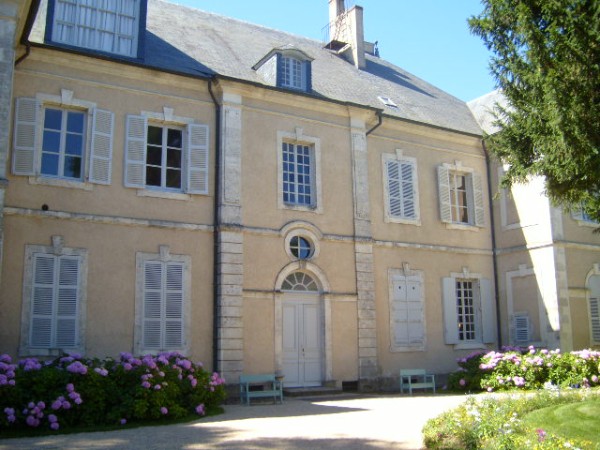
George Sand’s house in Nohant
Chopin wrote the two nocturnes in his Op. 48 set in 1841, when he’d settled in for the summer at Sand’s ancestral country estate in Nohant.
These two nocturnes were published in 1842 as part of a package deal. That package earned an impressive 2000 francs (in an era when a typical Parisian labourer would earn around 3 francs a day).
They were dedicated to his piano student Laure Duperré, daughter of Admiral Guy-Victor Duperré, who served as France’s Minister of the Navy three times.
Nocturne No. 13 in C minor, Op. 48, No. 1: The Most Important Nocturne?
Date composed: 1841
- German pianist Theodor Kullak called this nocturne “the most important one that Chopin created.” He called special attention to the opening theme: “the chief subject is a masterly expression of a great, powerful grief.”
- Chopin uses powerful octaves that call to mind Liszt’s writing and help to create a frenzy. Chopin used this technique more sparingly than Liszt, so it’s worth noting when he does.
- When the first theme returns, it is accompanied by fast, worried triplet figures in the left hand, working up to another climax.
- The nocturne ends with hushed chords.
Nocturne No. 14 in F-sharp minor, Op. 48, No. 2: The Tyrant and Supplicant Nocturne
Date composed: 1841
- The main theme of the nocturne is accompanied in the left hand by a triplet figure followed by a quarter note, which gives the first section a sense of motion – like a couple dancing and hesitating between steps.
- The middle section is in the key of D-flat major. According to Gutmann, who told the story to Niecks, Chopin said this section should be played like a recitative, with a tyrant commanding and a supplicant asking for mercy.
- The coda leads up to the work’s closing chord: one in F-sharp major, signalling a gentle transition from the mysterious minor-key darkness to a final note of hope and resolution.
Nocturnes, Op. 55 (published 1844)
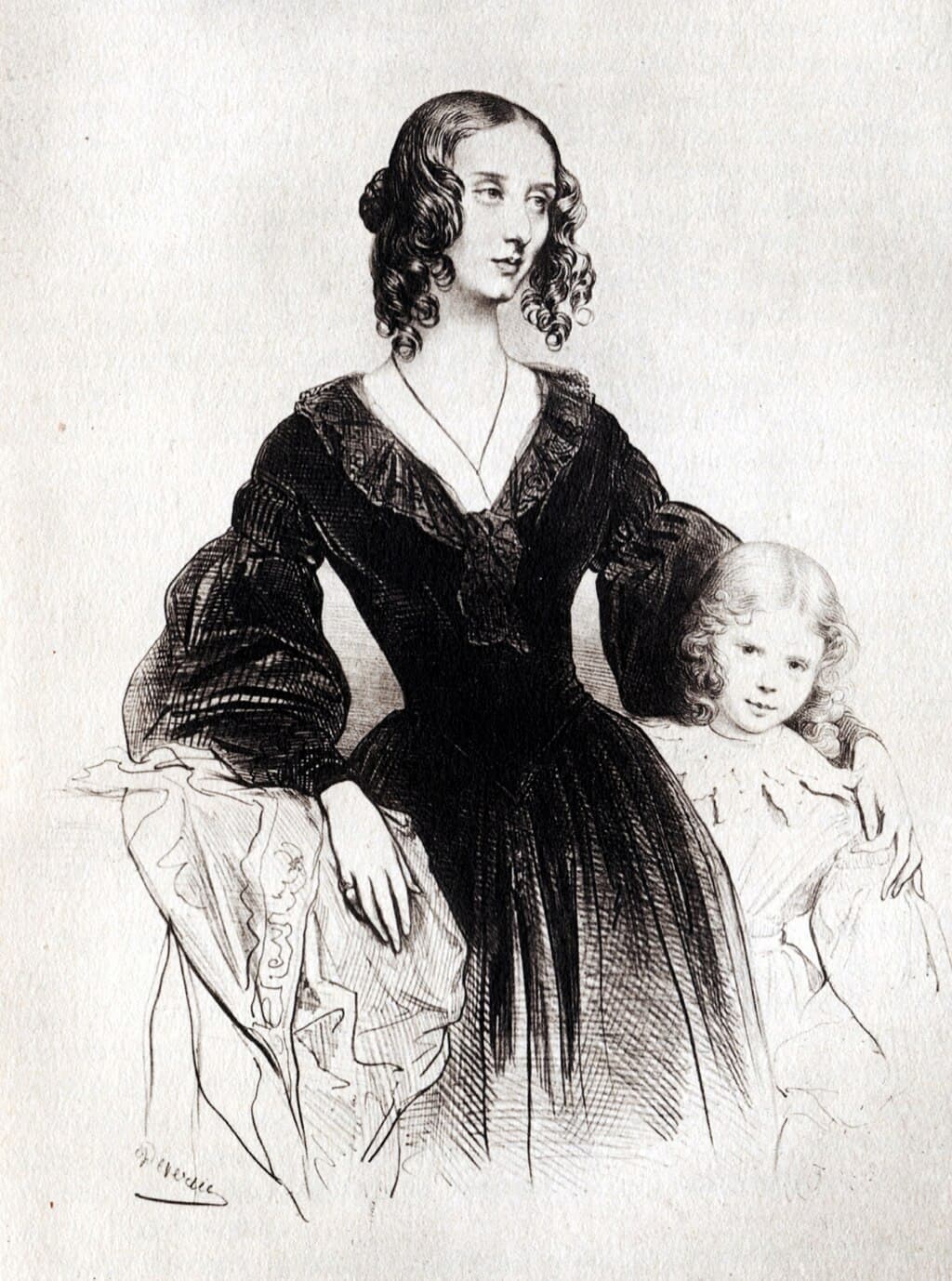
Jane Stirling
Chopin’s Op. 55 nocturnes were composed sometime between 1842 and 1844.
He dedicated them to Jane Stirling, a wealthy Scotswoman who was one of his students and a major fan of his work.
Especially after his relationship with George Sand broke down in 1847, he became increasingly reliant on Stirling for money and help organising logistics and healthcare.
Nocturne No. 15 in F minor, Op. 55, No. 1: The Nocturne With the Loping Accompaniment
Date composed: 1842–1844
- The opening theme of this nocturne is accompanied by heavy chords on the second and fourth beats, resulting in a slightly loping foundation for the wistful melody in the right hand above.
- A contrasting middle section is signalled by stormy octaves in triplets. A desperate melody, revealed in pieces, comes afterwards.
- When the first theme returns, it eschews the heavy opening and evaporates in a flight of fancy, ending on dreamy chords.
- Vladimir Horowitz chose this as one of the pieces on his nationally broadcast 1968 Carnegie Hall concert, a major cultural event in American classical music history.
Nocturne No. 16 in E-flat major, Op. 55, No. 2: The Nocturne That Sounds In Progress
Date composed: 1842–1844
- The first thing you notice about this nocturne is the long trill in its opening measure, followed by its rocking accompaniment in 12/8 time. It feels as if we’ve entered a nocturne-in-progress.
- The right hand sometimes plays two lines at once, making those passages sound like a duet.
- This nocturne has no contrasting middle section, so it lacks the sense of journey and return that marks so many of Chopin’s nocturnes. That, combined with its wandering improvisatory nature, makes it feel more experimental than many of his other nocturnes.
Nocturnes, Op. 62 (published 1846)
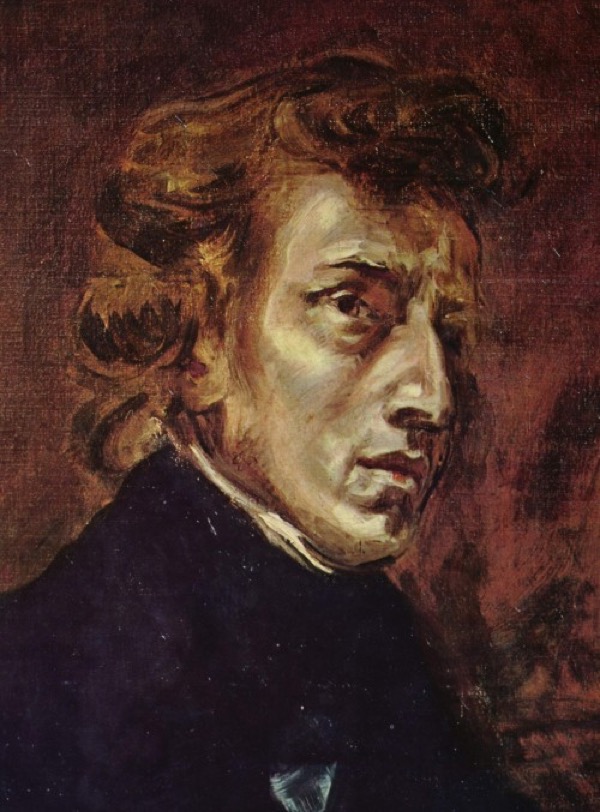
Frédéric Chopin
Chopin wrote this set of two nocturnes between 1845 and 1846. They were his last published nocturnes; he died three years later, in 1849.
The Op. 62 nocturnes were dedicated to his student Rosa de Könneritz, the daughter of the Saxon ambassador to France.
These nocturnes have become more popular in modern times. However, during the 19th century, they didn’t appeal as much to audiences and musicians as they do today. Critics initially dismissed them and blamed Chopin’s failing health.
Nocturne No. 17 in B major, Op. 62, No. 1: The Hothouse Flower Nocturne
Date composed: 1845–1846
- This nocturne’s key is unclear at the opening. Chopin revels in the not-knowing for a moment, then begins a simple melody in B major. The contrasting section that follows is in A-flat major.
- When the original theme reappears, it is ornamented by trills and flurries of scales and arpeggios.
- American critic and pianist James Huneker nicknamed this nocturne the Tuberose, after the hothouse flower used in fragrances. It’s easy to imagine these changeable, liquidy harmonies as wafts of rich perfume.
Nocturne No. 18 in E major, Op. 62, No. 2: The Final Published Nocturne
Date composed: 1845–1846
- This is the last of the nocturnes to be published during Chopin’s lifetime.
- The first theme somehow comes across as both deliberate and improvisatory.
- The piece features an agitated central section. Transitions between the contrasting sections are fluid and organic.
- The nocturne melts away in breathtaking fashion, ending with single notes instead of the standard chords.
Posthumously Published Nocturnes
After it became clear that Chopin’s death was imminent, he told friends and family that they should burn the works he’d never published. They didn’t do so, and multiple works were published posthumously.
Nocturne No. 19 in E minor, Op. 72, No. 1: The Teenaged Angst Nocturne
Date composed: 1827
- This moody nocturne is generally considered to be the first one that Chopin ever wrote, dating from the year he turned 17.
- The triplets in the left hand continue through the entire piece, as its grief-stricken character evolves in the right hand.
- It was printed in 1855 with his C minor Funeral March and the Three Écossaises and assigned the opus number 72. Despite his youth when he wrote it, it was numbered the 19th nocturne due to publication order.
Nocturne No. 20 in C-sharp minor, posthumous: The Nocturne That May Not Be a Nocturne
Date composed: 1830
- Chopin wrote this nocturne the year he turned 20.
- He gave the manuscript to his pianist sister Ludwika, instructing her to learn it before tackling his Piano Concerto No. 2 in F minor. She was the one who catalogued it as a piece “of a nocturne character” in her papers; Chopin himself had not titled it.
- The score references the concerto and his early song “Życzenie,” which may be why he chose not to publish it.
- A Chopin biographer named Marceli Antoni Szulc rediscovered the manuscript and published the piece in 1875.
- Composer Mily Balakirev publicly performed it at the 1894 unveiling of a monument at Chopin’s birthplace.
Nocturne No. 21 in C minor, posthumous: The Nocturne No One Can Date
Date composed: Unknown
- No one knows when Chopin wrote this nocturne. Scholars have proposed dates almost a decade apart.
- Ludwik Bronarski, who edited its first edition in 1938, suggested it might be one of Chopin’s earliest nocturnes. He believed it was written before Chopin left Poland in 1830.
- Chopin scholar Arthur Hedley disagreed. He noted that the manuscript was written on a type of paper Chopin used mostly in 1845 and 1846. That would make it a late work.
- It was published almost ninety years after Chopin’s death, making it the last of his nocturnes to appear in print.
- Compared to some of his longer, more demonstrative nocturnes, this one is small, understated, and delicate.
Conclusion
In these later nocturnes, Chopin experimented with structural innovations and an intensity of drama usually only heard in opera.
All of his nocturnes have remained in print and in demand for generations: a testament to how beloved these works are, and how indispensable audiences and musicians have found them.
For more of the best in classical music, sign up for our E-Newsletter