Sergei Taneyev, a student of Pyotr Ilyich Tchaikovsky and a teacher of Sergei Rachmaninoff and Alexander Scriabin, was a composer of high intellectual rigour and uncompromising standards.
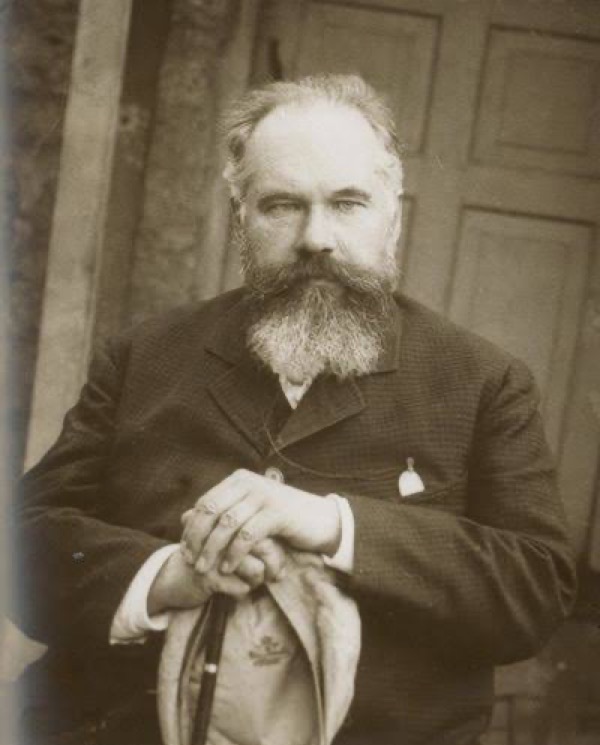
Sergei Taneyev
Above all, he was a composer of absolute music, with his output including four symphonies, a piano concerto, nine string quartets, a piano quintet, two string quintets and other chamber and orchestral works. Essentially, he despised the musical stage.
As such, it is somewhat surprising that he regarded Oresteia, a work described as a “musical trilogy” rather than an opera, as a major achievement. To commemorate his birthday on 25 November, let’s have a look at Taneyev’s only opera, modelled on the original play by Aeschylus.
Sergei Taneyev: Oresteia, (excerpt)
The Drama of Oresteia
Written between 1887 and 1894, Taneyev’s single dramatic composition is dedicated to the memory of Anton Rubinstein. As Richard Taruskin observed, “though necessarily a longish work with an actual running time over three hours, the action is exceedingly compressed, schematic, indeed minimal.”
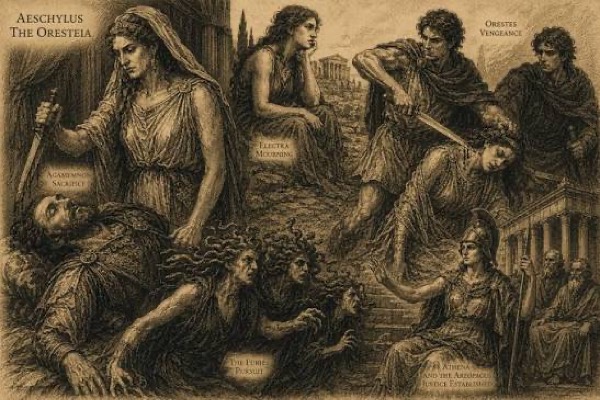
The plot is based on a trilogy of tragedies by the ancient Greek dramatist Aeschylus, and the Oresteia tells the story of the house of Atreus. The first play is titled Agamemnon, and the opera retells the story of the victorious return of the king from the Trojan War. Meanwhile, his wife Clytemnestra (contralto) and her lover Aegisthus (baritone) plan his murder. The murder is then carried out.
Sergei Taneyev: Oresteia, Part I, “Agamemnon” Scene 2: Oh, my King! My glory, my love (Leningrad Radio and TV Chorus; Leningrad Philharmonic Orchestra; Gemal Dalgat, cond.)
The Cycle of Revenge
The second part, Libation Bearers, takes its title from the chorus of women servants who come to pour offerings at the tomb of the murdered Agamemnon. Clytemnestra, haunted by Agamemnon’s ghost, asks his daughter Electra (soprano) to pacify the god with a sacrifice.
Orestes (tenor), Agamemnon’s son, reveals himself to Electra, and the siblings together plan their revenge. Orestes, assisted by Electra, kills Aegisthus and Clytemnestra. Orestes’ attempts at self-justification falter, and he flees, guilt-ridden and pursued by the female incarnation of his mother’s curse, the Furies.
Sergei Taneyev: Oresteia, Part II, “Libation Bearers” Scene 2: What is this? A lock of hair? (Leningrad Radio and TV Chorus; Leningrad Philharmonic Orchestra; Gemal Dalgat, cond.)
From Vengeance to Justice
The third part, The Furies, opens at the shrine of Apollo at Delphi, where, pursued by the Furies, Orestes seeks forgiveness. Apollo (baritone) restrains the Furies and orders Orestes back to Athens to stand trial.
The goddess Athena organises a trial with a jury of citizens, and as the jury is evenly divided, Athena casts the deciding vote for Orestes’ acquittal. Orestes is released from guilt, and the cycle of retributive bloodshed is replaced by the rule of law and the justice of the state.
Sergei Taneyev: Oresteia, Part III, “The Eumenides” Scene 3: Finale (Leningrad Radio and TV Chorus; Leningrad Philharmonic Orchestra; Gemal Dalgat, cond.)
The Oresteia
Monumental Music
None of the bloody events actually take place onstage, as the drama unfolds through narration, psychological monologues, and leitmotif-heavy music between the acts. Two of these, Agamemnon’s March and the representation of Apollo’s temple at Delphi, have achieved repertory status as concert pieces in Russia.
The opera itself begins with a brief prelude, but Taneyev’s orchestral overture entitled Oresteia, which dates from 1889, is a separate symphonic poem based on themes from the trilogy. Richard Taruskin finds “some very impressive music of monumental character, nor is it wholly deficient in traditional operatic values.”
Sergei Taneyev: Oresteia Overture, Op. 6
A Private Hearing
Even more impressive is Rimsky-Korsakov’s assessment, particularly as he considered many of Taneyev’s works to be “most dry and laboured in character.” However, after a private hearing of Oresteia at his home, with Taneyev at the piano, he changed his mind.
As he writes, “the opera astonishes us all with pages of extraordinary beauty and expressiveness. Taneyev’s working methods ought to result in a dry and academic composition, devoid of the shadow of inspiration; in reality, however, Oresteia proved quite the reverse. For all its strict premeditation, the opera was striking in its wealth of beauty and expressiveness.”
The opera premiered on 29 October 1895 at the Mariinsky Theatre, conducted by Eduard Krushevsky. The musical director, Eduard Nápravník, had refused to conduct the work and had demanded merciless cuts as the price of production. Taneyev withdrew the opera after eight performances, and it was only revived shortly after his death in 1915.
Sergei Taneyev: Oresteia, Part III, “The Eumenides” Scene 1: Entr’acte: A rest, a rest, where do I find a rest? (Leningrad Radio and TV Chorus; Leningrad Philharmonic Orchestra; Gemal Dalgat, cond.)
The Revival of Oresteia
Reportedly, it achieved 35 performances during the revolutionary period, and the work was staged in a 1963 Minsk production that also travelled to Moscow in 1964. The 21st century has seen renewed interest in the work, with the Saratov Opera and Ballet Theatre mounting a production in 2011.
The first complete production outside Russia took place in 2013 with a historic staging at Bard SummerScape in New York, directed by Thaddeus Strassberger and conducted by Leon Botstein. Further Russian productions followed in Rostov-on-Don in 2015 and Saratov in 2017. In June 2017, Botstein returned to the Mariinsky Theatre to conduct a concert performance of the work.
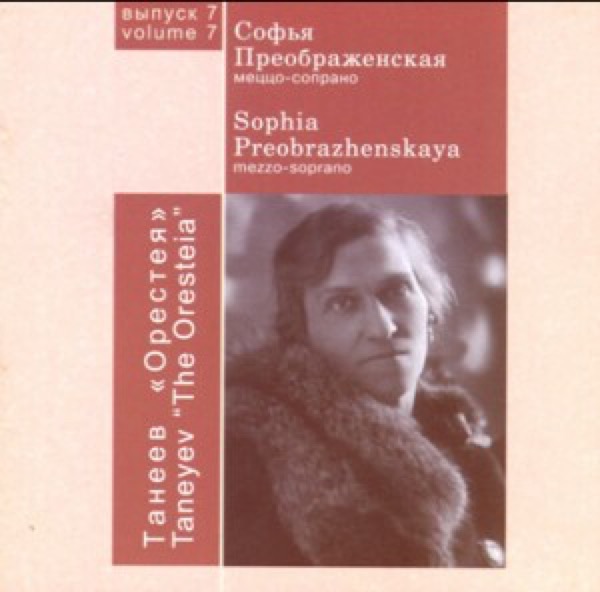
Taneyev “The Oresteia”
For more of the best in classical music, sign up for our E-Newsletter