There is something especially pleasing about encountering a young pianist whose playing displays not only formidable technical command but also the musical intelligence, sensitivity and maturity one might more readily associate with an artist of considerably greater experience. Such is the case with Austrian pianist Lukas Sternath, whose impressive debut recording of music by Schubert and Liszt announces a musician of exceptional promise.
Born in Vienna in 2001, Sternath came to international attention when he won the 2022 ARD International Music Competition. He subsequently studied with Igor Levit and Paul Lewis in Hanover and is now a BBC Radio 3 New Generation Artist. Interestingly, he declined the opportunity to make a debut recording immediately after his competition success, preferring to wait until he felt artistically ready. That decision speaks of a seriousness of purpose which is evident throughout this generously filled double album, released on Igor Levit’s new NO SILENCE label.
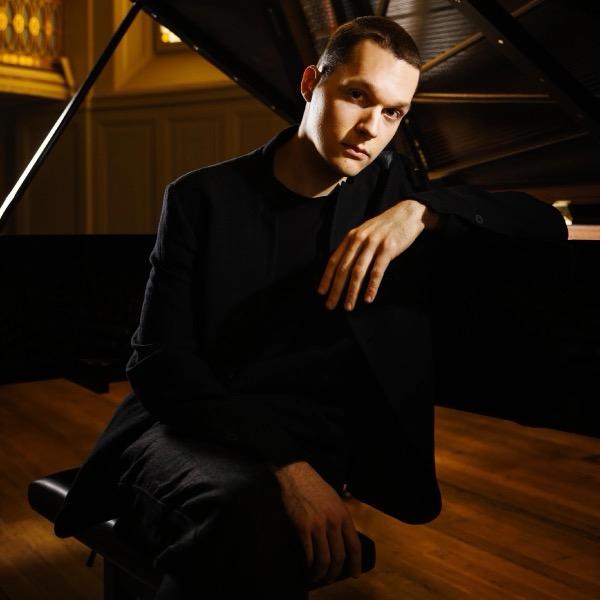
Lukas Sternath © Peter Rigaud
The programme is both ambitious and thoughtfully conceived, bringing together Schubert’s Wanderer Fantasy, a selection of his songs transcribed for piano by Liszt, and the second book of Liszt’s Années de pèlerinage. The connecting thread is the idea of wandering, both physical and spiritual, and the search for belonging, consolation and meaning.
What impresses most about Sternath’s playing is its naturalness. Here is a pianist who possesses all the necessary virtuosity but seems entirely uninterested in drawing attention to it for its own sake. His technique serves the music, allowing him to explore its emotional and expressive possibilities without exaggeration or affectation. His approach has an appealing directness, allied to a remarkably sophisticated appreciation of colour, texture, and musical architecture.
The Schubert song transcriptions are particularly revealing. Liszt’s arrangements are far more than elaborate pianistic reworkings of familiar melodies; at their best, they preserve the intimacy and emotional immediacy of Schubert’s originals while exploiting the piano’s capacity for colour and expressive nuance. Sternath clearly understands this: his approach is lyrical and unforced, with a sensitivity to phrasing and the natural rise and fall of the musical line that implies a singer’s instinct for breathing. In pieces such as Auf dem Wasser zu singen and the profoundly affecting Litaney, the piano becomes a vehicle for the most intimate expression.
Franz Schubert, Franz Liszt: Franz Schuberts geistliche Lieder, S562/R247: No. 1. Litaney (Lukas Sternath, piano)
By contrast, Schubert’s Wanderer Fantasy demands a different kind of musical imagination, combining formidable technical challenges with an almost symphonic sense of structure. Sternath brings energy and conviction to its dramatic passages while remaining alert to the work’s shifting moods and underlying lyricism. The music’s considerable virtuosity never becomes an end in itself; rather, it is integrated into a persuasive musical narrative. This is playing which balances youthful ardour with interpretative intelligence.
The second disc, devoted to Liszt’s Années de pèlerinage: Deuxième année, Italie, offers further evidence of Sternath’s artistic range. Inspired by Italian art and literature, these pieces encompass a remarkable variety of moods, from the contemplative beauty of Sposalizio and the sombre introspection of Il penseroso to the emotional breadth of the three Petrarch Sonnets.
Franz Liszt: Années de pèlerinage, 2nd year, Italy, S161/R10b: No. 5. Sonetto 104 del Petrarca (Sonnet 104 of Petrarch) (Lukas Sternath, piano)
Sternath’s apparent affinity for this repertoire is especially striking in the more introspective music, where his attention to tonal shading and the expressive possibilities of silence gives the music space to breathe. Equally, he is fully equipped to meet the considerable demands of the concluding Après une lecture du Dante, that extraordinary work in which Liszt pushes the piano towards orchestral sonorities and almost overwhelming dramatic intensity. Yet even here, the impression is of an artist concerned with the musical argument rather than simple display.
It is perhaps telling that the album concludes not with the thunderous rhetoric of the Dante Sonata but with Liszt’s transcription of Schubert’s Ständchen. After such an expansive musical voyage, this return to the intimacy of song feels entirely appropriate, a reminder that the greatest expressive power often resides in the simplest musical gestures.
Out Now: Lukas Sternath — Ständchen
There is much to admire in this recording: the breadth of the programme, the evident thought behind its conception, the refinement of the playing and, above all, the sense of a young musician with a distinctive artistic voice. Sternath does not seek to impose himself on the music; rather, he lets it speak with impressive clarity and eloquence.
It is rare to encounter a debut recording which feels so complete, so assured in its artistic vision. There is no sense here of a young pianist anxious to demonstrate everything he can do, though he has formidable technique. Instead, one hears a musician who knows when to unleash the instrument’s full resources and, perhaps more importantly, when to hold back, allowing the music to speak with quiet eloquence.
The best pianists make us listen afresh to music we think we know, revealing new colours, unexpected details and emotional depth. Sternath achieves this repeatedly throughout this remarkable recording.
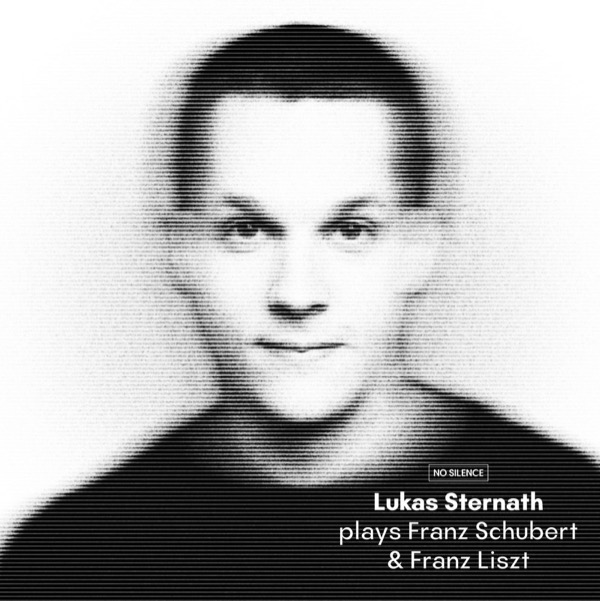
Lukas Sternath plays Franz Schubert and Franz Liszt
Lukas Sternath, piano
NO SILENCE RECORDS / Sony Classical
Released 23 October 2026
For more of the best in classical music, sign up for our E-Newsletter